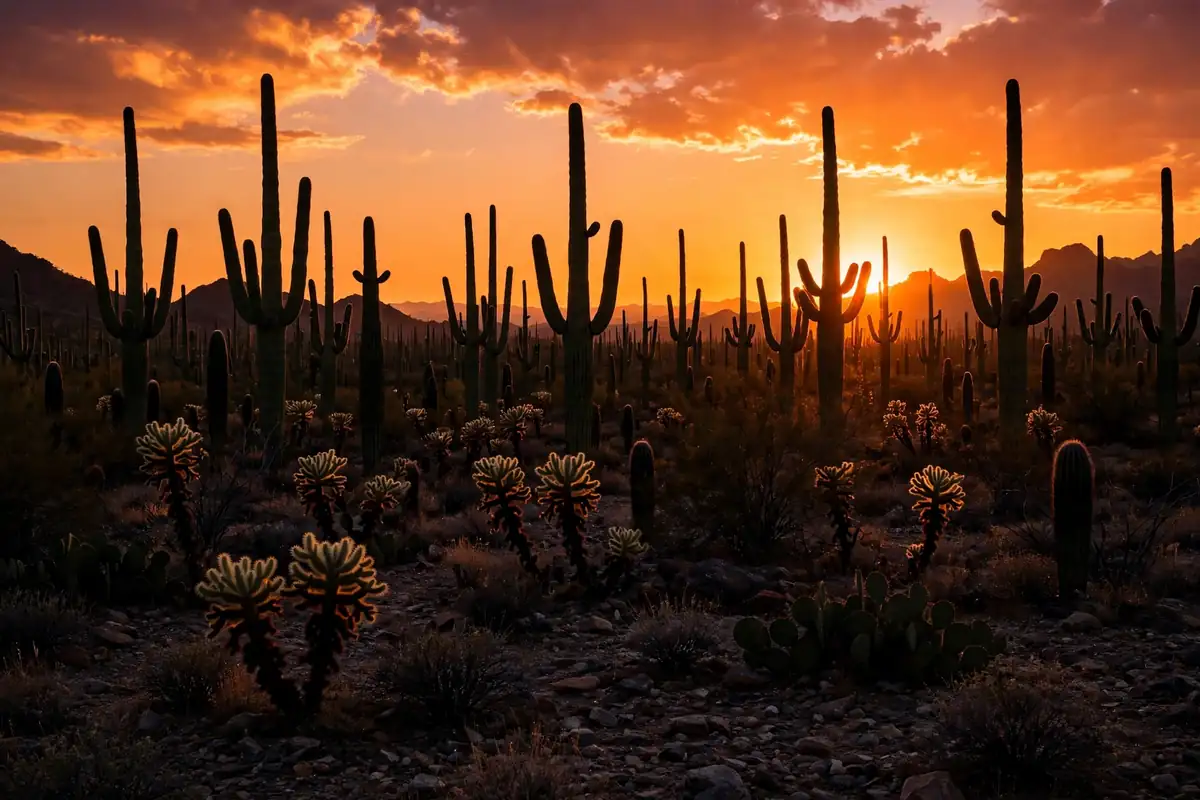
Nothing says “Arizona desert” like a saguaro: arms raised, two hundred years of slow growth behind it, standing guard over a rocky hillside outside Tucson. Saguaro National Park protects two forests of these giants, one on each side of the city, and this saguaro national park guide shows you how to experience both — the scenic loops, the best short hikes, the sunset spots, and the seasons when the desert blooms instead of bakes.
The park’s split personality is its charm. The Tucson Mountain District (west) packs dense cactus forests and famous sunsets into a compact area. The Rincon Mountain District (east) is larger, quieter, and backed by a mountain range that climbs from cactus to pine forest. Most visitors see one district; seeing both, with a Tucson day in between, makes the trip.
The Two Districts: West and East
Tucson Mountain District (West)
The west district is the crowd favorite, and for good reason: the saguaros here grow thick and tall, the Bajada Loop Drive links short trails and picnic areas, and Signal Mountain offers a summit view over a sea of cactus. The excellent visitor center (Red Hills) starts most visits, and the district pairs naturally with the nearby desert museum and Old Tucson area attractions on the same side of town. Desert photographers rate the west side among the finest cactus landscapes in the Southwest, a worthy rival to the scenes in our Joshua Tree hiking guide.
Rincon Mountain District (East)
The east district trades density for space. The Cactus Forest Loop Drive rolls for eight miles past limestone kilns, historic ranch sites, and saguaro groves, with trailheads at every bend. Longer trails climb into the Rincon Mountains toward grasslands and pines — a full desert-to-mountain journey in a single park. Hikers who enjoyed the sky-island feel of the Chisos in our Big Bend National Park guide will recognize the same pattern here: the higher you climb, the more the desert lets go.
Best Hikes in Saguaro National Park
Start short and scenic. In the west district, the Valley View Overlook Trail is an easy walk to one of the park’s classic panoramas, and the Desert Discovery Nature Trail adds signs that decode the desert — what eats what, who lives in the cactus, why the rocks are red. The Bajada Wash and Hugh Norris trails serve hikers who want more climbing; Hugh Norris, the district’s longest, rewards the effort with ridge-top forests of saguaro all the way to Wasson Peak.
In the east, the Freeman Homestead Trail is a gentle loop past a historic homesite and one famously enormous saguaro, while the Douglas Spring Trail climbs steadily toward seasonal waterfalls after wet winters. The Cactus Forest Trail lets you walk (or ride) through the heart of the grove at ground level. Whichever district you choose, the trail craft from our Grand Canyon South Kaibab Trail guide — early starts, real water discipline, respect for exposure — is exactly the mindset Sonoran trails demand.
One more ritual belongs in every visit: a sunrise walk. The desert at dawn is cool, quiet, and busy — birds calling from the cactus tops, long shadows striping the bajada, and the mountains turning pink. It is also the safest hour to hike in the warm months. Early starts are a theme across America’s giant-plant parks; the dawn patrol habit you build here is the same one that pays off among the giant trees in our Sequoia National Park guide, where the groves empty and glow before breakfast.
Scenic Drives and Sunset Spots
Both loop drives are highlights in their own right. The west’s Bajada Loop is unpaved in part but manageable for most cars in dry weather, and it strings together picnic areas with saguaro groves that glow in late light. The east’s Cactus Forest Loop is paved, one-way in sections, and built for slow sightseeing with frequent pullouts.
For sunset, the west district wins. Gates Pass, just outside the park on the road over the Tucson Mountains, is the region’s famous sunset viewpoint, and the groves along the loop drive catch the same golden light with fewer people. Photographers should arrive an hour before sunset; the saguaros rim-lit against a colored sky are the shot this saguaro national park guide exists to help you get. Arrive earlier still if you want the desert quiet — the last half hour before sunset, when the heat breaks and the coyotes start up, is the desert’s finest hour.
When to Visit: Blooms, Heat, and Monsoons
Timing is the whole game in the Sonoran Desert. Late fall through early spring is prime: mild days, cold nights, and trails you can hike at noon. In spring — roughly March into early May after wet winters — wildflowers carpet the bajadas, and in May and early June the saguaros themselves bloom with Arizona’s state flower, creamy white blossoms that open at night and crown every arm by morning.
As you explore the enchanting landscapes of Saguaro National Park, it’s worth considering how the unique topography and biodiversity of America’s national parks weave a rich tapestry of natural beauty across the country. Just as the saguaro stands as an icon of the Sonoran Desert, other parks offer their own remarkable features that beckon adventurers and nature enthusiasts alike. For instance, Capitol Reef National Park showcases a stunning array of geological formations and vibrant ecosystems, inviting visitors to embark on memorable hikes and scenic drives. The diversity in these protected areas not only highlights the ecological importance of conservation but also underscores the varied experiences that await those willing to explore the great outdoors, from the towering cacti of Tucson to the breathtaking cliffs and orchards of Capitol Reef.
Summer is a different park. Temperatures routinely pass 100 degrees, and the smart pattern is sunrise hiking only, finished by mid-morning. The July-to-September monsoon brings dramatic thunderstorms, flash-flood risk in washes, and a desert that greens up almost overnight. Winter visitors planning a desert-park season should also read our guide to the best national parks to visit in winter, where Saguaro’s mild January days earn their place. Whenever you come, carry water beyond what seems reasonable — a liter per hour of hiking is the desert rule of thumb — and never enter a flooded wash.
How the Giants Live: Saguaro Facts Worth Knowing
A saguaro’s life is lived in slow motion. A ten-year-old plant may stand only an inch and a half tall, and the famous arms usually appear only after many decades of growth. The ribbed skin expands like an accordion after rains, letting a single plant store enormous amounts of water, while a shallow, wide root system drinks a storm’s worth of rain before it evaporates. In late spring the crown of buds opens into Arizona’s state flower. Knowing even a little of this changes how you walk the trails — and it sharpens your eye for the smaller desert stories that fill our travel photography guide for desert parks, from backlit cholla to the texture of a cactus skeleton.
Wildlife and Desert Safety
The Sonoran Desert is alive. Watch for Gila woodpeckers nesting in saguaro boots, Harris’s hawks hunting in family groups, coyotes at dawn, and javelinas trotting through washes. Snakes, including rattlesnakes, live here too; they want nothing to do with you, so watch where you step and place your hands, especially at dawn and dusk. Cactus spines are the more common injury — stay on trail, and carry tweezers or a comb for the famous jumping cholla segments that seem to leap onto ankles.
Heat illness is the real danger, and it sneaks up on people who feel fine. Build your plan around water, shade stops, and honest turnaround times, exactly as you would for the exposed routes in our Arches National Park hiking guide. Entry requires a park pass; if Tucson is one stop on a Southwest loop, our America the Beautiful Pass guide helps you decide whether the annual pass pays off, and our national park trip planning guide covers building a multi-park desert itinerary.
Pairing the Park With Tucson
Tucson is half the experience. The city is a UNESCO City of Gastronomy, so come hungry for Sonoran hot dogs, carne asada, and some of the best Mexican food north of the border. The Arizona-Sonora Desert Museum, next to the west district, is part zoo, part botanical garden, and the perfect warm-up act for the park itself. Downtown’s historic barrios, the Mission San Xavier del Bac south of town, and the Pima Air & Space Museum round out a full second day. Road-trippers heading east afterward can roll straight into the desert itinerary in our Utah Mighty 5 road trip itinerary or northeast to the rainbow badlands of our Petrified Forest National Park guide — the Sonoran stop will have taught you the desert rules that keep all of them safe and enjoyable.
Quick Answers
Which district should I visit first? The west (Tucson Mountain) district for the densest cactus forests and sunsets; the east for space, quiet, and mountain trails.
When do saguaros bloom? Typically May into early June. The flowers open at night and are best seen in the morning.
How much time do I need? One day for one district, two days for both plus Tucson. A sunset in the west district is non-negotiable.
Can I hike in summer? Only at sunrise with serious water and a short route. Midday summer hiking in the low desert is genuinely dangerous.
The Bottom Line
Saguaro National Park is the desert with a face — thousands of them, arms raised over the Tucson valley. Walk the west district at golden hour, drive the quiet east loop, learn the bloom calendar, and let Tucson feed you between adventures. Then keep the desert thread going with the white dunes in our White Sands National Park guide: same sun, same rules, completely different world.