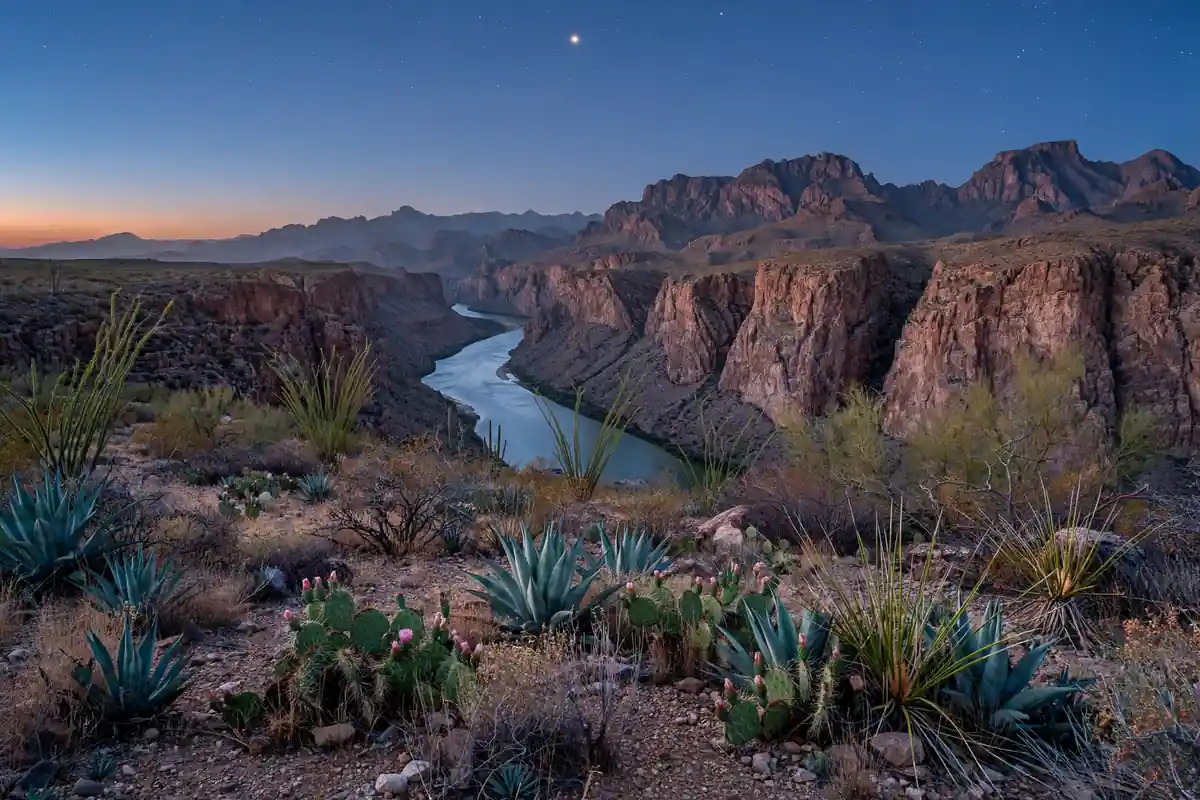
Big Bend is the national park for people who like their landscapes big, quiet, and a little bit wild. Tucked into the great bend of the Rio Grande in West Texas, this big bend national park guide covers a place larger than Rhode Island where desert, river, and mountains meet — and where you can hike all day and count the other people you see on one hand. It is remote, it is hot for much of the year, and it is absolutely worth the drive.
What makes Big Bend special is variety. In a single day you can walk a cool mountain trail in the Chisos Basin, stand in a limestone canyon with Mexico on the other side of the river, soak tired legs in a natural hot spring, and finish under some of the darkest night skies in the United States. This guide lays out how to do it well.
Getting to Big Bend: The Drive Is Part of the Trip
There is no shortcut to Big Bend, and that remoteness is exactly why it stays uncrowded. The nearest airports are in Midland and El Paso, each several hours away by car. Most visitors drive in through Marathon on the north or through Study Butte and Terlingua on the west side. Both gateway towns are small and characterful, with a handful of motels, cafes, and fuel stops.
Fuel up whenever you can — distances inside the park are long and gas stations are few. The same rule applies to water and groceries: arrive stocked. Drivers crossing Texas will find the small towns and barbecue stops in our Texas Hill Country road trip guide a pleasant warm-up act on the way west. Once you reach the park, slow down; the scenic drives reward an unhurried pace, and wildlife on the road is common at dawn and dusk.
The Three Areas of the Park
Chisos Basin: The Mountain Heart
The Chisos Mountains rise straight out of the desert, and the basin at their center is the park’s green, cooler heart. Trails leave directly from the Chisos Basin trailhead area, the lodge, and the campground. The Window Trail descends to a pour-off with a sweeping desert view, while the Lost Mine Trail climbs to ridgelines facing Casa Grande Peak and is many visitors’ favorite half-day hike. Strong hikers add Emory Peak, the park’s highest point, or the South Rim for the biggest vista in Texas. Travelers who love this mix of desert and high country will also enjoy the canyon-country walks in our Arches National Park hiking guide.
Santa Elena Canyon and the Rio Grande
At the park’s southwest corner, the Rio Grande squeezes through Santa Elena Canyon, where limestone walls rise more than a thousand feet on both sides — Texas on one bank, Mexico on the other. A short trail climbs over a rocky saddle and drops to the river’s edge inside the canyon mouth; it is short, spectacular, and one of the essential stops in any big bend national park guide. Nearby, the Ross Maxwell Scenic Drive links overlooks, the old Sam Nail Ranch, and the historic Castolon district, and it is the park’s best half-day drive.
Rio Grande Village and the East Side
The east side centers on Rio Grande Village, with a campground, a small store, and the Boquillas Canyon area, where a short trail leads into another river canyon beneath towering walls. The overlook at Boquillas gives a fine view across to the Mexican village of the same name. The east side is also closest to the park’s famous hot springs, where a historic bathhouse foundation holds warm water right at the river’s edge — go early in the morning for the quietest soak.
Best Hikes for First-Time Visitors
Start with the greatest hits. The Lost Mine Trail (moderate, with steady climbing and constant views) and the Window Trail (a gentle descent that gets hotter as you drop) anchor most first trips. Santa Elena Canyon is short and unmissable. Balanced Rock, reached by the Grapevine Hills Trail, is an easy walk to a fun rock formation that kids love. The Ernst Tinaja trail explores a sculpted canyon with natural rock pools a short drive from the east side.
For a bigger objective, the South Rim loop is the park’s signature backpack or very long day hike, with the famous view over the desert to Mexico. Desert veterans comparing parks often rank Big Bend alongside the routes in our Joshua Tree hiking guide for sheer solitude, and the preparation mindset in our Death Valley camping guide — carry far more water than you think — applies here word for word.
Dark Skies: Big Bend After Dark
Big Bend is an International Dark Sky Park, and on a moonless night the Milky Way here is not a faint smudge — it is a bright river of light that casts shadows. The Chisos Basin and the desert campgrounds both offer huge skies; even the parking areas work, because there is simply no city glow in any direction. Winter and early spring bring the best combination of dark skies and comfortable temperatures.
As you journey towards the surreal landscapes of Big Bend National Park, consider that the drive itself is an essential part of the experience. The route to this remote Texas gem offers a tapestry of breathtaking views and unique terrains, making it a destination that perfectly complements the park’s expansive beauty. With scenic byways winding through the rugged hills and valleys, travelers can immerse themselves in the picturesque scenery that defines the American Southwest. For those planning their next road trip, exploring the best scenic drives USA can provide a wealth of options that enhance the adventure, whether you’re drawn to coastal vistas, mountainous routes, or historic highways. Each journey reveals its own story, inviting you to discover the diverse landscapes that await beyond the horizon.
As visitors explore the vast and tranquil landscapes of Big Bend, it’s essential to acknowledge that the allure of the American Southwest extends beyond this iconic park. The diverse experiences available in regions like West Texas can be paralleled with the vibrant atmosphere of coastal destinations such as Florida, where the laid-back charm of Key West awaits. Just as Big Bend offers a unique blend of rugged trails and serene night skies, Key West provides a rich tapestry of cultural experiences, from the lively Duval Street to breathtaking sunsets at Mallory Square. Those seeking a balanced itinerary should consider exploring the array of things to do in key west, which promise to enrich their travel narrative and provide a delightful contrast to the solitude found in Big Bend. Whether it’s indulging in local cuisine or engaging in exhilarating water sports, the juxtaposition of these two destinations highlights the varied adventures awaiting intrepid travelers.
As adventurers seek the unparalleled serenity of Big Bend, they may also find themselves drawn to the diverse offerings of other national parks that promise a different yet equally enriching experience. For those who appreciate the juxtaposition of rugged landscapes and lush greenery, exploring the wonders of Cuyahoga Valley National Park provides a refreshing contrast. Nestled in Ohio, this park boasts picturesque waterfalls, tranquil trails, and a scenic railroad that weaves through its vibrant ecosystems. Each park, with its unique charm, invites visitors to immerse themselves in the beauty of the American wilderness, whether it be under the expansive skies of West Texas or amidst the serene valleys of the Midwest. Engaging with both locations allows nature enthusiasts to experience the vastness and variety that our national parks have to offer, enriching their appreciation for the diverse landscapes that define the great outdoors.
Bring a red flashlight, give your eyes twenty minutes to adjust, and plan one late night into every trip. Stargazing pairs perfectly with the park’s quiet campgrounds, and our guide to the best national parks to visit in winter explains why the cooler months are prime time for desert parks like this one.
One Perfect Day in Big Bend
If you only have a single day, spend the cool morning on the Lost Mine Trail, drive the Ross Maxwell Scenic Drive as the heat builds, and stand inside Santa Elena Canyon in the late afternoon when the walls glow. Finish at the Chisos Basin lodge area for sunset, then stay out for the first stars. It is a taster, not the full meal — the dunes and open sweeps of our Great Sand Dunes National Park guide are the only rivals for single-day desert drama — but it will show you exactly why Big Bend regulars keep coming back. Ambitious walkers comparing bucket lists will also find the South Rim loop earns its place on our ranking of America’s best hiking trails.
When to Visit and How to Stay Safe
Season is everything in the desert. Late October through April is the sweet spot, with mild days and cold, starry nights. Spring break is the busiest week of the year. From May through September, desert floor temperatures regularly soar past 100 degrees, and hiking low trails becomes genuinely dangerous; if you visit in summer, hike only at dawn in the mountains and spend midday in the shade or the river.
The safety rules are simple and non-negotiable: carry at least a gallon of water per person per day of hiking, wear a hat and sunscreen, start early, and never rely on finding water on the trail. Cell service is nearly nonexistent, so download maps ahead of time and leave your plan with someone. A park pass is required for entry — see our America the Beautiful Pass guide for when the annual pass makes sense — and if you are stringing several desert parks together, our national park trip planning guide covers permits, timing, and budgets in one place.
Where to Stay
The Chisos Mountains Lodge is the only hotel inside the park, and it books out months ahead for spring and fall. Park campgrounds at the Chisos Basin, Rio Grande Village, and Cottonwood offer first-come and reservable sites depending on season. Outside the park, Terlingua and Study Butte have motels, casitas, and RV parks with real desert character, and Marathon makes a quiet base for the north entrance. Wherever you stay, reserve early for the October-to-April window — this big bend national park guide cannot stress that enough, because the park’s remoteness means there is no overflow lodging an hour away.
Quick Answers
How many days do I need? Three full days is the comfortable minimum: one for the Chisos Basin, one for Santa Elena and the west side, one for the east side and hot springs.
What is the best month? November and March offer the best balance of mild weather and dark skies; March is busier with spring break crowds.
Is Big Bend safe? Yes, with desert sense: water, sun protection, early starts, and respect for heat. Border-area concerns are minimal for typical visitor activities inside the park.
Can I cross into Mexico? The Boquillas crossing, when operating, allows a legal day visit to the village by rowboat with proper documents. Check current status before relying on it.
The Bottom Line
Big Bend asks more of you than most parks — a long drive, real preparation, respect for the heat — and pays it back with solitude, scale, and night skies you will never forget. Hike the Chisos in the morning, stand in Santa Elena Canyon by afternoon, and save one night for the stars. If this corner of Texas wins you over, the painted badlands and petrified logs in our Petrified Forest National Park guide make a worthy next stop, and the solitude of our Badlands National Park guide will feel like coming home.