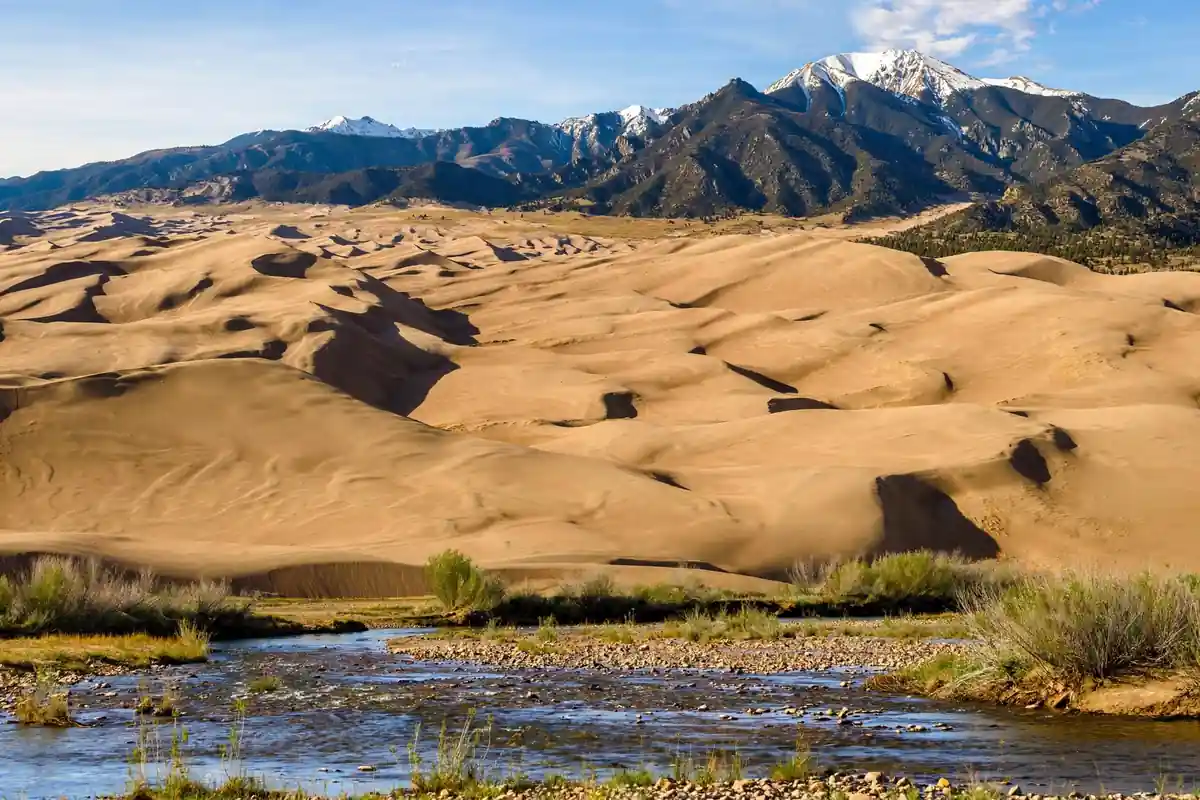
In southern Colorado, a sea of sand piles up against the Sangre de Cristo Mountains in a scene that looks borrowed from the Sahara. Great Sand Dunes National Park protects the tallest dunes in North America, rising roughly 750 feet, and wraps them in grasslands, wetlands, and alpine forest. This great sand dunes guide covers the creek timing that makes or breaks a visit, how the sledding works, which hikes to pick, and the small practical tricks that separate a great day from a sandy, sunburned slog.
What Makes These Dunes So Special
Wind does the sculpting here. Sand carried across the San Luis Valley slams into the mountain wall, drops, and piles up over thousands of years, while two mountain creeks recycle the grains back toward the valley floor. The result is a dune field about 30 square miles in size, topped by Star Dune, generally measured as the tallest dune on the continent.
Unlike most famous parks, Great Sand Dunes has almost no trails on the sand itself. You are free to climb any dune in any direction, which makes the park feel wonderfully open. That freedom comes with a trade: there is no shade, no water, and no marked route on the dune field, so planning your timing matters more here than almost anywhere else.
Medano Creek: The Park’s Pop-Up Beach
Every spring, snowmelt swells Medano Creek as it flows around the base of the dunes, creating wide, shallow water with a rare trick. The creek’s current forms small underwater sand ridges that build up and break apart, sending gentle pulses of water downstream like miniature waves. Kids tube and splash in it, adults wade, and for a few weeks the driest-looking park in Colorado has a beach.
Timing is everything. Flow usually builds through spring and peaks around late May into early June in an average snow year, then fades by early July. In dry years the window is shorter. Check the park’s current conditions page before you commit to a creek-focused trip, and aim for a weekday if you can, because the creek area gets busy on peak weekends.
The creek pairs naturally with a wider desert journey. Travelers building a Southwest loop often continue to the dunes and mesas in our Big Bend National Park guide or the Arizona sandstone country covered in our Zion National Park hikes guide.
Sandboarding and Sledding on the Dunes
Yes, you can slide down the dunes, and yes, it is as fun as it sounds. Regular snow sleds and cardboard do not work well on dry sand. You need a proper sandboard or sand sled with a slick, specially made base, and you wax it between runs. Rent one from outfitters near the park entrance or in the San Luis Valley towns before you arrive, since rentals are not available inside the park itself.
Start on a moderate slope near the parking area to learn the balance, then work up to bigger faces as your confidence grows. Sandboarding is done standing, like snowboarding, while sand sleds are ridden seated or lying down and are the easier choice for most beginners and kids. Falls are soft but the sand is abrasive, so long sleeves are smarter than they sound.
If sliding down sand reminds you of sliding down snow, Colorado offers both in a single trip. Our Million Dollar Highway guide strings together the mountain towns north of here, and our Joshua Tree hikes guide covers another dry landscape where the recreation rules surprise first-timers.
Best Hikes at Great Sand Dunes
High Dune on the First Ridge
The park’s signature climb tops out around 699 feet and delivers the classic view: dunes in front, the whole Sangre de Cristo range behind. From the main parking area it is roughly 2.5 miles round trip, but sand makes every step count double, so allow two to three hours and start early or late in the day.
Star Dune
The tallest dune in North America is a serious outing of about 8 miles round trip if approached across the dune field from the main area, with no trail and no water. Most hikers take four to six hours. Go at dawn in summer, navigate by landmarks, and treat it with the respect you would give any exposed desert route.
Mosca Pass and Montville Nature Trail
When you need shade, head for the trees. The Mosca Pass Trail follows a historic wagon route into the mountains for about 3.5 miles one way, while the short Montville Nature Trail loops through cool forest near the visitor center and explains the park’s surprising variety of habitats.
Zapata Falls
Just south of the park entrance, a half-mile trail leads to a 30-foot waterfall hidden inside a narrow, chilly cavern. You will wade through ankle-deep creek water to see it, which feels wonderful after a morning on hot sand. Hikers collecting Colorado waterfalls often combine this stop with the mountain towns in our Denver weekend guide and the springs listed in our Colorado Springs places guide.
Stargazing in a Dark Sky Park
Great Sand Dunes is a certified International Dark Sky Park, and on a moonless summer night the Milky Way can look close enough to touch. The combination of high elevation, dry air, and an almost empty horizon makes this one of the best night-sky parks in the country. Rangers run night programs in season, and simply lying back on cooling sand after sunset is an experience most visitors rank beside the dunes themselves.
Bring a red flashlight to protect your night vision, warm layers for the rapid desert cooldown, and more patience than equipment. Photographers should note that the dunes photograph beautifully at dawn and dusk too, when shadows carve the ridges into sharp, graphic lines.
Photographing the Dunes Without Wrecking Your Gear
Great Sand Dunes is a gift to photographers, as long as they respect one enemy: the sand itself. It is fine, windblown, and determined to get inside lenses, zippers, and camera bags. Change lenses inside the car or not at all, keep a UV filter on as a sacrificial shield, and carry a soft brush for cleaning at the end of the day rather than blowing grit deeper into the works.
For the classic shot, climb the first ridge about an hour before sunset, when low light rakes across the dune faces and every footprint trail and wind ripple turns into texture. Footprints vanish visually if you walk the ridgelines and compose along untouched faces. After dark, the same ridge becomes a front-row seat for the Milky Way in summer. Desert photographers who enjoy this park often continue south to the cactus country in our Saguaro National Park guide, where the light discipline is similar but the subjects stand perfectly still.
When to Visit and How to Handle the Sand
Late spring is the sweet spot for Medano Creek, wildflowers, and tolerable midday temperatures. Summer delivers warm creek water and long days but also crowds and two hazards: afternoon lightning that sweeps hikers off the high dunes, and sand surface temperatures that the park warns can reach around 150 degrees on still summer afternoons. Wear closed shoes at midday, full stop. Fall brings golden cottonwoods and quiet trails, while winter is cold, clear, and almost empty, as noted in our best national parks in winter roundup.
A few rules from sore experience: the visitor center sits around 8,200 feet, so altitude affects flatlanders more than they expect. Drink water constantly. Keep a spare pair of socks in the car, because sand gets into everything, including your ears. And shake out your shoes before the drive home, not during it.
Southwest travelers often chain this park with the painted badlands further south. Our Petrified Forest National Park guide and our Arches National Park hikes guide complete the circuit, while our America the Beautiful pass guide explains when one annual pass covers the whole route.
Frequently Asked Questions
How many days do I need at Great Sand Dunes?
One full day covers the creek, a dune climb, and an evening of stargazing. Two days lets you add Star Dune or Mosca Pass without rushing.
When does Medano Creek flow?
Typically from April into early summer, peaking around late May or early June in an average year. Flow depends on snowpack, so always check current conditions before a creek-focused trip.
Can I rent a sandboard inside the park?
No. Rent from shops near the entrance or in valley towns before you go, and make sure you get a proper sand sled or board with wax, not a snow toy.
Are dogs allowed on the dunes?
Pets are allowed in the main day-use areas and on the dune field on leash, but hot summer sand can burn paws. Early morning is the only kind option in summer.
Final Tips Before You Climb
Great Sand Dunes rewards visitors who play by desert rules: start early, carry water, respect the sun, and save something for the night sky. Follow this great sand dunes guide and the park that looks simplest on the map turns out to be one of the most varied in the system, with a creek, a forest, a waterfall, and the tallest dunes in North America all before dinner.