Winter splits the national park system in two. Half the parks disappear under deep snow, close most of their roads, and become quiet worlds of steam, ice, and wildlife. The other half — the desert and swamp parks — finally cool down and hit their best season of the year. These are the best national parks in winter, chosen for what each one genuinely offers between December and February, along with the road and weather realities you need to plan around.
Whichever half you choose, winter rewards you with the same gifts: empty trails, lower lodging prices, and landscapes that summer visitors never see. Here is where to go.
The Snowy Classics
Yellowstone National Park, Wyoming
Yellowstone in winter is a different planet. Nearly all park roads close to cars; travel runs by snowcoach and snowmobile on guided tours. Geysers erupt into freezing air and vanish in their own steam, bison wear coats of frost, and wolves are at their most visible in the Lamar Valley. Base yourself in Gardiner or Mammoth Hot Springs — the north road is the one route plowed all winter — and follow the day-by-day structure of our Yellowstone 3-day itinerary, adjusting it for snowcoach schedules.
Grand Teton National Park, Wyoming
Just south of Yellowstone, the Tetons in winter are pure alpine drama: white peaks, frozen lakes, and moose wintering in the valley floor. The Teton Park Road closes to vehicles and becomes a beloved groomed track for cross-country skiers and snowshoers. The hiking routes in our Grand Teton hikes guide transform into ski and snowshoe routes, and nearby Jackson offers the coziest base-camp town in the park system.
Bryce Canyon National Park, Utah
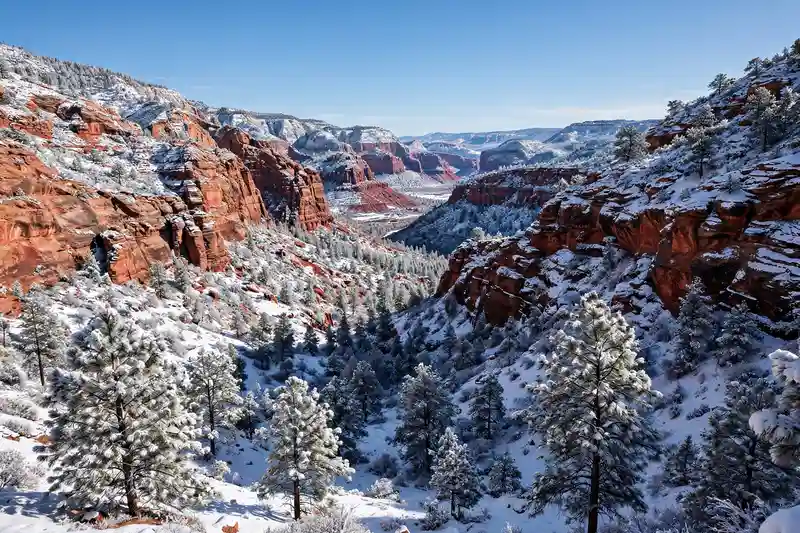
Bryce sits above 8,000 feet, so winter here is cold, bright, and astonishing — orange hoodoos dusted in snow under a deep blue sky. Roads and viewpoints stay open when weather allows, rim trails can be icy (bring traction devices), and ranger-led snowshoe walks are a seasonal highlight. On a clear January day, the trails in our Bryce Canyon hikes guide deliver some of the finest winter scenery in Utah.
Zion and the Utah Desert, Utah
Zion is the gentle middle option: cold mornings, mild afternoons, no shuttle crowds, and waterfalls fed by winter storms. Snow occasionally dusts the red cliffs, which is a photographer’s dream. It pairs naturally with Bryce in a single trip — just check mountain-pass conditions between them.
The Warm Escapes: Desert Parks at Their Best
Everglades National Park, Florida
Winter is the Everglades’ prime season, full stop. The dry season means fewer mosquitoes, lower humidity, comfortable temperatures, and wildlife concentrated around shrinking water holes — alligators, wading birds, and manatees in extraordinary numbers. Our Everglades national park guide covers the Anhinga Trail and Shark Valley in detail; in January, both are at their absolute best.
Big Bend National Park, Texas
Big Bend’s brutal summer heat keeps most people away, which makes winter its gift to you: hiking weather in the 60s and 70s, hot springs by the Rio Grande, and some of the darkest night skies in the country. Our Big Bend national park guide lays out the Chisos Basin and Santa Elena Canyon; in winter you can hike both in one trip without rationing water by the liter.
Saguaro National Park, Arizona
The giant cactus forests outside Tucson enjoy mild, sunny winters made for long desert walks. Days are warm enough for t-shirts, nights are crisp, and desert sunsets turn the saguaros into silhouettes. See our Saguaro national park guide for the two districts and best trails — winter is when locals do their longest hikes here.
Death Valley National Park, California
The hottest place on Earth becomes one of the most pleasant in winter, with daytime temperatures ideal for exploring salt flats, dunes, and canyons. Our Death Valley camping guide covers the campgrounds and safety basics; winter stargazing and sunrise at Zabriskie Point are bucket-list material.
White Sands National Park, New Mexico
Gypsum dunes under low winter sun, with cold, clear air and thin crowds — White Sands is quietly superb in winter, especially for sledding at golden hour and full-moon nights when the park offers them. Our White Sands national park guide has the sledding and safety essentials.
Olympic National Park, Washington
Olympic is winter’s wild card. Its temperate rainforests — Hoh and Quinault — are at their greenest and most atmospheric in the rainy season, when moss-draped maples drip over nearly empty trails. The road up to Hurricane Ridge opens on winter weekends when conditions allow, offering skiing and huge views over the strait. Down on the coast, winter is storm-watching season: powerful Pacific surf rearranges the beaches at Rialto and Ruby Beach, and watching it from a safe distance is a Pacific Northwest tradition. Pack serious rain gear, expect some trail flooding, and treat the moodiness as the attraction — it is.
Grand Canyon National Park, Arizona
The South Rim stays open all winter, and those who brave its cold, windy rim are rewarded with the canyon at its clearest — summer haze gone, snow tracing the temples and buttes after storms, and viewpoints you may have to yourself. Bright Angel Trail’s upper section can be icy enough to demand traction devices, and the rim sits near 7,000 feet, so nights are bitter. The North Rim, a thousand feet higher, closes to vehicles for the season. If you can time a visit right after a light snowstorm, the canyon in white and red is arguably the single best winter view in the entire park system.
Parks to Approach with Caution in Winter
Some beloved parks are effectively closed or seriously limited. Glacier’s Going-to-the-Sun Road shuts completely, though the hikes in our Glacier National Park hikes guide return gloriously in July. Acadia’s Park Loop Road closes, though carriage roads welcome skiers. The Grand Canyon’s South Rim stays open and is beautiful in snow, but the North Rim closes. Badlands — detailed in our Badlands national park guide — remains open and hauntingly empty, but prairie winds and subzero snaps demand real preparation. The rule: winter is wonderful where the park is designed for it, and a research project everywhere else, so run through the checks in our guide to planning a national park trip before booking.
What to Pack for a Winter Park Trip
- Layers, not bulk: a base layer, insulation, and a windproof shell beat one giant coat.
- Traction: microspikes turn icy rim trails from risky to routine.
- Sun protection: snow glare at altitude burns fast; desert parks still demand sunscreen and water.
- Car kit: full tank, blankets, snacks, and a paper map — mountain weather closes roads with little warning.
- Short-day planning: build itineraries around 5 p.m. darkness, then enjoy the compensation — winter night skies are the darkest of the year.
Drivers heading to ski towns on the same trip can extend the theme with our best ski resorts in the USA guide, and one purchase simplifies every park gate on the list: the national park pass, which covers entrance fees at all of them for a full year.
Winter Is Secretly the Best Wildlife Season
One advantage winter guides rarely advertise: the animals are easier to find. In Yellowstone, wolves hunt in open, snow-covered valleys where spotting scopes pick them out for miles. In the Everglades, alligators bask along canal banks in the mild sun while wading birds crowd the remaining water. Desert parks push bighorn sheep, coyotes, and javelinas into view during pleasant daylight hours instead of hiding them from the heat. Even moose in Grand Teton and elk at the Grand Canyon step into the open more often. Bring binoculars, give every animal a wide, respectful distance, and let winter’s bare trees, white backgrounds, and concentrated water do the searching work for you.
Frequently Asked Questions
Which national park is best for a first winter trip?
For warmth and easy logistics, the Everglades or Saguaro. For a true winter wonderland with infrastructure, Yellowstone based in Gardiner or West Yellowstone, with tours booked well ahead.
Are national parks cheaper in winter?
Usually, yes. Lodging in gateway towns drops, and some park lodges close entirely (which is its own warning). Entrance fees stay the same, so the pass math is unchanged.
Do I need tire chains or a 4WD vehicle?
In mountain parks, quite possibly — several states require carrying chains in winter, and rental agreements may restrict their use. Check each park’s winter driving page before you go, and never let a schedule pressure you into driving a storm.
The Bottom Line
The best national parks in winter are not consolation prizes for missing summer. They are distinct destinations: a steaming, wolf-tracked Yellowstone, a snow-dusted Bryce, an Everglades alive with birds, a Big Bend mild enough to hike all day. Pick your climate — deep winter or desert spring — pack for it honestly, check the forecast one final time before you leave, and you will have America’s most famous landscapes almost entirely to yourself. Start with just one park this season, and winter may well become your favorite time to go.