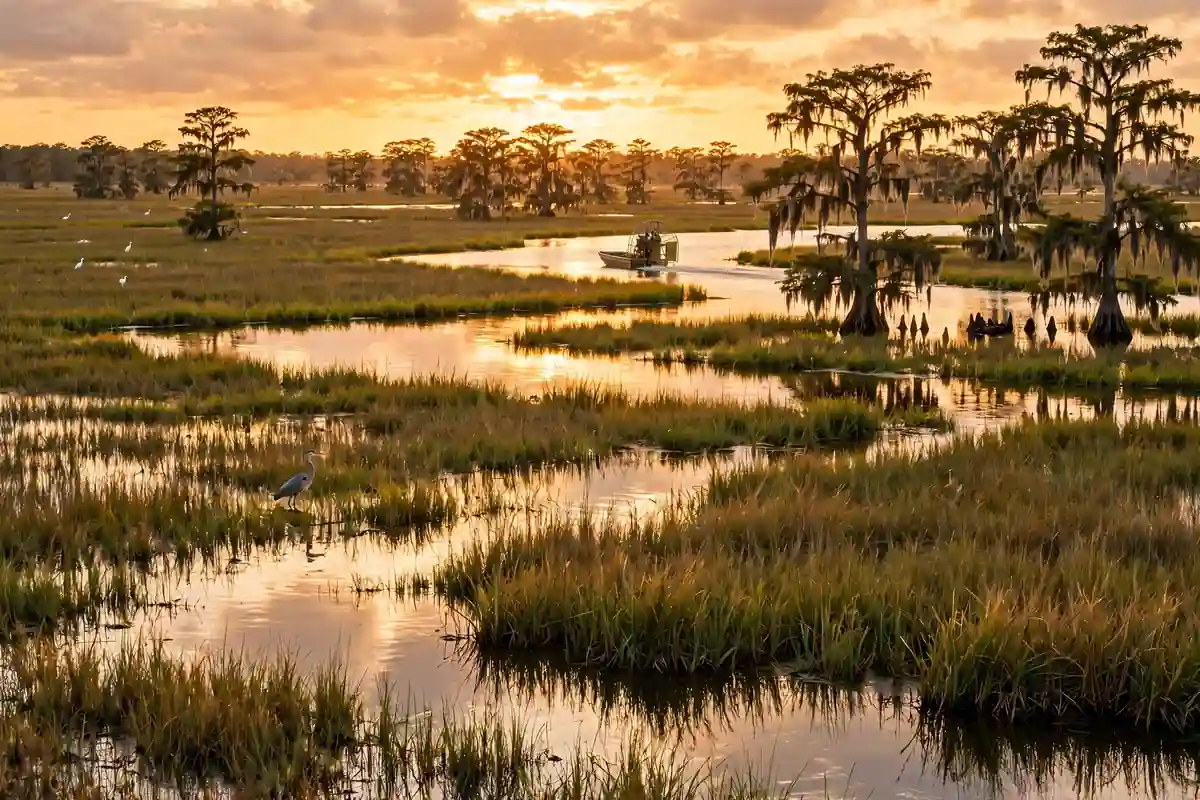
The Everglades does not look like other national parks. There are no mountains and no canyons — instead, a shallow river of grass flows almost invisibly across 1.5 million acres of South Florida, sheltering alligators, wading birds, and one of the most unusual ecosystems on Earth. This Everglades National Park guide explains the three main entrance areas, when to come, and how to see real wildlife without needing a boat or a biology degree.
First, a mindset shift: in the Everglades, the magic is in the details. Slow down at the boardwalks, look into the water, and let the animals reveal themselves.
Everglades National Park Guide: The Three Main Areas
The park is huge, and its visitor areas are not connected by roads inside the park. Most first-time visitors choose between the southern main road and Shark Valley, and add the Gulf Coast if they have a third day.
The Main Park Road: Homestead to Flamingo
The most complete introduction starts at the Ernest F. Coe Visitor Center near Homestead. From here, one road runs 38 miles to Flamingo on Florida Bay, passing most of the park’s famous short trails.
The Anhinga Trail, just inside the entrance at Royal Palm, is the single best stop in the park. This short boardwalk trail, well under a mile long, loops over a slough where alligators, turtles, herons, and the snake-necked anhinga birds gather within easy viewing distance, especially in the dry season. The neighboring Gumbo Limbo Trail winds through a shaded tropical hardwood hammock for contrast.
Further along, the Pa-hay-okee Overlook boardwalk opens onto an endless grass prairie, and the Mahogany Hammock boardwalk circles through a dense jungle of mahogany trees. At road’s end, Flamingo offers a marina, kayak and canoe rentals, boat tours, camping, and — in winter — a good chance of spotting manatees in the marina basin.
Shark Valley: The Heart of the River of Grass
On the Tamiami Trail (US-41), about 25 miles west of Miami, Shark Valley is the classic Everglades day trip. A flat 15-mile loop road runs into the heart of the sawgrass marsh. You can ride the two-hour narrated tram tour, rent a bike, or walk part of the road as far as you like.
Halfway around the loop, a 65-foot observation tower gives you the park’s best panoramic view — a sea of grass to every horizon. Alligators often sun themselves right along the road, and staff will remind you to keep at least 15 feet away and never step off the pavement near one. If you are basing yourself in the city, our miami travel guide helps you fit Shark Valley into a beach-and-city itinerary, and the key west travel guide covers the natural extension south.
The Gulf Coast: Everglades City and the Ten Thousand Islands
The quiet Gulf Coast Visitor Center near Everglades City is the gateway to the Ten Thousand Islands, a maze of mangrove islands best explored by boat. Park concession boat tours and kayak trips here focus on dolphins, manatees, and bird rookeries rather than alligators. It is the calmest, least crowded corner of the park.
Best Time to Visit the Everglades
Timing matters more here than in almost any other park. The dry season, roughly December through April, is the time to come. Cooler temperatures and lower water concentrate wildlife around the remaining sloughs and canals, mosquitoes fade to a minor nuisance, and ranger-led programs run at full strength.
The wet season, roughly May through November, transforms the park. Afternoon thunderstorms roll in, humidity soars, wildlife spreads out across the flooded prairie, and mosquitoes can be genuinely fierce — many locals simply stay away. If you must visit in summer, go early in the morning, dress for biting insects, and temper expectations. Our best time to visit florida guide puts these seasons in statewide context, and the florida keys road trip itinerary pairs well with a dry-season Everglades day.
Wildlife Watching in the Everglades
Alligators are the headliners, and in the dry season you will likely see them at the Anhinga Trail, along the Shark Valley road, and in canals throughout the park. Watch for the details: baby alligators near mothers in spring, turtles basking on logs, and anhingas spreading their wings to dry after diving.
Birding is world-class. Roseate spoonbills flash pink at dawn, great blue herons stalk the shallows, and wood storks, egrets, ibis, and osprey are everyday sights. Winter brings the greatest variety, including migratory species. The rare Florida panther lives here too, but sightings are extraordinarily uncommon — consider yourself lucky to find tracks.
One common question: what about airboats? Airboats are not permitted inside the national park itself. Private operators run them on waters outside the park boundaries along the Tamiami Trail, which is why you see their signs everywhere. Inside the park, the Shark Valley tram, Gulf Coast boats, and your own paddle power are the rides available — a distinction our national park trip planning guide flags for several parks with special rules.
Staying Safe and Comfortable
The Everglades is gentle terrain with serious sun. Carry water on every walk, even short boardwalks, because there is little shade and Florida heat sneaks up on visitors in any month.
- Respect alligators. Keep at least 15 feet away, never feed wildlife (it is illegal and dangerous), and keep children close on trails where gators rest nearby. More guidance is in our travel safety tips roundup.
- Prepare for mosquitoes. In the wet season and at dawn or dusk year-round, use repellent and consider long sleeves. At Flamingo in summer, locals joke the mosquitoes have their own zip codes.
- Mind the vultures. At some trailhead parking lots, black vultures have a habit of nibbling rubber on parked cars. The park provides free tarps at Royal Palm to cover your vehicle — use them.
- Watch the weather. Summer storms build fast. If thunder roars, get off boardwalks and the observation tower and wait it out.
Paddling and Ranger Programs
The Everglades was made to be seen from water level. Near Flamingo, the Nine Mile Pond marked canoe trail loops about five miles through mangrove tunnels and open marsh — a half-day paddle where herons flush ahead of your bow and alligators slide off the banks. Rentals are available at the Flamingo marina, and the West Lake area offers another sheltered mangrove paddle. Go in the morning before the wind rises, carry a map of the marked trail, and tell the marina your return time.
On land, ranger-led programs are the dry season’s hidden treasure. Naturalists lead morning walks at Royal Palm, talks at the visitor centers, and in some seasons evening programs under some of the darkest skies in Florida. Schedules change with staffing and season, so check the board at the entrance visitor center when you arrive. A one-hour walk with a ranger will teach you more about reading this landscape — the solution holes, the periphyton mats, the difference between a slough and a marl prairie — than a full day of wandering on your own.
Fees, Tours, and Trip Combinations
Entry is charged per vehicle and the pass is valid for several days across all entrances; the America the Beautiful annual pass is accepted, as detailed in our national park pass guide. If you are flying in, our places to visit near Miami International Airport guide helps you fill arrival and departure days, and first-timers to the country will appreciate the USA travel guide for first-time visitors.
With two days, combine the main road (day one) with Shark Valley (day two). With three, add the Gulf Coast or a guided kayak trip among the mangroves. Dry-season visitors continuing south should not miss the beaches and reefs in our best beaches in the usa guide, while those heading to another warm-weather park can compare notes with our big bend national park guide.
Frequently Asked Questions
How many days do I need in the Everglades?
One full day covers the main park road highlights. Two days lets you add Shark Valley properly, and three days opens up the Gulf Coast or a paddling trip.
Can I see alligators in the Everglades year-round?
Yes, alligators live here year-round, but dry-season visits (December to April) offer far more sightings because wildlife gathers around the shrinking water sources.
Are airboat tours inside Everglades National Park?
No. Airboats are not allowed inside the park. Airboat operators work outside park waters; inside the park you can take the Shark Valley tram, a Gulf Coast boat tour, or paddle a canoe or kayak.
What should I pack for an Everglades day trip?
Bring water, sun protection, insect repellent, a hat, and binoculars if you have them. In the wet season, add a rain jacket and a full change of clothes in the car.
Final Thoughts
The Everglades rewards patience more than mileage. Stand quietly on the Anhinga boardwalk at dawn, watch a heron hunt in golden light, and you will understand why this flat, flooded, extraordinary place earned its protection. Come in the dry season, bring your curiosity, and give the River of Grass time to show itself.