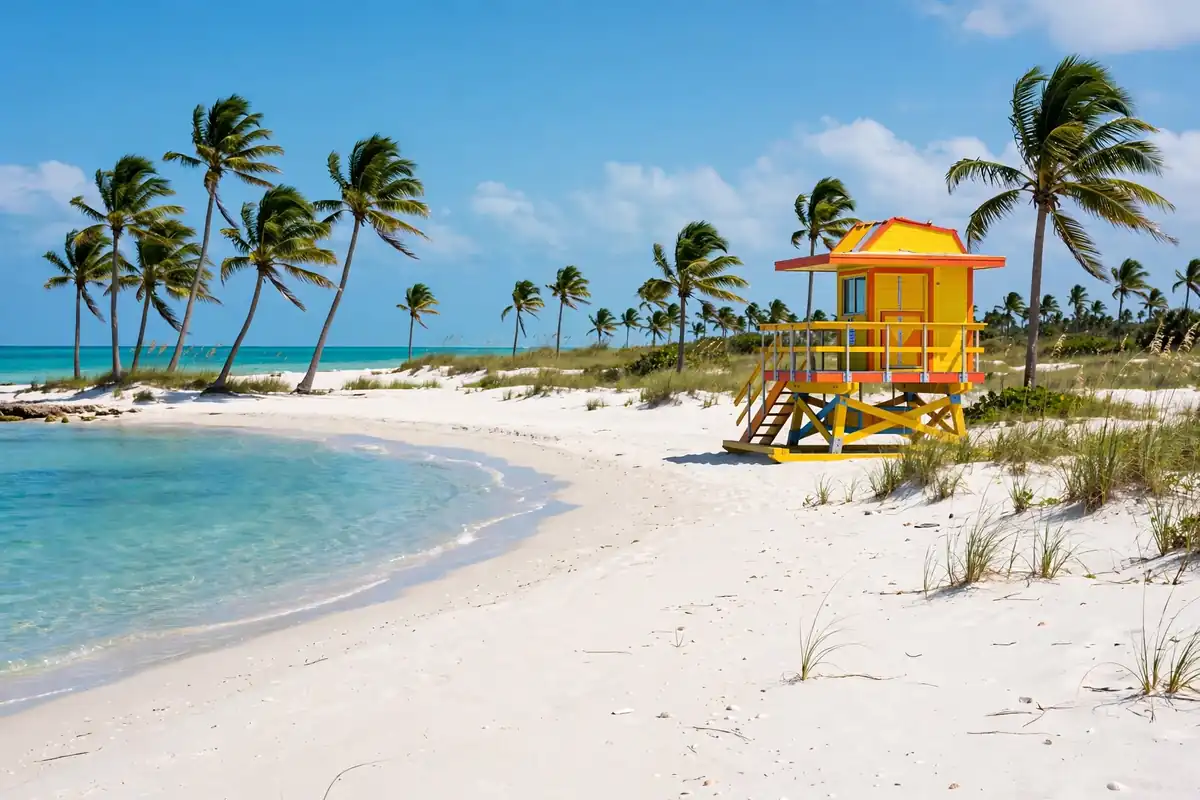
The best time to visit Florida is from November to April, when the dry season brings sunny days in the 70s and low 80s, low humidity, and almost no hurricane risk. Winter and early spring are the classic Sunshine State window, and prices reflect it. Summer is hot, humid, and storm-prone, but it also delivers the year’s lowest hotel rates outside holiday weeks.
Florida is a big, varied state, and timing matters differently in Miami than in Orlando or the Panhandle. The right month depends on whether you are chasing beach days, theme parks, wildlife, or bargains. This guide walks through the seasons region by region, so you can match your dates to your plans.
Best Time to Visit Florida at a Glance
Late fall through spring is prime time almost everywhere in Florida. November pairs warm seas with thinning crowds. December to February is peak snowbird season, when northerners settle in for the winter and South Florida enjoys its finest weather of the year. March and April add spring warmth, though March also brings spring break crowds to beach towns and Orlando.
May is the shoulder-season bargain: still mostly dry, warming fast, and cheaper than winter. June flips the switch to summer — daily thunderstorms, serious humidity, and the start of hurricane season — and from there to October the state runs on heat management and low prices.
Your destination refines the answer. Theme park trips, beach weeks, and nature travel each have their own best windows, which the sections below unpack. When your dates are set, build your route with our Miami travel guide and our Key West guide, two corners of the state that reward good timing most.
Florida Weather by Season
Dry Season (November to April)
The dry season is Florida at its best. Rain becomes occasional, humidity drops, and highs run from the mid-70s in North Florida to the low 80s in Miami and the Keys. Cold fronts occasionally push into the Panhandle and Central Florida in mid-winter, bringing a few crisp days, but South Florida rarely sees anything colder than a light jacket evening.
This is also wildlife season. Manatees gather at warm springs such as those near Crystal River from roughly November to March, alligators bask visibly in the Everglades, and migratory birds fill the wetlands. If nature is your goal, plan a dry-season day with our Everglades National Park guide.
Wet Season (May to October)
May starts the transition, and by June the pattern sets: hot mornings, building clouds, and a heavy afternoon thunderstorm most days. Highs sit in the low 90s statewide, and humidity is relentless. The rain is intense but usually brief, and locals schedule beach time before noon and indoor plans for mid-afternoon.
Ocean water is at its warmest in summer, which beach lovers praise, and summer evenings in coastal towns are lovely once the storms pass. Just build flexibility into every day, because lightning — Florida is the lightning capital of the United States — clears beaches and pools quickly and often.
Hurricane Season: The Honest Picture
Atlantic hurricane season runs June 1 to November 30, with Florida’s highest risk from mid-August through October. Most summer and fall trips are never affected by a named storm, but the risk is real enough to shape how you book. Choose refundable rates, keep an eye on forecasts the week before travel, and review the trip-protection basics in our travel insurance guide if you book peak-season dates.
Regional risk varies. The Gulf Coast, the Panhandle, and the Keys have historically seen more landfalls than Florida’s Atlantic side, but no coast is immune. If a storm does approach during your trip, follow local evacuation and closure guidance promptly — Florida’s systems for this are well practiced. The reward for traveling in the risky window is price: September, the statistical peak, is often the cheapest month of the year for hotels statewide.
Theme Parks: Orlando Timing
Orlando follows its own calendar, driven by school holidays. The busiest, priciest weeks are Christmas to New Year’s, spring break in March, and mid-summer. The sweet spots are mid-January to mid-February, late April to May, and September, when crowds thin and park days feel manageable.
Heat strategy matters as much as crowds in Orlando. Summer park days call for early starts, midday breaks at the hotel pool, and evenings back in the parks. Our Disney World planning guide and Universal Orlando planning guide cover tickets, line-skipping systems, and daily pacing in detail, and both are easier to enjoy in the dry-season months when afternoon storms are rare.
Beaches, the Keys and Regional Differences
For pure beach time, April, May, and October are Florida’s golden months: warm water, warm air, and fewer people than peak season. Winter beach days are reliable in South Florida but can be chilly on the Panhandle, where January highs may only reach the low 60s. Our roundup of the best beaches in the USA includes several Florida stretches worth building a trip around.
The Keys run on island time year-round, but the dry season shows them best, with clear water for snorkeling and calm seas for boating. Summer in the Keys is very hot, though sea breezes help, and lobster season events draw crowds in late summer. The drive itself is half the fun, as our Florida Keys road trip itinerary explains, and couples will find quieter corners in the existing guide to the top places to visit in Florida for couples.
Crowds and Prices by Month
Florida’s price calendar has three tiers. Peak pricing rules from mid-December through Easter in South Florida and during school holidays in Orlando. Shoulder months — late April, May, and November — balance good weather with moderate rates. The value tier is summer and early fall, with September the cheapest and riskiest month of all.
Snowbird season deserves a special note: from January through March, long-stay visitors fill rentals and RV parks in smaller coastal towns, which can tighten availability even where hotel prices look reasonable. Book winter beach rentals early, and consider lesser-known Gulf towns if the famous ones are full.
The Other Florida: Springs, Rivers and State Parks
Visitors who only see beaches and theme parks miss the Florida locals treasure most. The state’s interior is laced with crystal-clear springs — Ichetucknee, Weeki Wachee, and the springs around Ocala National Forest — where the water stays a constant 72 degrees year-round. In the dry season these are sublime places to swim, kayak, and spot turtles and wading birds, and in winter they double as manatee sanctuaries.
Florida’s state park system is one of the best in the country, protecting barrier islands, old-growth hammocks, and historic sites at a fraction of theme park prices. Bahia Honda in the Keys, Grayton Beach in the Panhandle, and Myakka River near Sarasota each show a different wild face of the state. Winter and early spring are the best months for all of them, with mild temperatures, low humidity, and almost no mosquitoes — one more reason the dry season wins, and a pattern shared by many of the destinations in our guide to the best national parks in winter.
Build at least one nature day into any Florida itinerary longer than a weekend. The contrast — silent spring water in the morning after a loud beach town the day before — is the version of Florida people fall in love with and return to for decades.
Frequently Asked Questions
What is the cheapest month to visit Florida?
September is usually the cheapest month statewide, followed by the weeks right after Labor Day and the lull between Thanksgiving and mid-December. The reason is simple math: heat, humidity, school in session, and peak hurricane risk all suppress demand at once.
When should you avoid Florida?
Avoid peak hurricane weeks in September and early October if your plans cannot bend, and avoid March beach towns if spring break crowds would ruin your trip. Otherwise, Florida is a year-round destination — comparing it with the best time to visit New Orleans or the best time to visit Las Vegas shows how differently American warm-weather cities handle their off-seasons.
Is Florida too hot in summer?
For sightseeing-heavy trips, summer heat and humidity can be draining, with highs in the 90s and daily storms. For beach-and-pool trips with a slow pace, summer works fine and costs far less. Northern visitors unused to heat often prefer the approach in our guide to the best time to visit Chicago — go in the warm season there, and save Florida for winter instead.
How many days do you need in Florida?
Four to five days suit a single region, such as Orlando’s parks or a Miami-and-Keys combination. A full week or more lets you pair two regions without rushing. Florida rewards focus; trying to see the whole state in one trip usually means seeing mostly highways.
The Bottom Line
The best time to visit Florida is the dry season, November through April, for weather you can trust. Choose May or November for value with mostly good conditions, and choose summer or September only with flexible bookings and a heat-tolerant plan. Match the month to your region and your reason for going, and the Sunshine State lives up to its name.