Canyonlands is the national park that teaches you to think bigger. Arches, its famous neighbor, gives you icons; Canyonlands gives you scale — 337,000 acres of red rock canyons, spires, and mesas carved by the Colorado and Green Rivers into a labyrinth so vast that its districts do not connect by road inside the park. Most visitors see one district and leave impressed. The ones who plan well see two, understand what makes them different, and leave converted. This Canyonlands National Park guide covers both, plus the fees, permits, hikes, and seasonal timing you need to get it right.
One planning reality up front: the districts — Island in the Sky, the Needles, and the remote Maze — each require separate driving access. Budget one district per day, minimum, and do not assume you can “pop over” between them. Distances on the map are lies told by empty desert.
Canyonlands National Park Basics: Fees, Seasons, and Getting There
Entry is $30 per private vehicle for seven days, and the America the Beautiful annual pass ($80) covers it — a good value if you are visiting other parks on the same trip. Beyond entry, backcountry overnight permits and some 4WD routes require separate permits through recreation.gov; backcountry permits run about $36 plus a per-person nightly fee, and they sell out in spring and fall.
Moab is the gateway town, about 40 minutes from the Island in the Sky entrance and roughly 90 minutes from the Needles. Monticello, south of Moab, is the closer base for the Needles district. The Maze is a different expedition entirely — hours on dirt roads, high-clearance 4WD required, no services — and most first-time visitors should save it for a return trip.
Spring (March–May) and fall (September–November) are the prime seasons: mild days, cool nights, and good trail conditions. Summer brings brutal heat — hiking midday in July is genuinely dangerous — and winter brings solitude, cold nights, and the occasional snow-dusted canyon. There is no bad season here, only bad preparation. The same preparation mindset in our guide to staying safe on adventure trips will serve you well in desert country.
Island in the Sky: The Classic First Visit
Island in the Sky is a 6,000-foot mesa that drops away on every side into the canyons below — the district most visitors see, and the right choice for a first trip. A single scenic drive threads overlook after overlook along the mesa top, and the trail options range from wheelchair-accessible viewpoints to one of the Southwest’s classic day hikes.
Mesa Arch: The Sunrise Icon
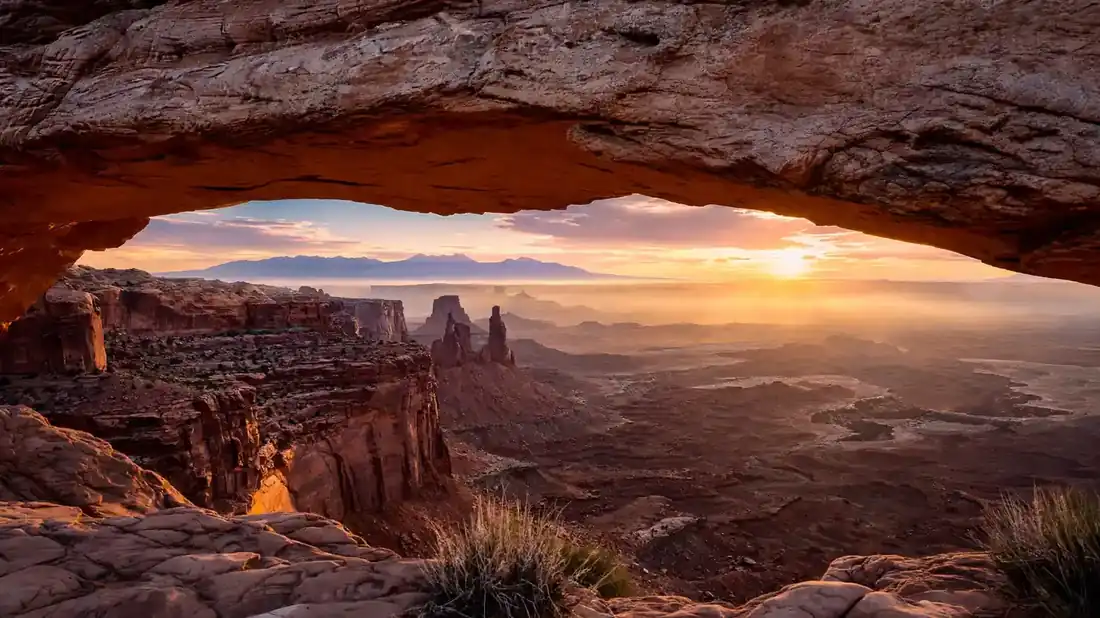
Mesa Arch is the most photographed spot in Canyonlands: a natural arch framing the canyon country beyond, lit from below at sunrise. The hike is a half-mile loop — trivial in distance, enormous in payoff — which is exactly why you must arrive before dawn to get the shot without a crowd of tripods. If you want to understand the light, our travel photography guide covers shooting desert sunrises.
Grand View Point and the Overlook Trail
At the end of the scenic drive, Grand View Point looks down the entire canyon system to the confluence of the rivers. The two-mile round-trip overlook trail adds the best sustained views in the district. Come at sunset, when the canyons burn gold and the crowds thin.
Upheaval Dome and the Whale Rock Trail
Upheaval Dome is a geological mystery — a crater-like formation whose origin scientists still debate — reached by a short trail. Nearby, the Whale Rock scramble (about a mile) is the district’s fun little summit, great for kids and short on time.
Shafer Trail: The White-Knuckle Drive
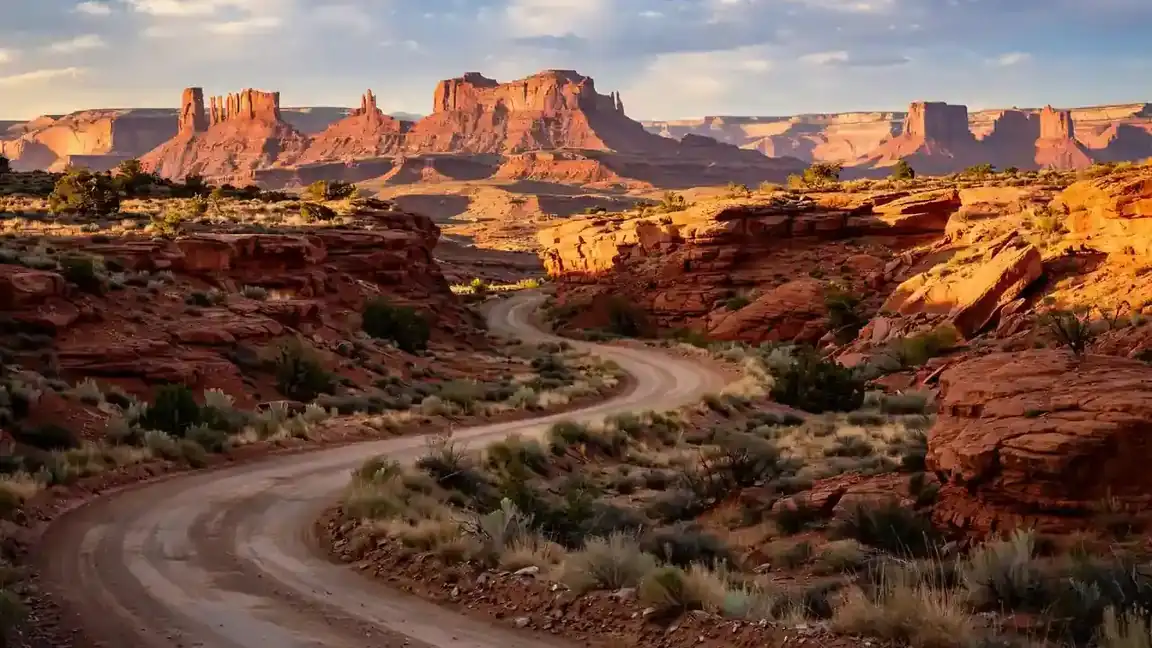
For high-clearance 4WD drivers, the Shafer Trail switchbacks down the mesa’s cliff face in a series of hairpins that are equal parts thrilling and terrifying. A backcountry vehicle permit is required; check current road conditions, because the switchbacks wash out. This is the drive that converts road-trippers into backcountry believers — and it connects, for the well-equipped, to a full day of canyon exploration. Pair it with the route-planning ideas in our USA road trip planner.
The Needles: The Backpacker’s Canyonlands
The Needles district, 90 minutes south of Moab, is a different planet from the mesa-top viewpoints: a jumble of red and white sandstone spires, deep canyons, and some of the best backpacking in the Southwest. It sees a fraction of the visitation, and it rewards hikers who come prepared for remoteness — no food services, limited water, and trails that demand navigation skills.
Chesler Park Loop and the Joint Trail
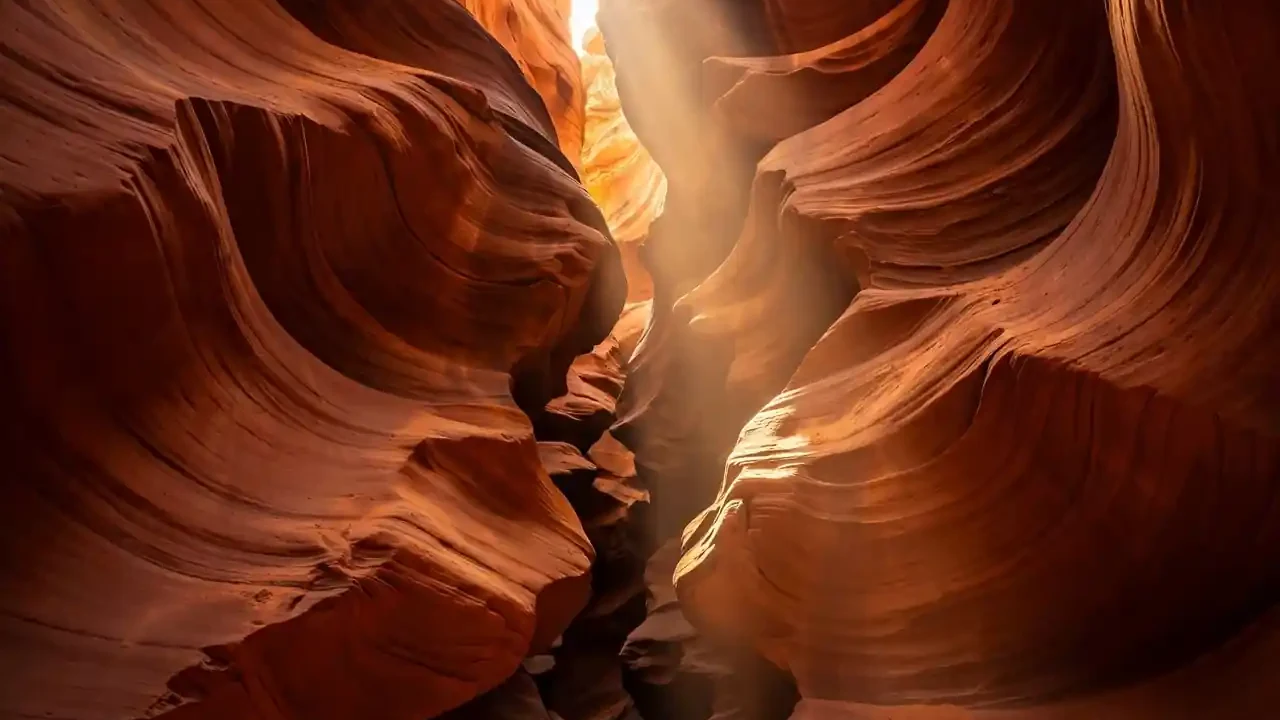
The Chesler Park Loop (about 11 miles with the Joint Trail) is the district’s signature hike: you cross open grassland ringed by spires, then drop into the Joint Trail — a narrow slot canyon where the walls press close and the light goes strange. It is a full, strenuous day, and one of the great desert day hikes in America. Start early, carry a gallon of water per person, and do not attempt it in summer heat. Strong hikers looking for comparable mileage will find it in our roundup of the best hiking trails in the USA for every skill level.
Druid Arch: The Long Payoff
Druid Arch is a massive stone formation at the end of an 11-mile round-trip trail through Elephant Canyon. The final scramble up slickrock to the arch’s base is the crux. Like Chesler Park, this is a spring-or-fall hike — a full day that punishes poor planning and rewards good planning enormously.
Pothole Point and Cave Spring: The Easy Wins
Not everything in the Needles is an expedition. The Pothole Point trail is a short loop across slickrock with pothole ecosystems and big views, and the Cave Spring trail passes a historic cowboy camp and a small arch. Both are under a mile and perfect for arrival day or for groups with mixed fitness.
The Maze: For the Return Trip
The Maze is one of the most remote districts in the entire national park system — a tangle of canyons hours from pavement, with no water, no services, and rescue that can take days. It is magnificent, and it is not a first-visit destination. If the Maze calls to you, go with experience, a high-clearance 4WD, a satellite communicator, and more water than you think possible. For most visitors, knowing it exists is enough; the two developed districts are a lifetime of hiking on their own.
Camping and Lodging: Where to Sleep
Island in the Sky’s Willow Flat campground and the Needles’ Squaw Flat campground are small, basic, and perfectly positioned — Willow Flat is first-come, while the Needles’ reservable loop fills fast in spring and fall. Both run about $15–$20 per night. Bring everything: there is no water at Willow Flat and no services in either district.
For backcountry camping, permits are required and must be reserved on recreation.gov — plan months ahead for spring and fall. Moab offers the full range of lodging, from campgrounds to hotels, and makes a practical base if you want showers and restaurants between park days. If camping is new to you, our beginner camping guide covers the gear and skills that make desert camping comfortable rather than miserable.
Pairing Canyonlands With Arches and the Rest of Utah
Canyonlands and Arches sit minutes apart at their closest entrances, and they are the natural pair: Arches for icons, Canyonlands for immersion. Give Arches a full day, Canyonlands one district per day, and you have the core of a perfect week. Our guide to the best hikes in Arches National Park covers the other half of the trip — and note that Arches has discontinued its timed entry system for 2026, which changes the planning math in your favor.
Beyond the two parks, the Utah Mighty 5 road trip is one of the great American drives. Bryce Canyon’s hoodoo hikes and Zion’s canyon trails are both within a half-day’s drive, and the whole loop is covered in the spirit of our classic American road trip routes. Budget travelers can keep costs down with the strategies in our budget backpacking guide.
What to Pack for Canyonlands
Desert hiking punishes light packers and rewards over-preparers. The non-negotiables: at least a gallon of water per person for full-day hikes in the Needles, salty snacks and electrolytes, a wide-brimmed hat, sunscreen, and layers for temperature swings — desert mornings can start near freezing and end in the 80s. Sturdy boots with ankle support matter on slickrock and in the Joint Trail’s boulder scrambles, and trekking poles save knees on long descents. Download offline maps before you leave Moab; cell service dies fast inside the park. For navigation, save your routes in one of the best travel apps for 2026; first-time desert travelers will also benefit from our first-time USA visitor guide.
Conclusion: Give Canyonlands the Time It Deserves
The mistake most people make at Canyonlands is treating it as a half-day add-on to Arches. Do the opposite: give the Island in the Sky a full day for the overlooks and Mesa Arch at sunrise, give the Needles a full day for Chesler Park or Druid Arch, and let the desert’s scale do its work on you. Check permit requirements early, carry more water than feels reasonable, and remember that the districts don’t connect — plan one per day, and you will leave understanding why this park has the most devoted repeat visitors in Utah.