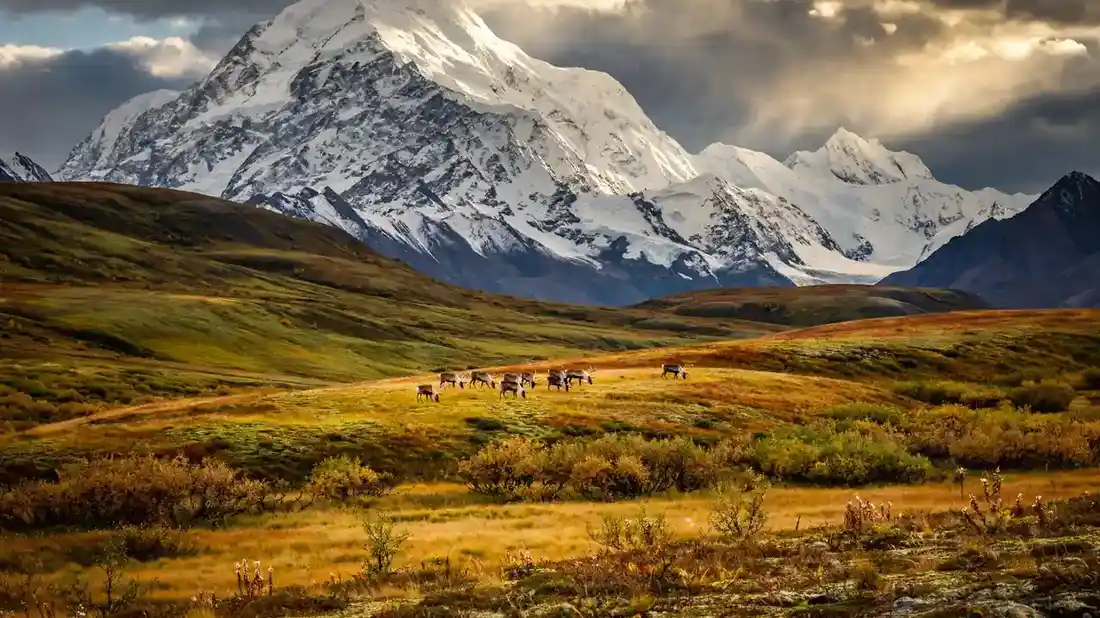
Denali is North America’s tallest mountain, and the national park that surrounds it is one of the last great wildernesses on the continent — six million acres of tundra, taiga, and glacier-carved valleys where grizzly bears, caribou, moose, wolves, and Dall sheep roam free. Visiting is unlike any other national park experience in the United States, because private vehicles are restricted and the park’s single road is traveled almost entirely by bus.
This Denali National Park guide covers everything you need to plan the Alaska trip of a lifetime in 2026: how the bus system works, where to see wildlife, the best hikes, where to stay, and when to go.
How Denali Works: The Park Road and Bus System
Denali has one road — the 92-mile Denali Park Road — and private vehicles can only drive the first 15 miles of it. Beyond that, you travel by park bus, and understanding the two bus systems is the key to the whole trip.
Transit buses (green buses) are the flexible, affordable option. You buy a ticket for how far you want to go, and you can hop on and hop off anywhere along the road to hike, photograph, or watch wildlife, then flag down the next bus to continue. Tour buses (tan buses) are narrated, stay on a fixed schedule with fewer stops, and cost significantly more. For most independent travelers, the transit bus is the better choice — it gives you freedom, and the drivers are excellent wildlife spotters who stop for every bear and moose.
How far should you ride? The farther you go, the better the mountain views and the wildlife odds. The road to at least the Eielson Visitor Center (mile 66) is the classic full-day commitment, and on a clear day the view of Denali from Eielson is one of the great mountain vistas on Earth. Note that only about 30 percent of visitors ever actually see the mountain — it makes its own weather — so treat a sighting as a gift, not a guarantee.
Wildlife Viewing in Denali
Denali is arguably the finest wildlife-viewing destination in the United States, and the bus ride itself is the safari. Keep your binoculars ready and your camera charged from the moment you board.
Grizzly bears are the stars. The park’s bears are often visible from the road, digging for ground squirrels on the tundra or ambling along river bars. The Sable Pass and Polychrome Pass areas are particularly productive. Caribou migrate through the park in herds, moose browse the willows near the park entrance, Dall sheep dot the cliffs like white confetti, and if you are extraordinarily lucky, you may spot a wolf — the park’s most elusive resident. For a very different wildlife spectacle, the wetlands in our Everglades National Park guide teem with alligators and wading birds.
The best wildlife viewing is in the early morning and late evening, so book the earliest bus you can tolerate. Bring the longest lens you have, dress warmly even in summer, and remember that every animal here is wild — the park’s viewing etiquette keeps both you and the wildlife safe. For more on staying safe around big wildlife, review our adventure travel safety tips before your trip.
Best Hikes in Denali National Park
Denali has only a handful of maintained trails, and that is entirely the point: this is one of the few places in America where you can practice true off-trail wilderness hiking. Both styles are worth your time.
Easy: Horseshoe Lake and the Triple Lakes Trail
Near the park entrance, the Horseshoe Lake Trail is a gentle two-mile loop through forest to a beaver-dammed lake where moose are frequently spotted. The boreal forest here feels a world away from the desert Southwest’s Joshua Tree, making the two a fascinating contrast on a bigger western itinerary. The Triple Lakes Trail is a longer, roughly nine-mile one-way route with shuttles at both ends, climbing through forest and tundra with expanding views. Both are perfect for your arrival day while you acclimatize to the scale of the place.
Moderate: Savage River Loop and Savage Alpine Trail
At mile 15, where private cars must turn around, the Savage River area offers the park’s best accessible hiking. The Savage River Loop is an easy two-mile riverside walk with excellent chances of Dall sheep sightings on the cliffs above. The Savage Alpine Trail climbs about 1,500 feet over four miles round trip onto the open tundra, with sweeping views back toward the Alaska Range. The tundra walking here — springy, flower-dotted, endless — is a highlight in itself.
Off-Trail: Eielson and the Thorofare Pass Area
From the Eielson Visitor Center at mile 66, the maintained trails end and the wilderness begins. The classic adventure is to hike the open tundra ridges around Eielson — there are no trails, so you simply pick a ridge and walk, with Denali (on a clear day) as your constant companion. Rangers at Eielson give daily talks on off-trail route selection and bear safety; attend one before you set out. Hiking here feels like true exploration, and it is the experience that separates Denali from every other park in the system. Experienced hikers who love this kind of freedom should also look at the best hikes in Glacier National Park for more big-wilderness walking.
Where to Stay: Denali Lodging Guide
Inside the park: A handful of wilderness lodges sit deep along the park road (accessible only by bus), offering the most immersive Denali experience — multi-night stays with guided hiking, meals included, and wildlife right outside your cabin. They book out a year or more in advance and are priced accordingly, but for a once-in-a-lifetime trip they are worth every penny.
At the entrance: The Denali Park Village area at mile 237 of the Parks Highway has the full range of hotels, restaurants, and tour operators. It is convenient and lively, but it feels more like a tourist strip than wilderness — fine as a base, not as a destination.
Camping: The park’s campgrounds are superb. Savage River and Teklanika offer genuine wilderness camping (Teklanika requires a three-night minimum and is bus-access only), while Riley Creek near the entrance is the most accessible. All campgrounds require reservations and strict food-storage compliance — this is serious bear country. Our desert camping guide and beginner’s camping guide cover the universal skills, though Denali’s bears demand extra respect.
Best Time to Visit Denali
The park road is typically open from mid-May through mid-September, and each part of the season has a distinct character. June brings the midnight sun, newborn animals, and the best chance of clear mountain views — but also mosquitoes in legendary numbers. July is peak wildflower season on the tundra, with warm days and the full bus schedule running. August offers ripe blueberries (watch for bears doing the same), fewer bugs, and the start of fall color. September is the locals’ favorite: the tundra turns crimson and gold, the crowds vanish, the northern lights begin to appear — but services wind down and snow can close the road with little warning.
Book buses, lodging, and campgrounds the moment your dates are set. Denali’s short season means everything competitive sells out, and there are no walk-up alternatives for the deep-park experiences.
Getting to Denali
Most visitors fly into Anchorage or Fairbanks and take the Alaska Railroad or drive the Parks Highway to the park — about five hours from Anchorage, two from Fairbanks. The train journey itself is spectacular, with dome cars and open viewing platforms. Allow a full travel day on each end; Alaska’s distances are deceptive, and rushing them is the most common mistake first-time visitors make. If you are building a bigger Alaska itinerary, our guide to America’s best hot springs includes the perfect post-hike soak for the drive back south.
Denali Trip Planning Checklist
Reserve the bus first. Transit bus seats for the Eielson route sell out in summer. This is the single most important reservation of your trip.
Pack for all four seasons. Summer temperatures range from the 30s to the 70s, often in the same day. Bring warm layers, rain gear, and sun protection regardless of the forecast.
Bring serious insect protection. June and July mosquitoes are not a minor annoyance — they are a trip-defining force. Head nets and strong repellent are essential.
Carry bear spray and know how to use it. Required for any off-trail hiking, and good sense everywhere else in the park.
Download offline maps. There is no cell service beyond the park entrance. Download everything before you arrive.
Budget extra days. Weather delays are normal in Alaska. An extra buffer day dramatically increases your odds of seeing the mountain, and Denali rewards slow travel like nowhere else. The same unhurried approach pays off on long scenic drives like the Pacific Coast Highway. Travelers pairing Alaska with other western parks will find similar planning principles in our Olympic National Park hiking guide and Yellowstone itinerary.
Conclusion
Denali is not a park you simply visit — it is a wilderness you surrender to. The bus ride in, the tundra under your boots, a grizzly on a distant hillside, and (if the mountain allows it) that first staggering view of 20,310 feet of rock and ice rising from the plain: these are the moments that define a lifetime of travel. Plan carefully, book early, pack for everything, and give the park the time it deserves. Alaska’s great mountain is waiting.