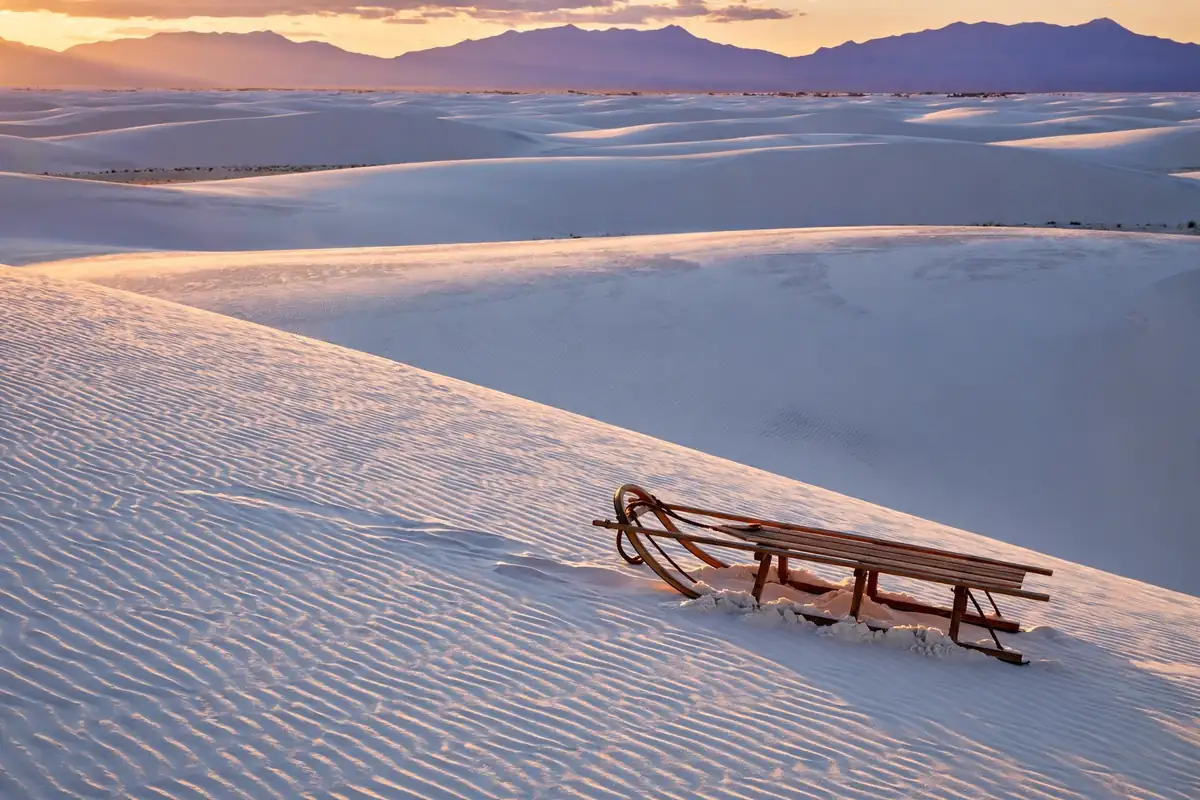
White Sands looks like a snowfield that wandered into the New Mexico desert. Wave after wave of brilliant white gypsum dunes roll across the Tularosa Basin, squeaking under your shoes and glowing pink at sunset. This white sands national park guide covers everything a first visit needs: sledding down the dunes, the scenic Dunes Drive, the best short trails, and the simple tricks — timing, water, and sunglasses — that make a day here unforgettable instead of uncomfortable.
The park protects the largest gypsum dune field on Earth, roughly 275 square miles of it, and the experience is wonderfully hands-on. There are no slot canyons to peer into or summits to bag. You park, walk a few steps, and you are in the middle of a white desert that begs to be climbed, sledded, and photographed.
What Makes White Sands Different
Most dunes are quartz sand; these are gypsum, a soft mineral washed down from the surrounding mountains and left behind when ancient lakes dried. Gypsum stays noticeably cooler than regular sand, so bare feet are comfortable even on sunny days, and the dunes hold crisp ripples and animal tracks beautifully. The result feels part beach, part snowfield, part moonscape.
The setting adds to the drama. The San Andres Mountains frame the west and the Sacramento Mountains the east, and the sky over the basin is enormous. First-timers who love sculpted desert scenery often pair White Sands with the towering dunes in our Great Sand Dunes National Park guide — the two parks are natural siblings, one white and one golden, both built for climbing and sledding.
Dune Sledding: The Main Event
Sledding is the park’s signature activity, and it works for almost every age. Waxed plastic saucers and sleds are sold at the visitor center gift shop — buy one on your way in (you can often sell it back at a discount when you leave), because the gift shop is the trailhead for fun here. Head to the steeper faces along Dunes Drive, pack the sand at the top of your run, and re-wax the sled bottom between runs for the best glide.
A few tips make sledding better and safer. Choose slopes away from the road and parking areas, watch for a soft run-out at the bottom, and never sled headfirst. Kids can ride for hours; adults usually discover muscles they forgot they had climbing back up. Sunset sledding, when the dunes turn gold and the crowds thin, is the session everyone remembers. Travelers collecting desert experiences will find a similar joyful simplicity at the dunes and oases in our Joshua Tree hiking guide — different park, same desert magic.
Dunes Drive and the Best Short Stops
The eight-mile Dunes Drive loops from the visitor center into the heart of the field, starting on pavement and finishing on hard-packed gypsum that feels like driving on snow. Allow at least an hour for the loop with stops; most visitors spend half a day. Every pullout is an invitation to climb a ridge and look back at the white waves rolling to the mountains.
Interdune Boardwalk
This easy, accessible boardwalk crosses a flat area between dunes where plants and animals survive in the gypsum. Interpretive signs explain how life adapts here — look for bleached earless lizards and other pale creatures evolved to match the sand. It is the best stop for understanding the park rather than just playing in it.
Alkali Flat Trail
Despite the name, this loop of about five miles is neither flat nor easy — it climbs dune after dune into the silent heart of the field, marked by posts across a trackless white sea. Go early, carry far more water than feels necessary, and turn back the moment you lose the markers. For hikers who have done the popular routes in our Arches National Park hiking guide, Alkali Flat offers the opposite thrill: no arches, no crowds, just white space and wind.
Lake Lucero and Ranger Programs
For a deeper story, join a ranger-led tour to Lake Lucero, the dry playa at the edge of the field where the gypsum story begins. Tours run only on select days and fill fast, so reserve the moment your trip dates are set. Ranger walks and talks run through the year — moonlight hikes, geology strolls, and sledding-season programs — and they turn a pretty place into an understood one. Travelers building a New Mexico–Arizona loop can pair the lake day with the rainbow badlands in our Petrified Forest National Park guide, another landscape where the geology does all the talking.
Sunsets, Full Moons, and Stargazing
White Sands at sunset is one of the great free shows in the national park system. The dunes catch fire with color — gold, then pink, then lavender — while the mountains behind them go purple. Rangers often lead sunset strolls in season, and any ridge along Dunes Drive works as a front-row seat. Stay for twilight; the half hour after the sun drops is the most beautiful of the day.
The park is also famous for its full-moon nights, when the dunes glow bright enough to walk by moonlight and the park sometimes stays open late with special programs. In summer, ranger-led full-moon hikes and even concerts are scheduled around the lunar calendar. Dark-sky fans should check the moon phase when planning, the same advice we give in our guide to the best national parks to visit in winter: a new moon means stars, a full moon means a silver desert. Both are worth the trip.
Best Time to Visit and Staying Comfortable
White Sands is a year-round park, but the experience changes sharply by season. Spring and fall bring the kindest temperatures. Summer days are fierce — plan dune time for early morning and the golden hour, and hide from midday in Alamogordo. Winter days are often mild and crowd-free, though nights are cold and wind can sandblast the ridges.
Comfort here is a checklist, not a hope: sunglasses (the glare off white gypsum is snow-glare strong), sunscreen including under the chin, a hat, and at least a liter of water per person for even a short outing — more for Alkali Flat. There is almost no shade anywhere in the dunes. Shoes are optional on the soft sand, but bring them for hot pavement and prickly plants at the edges. The park occasionally closes for tests at the neighboring missile range, so check the park website the morning of your visit; our national park trip planning guide covers how to build flexible plans around closures like these.
Nearby Bases: Alamogordo and Las Cruces
Most visitors sleep in Alamogordo, about twenty minutes from the entrance, where you will find motels, restaurants, and the New Mexico Museum of Space History perched above town. Las Cruces, roughly an hour away, adds a livelier food scene, the historic plaza of Old Mesilla, and the Organ Mountains as a backdrop. Santa Fe makes a longer but rewarding extension — see our Santa Fe travel guide for how to fold adobe, art, and green chile into the same road trip.
A park pass is required for entry. If New Mexico is one stop on a bigger parks loop, our America the Beautiful Pass guide explains when the annual pass beats per-park fees. And one last practical note for this white sands national park guide: the dunes shift constantly, so the sledding hill you loved in the morning may look different by afternoon — that is not a problem, it is the park working as designed.
Camping inside the park is backcountry-only and primitive: a handful of designated sites reached on foot through the dunes, with a permit from the visitor center. There are no campgrounds and no hookups among the gypsum. If you have never camped in sand before, the shelter, water, and anchoring advice in our beginner’s camping guide translates directly — tent stakes behave very differently in soft gypsum, and a still night can turn breezy by 2 a.m. Everyone else should base in Alamogordo and treat the dunes as a glorious day trip, which is honestly how White Sands shines brightest.
Quick Answers
Can you really sled on the dunes? Yes — waxed plastic saucers on the steeper faces are the park’s signature activity. Buy or rent at the visitor center gift shop.
How much time do I need? Half a day covers Dunes Drive, the boardwalk, and serious sledding. A full day adds Alkali Flat and a sunset.
Is the sand hot? Gypsum stays cooler than regular sand and is usually comfortable barefoot, but summer surfaces and pavement can still burn — bring shoes anyway.
Why does the park close sometimes? Missile-range tests next door occasionally close the park and highway for short windows. Check the park’s alerts page before you drive out.
The Bottom Line
White Sands is the rare national park that asks nothing complicated of you: show up with water, sunglasses, and a sled, and the dunes handle the rest. Climb a ridge at sunrise, race the kids down a white slope, then watch the whole field turn pink at sunset. For a longer desert loop, continue to the cactus forests in our Saguaro National Park guide or the red-rock trails in our Death Valley camping guide, and keep the same rule everywhere: in the desert, timing and water are everything.