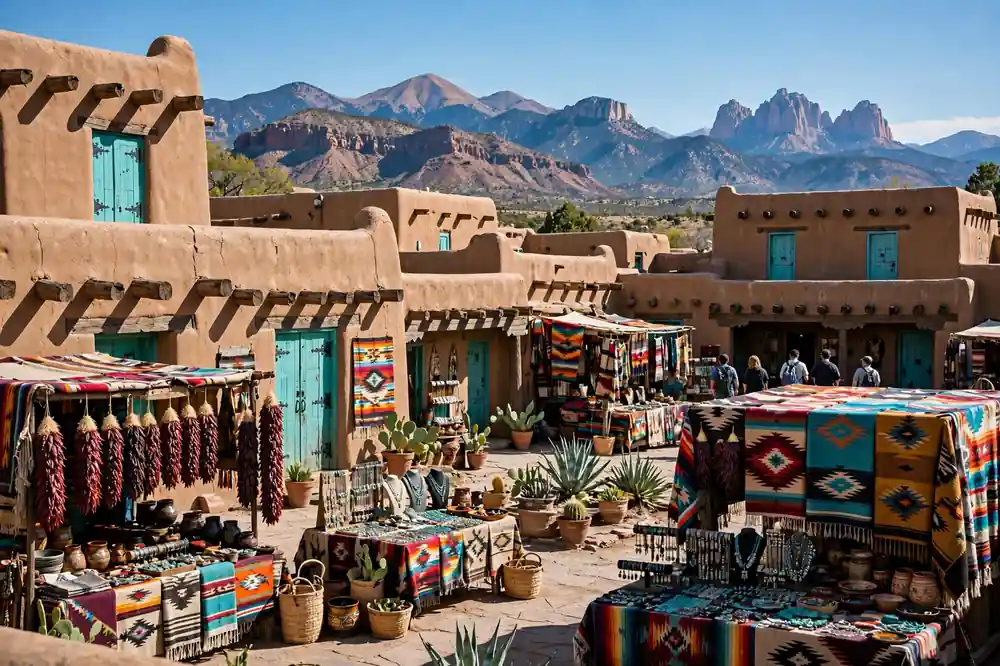
The best things to do in Santa Fe blend 400 years of history with one of the most creative small-city scenes in America. Santa Fe is the oldest state capital in the United States, founded around 1610, and its adobe heart still follows the Spanish colonial plan: a central plaza, a cathedral, and low earthen buildings glowing pink and gold in the high-desert light. At 7,000 feet in the foothills of the Sangre de Cristo Mountains, the air is dry, the skies are enormous, and the chile is a genuine way of life.
This guide walks the Plaza and Canyon Road, covers the museums that matter, explains the red-or-green question every visitor must answer, and adds the spas, markets, and day trips that turn a good visit into a great one.
The Plaza and Santa Fe’s Historic Heart
Everything begins at the Santa Fe Plaza, the city’s living room since the early 1600s. Vendors, buskers, and locals share the shaded square, and the surrounding streets hold the city’s best concentration of shops selling turquoise jewelry, woven rugs, and Pueblo pottery. Along the Plaza’s north side, Native American artisans sell their work under the portal of the Palace of the Governors, the oldest continuously used public building in the country and now part of the New Mexico History Museum behind it.
Two blocks east, the Cathedral Basilica of St. Francis of Assisi rises in pale stone, unusual among the adobe around it, while the small Loretto Chapel nearby is famous for its elegant spiral staircase, built without a visible central support. A short walk south, the San Miguel Chapel claims the title of oldest church in the United States, and the Barrio de Analco across the river preserves some of the oldest houses in the nation. History in Santa Fe is not behind glass — it is the street plan itself. If this layered Southwestern history hooks you, extend the theme on our Utah Mighty 5 road trip itinerary, the region’s other great loop of old landscapes and small towns.
Canyon Road and the Art Scene
Santa Fe is one of the largest art markets in the United States, and Canyon Road is its showroom: a half-mile of adobe galleries, sculpture gardens, and studios packed along a winding lane east of the Plaza. Friday evenings bring gallery openings with wine and live music in season, and even confirmed non-shoppers enjoy the stroll. Prices range from postcard prints to museum-grade bronzes, and most galleries welcome browsers warmly.
For a completely different flavor of art, book tickets to Meow Wolf’s House of Eternal Return, the immersive art installation that launched a genre — part funhouse, part story you explore room by room. It sells out on weekends, so reserve ahead. Back in the museum world, the Georgia O’Keeffe Museum near the Plaza holds the largest collection of O’Keeffe’s work anywhere and is essential for understanding why this landscape shaped modern American art. On Museum Hill, the Museum of International Folk Art and the Museum of Indian Arts and Culture add depth, and their shared plaza hosts the beloved Santa Fe International Folk Art Market each summer. Charming, creative, and walkable, Santa Fe earns its place on our list of the best small towns in the USA — though “small city with a big soul” might be fairer.
Things to Do in Santa Fe for Food Lovers: Red, Green or Christmas
Order any New Mexican dish and you will face the state question: “Red or green?” It refers to the chile sauce — red made from dried ripe chiles, green from roasted unripe ones. The correct answer for first-timers is “Christmas,” meaning both, side by side. Green chile stew, carne adovada, blue corn enchiladas, and sopapillas with honey define the local table, and the flavors here are deeper and earthier than the Tex-Mex most visitors know.
Start at the Santa Fe Farmers Market in the Railyard District, one of the oldest farmers markets in the country, where growers sell roasted chiles by the sack in late summer and fall. For sit-down classics, The Shed near the Plaza and Tomasita’s by the rail depot have fed locals for decades; for a splurge, Geronimo on Canyon Road serves elegant “global eclectic” plates in a 1756 adobe house. Food travelers consistently rank Santa Fe among the best food cities in the USA, which is remarkable for a city of under 100,000 people. Between meals, the Railyard’s breweries, distilleries, and the Violet Crown cinema make the district a second downtown, especially on market mornings and summer concert nights.
Spas, Soaking and the Great Outdoors
Santa Fe’s high-desert setting pairs art with restoration. Ten Thousand Waves, a Japanese-style spa tucked into the piñon hills above town, is the famous splurge: outdoor soaking tubs, cedar paths, and mountain silence. Book well ahead. In town, hotel spas and the hot mineral waters of Ojo Caliente, about an hour north, offer easier alternatives.
For active hours, the Dale Ball Trails network starts minutes from the Plaza with desert foothill paths, while the Santa Fe ski area climbs to over 12,000 feet for winter skiing and summer chairlift rides. Hikers building a desert circuit often combine Santa Fe with White Sands National Park in southern New Mexico — a long but spectacular day or an easy overnight — and with Petrified Forest National Park across the Arizona line. Adventurers passing through the Four Corners region also detour to Big Bend National Park on longer Texas loops, and our RV rental guide for beginners helps if you are turning the whole Southwest into one rolling road trip. Historic Route 66 once ran right through Santa Fe, too — see our Route 66 road trip itinerary for the classic drive that still passes through Albuquerque an hour south.
Day Trips: Taos, Bandelier and Chimayó
Santa Fe’s day trips are unusually strong. Bandelier National Monument, about 45 minutes northwest, protects ancestral Pueblo cliff dwellings you can climb into by ladder, set in a deep, quiet canyon. Taos, 90 minutes north on the scenic High Road, adds the thousand-year-old Taos Pueblo, the Rio Grande Gorge Bridge, and a ski valley that rivals Santa Fe’s. The High Road itself passes Chimayó, famous for its healing-earth chapel and weaving shops, and tiny Truchas under the Truchas Peaks.
South of town, the Turquoise Trail (Highway 14) links the old mining towns of Cerrillos and Madrid — now a colorful strip of galleries and the famous Mine Shaft Tavern — and makes an easy half-day loop. Whichever direction you choose, remember the altitude: Santa Fe sits at 7,000 feet, so sun, water, and a slower first day matter, exactly the desert advice in our USA road trip planner. Light packers heading for several climates in one loop should also review our carry-on packing list before zipping the bag.
Shopping for Pueblo Art and Turquoise, Honestly
Santa Fe shopping deserves one honest paragraph. The artisans under the Palace of the Governors portal sell their own work, follow strict authenticity rules, and are happy to explain hallmarks and materials — it is one of the best places in the country to buy Native jewelry and pottery directly from the maker. In shops, look for pieces signed by the artist, ask what materials are used, and expect genuine turquoise, silver, and hand-coiled pottery to cost real money; very cheap “turquoise” is often block or imitation. Buying one meaningful piece beats a bag of souvenirs, and artists’ stories — which plaza vendors share freely — become part of what you take home. The same makers appear at the summer Indian Market, the largest Native art market in the world, when the whole city turns into a gallery.
Practical Tips and Quick Questions
When is the best time to visit Santa Fe?
September is the sweet spot: golden light, chile-roasting season, and cooler days around the Fiestas de Santa Fe. Summer brings monsoon afternoon storms and the famous opera and market seasons; winter is quiet, sunny, and ski-friendly; spring can be windy but crowd-free.
How many days do you need?
Two full days cover the Plaza, Canyon Road, and the main museums. Add a third for Bandelier or Taos, and a fourth if spa time and the Turquoise Trail are on your list.
Do you need a car in Santa Fe?
The historic center is walkable and the free Santa Fe Pickup shuttle loops downtown sights, so car-free weekends work. You will want a car for Bandelier, Taos, Chimayó, and any ski or spa trips into the hills.
The Bottom Line
The essential things to do in Santa Fe are sensory ones: morning light on adobe walls, chile at lunch — Christmas style — galleries on Canyon Road in the golden hour, and a soak under desert stars. Few American cities mix Indigenous, Spanish, and Anglo heritage with this much art per square mile. Come for two days, stay for four, and do not be surprised when Santa Fe, the City Different, starts feeling like the place you measure other trips against.