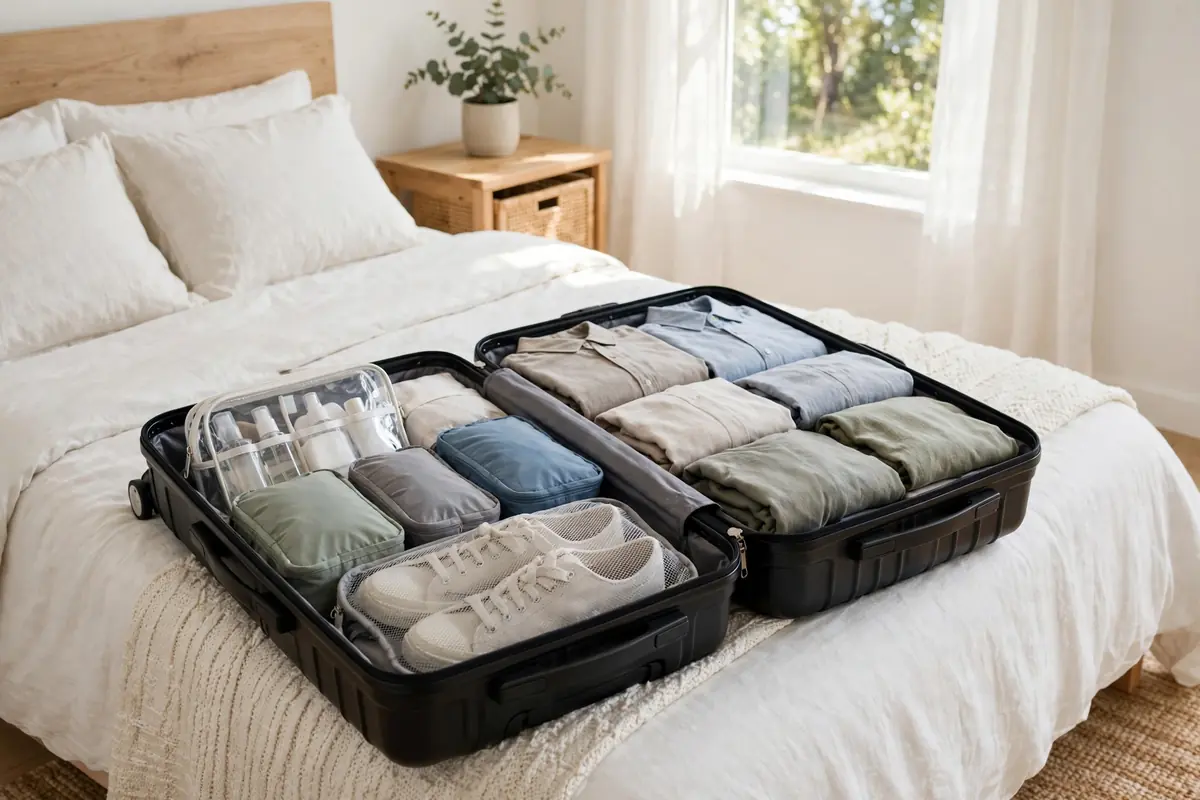
A week of travel in a single carry-on sounds like a dare until you try it. Then it becomes a habit: no checked-bag fees, no lost luggage, no waiting at the carousel, and a fast exit from every airport. This carry-on packing list gives you the complete system: the clothes, toiletries, tech, and small extras that fit in one overhead-bag-sized suitcase, plus the rules that keep it legal at security.
The list assumes a standard week-long trip in mild to warm weather with access to a sink or laundry service once. Colder trips need the layering tweaks covered below, but the structure stays the same.
Start With the Right Bag
Most US airlines cap carry-ons at roughly 22 by 14 by 9 inches, wheels and handles included, but limits vary by airline and smaller regional jets are stricter. Check your airline’s page before you pack, because a bag that fits one carrier’s sizer may not fit another’s. A personal item that slides under the seat in front of you adds a second, unofficial bag for the things you need in flight.
Soft-sided bags and travel backpacks squeeze into tight bins better than hard shells, while two-wheeled bags roll easier on rough streets than spinners. Since airlines weigh fees as much as size, it also helps to know how to find cheap flights and avoid extra airline fees when you book, because a free carry-on is only truly free if the fare includes it.
The Personal Item: Your Second Bag in Disguise
Most travelers underuse the personal item, the smaller bag that goes under the seat in front of you. A structured tote or small backpack in this role holds everything you cannot afford to lose or be separated from: documents, medication, tech, a change of clothes, and your toiletries bag. If your carry-on gets gate-checked on a full flight, this bag is your insurance policy, and it stays with you the entire trip.
Pack it like a one-day survival kit. One full outfit, sleepwear, chargers, headphones, snacks, and your liquids bag means a lost or delayed main bag becomes an inconvenience instead of a crisis. It also doubles as your day bag at the destination for markets, beaches, and museums, so choose one you are happy to carry all day. Travelers who treat the personal item as a real bag, instead of an afterthought, are the ones who make a week in a carry-on look easy.
The Clothing System: A Week of Outfits
The secret is not packing less clothing; it is packing clothing that all works together. Choose one color family, usually built around navy, black, or gray, with two accent colors, so every top matches every bottom. Then pack by the numbers:
- Tops: 5 shirts or blouses, in fabrics that resist wrinkles and odors.
- Bottoms: 2 pairs of pants or one pants and one skirt, plus shorts if the weather allows.
- Layers: 1 sweater or fleece and 1 light jacket you can wear on the plane.
- Underwear and socks: 5 to 7 sets, quick-dry if you plan to wash as you go.
- Sleepwear: 1 set that can double as lounge wear.
- Shoes: Wear your bulkiest pair; pack 1 lighter pair, plus sandals in warm weather.
- Accessories: A scarf or hat for sun, warmth, and dressing up a repeat outfit.
This gives you a week of combinations without repeating an exact outfit. Plan one sink-wash session midweek for underwear, socks, and one or two tops, and choose quick-dry fabrics so everything dries overnight on the shower rod. If you are building your technique from scratch, the light-packing mindset in this guide to backpacking on a budget applies the same capsule logic to longer trips.
Sink-Washing: The Skill That Makes It All Work
The midweek wash is what turns five days of clothes into seven. The technique is simple: fill the hotel sink with warm water and a few drops of travel detergent or shampoo, soak the quick-dry items for ten minutes, agitate gently, rinse, then roll each piece in a dry towel and step on it to pull out most of the water. Hung on the shower rod or a travel clothesline, synthetics and merino dry overnight in most hotel rooms.
Wash on the second or third night, not the last, so everything is dry before you repack. Choose fabrics that make this easy: merino wool and modern synthetics resist odor and dry fast, while heavy cotton denim and thick tees are the worst travelers in the bag. If laundry feels like a chore on vacation, split the difference: send one small hotel laundry load midweek and still travel with half the luggage of everyone around you.
Toiletries and the 3-1-1 Rule
US airport security limits liquids, gels, and aerosols in carry-ons to containers of 3.4 ounces (100 milliliters) or smaller, all fitting inside one clear quart-size bag, one bag per passenger. Pack travel sizes of toothpaste, shampoo, conditioner, body wash, sunscreen, and any liquid makeup, and move everything else to solid alternatives where you can: bar shampoo, solid deodorant, and toothpaste tablets do not count against the limit.
Keep prescription medication in its labeled container in your personal item, never in an overhead bag you might have to gate-check. Add lip balm and hand lotion, because cabin air is desert-dry, and a small pack of tissues and hand sanitizer earns its space on every trip.
Tech, Documents, and Health Essentials
Build one small pouch for tech: phone charger, charging cable for each device, a compact power bank, earbuds or headphones, and a plug adapter if your trip needs one. Download movies, music, maps, and boarding passes before you leave home, because airport Wi-Fi and cellular signals fail at the exact wrong moments.
Documents ride in your personal item in a slim organizer: ID or passport (our guide on how to apply for a passport explains the process if yours needs renewing), payment cards plus a backup card stored separately, health insurance card, and printed copies of key bookings. Add a small health kit with pain relievers, motion-sickness tablets, bandages, and any daily medication, and while you are organizing paperwork, review our travel insurance guide to decide whether your trip deserves coverage.
Packing for Different Kinds of Trips
The core list flexes by destination. Theme park days call for a small daypack, poncho, and extra socks, which slots neatly into the plan in our universal orlando planning guide. Cruises need layers for windy decks and a swimsuit in your embarkation-day bag, exactly as our alaska cruise guide describes for glacier viewing days.
Season matters too. The weather windows in our best time to visit hawaii guide tell you whether your week leans toward reef-safe sunscreen and sandals or a light rain shell. Winter trips are the true carry-on test: our best ski resorts in the usa roundup assumes you will rent bulky gear at the destination, wear your ski jacket on the plane, and pack base layers tightly. For outdoor trips, adapt the list with sun protection and trail-ready layers, the same essentials listed in our guide on how to plan a national park trip for permits, timing, and budgets.
Packing Cubes and the Rolling Method
Roll soft clothes tightly to save space and reduce wrinkles, and fold structured items like blazers flat on top. Packing cubes compress clothing and keep categories separate: one cube for tops, one for bottoms, one for underwear and socks. A compression cube for the bulkiest items can win back a surprising amount of room.
Pack in loading order. Heavy items go near the wheels so the bag stands without tipping. Shoes line the edges, stuffed with socks or chargers. Keep the liquids bag and laptop in the most accessible pockets, because you will pull both out at security, and leave a little empty space. A carry-on packed to bursting on day one has nowhere to put the souvenir from day five.
What to Wear on the Plane
Your travel outfit is free luggage space. Wear your heaviest shoes, your jacket, and your thickest layer, even if you carry the jacket over your arm through the terminal. Choose pants with real pockets for your phone and ID during boarding, and skip belts and complicated shoes that slow you down at security.
Tuck a few personal-item essentials around you: headphones, a snack, a refillable water bottle to fill after security, and anything you would need if your carry-on gets gate-checked after all. Independent travelers rate this setup highly, and our solo travel usa guide recommends the same one-bag approach for moving fast and keeping your hands free.
Common Carry-On Mistakes to Skip
Three mistakes undo most first attempts. The first is just-in-case packing: the extra shoes, the third jacket, the full-size bottle. Every just-in-case item should have to argue for its space, and most lose. The second is ignoring the personal item and cramming everything into the main bag, which wastes your best-organized space. The third is packing a bag you cannot lift. If you cannot hoist it into an overhead bin yourself, it is not a carry-on strategy; it is a checked bag with extra steps. Test-lift it at home, fully packed, before you commit.
The Night-Before Checklist
Run this list the evening before departure:
- Check the bag against your airline’s size and weight limits.
- Confirm the liquids bag is packed, sealed, and easy to reach.
- Charge every device, then pack the chargers last.
- Photograph the contents and your documents as a backup record.
- Weigh the bag; if you strain to lift it overhead, repack lighter.
- Put out your travel outfit, bulkiest shoes first.
That is the whole system: one bag, one color palette, one liquids bag, and nothing you do not use. Master this carry-on packing list once, and every trip after it packs itself in twenty minutes.