Renting an RV is the easiest way to test the motorhome life without buying one, and for a first-timer the learning curve is friendlier than it looks. This RV rental guide breaks down the vehicle types, the real costs beyond the nightly rate, and the planning habits that separate a smooth first trip from a stressful one.
You do not need special experience to drive most rental RVs, and you do not need a special license for standard models in the United States. What you do need is a clear picture of size, budget, and route before you book — so let us build it.
The Main Types of RV You Can Rent
Class A motorhomes are the big, bus-shaped rigs. They sleep the most people and carry the most storage, but they are the hardest to park, the thirstiest on fuel, and usually the priciest to rent. Most beginners are happier in something smaller.
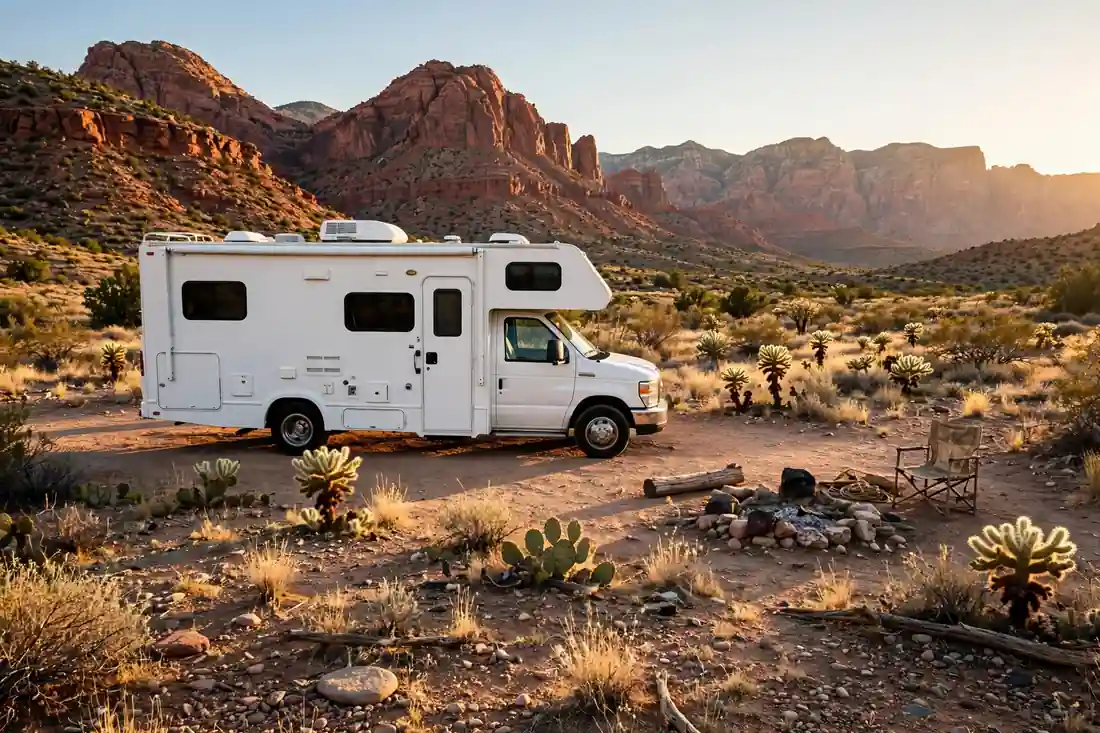
Class C motorhomes are the classic rental choice, built on a truck or van chassis with a cab-over bunk. They typically sleep four to six, handle more like a large truck than a bus, and dominate the fleets of national rental companies. For most first trips, this is the sweet spot.
Class B campervans are converted vans with a bed, a small kitchen, and sometimes a compact bathroom. They sleep two to three, fit in normal parking spaces, and are the easiest of all to drive. Travel trailers, finally, are towed behind your own vehicle — cheaper per night, but only sensible if your truck or SUV is rated to tow one safely.
What an RV Rental Really Costs
The nightly rate is only the starting point. As a rough guide, small campervans commonly start around $100 a night, mid-size Class C rentals often land somewhere in the $150–$300 range, and large Class A rigs in peak season can run several hundred dollars a night. Rates swing hard with season, location, and how early you book, so treat those figures as planning ballparks, not quotes.
Then come the extras, and this is where beginners blow the budget:
- Mileage: many rentals include a limited number of miles per day, with a per-mile charge beyond that. Long highway routes add up fast.
- Generator use: sometimes billed by the hour when you run it without hookups.
- Insurance: basic coverage may be included, but higher protection levels cost extra per day.
- Kitchen and linen kits: pots, dishes, and bedding are frequently add-on packages.
- Cleaning and dumping fees: returned dirty or with full tanks, the bill follows.
- Security deposit: a refundable hold, often substantial, placed on your card at pickup.
National chains such as Cruise America are predictable and widely located, while peer-to-peer platforms such as Outdoorsy and RVshare offer more variety and often better prices from private owners. Either way, compare the full trip cost — rate plus mileage plus fees — not just the nightly number in the headline.
Insurance, Deposits and the Fine Print
Read the rental agreement before pickup day, not at the counter. Confirm what the included insurance actually covers and what the deductible is. Check the cancellation window, because RV bookings in peak season often carry stricter terms than hotel bookings.
Also confirm the rules that surprise people most: minimum driver age (often 25 for larger rigs), whether additional drivers cost extra, pet policies, and whether the RV may attend festivals or travel on unpaved roads. Many agreements quietly prohibit both.
Planning Your First RV Road Trip
Choose a route that respects the vehicle’s pace. RVs are slower up grades, slower to stop, and happier at moderate daily distances — plan shorter driving days than you would in a car. A classic beginner-friendly loop is the Florida Keys road trip, where distances are short, campgrounds are plentiful, and the ocean is never far away.
Out west, the national-park corridor in our Utah Mighty 5 road trip itinerary is a spectacular first route, with the warning that some park roads and tunnels have length and height limits. On the East Coast, a Maine road trip itinerary pairs coastal campgrounds with small towns and easy driving. And if you are eyeing the famous mountain switchbacks of the Million Dollar Highway in Colorado, be honest about your comfort with cliff-edge driving in a tall vehicle — there is no shame in saving that one for trip number two.
Before you finalize any route, skim a structured planner like the ultimate USA road trip planner and the timeless Route 66 road trip itinerary — both help you sanity-check distances, fuel stops, and overnight spacing.
Campgrounds, Hookups and National Parks
Book campgrounds earlier than feels necessary, especially near national parks in summer. Full-hookup sites give you water, sewer, and electricity; partial sites give you some of the three; dry camping (boondocking) means you rely on your tanks and battery. New renters usually sleep best with at least electric hookups while they learn the systems.
If parks are on your route, an America the Beautiful national park pass can pay for itself within a few entries, and it helps to learn the reservation rhythm in our guide to planning a national park trip step by step. For general ground skills — leveling, leveling blocks, and campsite etiquette — the basics in this beginner camping guide transfer directly to RV life.
Desert routes deserve extra respect. The heat, distances, and limited services covered in the Death Valley camping guide show why water, fuel, and shade planning matter more in an RV, where a breakdown leaves you with the whole house, not just a car.
The Oregon Coast Test: A Perfect Practice Run
If you want one route that teaches everything gently, consider the Oregon Coast road trip. Distances between towns are short, state-park campgrounds are excellent and bookable, fuel and groceries are easy to find, and the scenery forgives the slower pace. Two or three nights there will teach you more about your rental — backing in, leveling, dumping tanks — than a week of highway miles.
Driving and Daily-Life Tips for Beginners
Do a full walk-around at pickup and film it on your phone; that video is your deposit protection. Learn where the water, propane, and battery gauges live, and practice one slow lap of the parking lot before hitting the road. In camp, arrive before dark whenever you can — backing into a site at noon is a chore, at midnight it is a performance for the whole campground.
Manage your tanks like a budget. Fresh water, gray water, and black water all empty and fill at different speeds, and a family of four showers like a small hotel. Short showers and dish discipline stretch a tank from days of worry to a non-issue. Finally, build slack into the plan: the best RV days are the unplanned ones, and a schedule with no slack turns every dump-station line into a crisis.
Pickup Day: Your First-Hour Checklist
Arrive at pickup with time to spare, because the handover is your one free lesson. Ask the owner or agent to demonstrate the essentials while you watch: leveling the rig, connecting water and electric hookups, lighting the water heater, extending slides or awnings, and — most important of all — the dump procedure for the gray and black tanks. If any step confuses you, ask again; every experienced RVer was shown these things once, too.
Before you drive away, check the practical details yourself. Test that the refrigerator runs on both electric and propane if it is a dual-power model. Confirm the tire pressure looks right and glance at the tread, since rental rigs work hard for a living. Photograph every existing scratch and dent. Then find the spare tire, the jack, and the sewer kit, because the worst time to learn their location is on a shoulder at dusk. Finally, save the rental company’s roadside-assistance number in your phone — most rentals include it, and on a first trip it is worth more than any upgrade package.
Quick Questions, Straight Answers
Do I need a special license to rent an RV? For standard rental motorhomes, a regular US driver’s license is generally all you need. Very large units and some states have exceptions, so confirm with the rental company for the exact model you book.
How far ahead should I book? For summer and holiday weekends near popular parks, booking several months ahead is wise. Shoulder seasons are far more forgiving, and last-minute deals do appear.
Can I take a rental RV anywhere? No. Agreements commonly restrict unpaved roads, certain festivals, and travel into Mexico or remote areas. Check the contract for your specific plans.
The Bottom Line
Pick a Class C or a campervan, budget for the full cost rather than the headline rate, book campgrounds early, and choose a forgiving first route. Do those four things and your first rental stops being an experiment and becomes the trip everyone talks about at dinner for the rest of the year.