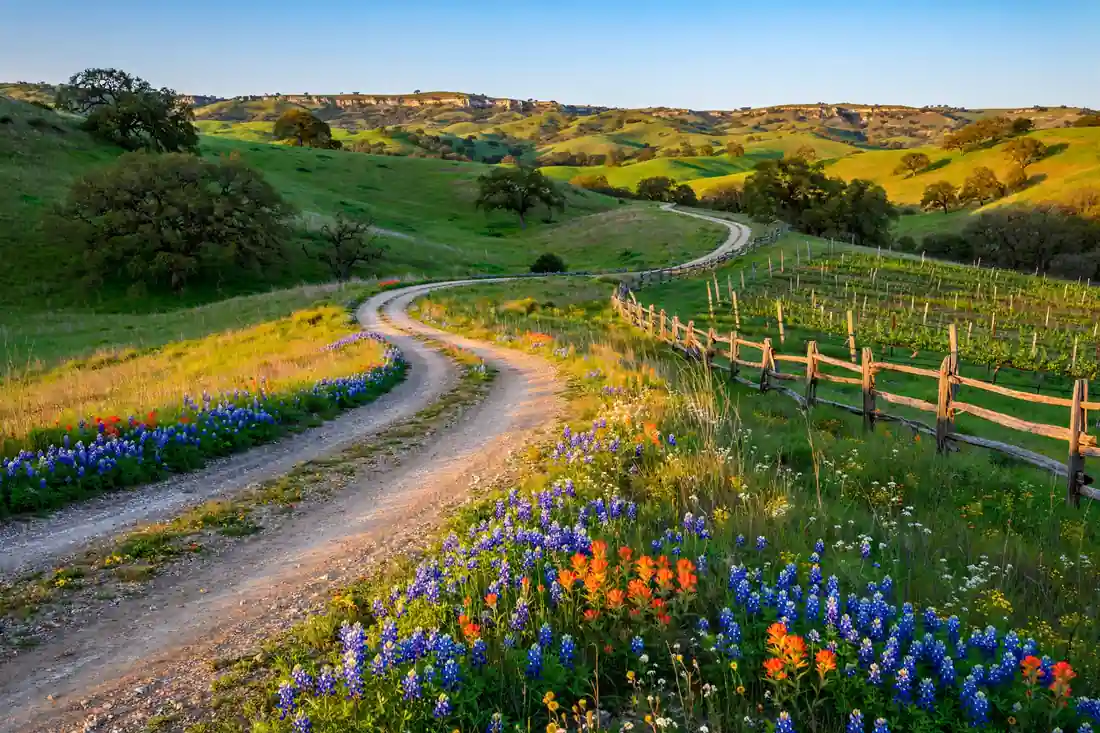
A great Texas Hill Country road trip strings together the best of small-town Texas in one easy loop: German heritage towns, more than fifty wineries, some of the most famous barbecue on earth, and spring-fed swimming holes so clear you can see the limestone on the bottom. The region sits west of Austin and north of San Antonio, close enough for a long weekend yet spread out enough to reward four or five unhurried days.
Unlike a point-to-point drive, this trip works best as a loop with two or three overnight bases. Fredericksburg anchors the west side, Wimberley and Dripping Springs cover the east, and scenic ranch roads connect them through rolling oak-and-limestone country. Here is how to plan it, town by town and plate by plate.
Texas Hill Country Road Trip Route at a Glance
Most travelers fly into Austin or San Antonio, pick up a rental car, and head west. A classic loop runs from Austin to Dripping Springs and Wimberley, continues to Johnson City and Fredericksburg, dips south to Luckenbach and Boerne, then returns through San Antonio or back up Highway 281. Driving distances are refreshingly short: most hops are 30 to 60 minutes, which leaves your days open for tasting rooms, trail walks, and long lunches.
If you are building a bigger Texas itinerary, pair this loop with our guide to the best things to do in Dallas to the northeast. Road trippers crossing the whole state often treat the Hill Country as the scenic heart of a longer Southern drive, much like the river towns on a Great River Road trip down the Mississippi.
How Many Days Do You Need?
Three days covers the highlights: one for Fredericksburg and wine, one for swimming holes and Wimberley, and one for barbecue and small towns. Four or five days lets you add Enchanted Rock, a day in Johnson City, and a slower pace overall. Because the drives are short, this is also one of the most forgiving road trips in America for beginners — and a comfortable step up from the routes in our ultimate USA road trip planner.
Fredericksburg: Wine Country With a German Accent
Fredericksburg was founded by German settlers in 1846, and its wide Main Street still mixes biergartens, bakeries, and historic stone Sunday houses with a serious modern wine scene. Highway 290 east of town, often called the Wine Road, is lined with tasting rooms pouring Texas tempranillo, viognier, and mourvèdre. Most wineries charge a modest tasting fee, and many have shaded patios, food trucks, and live music on weekends.
Book tastings ahead on Saturdays, when the road gets busy, and assign a designated driver or use one of the local shuttle services that loop the wineries. In town, do not miss the National Museum of the Pacific War, one of the finest military museums in the country, or a peach stand in summer — Gillespie County peaches are a genuine local obsession, typically ripe from late May through August.
Enchanted Rock and Luckenbach
About 20 minutes north of Fredericksburg, Enchanted Rock State Natural Area protects a massive pink granite dome with sweeping views from its summit trail. The park often reaches capacity on weekends, so reserve a day pass online in advance and arrive early to beat both the line and the heat. On your way back, detour to Luckenbach, the tiny dance-hall town made famous by the Waylon Jennings song, where there is almost always a guitar picker under the oak trees.
The Barbecue Trail: Lockhart, Luling and Driftwood
For many travelers, barbecue is the real reason for a Texas Hill Country road trip. The small town of Lockhart, officially the Barbecue Capital of Texas, is home to legendary pits such as Kreuz Market, Smitty’s Market, and Black’s Barbecue, where brisket, ribs, and sausage rings are served by the pound on butcher paper — no forks, and at some counters, famously no sauce. Arrive before noon on weekends, because popular meats sell out.
Driftwood’s Salt Lick, with its sprawling oak-shaded picnic grounds and open pit, makes an easy stop between Wimberley and Austin, while Luling adds small-town charm and its own respected smokehouses. Food lovers building a nationwide eating itinerary should also browse our picks for the best food cities in the USA, where Texas barbecue holds its own against every regional style in the country.
Barbecue Tips From the Line
- Go early. The best pits open mid-morning and sell out of brisket by early afternoon.
- Order fatty brisket. Ask for the moist or fatty cut — it is the Texas benchmark.
- Cash and patience help. Lines are part of the culture; use the time to study the board.
- Balance the day. A heavy barbecue lunch pairs well with a light afternoon swim, not a winery marathon.
Swimming Holes: The Hill Country’s Summer Treasure
Nothing defines summer here like the spring-fed swimming holes, where constant cool water turns a 100-degree day into the best part of the trip. Barton Springs Pool, in Austin’s Zilker Park, stays around 68 degrees year-round and is big enough for laps, lounging, and people-watching. Hamilton Pool Preserve, a collapsed grotto with a waterfall near Dripping Springs, is spectacular — and requires advance reservations that can book out weeks ahead.
Near Wimberley, Jacob’s Well and the Blue Hole offer crystal-clear cypress-shaded water, and both use reservation systems in summer. Krause Springs, west of Austin, adds waterfalls, a spring-fed pool, and shady picnic grounds on private land. Always check each site’s current reservation and swim-status rules before you drive out, because drought and rainfall can close a hole with little notice. Many of these towns also appear in our roundup of the best small towns in the USA to visit, and they earn their place on swimming season alone.
Johnson City, Dripping Springs and the Ranch Roads
Johnson City, hometown of President Lyndon B. Johnson, pairs the LBJ National Historical Park with a growing strip of tasting rooms and galleries along Main Street. In December, its courthouse lights display is one of the most beloved holiday sights in Texas. Dripping Springs, meanwhile, has become a hub for distilleries, olive oil tasting, and farm-to-table restaurants, and it makes a convenient first or last night near Austin.
The drives between towns are half the pleasure. Ranch Road 12, Fitzhugh Road, and the Willow City Loop wind past live oaks, wildflower fields, and longhorn-dotted pastures. In March and April, bluebonnets and Indian paintbrush line the highways — the famous Willow City Loop can back up with wildflower traffic on spring weekends, so go on a weekday morning if you can. Travelers who enjoy this style of slow, scenic driving often graduate to the epic Route 66 road trip next.
When to Go and What It Costs
Spring (March to May) is the sweet spot: wildflowers, mild temperatures, and full swimming holes before the worst heat. Fall (October and November) brings harvest energy to the wineries and comfortable hiking weather. Summer is prime swimming season but brutally hot for midday walking, while winter is quiet, mild, and the cheapest season outside the holidays.
Budget-wise, this is a mid-range trip. Expect small-town inns and guesthouses to cost less than Austin hotels, winery tastings to run the price of a nice cocktail each, and barbecue to be one of the great bargains in American food. Gas is reasonable because distances are short — one reason the Hill Country is a favorite add-on in guides like our list of places to visit in Texas during spring break. Campers and RV travelers can stretch the budget further with state park sites; our RV rental guide for beginners covers the basics if you want to try that style here.
Where to Stay: Inns, Cabins and Dark-Sky Campsites
Fredericksburg has the deepest bench of places to sleep: historic Sunday houses converted into guest cottages, boutique hotels on Main Street, and hundreds of vacation rentals in the surrounding ranch country. Book well ahead for wildflower season and fall harvest weekends, when the town fills up fast. Wimberley and Dripping Springs lean toward cabins, creekside cottages, and small inns — a quieter base that suits couples and anyone whose perfect evening is a porch, a cold drink, and a sky full of stars.
Campers are well served too: Enchanted Rock, Pedernales Falls, and Guadalupe River state parks all put you minutes from the swimming and hiking that anchor this trip, with a fraction of the hotel cost. New to camping? The gear and site-selection basics in our camping for beginners guide translate directly to Hill Country state parks. One more Hill Country perk: it is famously dog-friendly, with winery patios and cafe courtyards that welcome leashed pups — if your co-pilot has four legs, our advice on how to travel with a dog will make the miles smoother for both of you.
Key Takeaways for Your Texas Hill Country Road Trip
- Base in Fredericksburg and Wimberley, and keep daily drives under an hour.
- Reserve Enchanted Rock day passes and swimming hole entry well ahead in peak season.
- Hit Lockhart barbecue before noon, and never plan a heavy lunch before a long drive.
- Spring wildflowers and fall harvest weekends are the two best windows.
- Pack light layers and swim gear — our carry-on packing list works fine for this short-hop trip.
Above all, leave slack in the schedule. The Hill Country rewards the traveler who stops for the unplanned peach stand, the tiny dance hall, or one more glass of Texas wine as the light goes gold over the oaks. That unhurried rhythm is exactly what makes this the finest short road trip in the South.