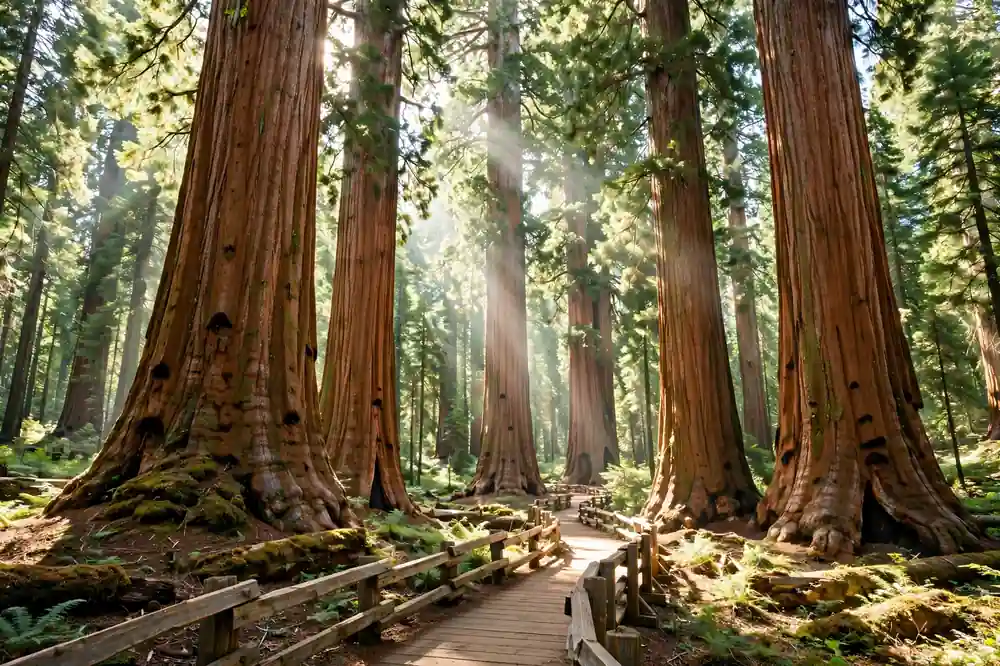
Nothing prepares you for your first giant sequoia. These trees are not just tall — they are massive in every direction, with trunks wider than a house and bark two feet thick. This Sequoia National Park guide helps you see the giants up close, plan the classic short hikes, and combine the park with its neighbor, Kings Canyon, for a complete trip.
Most visitors spend their time along the Generals Highway in the Giant Forest area, where the biggest trees, best trails, and main lodge all sit within a few miles of each other. Here is how to make the most of it.
Sequoia National Park Guide to the Giant Forest
The Giant Forest is one of the largest unlogged groves of giant sequoias on Earth, and it is where your visit should begin. The grove sits at roughly 6,500 feet in elevation, so the air feels noticeably thinner than in the valley below. Take the first day slowly, drink water, and let your body adjust.
Start at the Giant Forest Museum, where exhibits explain how these trees grow, survive fire, and reproduce from cones the size of an egg. From there, the park’s shuttle system (in season) and a web of gentle trails connect the major sights, so you can leave the car parked and walk among the giants.
Meeting the General Sherman Tree
The General Sherman Tree is the largest known single-stem tree on Earth by volume, and it is the park’s headline attraction. A paved trail of about half a mile descends from the parking area to the tree, with benches along the way. Remember that the walk back is uphill at altitude, so save some energy.
For a longer taste of the grove, continue onto the Congress Trail, an easy loop of about two miles that passes dense clusters of giant sequoias, including groups named the House and the Senate. This loop delivers the full cathedral-like atmosphere with far fewer people than the Sherman Tree viewpoint alone.
Best Short Hikes and Viewpoints in Sequoia
Moro Rock is the park’s great viewpoint. A steep stairway of more than 350 steps climbs the granite dome to a summit panorama that takes in the Great Western Divide and the Kaweah River canyon. Go early or late in the day to avoid the midday crowd on the narrow stairs.
Crescent Meadow, reached by a scenic side road, is a lush green clearing ringed by sequoias. Early conservationist John Muir reportedly called it the gem of the Sierra. The easy loop around the meadow is perfect for families, and the same road passes the Tunnel Log, a fallen giant you can drive through when the road is open — a classic photo stop. In winter this side road closes, and the meadow becomes a snowshoe destination instead.
Tokopah Falls rewards a moderate hike of about 3.4 miles round trip. The trail follows the Marble Fork of the Kaweah River to a dramatic 1,200-foot waterfall framed by granite walls. It is one of the finest half-day walks in the park and pairs well with the way trails are sequenced in our best yosemite hikes guide, if you are visiting both Sierra parks on one trip.
Crystal Cave and Other Sequoia Highlights
Beneath the giant trees lies a different world. Crystal Cave is a marble cave filled with polished formations, open for guided tours in the warmer months. Tickets typically must be reserved in advance, and tours sell out, so book before your trip. The steep trail down to the cave entrance is a small hike in itself.
Wildlife watching adds another layer to a visit. Black bears are common in meadows, marmots sun themselves on rocks, and mule deer wander the forest. Store all food in the bear-proof lockers provided at trailheads and campgrounds — it is the rule, and it keeps bears wild. If desert parks come next on your route, our big bend desert trails guide and saguaro cactus forest guide cover very different country administered by the same park service.
Adding Kings Canyon National Park
Sequoia and Kings Canyon are managed as one unit, and most visitors see both. Kings Canyon’s Grant Grove holds the General Grant Tree, one of the largest sequoias of all, on an easy paved loop. The grove sits close to the park entrance on Highway 180, which makes it an easy first or last stop.
If you have an extra day, the Kings Canyon Scenic Byway descends into one of the deepest canyons in North America. The road winds down to Roads End, passing Grizzly Falls and opening access to Zumwalt Meadow and riverside trails. Allow a full day for the drive and short hikes, and check road status, because this route is seasonal and closes in winter.
When to Visit Sequoia National Park
Summer is the main season: all roads and the cave are typically open, shuttles run, and the high meadows are green. It is also the busiest season, so book lodging and cave tours early.
Spring and autumn bring thinner crowds and cool, pleasant hiking weather in the groves. Waterfalls run strongest in spring. Some services reduce hours, and the first snows can arrive by late autumn.
Winter turns the Giant Forest into a quiet snow globe. The sequoias in snow are unforgettable, and marked snowshoe and cross-country ski trails leave from the museum area. Chains or snow tires are often required on park roads, and rangers check. Our winter national parks guide explains how Sequoia compares with other cold-season parks, and the national park pass guide will help you decide if the annual pass beats daily fees for a multi-park year.
Planning Your Sequoia Trip: Fees, Lodging, and Roads
Entry is charged per vehicle, and the America the Beautiful pass is accepted, just as it is across the system described in our guide to planning a national park trip. Inside the park, Wuksachi Lodge is the main hotel, and campgrounds such as Lodgepole (with reservations in season) put you minutes from the Giant Forest. More options sit in Three Rivers, the gateway town below the Ash Mountain entrance.
The Generals Highway between Sequoia and Kings Canyon is steep, narrow, and winding, with vehicle length advisories on its tightest section. Large RVs and trailers are often directed to the Highway 180 entrance instead. Drive it slowly, use turnouts, and never stop in the road for wildlife.
Finally, build altitude into your plans. Many visitors pair Sequoia with parks at lower elevations — our Death Valley camping guide covers the below-sea-level contrast nearby, while the crater lake national park guide is a natural northern stop on a longer western loop.
A Sample Two-Day Sequoia Itinerary
Day one: the Giant Forest. Arrive through the Ash Mountain entrance and stop at the Foothills Visitor Center for current conditions, then climb the Generals Highway to the Giant Forest Museum. Spend the morning on the Sherman Tree and Congress trails while the light is soft and the crowds are still thin. After lunch at Lodgepole or a picnic among the giants, walk the Crescent Meadow loop and pause at Thorp’s Log, a hollow fallen sequoia once used as a cabin. Finish the day climbing Moro Rock for sunset, when the Kaweah canyon turns gold below you.
Day two: caves, waterfalls, and a choice. Take a morning Crystal Cave tour (booked in advance), then hike to Tokopah Falls in the cool of late morning and enjoy lunch beside the river. In the afternoon, choose your finale: drive north into Kings Canyon for the General Grant Tree and the start of the scenic byway, or stay in the Giant Forest for a quieter second pass along trails you rushed the day before. Either way, end with dinner at Wuksachi Lodge or back in Three Rivers, and look up — on clear nights the stargazing from the grove’s edge is superb.
Frequently Asked Questions
How many days do I need in Sequoia National Park?
Two days covers the Giant Forest highlights, Moro Rock, and Tokopah Falls at a relaxed pace. Add a third day for Kings Canyon’s scenic byway or a Crystal Cave tour.
What is the difference between Sequoia and the redwoods?
Giant sequoias grow on the western slope of the Sierra Nevada and are the largest trees by volume. Coast redwoods grow near the Pacific and are the tallest trees. Both are spectacular, but they are different species in different places.
Can I see the General Sherman Tree in winter?
Yes, the Sherman Tree trail is open year-round, though it can be snowy and icy. The nearby accessible trail from the upper parking area may be easier in winter conditions. Check current conditions at the visitor center.
Is one day enough for Sequoia and Kings Canyon together?
You can sample both in one long day — Grant Grove, the Sherman Tree, and Moro Rock — but two or three days is far more satisfying and lets you add a real hike or two.
Final Thoughts
Sequoia is a park that changes your sense of scale. Stand beside the General Sherman Tree, walk the quiet Congress Trail at dawn, and watch evening light hit Moro Rock, and you will understand why people protect places like this. Give the giants your time, and they will give you perspective in return. For more park-to-park inspiration, the itineraries in our Yellowstone 3-day itinerary and trail lists like Olympic National Park hikes and Arches National Park hikes are excellent next reads.