San Antonio might be the most underrated big city in Texas. The best things to do in San Antonio revolve around water and history: a shaded river running one level below the streets, the most famous mission in America, and four more Spanish colonial missions strung along a green parkway. Around those anchors you will find serious Tex-Mex, lively markets, and a pace that feels a notch friendlier than the state’s bigger metros.
This guide walks the city in the order most visitors enjoy it — the River Walk and the Alamo first, then the mission trail, neighborhoods, food, and day trips. Two full days is a workable minimum; three lets the city breathe.
Best Things to Do in San Antonio: The River Walk and the Alamo
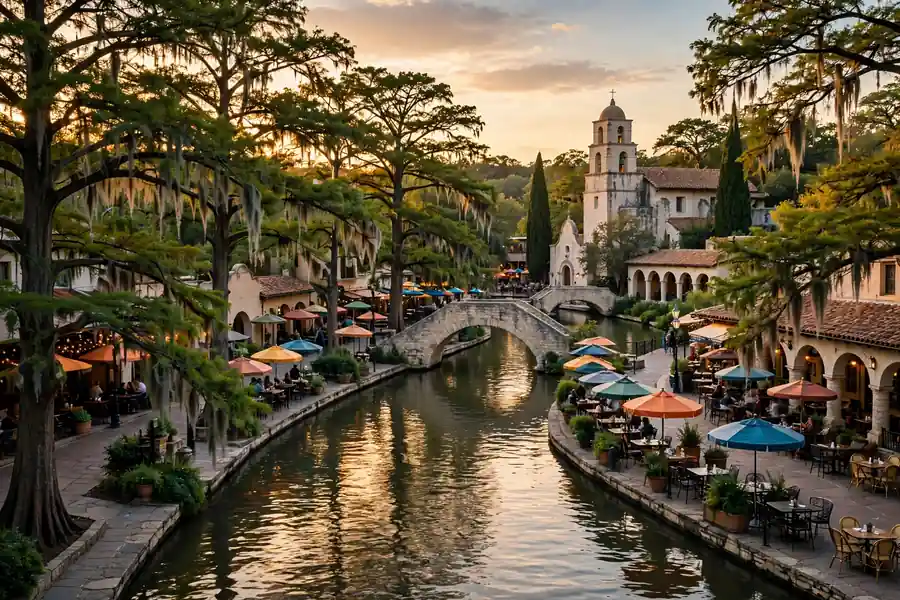
The River Walk is San Antonio’s signature: a network of stone paths and bridges along the San Antonio River, one level below street traffic and lined with cypress trees, cafes, and hotels. The downtown loop is the liveliest stretch. Walk it early in the morning for quiet photos, ride one of the narrated river barges to get your bearings, then return at night when the lights reflect on the water and the restaurant patios fill up.
At street level, five minutes away, stands the Alamo. The small stone church is the surviving heart of the 1836 battle that became central to Texas identity. Entry to the church is free, though timed reservations are recommended, especially on weekends and during spring break. Give yourself time for the exhibits and the grounds — the site explains far more than the famous last stand, and respectful quiet is part of the visit.
The Mission Trail: Four More Missions, One National Park
What many visitors miss is that the Alamo was one of five missions. The other four — Concepción, San José, San Juan, and Espada — form San Antonio Missions National Historical Park, a UNESCO World Heritage Site spread along the river south of downtown. Mission San José is the grandest, famous for its carved Rose Window, while Concepción retains original frescoes faded by three centuries of sun.
The Mission Reach trail links them all, and renting a bike is the most enjoyable way to cover the route. Go early in warmer months, carry water, and remember these are still active parishes — Sunday services are open to visitors who dress and behave respectfully. Travelers who love layered colonial history often pair this trip with the Lowcountry, and our Charleston travel guide makes a fine companion read.
Neighborhoods, Markets and Heights
For a change of texture, spend an afternoon at the Pearl, a former brewery north of downtown that now anchors the city’s best food hall, farmers markets, and riverside lawns. South of the center, the King William Historic District shows off grand 19th-century homes along shaded streets, best seen on a slow self-guided walk.
Historic Market Square — known locally as El Mercado — is the largest Mexican market in the United States, with stalls of pottery, textiles, and folk art, plus mariachi music drifting through the plaza. For a view over it all, ride the elevator up the 750-foot Tower of the Americas in Hemisfair Park, built for the 1968 World’s Fair. Families should also note the nearby San Antonio Botanical Garden, a peaceful 38 acres that shows off Texas native plants beautifully in spring.
Tex-Mex and What to Eat
San Antonio claims, with justification, to be the birthplace of Tex-Mex as most Americans know it. Order puffy tacos — the city’s signature, with shells that inflate in hot oil — and try migas at breakfast and a proper bowl of carne guisada at lunch. The West Side and Southtown hold many of the most loved local spots; lines at weekend brunch are a good sign, not a deterrent.
Barbecue has a strong foothold here too. If smoked brisket becomes a theme of your Texas trip, compare notes with the pits described in our Dallas travel guide and the live-music-and-brisket pairing in our Austin travel guide — Austin is barely an hour and a half up the interstate, which makes the two cities natural trip partners. Finish evenings the local way: a paleta or a raspas from a neighborhood stand beats any chain dessert.
Day Trips from San Antonio
The Texas Hill Country begins almost at the city limits. Fredericksburg, about seventy miles northwest, offers German heritage, peach stands in summer, and tasting rooms along Wine Road 290. Our Texas Hill Country road trip strings the best of it together, swimming holes and barbecue included. Closer in, Natural Bridge Caverns delivers an easy underground escape from the Texas heat.
Drivers heading further afield can fold San Antonio into a grand Texas loop. The small-town detours in our guide to places to visit near San Angelo suit a westward drive, while classic Americana fans can connect north to the route covered in our Route 66 road trip itinerary. For the full framework, the routes and checklists in our ultimate USA road trip planner and the southbound options in our guide to places to visit in Oklahoma near Dallas will round out a multi-state plan, and river lovers should glance at our Great River Road trip guide for the Mississippi counterpart to San Antonio’s own river culture.
When to Visit and Getting Around
Spring is San Antonio at its best: wildflowers, mild days, and Fiesta, the city’s huge multi-day celebration in April. Fall runs a close second. Summer is genuinely hot — plan outdoor sights for mornings, carry water, and lean on the River Walk’s shade. Winter is mild and quiet, with the river dressed in holiday lights.
Downtown, the River Walk, and the Pearl are easy on foot or by the VIA bus and streetcar-style routes; rent a car for the missions and any Hill Country day trip. If you are also weighing the state’s other great historic city-pairing, our Savannah travel guide shows a Georgia version of the same recipe — old streets, riverfront evenings, and food worth traveling for.
Museums, Gardens and Family Stops
When you are ready to step off the river, San Antonio’s museum corridor along Broadway rewards a full afternoon. The Witte Museum covers Texas deep time — dinosaurs, rock art, and the story of the land itself — and it is the family favorite of the city. A short walk away, the San Antonio Museum of Art fills a former brewery with everything from Latin American folk art to one of the South’s best antiquities collections, and its riverside terrace is a quiet place for coffee.
The Briscoe Western Art Museum, right on the River Walk, tells the story of the American West through painting, sculpture, and artifacts, while the nearby Japanese Tea Garden transforms an old rock quarry into koi ponds, stone bridges, and shaded paths — admission is free, and it photographs beautifully in the morning. Brackenridge Park ties the area together with the San Antonio Zoo, a miniature train, and picnic lawns under huge oaks. Together these stops prove the city has far more depth than its two most famous sights suggest.
San Antonio After Dark
Evenings belong to the river. The downtown loop glows after sunset, and a slow barge ride at night shows the bridges and cypress trees at their most romantic. Southtown, just south of downtown, hums with galleries that stay open late during First Friday art walks, and the neighborhood’s small restaurants and cocktail bars fill with locals rather than tour groups.
For live music, look to the historic dance halls and listening rooms scattered from the West Side to St. Mary’s Strip, where conjunto, country, and indie acts share the same week. Mariachi bands still drift through Market Square well into the evening. However you end the day, a late walk along a quiet stretch of the Mission Reach — moonlight on the water, the city hushed behind you — is the San Antonio memory many visitors prize most.
San Antonio FAQs
How many days do you need in San Antonio?
Two days covers the River Walk, the Alamo, and one or two missions. Three days adds the full mission trail by bike and a neighborhood-and-food day. Four days lets you add a Hill Country day trip without rushing.
Is the Alamo really free?
Yes, entry to the Alamo church is free, though timed entry reservations are recommended and some special exhibits or tours cost extra. Arrive early in the day for the calmest experience.
What is the best month to visit San Antonio?
Late March and April offer wildflowers, comfortable temperatures, and Fiesta season. October is another sweet spot, with cooler evenings and thinner crowds at the missions.
Key Takeaways
San Antonio’s magic is in the combination: one famous shrine, four working missions, a river that doubles as a promenade, and food that anchors the whole experience. Walk the River Walk at dawn and again after dark, give the mission trail a full unhurried day, and eat where the locals line up. You will leave wondering why the city is not on every Texas itinerary already.