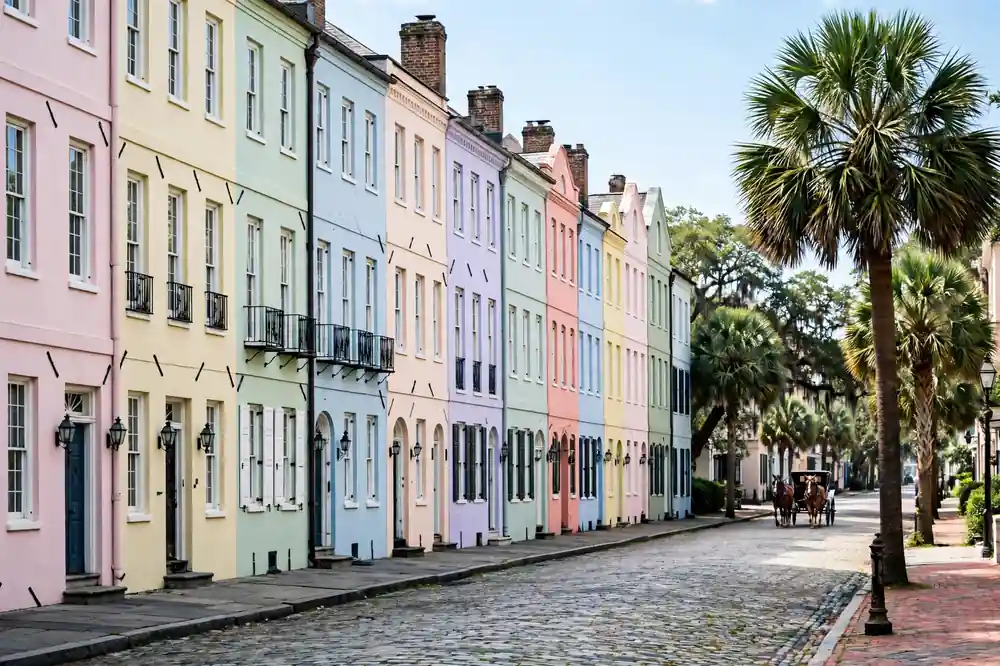
Charleston packs more history, color, and flavor into a few walkable blocks than most American cities manage in a whole county. The best things to do in Charleston start in the Historic District, where cobblestone lanes, pastel mansions, and church steeples sit beside one of the prettiest working harbors on the East Coast. Add in grand plantations, barrier-island beaches, and a food scene built on Lowcountry classics, and you have a trip that rewards slow mornings and long, wandering afternoons.
This guide covers the essentials in a sensible order: the historic core first, then the harbor and plantations, then beaches, food, and the practical details that make the trip run smoothly. Most first-time visitors find that three to four days is the sweet spot.
Best Things to Do in Charleston’s Historic District
Start at Rainbow Row, the famous line of thirteen colorful Georgian houses along East Bay Street. Go early in the morning, when the light is soft and the tour groups have not arrived yet. The houses are private homes, so admire them from the sidewalk and take your photos from across the street.
From there, walk a few blocks south to the Battery, a promenade along the harbor lined with grand antebellum homes and old live oaks. White Point Garden, at the tip of the peninsula, is a shady place to rest and look out toward the harbor. It is one of the simplest and most enjoyable things to do in Charleston, and it costs nothing.
Next, head to the Charleston City Market, a long open-air market that has operated since the early 1800s. Local artisans sell sweetgrass baskets woven in the Gullah tradition, along with art, jewelry, and food gifts. For shopping with more polish, walk King Street, which mixes antiques and bookstores near Marion Square with familiar national brands further north.
Churches, Alleys and Quiet Corners
Charleston is nicknamed the Holy City for its many steeples, and several historic churches welcome visitors during the week. Slip down Philadelphia Alley or Longitude Lane afterwards — these narrow, hidden passages feel a world away from the busy streets. A guided walking tour is worth the money here, because the best stories hide behind gates and garden walls that you would otherwise walk straight past.
Fort Sumter and the Harbor
Fort Sumter, out in the harbor, is where the first shots of the Civil War were fired in April 1861. The only way to reach it is by tour boat from downtown or from Patriots Point across the river. Boats fill up in spring and summer, so reserve your seats ahead of time rather than hoping for walk-up space.
Before or after the boat ride, stop at Patriots Point to tour the USS Yorktown, a World War II aircraft carrier turned museum ship. Back on the downtown side, the South Carolina Aquarium on the waterfront is a strong rainy-day option, especially for families. If your tastes run to older history instead, the Old Slave Mart Museum offers a sobering, important look at the city’s past that many visitors consider essential.
Plantations and Gardens Worth the Drive
The plantation roads along the Ashley River are home to some of the most visited gardens in America. Middleton Place is known for its sculpted terraced gardens, which are often described as the oldest landscaped gardens in the country. Magnolia Plantation, next door, takes a wilder, more romantic approach, with swamp gardens and long nature trails.
On the other side of the city, Boone Hall Plantation is famous for its long avenue of moss-draped live oaks. Wherever you go, take the presentations on enslaved life seriously — the better plantations now tell the full story of the people who built and worked these estates, and those tours are the most memorable part of the visit. Plan half a day for one plantation rather than rushing through two.
Charleston pairs naturally with its sister city further south. Many travelers combine both in one trip, and our guide to things to do in Savannah shows how the two cities differ — Savannah is moodier and more laid-back, while Charleston feels polished and maritime.
Beaches and Island Escapes
When you need a break from sightseeing, three beach towns sit within about half an hour of downtown. Folly Beach is the relaxed, surf-friendly option, with a long fishing pier and casual seafood shacks. Sullivan’s Island is quieter and more residential, with wide sand and a small main street of restaurants near its historic lighthouse.
As you immerse yourself in Charleston’s vibrant history and culinary delights, careful planning can enhance your experience and ease your journey. Packing efficiently for a trip filled with exploration is essential; it allows you to navigate the cobblestone streets and visit the grand plantations without the burden of excess luggage. To ensure you have everything you need while traveling light, consider an effective carry-on packing list that streamlines your essentials. This approach not only saves time at the airport but also gives you more freedom to enjoy Charleston’s charm without the hassle of bulky bags. With the right preparation, you can focus on the breathtaking landscapes and rich heritage that define this enchanting city.
Isle of Palms splits the difference, offering a resort feel and plenty of rental homes. On the way back into town, detour to Johns Island to see the Angel Oak, a sprawling live oak estimated to be several hundred years old. Coastal South Carolina has a charm all its own; if you enjoy it, the lighthouse-dotted route in our Coastal Maine road trip itinerary delivers a very different, New England version of the same slow coastal pleasure.
What to Eat: Lowcountry Classics
Charleston is one of the best food cities in the South. Start with shrimp and grits, the signature Lowcountry dish, and she-crab soup, a rich bisque you will find on menus all over the peninsula. Collard greens, hoppin’ John, and fresh local oysters in season round out the traditional table.
For a splurge, book a chef-driven tasting menu on upper King Street well in advance — the best rooms fill up weeks ahead on weekends. Barbecue fans should note that South Carolina’s mustard-based sauce is its own tradition, quite different from the brisket culture described in our Austin travel guide; trying both styles is half the fun of a Southern food trip. Save room for benne wafers and a slice of hummingbird cake from a local bakery.
Best Time to Visit and Getting Around
Spring, from March to May, brings warm days, blooming gardens, and festival season — along with the year’s highest hotel prices. Fall, from late September through November, is nearly as pleasant and a little calmer. Summer is hot and humid, with afternoon thunderstorms; winter is mild and quiet, and rates drop noticeably.
Downtown Charleston is compact and very walkable, and a free downtown shuttle loop covers the main sights. You only really need a car for the plantations and beaches. If you are building a longer Southern journey, Charleston also works as the starting point of a bigger loop — the routes in our Great River Road trip guide and our Natchez Trace Parkway road trip pair well with it, and the planning advice in our ultimate USA road trip planner will help you stitch the days together. Travelers who fall for the region often extend south afterwards, following our Florida Keys road trip down to the islands, or ending with the sunsets in our Key West travel guide.
Tours Worth Booking: Carriages, Ghosts and Harbor Sails
Charleston is a city that reveals itself best in stories, and its tour scene is unusually strong. Horse-drawn carriage tours loop the Historic District with guides who point out hidden gardens, explain the distinctive Charleston single house, and adjust every story to the questions the carriage asks. Routes are assigned by lottery at the start of each tour, a quirky local system designed to spread carriages evenly across the neighborhoods.
After dark, the mood changes. Charleston’s ghost tours are a beloved tradition, weaving documented history through graveyards, alleys, and the old city jail. They are more atmospheric than frightening, and the best guides treat the legends with a historian’s care. If you prefer your evening on the water, sunset sailing charters slip out of the marina for two quiet hours of skyline views, dolphin sightings, and Fort Sumter from a completely different angle.
Food tours deserve a place on the list too. A guided walk through the Upper King district strings together tastings of shrimp and grits, barbecue, and benne-seed everything while explaining how Gullah traditions shaped the Lowcountry table. Book these experiences for your first or second day — the orientation pays off for the rest of the trip, and the most popular departures sell out in spring.
Charleston FAQs
How many days do you need in Charleston?
Three days covers the Historic District, one plantation, and a beach afternoon. Add a fourth day if you want Fort Sumter, a second plantation, and an unhurried food day. History lovers comparing the two great Southern ports can also read how San Antonio handles its own layered past in our San Antonio travel guide.
Is Charleston expensive to visit?
Downtown hotels are pricey in spring and fall, but you can save by staying in Mount Pleasant or West Ashley and driving in. Many top sights — the Battery, Rainbow Row, and the beaches — are free, and plantation tickets are the main admission cost.
What is the best month to visit Charleston?
April and October usually offer the best mix of mild weather and manageable crowds. Gardens peak in spring, while fall brings oyster season and comfortable beach days without the summer humidity.
Key Takeaways
Charleston rewards travelers who slow down. Base yourself downtown, walk the Historic District early in the day, and give the plantations the time they deserve. Mix in a beach morning, at least one great Lowcountry dinner, and a harbor boat ride, and you will understand why so many visitors start planning their return trip before the first one ends. If you are touring the wider Carolinas in autumn, the fall-color drive in our Blue Ridge Parkway fall foliage guide makes a fine extension — or simply come back in October and enjoy Charleston’s own golden season.