Dallas does big with confidence: the largest urban arts district in the country, a park built on top of a freeway, and brisket worth planning a weekend around. The best things to do in Dallas balance that polish with real history — from the solemn ground of Dealey Plaza to the blues-soaked streets of Deep Ellum — and everything sits within an easy, driveable core.
This guide covers the essentials in a visitor-friendly order: the Arts District and downtown first, then Dealey Plaza, Deep Ellum, the Arboretum, and a Fort Worth day trip. Two to three days is enough for the highlights, with the State Fair demanding its own day in the fall.
Best Things to Do in Dallas: The Arts District and Downtown
Start in the Dallas Arts District, a walkable grid of museums and performance halls a few blocks from downtown’s towers. The Dallas Museum of Art is the anchor, with free general admission and collections that span ancient Americas art to contemporary installations. Across the street, the Nasher Sculpture Center pairs a serene garden with one of the finest private sculpture collections ever assembled.
Steps away, Klyde Warren Park floats above the freeway on a deck of green lawns, food trucks, and free daily programming — yoga at dawn, concerts at lunch, games for kids all day. It is the single best place to feel how downtown Dallas actually lives. The Perot Museum of Nature and Science, with its dinosaur halls and earthquake simulator, is the family favorite nearby, and the Crow Museum of Asian Art rounds out the district without an admission fee.
Dealey Plaza and the Sixth Floor Museum
No Dallas visit is complete without Dealey Plaza, where President John F. Kennedy was assassinated on November 22, 1963. The Sixth Floor Museum, set in the former Texas School Book Depository, walks carefully through Kennedy’s life, presidency, and that day, using the actual corner window vantage as its centerpiece. Audio guides include first-hand accounts and news footage.
Book tickets ahead — entry is timed and weekends sell out. Outside, the grassy knoll and memorial plaza invite quiet reflection, and the nearby John F. Kennedy Memorial, a stark open-air cenotaph by architect Philip Johnson, completes the visit. Give this part of the day unhurried time; it is the most affecting history in the city, told with similar care to the older stories in our Charleston travel guide.
Deep Ellum, Uptown and Bishop Arts
Deep Ellum, just east of downtown, was a 1920s blues and jazz hotspot and is now Dallas’s live-music and street-art quarter. By day, photograph the murals and browse the indie shops; by night, the venues fill up and the patios spill onto Elm Street. It is the neighborhood to pick for an evening out.
For a different mood, ride the free M-Line trolley up to Uptown, where McKinney Avenue mixes upscale dining with a leafy, walkable feel along the Katy Trail. Across the river, the Bishop Arts District in Oak Cliff offers two blocks of independent boutiques, galleries, and some of the most loved small restaurants in the city — go for dinner and stay for the people-watching.
The Arboretum, White Rock Lake and Reunion Tower
East of downtown, the Dallas Arboretum and Botanical Garden spreads 66 acres of seasonal plantings along White Rock Lake. Spring’s Dallas Blooms brings hundreds of thousands of tulips; autumn fires up thousands of pumpkins; and the lakeside lawns are lovely in any month. Rent bikes or join the joggers on the lake trail afterwards for the city’s favorite outdoor hour.
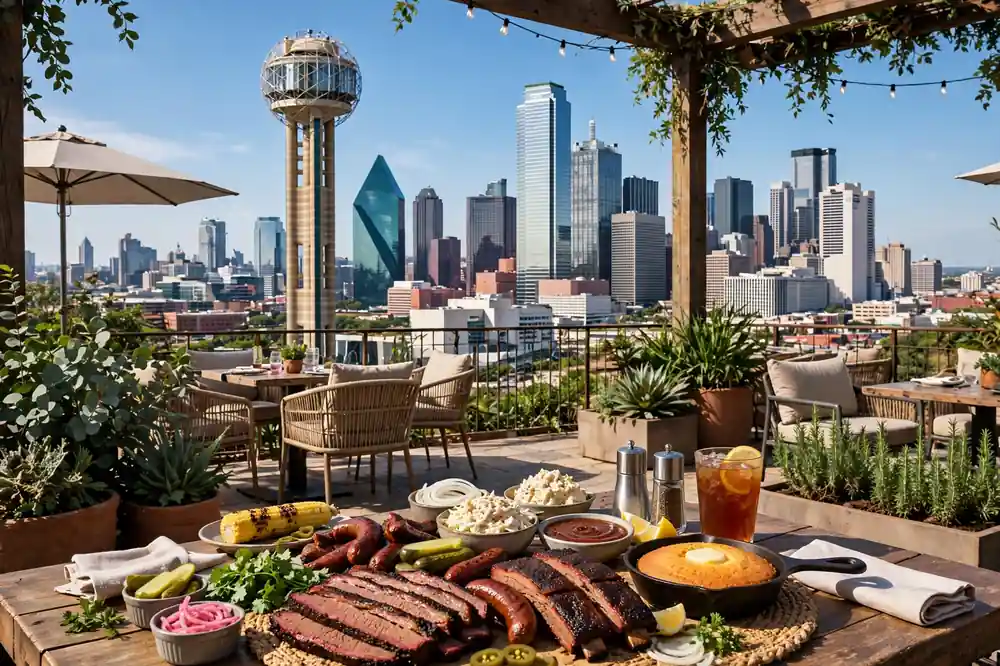
Back downtown, end a day at Reunion Tower, the 561-foot landmark topped with a glowing geodesic ball. The observation deck — GeO-Deck to locals — gives you the full skyline read, and sunset is the hour to choose. Views secured, the natural next stop is dinner; compare the coming barbecue notes with the pit stops in our San Antonio travel guide and the trailer scene in our Austin travel guide.
What to Eat: Brisket and Beyond
Dallas barbecue means brisket: salt-and-pepper bark, rendered fat, and slices cut thick. The most celebrated joints sell out by early afternoon, so treat lunch as the main event and arrive before noon. Beyond the pits, the city does upscale Tex-Mex, serious steakhouses, and a growing roster of chef-driven spots in Bishop Arts and the Design District.
Save one breakfast for chicken-fried steak or a stack of pancakes at a beloved old diner, and if your visit lands in fall, surrender a full day to the State Fair of Texas at Fair Park — Fletcher’s corny dogs, the 55-foot Big Tex, and fried everything. Food-focused road trippers can extend the theme west with the swimming-hole-and-brisket route in our Texas Hill Country road trip.
Day Trip: Fort Worth, the Other Half of DFW
Fort Worth, about 35 miles west, is the essential Dallas day trip — close enough for dinner back in Dallas, different enough to feel like another state of mind. The Stockyards National Historic District runs twice-daily cattle drives down Exchange Avenue, where you can watch longhorns pass, tour the rodeo grounds, and two-step at Billy Bob’s, the world’s largest honky-tonk.
The Cultural District counters with heavyweight museums: the Kimbell Art Museum, widely considered one of the finest small museums in America, the Modern Art Museum, and the Amon Carter’s Western collection. Drivers building a bigger Texas-and-beyond loop will find kindred stops in our guide to places to visit in Oklahoma near Dallas, the westward ideas in our guide to places to visit near San Angelo, and the Amarillo stretch of our Route 66 road trip itinerary, all of which slot into the framework of our ultimate USA road trip planner. Southern history fans looping back east should not miss the river cities in our Great River Road trip guide or the food-and-history weekend in our Atlanta travel guide.
When to Visit and Getting Around
Spring and fall are Dallas at its best — wildflowers and patio weather early in the year, football and the State Fair later on. Summer heat is serious; plan indoor sights for midday and embrace the city’s air-conditioning. Winter is mild, with occasional cold snaps and the Arboretum’s holiday displays.
DART light rail links downtown, the Arts District, both airports’ corridors, and Deep Ellum reliably, and the free trolley covers Uptown. You will still want a car for Fort Worth, the Arboretum, and barbecue runs. Budget tip: the two big art museums and the Crow are free, Klyde Warren Park programming is free, and many visitors find the city far better value than coastal equivalents.
Game Day, Stadiums and Only-in-Dallas Extras
Dallas takes its teams personally. Tours of AT&T Stadium in Arlington — home of the Cowboys — run most non-game days and deliver genuine wow moments: the vast arched roof, the enormous center-hung screen, and art installations that would hold their own in the Arts District. Back in Dallas proper, the American Airlines Center keeps the Mavericks and Stars in season downtown, and game nights give Deep Ellum a natural second act.
For a quieter only-in-Dallas hour, wander Dallas Heritage Village at Old City Park, where dozens of 19th-century Texas buildings — a schoolhouse, a farmstead, a main street of storefronts — were gathered and preserved near downtown. Costumed interpreters on event days bring the pioneer era to life without a hint of theme-park gloss. Fair Park deserves a look even outside fair season: its collection of Art Deco buildings from the 1936 Texas Centennial is the largest of its kind in the country.
Shopping the Dallas Way
Retail is a contact sport here — Neiman Marcus began in Dallas, and its downtown flagship still anchors Main Street with old-school elegance. NorthPark Center pairs luxury stores with a serious rotating art collection and landscaped courtyards, making it as much gallery as mall. Highland Park Village, open-air and Spanish-styled, is where Dallas goes to see and be seen over a long lunch.
Prefer independent? The Bishop Arts shops already mentioned are the antidote to mall fatigue, and the Design District’s galleries and antique warehouses reward an unhurried afternoon. Either way, shopping counts as a legitimate Dallas sight, not filler between them.
Dallas FAQs
How many days do you need in Dallas?
Two days covers the Arts District, Dealey Plaza, Deep Ellum, and a barbecue pilgrimage. Three adds Fort Worth properly. Add a full extra day in fall if the State Fair is on — it deserves one.
Is Dallas or Fort Worth better for tourists?
Dallas wins on museums, dining, and nightlife polish; Fort Worth wins on Western heritage, walkable stockyards, and a slower pace. The honest answer is both — they are 35 miles apart and complement each other perfectly.
What is Dallas best known for?
The Kennedy assassination site, the Arts District, big-league sports, brisket, and a skyline that lights up like nowhere else in Texas. And yes, the television show helped.
Key Takeaways
Dallas rewards planners: book the Sixth Floor Museum, eat brisket before noon, and give Fort Worth its own day. Mix the free museums and parks with one splurge dinner and a Deep Ellum night, and you will see why locals insist their city is far more than a business stop. Big D, it turns out, is a genuinely good time.