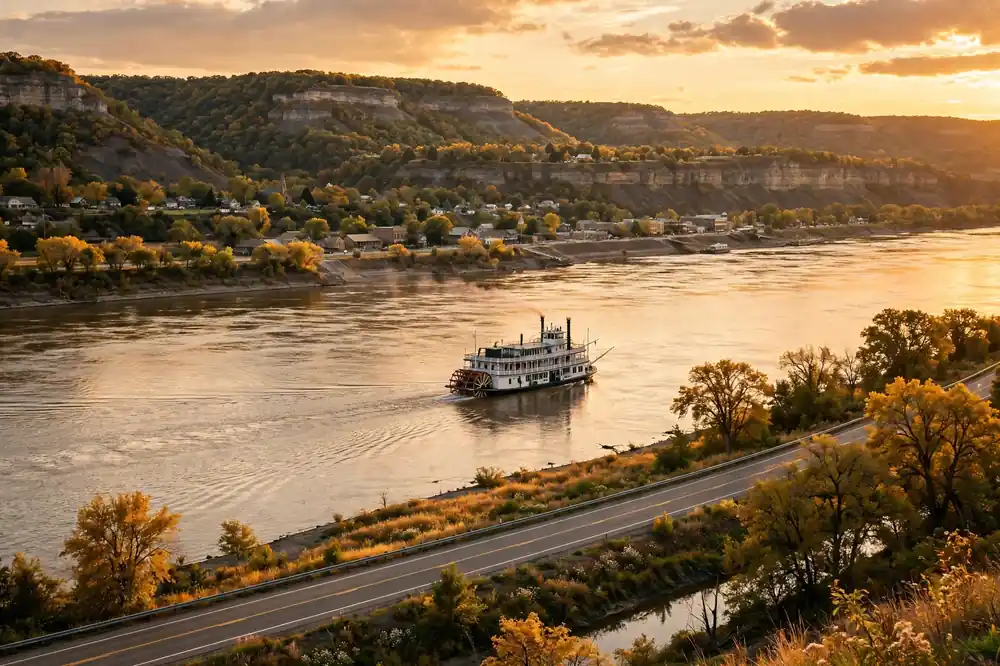
A great river road trip follows the Mississippi River for roughly 3,000 miles, from its humble beginnings at Lake Itasca in Minnesota to the Gulf of Mexico below New Orleans. The Great River Road is not a single highway but a network of state and local roads through ten states, marked by green signs bearing a riverboat pilot’s wheel. Follow them, and the river stays your companion the whole way south.
Few drives tell the American story so completely. You will pass towering bluffs in the north, Mark Twain’s hometown in Missouri, the blues-soaked streets of Memphis, and the plantation country of Louisiana. Most travelers drive one section at a time over four to seven days, and this guide covers the highlights from top to bottom, with the best river towns, food stops, and practical tips.
Planning Your Great River Road Trip
The route runs through Minnesota, Wisconsin, Iowa, Illinois, Missouri, Kentucky, Tennessee, Arkansas, Mississippi, and Louisiana. North-to-south is the classic direction, because the river grows grander as you go and the trip ends with a celebration in New Orleans. Our guide to things to do in New Orleans helps you plan that finale, and many drivers start with a day in the Twin Cities or a detour using our Chicago travel guide, since the Illinois section passes within reach of the city.
Watch for the pilot wheel signs and be ready to cross the river often; the best route zigzags between banks to catch the finest towns on each side. Bridges are part of the fun. Keep a real map or downloaded offline maps handy, because the designated route changes road numbers constantly. Spring and fall offer the best driving weather, while summer brings river festivals and long golden evenings, balanced against southern heat and humidity.
The Northern River: Minnesota, Wisconsin and Iowa
The river starts as a stream you can step across at Itasca State Park, then widens quickly into something worthy of the name. South of the Twin Cities, the road enters the Driftless Area, where the Mississippi cuts between 500-foot bluffs that glaciers somehow missed. Lake Pepin, a natural widening of the river, is rimmed with charming towns like Red Wing and Wabasha, and the whole lakeshore fits beautifully into our roundup of the best lake towns in the USA.
On the Wisconsin side, Stockholm and Pepin serve pie and local art in equal measure, while the Iowa side answers with the river towns of Guttenberg and Dubuque, one of the oldest settlements west of the Mississippi. Stop at an overlook near Effigy Mounds National Monument to see Native American burial mounds shaped like bears and birds, some more than a thousand years old. River eagles patrol these bluffs in winter, and lock-and-dam viewing platforms let you watch barges rise and fall with the water.
The Middle River: Illinois, Missouri and Memphis
Illinois and Missouri hold the river’s most famous literary stop: Hannibal, Missouri, the boyhood home of Samuel Clemens, better known as Mark Twain. Tour the Mark Twain Boyhood Home, walk to the lighthouse above town, and picture Tom Sawyer and Huck Finn on the water below. River towns like Hannibal anchor our list of the best small towns in the USA, and the whole middle section is rich with them, from Galena’s brick main street in Illinois to Ste. Genevieve’s French colonial houses in Missouri.
At St. Louis, the Missouri River joins the Mississippi and the Gateway Arch rises 630 feet over the waterfront. Ride to the top if heights do not bother you, then continue south to Memphis, where the river turns musical. Walk Beale Street, tour Graceland, and eat barbecue until you understand why this stretch of riverbank belongs in every discussion of the best food cities in the USA. Music fans may also enjoy knowing that the river has a rail twin: our Amtrak train travel guide describes trains that shadow the Mississippi for much of the journey.
The Southern River: Mississippi and Louisiana
South of Memphis, the river slows and widens through the Delta, the flat, fertile land that gave America the blues. Small towns like Clarksdale keep that heritage alive with juke joints and the Delta Blues Museum. Then comes Natchez, the oldest city on the river, famous for its antebellum homes on the bluffs. Natchez is also where another great drive begins: the Natchez Trace Parkway road trip heads northeast to Nashville, and combining the two routes makes a superb Southern loop.
Louisiana’s River Road, between Baton Rouge and New Orleans, passes the great plantation houses, including Oak Alley with its famous canopy of live oaks. These sites increasingly tell the full story, including the lives of the enslaved people who built and ran them, and guided tours handle that history with honesty. Approaching New Orleans, the river bends in its famous crescent, levees rise on both sides, and the road delivers you to the French Quarter. Like the drives celebrated in our ultimate USA road trip planner, this one ends in a city that rewards staying a while. Drivers comparing America’s legendary routes often pair it with the Route 66 road trip itinerary, and the contrast between river culture and desert highway is part of the pleasure.
On the Water: Riverboats, Locks and Wildlife
A river road trip should include time on the river itself. Sightseeing cruises leave from St. Louis, Memphis, and New Orleans, and multi-day paddlewheel voyages run the full length for travelers who want the slow version. Even a one-hour harbor cruise changes your perspective: the bluffs, bridges, and working waterfronts make far more sense from the water than from behind a windshield.
The locks and dams are the river’s unsung attractions. The Army Corps of Engineers built a staircase of locks to keep the upper river navigable, and most have free viewing platforms where you can watch a towboat push fifteen barges — carrying as much freight as hundreds of trucks — through the chamber. Kids love it, engineers love it, and everyone leaves with new respect for the working river. Wildlife refuges line the flyway too, so in spring and fall the sky fills with migrating pelicans, egrets, and ducks, and patient observers spot eagles and osprey fishing the backwaters.
What to Eat Along the River
Each state claims a specialty, and sampling them is half the itinerary. Minnesota and Wisconsin bring walleye sandwiches and cheese curds. Iowa and Illinois serve pork tenderloin sandwiches bigger than the plate. Missouri answers with St. Louis toasted ravioli and gooey butter cake, then Memphis counters with dry-rub ribs. In Mississippi and Louisiana, the menu turns to fried catfish, tamales in the Delta, po’boys, gumbo, and beignets. Budget time, not just money, for meals; river town cafes are rarely in a hurry, and neither should you be.
Great River Road Trip FAQs
How long does it take to drive the whole Great River Road?
The full 3,000-mile route takes about ten days of steady driving with modest stops, and two weeks is more comfortable. Most people choose one region — north, middle, or south — and give it four to seven days.
What is the best section for a first Great River Road trip?
The middle section from Hannibal to Memphis packs in the most famous sights per mile: Mark Twain’s hometown, the Gateway Arch, and Memphis music and barbecue. The northern bluffs section is the prettiest drive.
How do you follow the route without getting lost?
Follow the green pilot wheel signs and download the official state-by-state maps before you go. Expect frequent road changes, and when in doubt, head toward the river — the route always returns to it. Scenic byway fans can compare this journey with the mountain curves in our Blue Ridge Parkway fall guide to see how differently two great American byways can feel.
Practical Tips for the Drive
Check river conditions before you set out. In wet springs, high water can close low sections of the route, especially in the Delta, and detours are usually well signed. Fuel stations thin out in rural stretches of Mississippi and Arkansas, so top up in the bigger towns. Lodging ranges from chain hotels in the cities to family-run motels and river-view bed and breakfasts in the small towns, and the B&Bs are often the trip’s warmest memories. Finally, leave unscheduled time every day. The Great River Road’s best moments — a ferry queue chat, a free concert in a riverfront park, a towboat passing at sunset — rarely appear in any itinerary, including this one.
Key Takeaways
- The Great River Road stretches about 3,000 miles through ten states, marked by pilot wheel signs.
- Highlights include Lake Pepin, Hannibal, St. Louis, Memphis, Natchez, and the Louisiana River Road.
- Drive north to south for a route that builds to a New Orleans finale.
- Cross the river often; the best towns sit on alternating banks.
A great river road trip is less about the miles than about the current that carries you through them. The Mississippi has been America’s main street for centuries, and this drive lets you read its story town by town, meal by meal, and bend by bend. Pick your section, watch for the pilot wheel, and let the river set the pace.