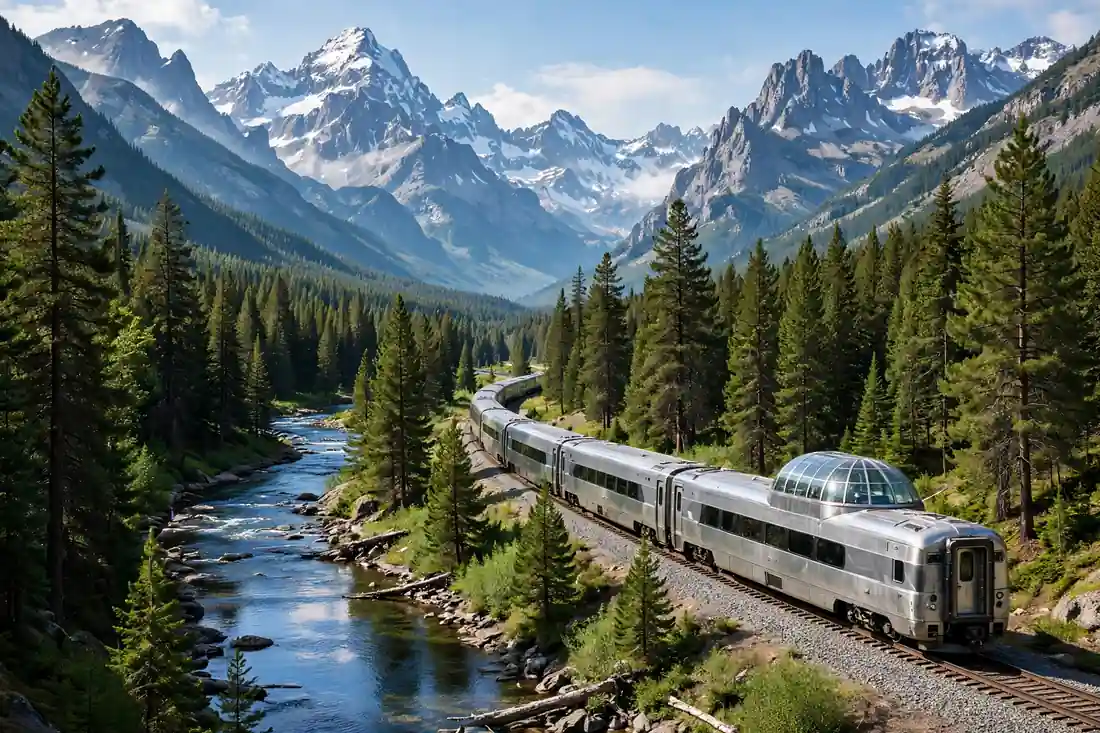
There is a moment on every long-distance train, usually somewhere in the mountains at breakfast, when the trip stops feeling like transportation and starts feeling like the vacation itself. This amtrak train travel guide is for travelers who want that experience without the guesswork: the routes worth your time, the difference between coach and a sleeper, and how to book the whole thing sensibly.
Amtrak runs passenger trains across most of the country, serving more than 500 stations in 46 states. You will not use it to win a race against a plane. You use it for scenery, space, and the simple pleasure of watching America roll past a very large window.
Why Choose the Train?
Start with comfort. Coach seats on long-distance trains are wide, recline deeply, and come with leg rests and real legroom, plus power outlets and no middle seats. You can stand up, walk to the lounge car, and watch the landscape from panoramic windows whenever you like. Stations are usually downtown, so you skip the airport trek at both ends.
Then there is the scenery argument. Classic drives like the one in our route 66 road trip itinerary are wonderful, but the driver sees mostly road. On the train, everyone gets the view, including through places with no roads at all, like the Colorado River canyons the California Zephyr crosses. If you are comparing travel styles for a big American trip, the train is the slow, comfortable middle ground between flying and driving.
The Great Long-Distance Routes
The California Zephyr runs between Chicago and the San Francisco Bay Area, crossing the Rockies and the Sierra Nevada in daylight on a well-planned schedule. For many riders it is the single most scenic train trip in the country. The Empire Builder heads northwest from Chicago to Seattle and Portland, tracing the northern plains and Glacier National Park country before crossing the Cascades.
The Coast Starlight links Seattle and Los Angeles, mixing Cascade mountain forests with long stretches of Pacific coastline. The Southwest Chief follows much of the old Santa Fe trail between Chicago and Los Angeles through the desert Southwest. In the east, the Crescent runs from New York to New Orleans, the Silver Service trains connect New York with Florida, and the Auto Train carries passengers and their cars between Virginia and Florida, the only service of its kind in the country.
Shorter regional routes fill in the map. The Pacific Surfliner hugs the Southern California coast, the Downeaster links Boston with Maine, and the Cascades trains serve the Pacific Northwest corridor between Eugene, Portland, Seattle, and Vancouver.
The Northeast Corridor: Acela and Northeast Regional
Between Washington, DC, New York, and Boston, the train stops being the slow option and becomes the smart one. Northeast Regional trains are frequent and affordable, while Acela is Amtrak’s fastest service, with upgraded seating and fewer stops. City-center to city-center, these trains routinely beat flying once airport time is counted.
The corridor also makes an easy multi-city trip. You could ride to the capital using our washington dc travel guide, continue north for a few days with the boston weekend itinerary, and never rent a car at all.
Coach, Business, and Sleeper Cars Compared
Coach is the default and, on daytime trips, all most people need. On overnight long-distance trains, coach passengers sleep in their reclining seats; bring a small pillow, blanket, eye mask, and earplugs, and it is a manageable, budget-friendly night or two.
Private sleeper rooms are the classic upgrade. A Roomette is a compact room for one or two with seats that convert to bunks; a Bedroom adds space and a private bathroom with shower. Larger family bedrooms and accessible rooms exist on many trains. Sleeper fares are per room, not per person, and meals in the dining car are typically included for sleeper passengers, which narrows the real price gap with coach once two people travel together.
Western long-distance trains add a Sightseer Lounge car with wraparound windows, open to all passengers. However you travel, spend time there. It is the social heart of the train and the best seat in America on mountain days. Chicago’s Union Station is the hub where most of these western routes begin, so our chicago travel guide pairs naturally with a Zephyr or Empire Builder departure.
Food on Board: Dining Car, Café Car, and Your Own Snacks
Most long-distance trains carry a dining car serving full meals to sleeper passengers and, when space allows, to coach passengers by reservation. A café car sells sandwiches, snacks, and drinks for most of the journey. Quality and menus vary by route, so veteran riders board with realistic expectations and a personal snack stash.
You may bring your own food and non-alcoholic drinks aboard. A small cooler bag with breakfast items, fruit, and treats makes early coach mornings far more pleasant. Alcohol you bring yourself must stay in your private room; in public areas, only drinks bought on board are allowed.
Sleeping in Coach: How to Rest Well Without a Room
Thousands of riders sleep in coach every night, and a little preparation turns it from an endurance test into a perfectly decent night. The seats recline far and the leg rest rises, so bring the kit that makes it feel like a bed: a travel pillow that supports your neck from the side, a light blanket or oversized scarf, an eye mask, and earplugs or noise-canceling headphones. The train’s air conditioning runs cool at night, so dress in layers you can adjust.
Set yourself up before the car quiets down. Use the restroom, brush your teeth, organize your bag so valuables stay against your body or under your seat, and tell the conductor if you need a wake-up call before your stop; crews routinely wake passengers ahead of their destination, including at small hours. Most people manage one reasonable night in coach easily, and even two on a cross-country run. If your trip involves three nights or more, that is the point where a Roomette usually earns its price.
Tickets, Fares, and Booking Tips
Amtrak fares work like airline fares: they rise as the train fills, and the cheapest coach buckets sell out first. Booking early matters most for sleeper rooms, which are limited and popular in summer and fall. Saver and value fares are the cheapest but carry change and refund restrictions, while flexible fares cost more and forgive last-minute plans.
If you are planning several rides in one trip, look at Amtrak’s multi-ride tickets and the USA Rail Pass, which bundles multiple segments into one pass for rail-heavy itineraries. Check current terms before you buy, because pass prices and rules change. Coach seats on many western routes are unreserved by segment or assigned at boarding, so arrive at the station with time to spare.
Stations, Baggage, and Packing
Amtrak’s baggage policy is more generous than the airlines’. You can typically bring two personal items and two carry-on bags free, and larger stations on major routes offer checked baggage service. Even so, you must lift your own bags onto racks and through narrow corridors, so pack lighter than you think. Our carry-on packing list is a good model for a train-friendly bag.
Arrive 30 to 45 minutes before departure, or an hour ahead if you are checking bags or traveling in a sleeper from a major station. Big-city stations like New York’s Moynihan Train Hall and Chicago Union Station are sights in themselves. And if trains leave you wanting more track time, Ohio’s cuyahoga valley national park guide includes a beloved scenic railroad ride through the national park.
Making a Trip of It
The best Amtrak trips mix train days with city days. Ride the Empire Builder west, then recover with a couple of nights using our seattle travel guide before flying home. Take the Zephyr to Emeryville and cross the bay to follow our san francisco itinerary. For lodging at each stop, this hotel vs airbnb comparison helps you decide between downtown hotels near stations and rentals for longer stays.
Trains also suit independent travelers well, since you control the schedule and the lounge car provides company when you want it, a point our solo travel usa guide makes about rail travel in general. However you build it, leave slack in the plan. Long-distance trains can run hours late, so never schedule a same-day flight or event right after a cross-country arrival.
Delays and Connections: Set Honest Expectations
Long-distance trains share most of their track with freight railroads, and delays of an hour or two on a cross-country run are normal rather than exceptional. Weather, freight congestion, and track work can stretch that further. Build your plans around the reality: never book a flight, cruise, or event for the same evening a long-distance train arrives, and keep the first night’s plans flexible.
When Amtrak sells you a connecting itinerary, it guarantees the connection and will rebook or accommodate you if its own delay makes you miss it, but self-built connections between separate tickets are your own risk. The Amtrak app and station boards give live train status, and checking your train’s progress the night before departure tells you whether to expect an on-time boarding or a leisurely station breakfast instead.
Key Takeaways
- Choose the California Zephyr or Empire Builder for the classic scenic experience.
- Book sleepers early; for two people, included meals close the gap with coach.
- On the Northeast Corridor, the train is often faster than flying door to door.
- Pack light, arrive early, and build buffer time around long-distance arrivals.
Book the route, claim a window seat, and let the country come to you. That is the whole secret of amtrak train travel, and it never really gets old.