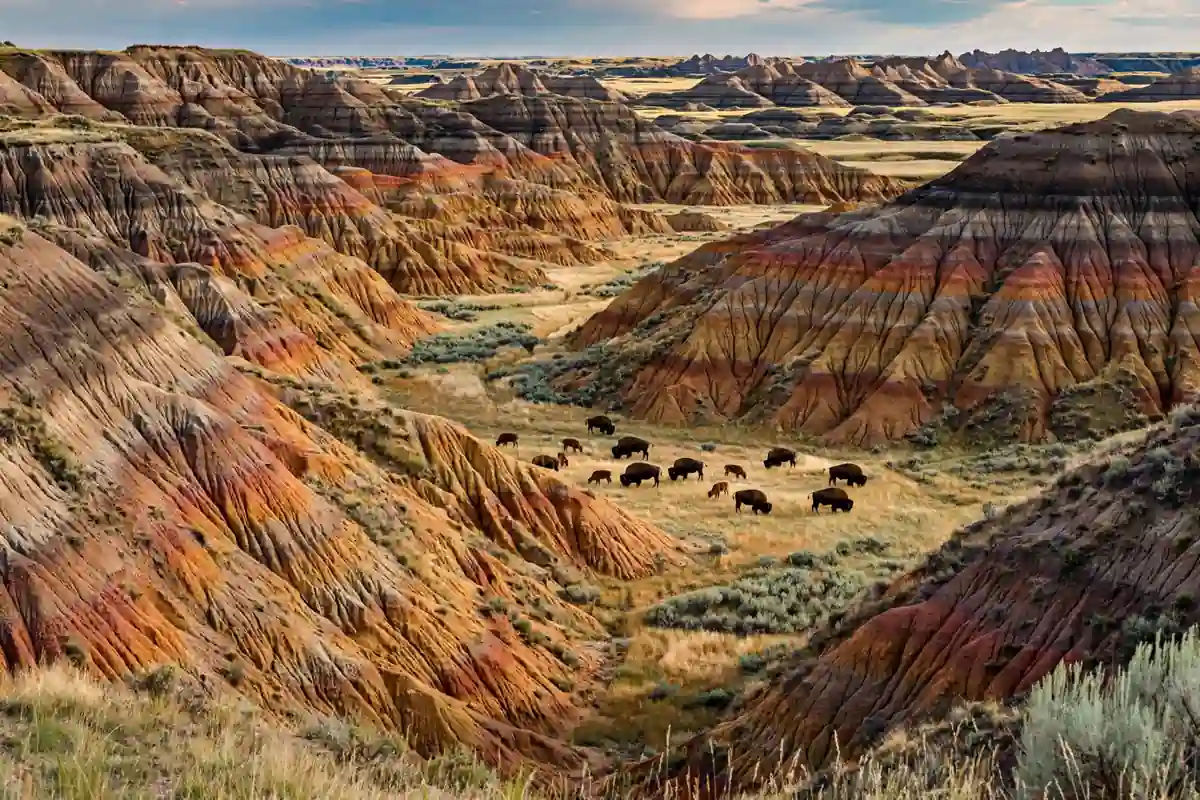
Theodore Roosevelt National Park in North Dakota is one of the most underrated national parks in America. President Theodore Roosevelt called his time in the North Dakota Badlands the place where “the romance of my life began,” and the park that bears his name still captures that wild spirit. Painted canyons, herds of bison, wild horses, prairie dog towns, and wide-open skies stretch across three separate units in the western part of the state.
This guide covers the best hikes, scenic drives, wildlife viewing, and practical tips for visiting Theodore Roosevelt National Park. Whether you are passing through on a road trip or planning a dedicated weekend, this park offers a quieter, wilder alternative to the crowded parks of the West.
Why Theodore Roosevelt National Park Is Special
The park protects the rugged Badlands landscape that shaped a young Theodore Roosevelt. After his wife and mother died on the same night in 1884, Roosevelt came to North Dakota to grieve and to ranch cattle. He later said the experience made him who he was, and as president he protected more than 230 million acres of public land.
Today, the park has three units: the South Unit near Medora, the North Unit near Watford City, and the remote Elkhorn Ranch Unit, where Roosevelt’s ranch once stood. The South Unit is the most visited, the North Unit is wilder and more rugged, and the Elkhorn Ranch Unit requires a long drive on gravel roads. Together, they protect a landscape of buttes, coulees, and grasslands that feels timeless.
Best Hikes in Theodore Roosevelt National Park
Start with the Painted Canyon Nature Trail in the South Unit, a short, easy loop that introduces you to the colorful Badlands formations. The trail is less than a mile long, but the views of layered red, orange, and tan rock are spectacular, especially in the morning light.
The Wind Canyon Trail is another short favorite, leading to a narrow canyon carved by the Little Missouri River. At sunset, the canyon glows, and the river bends below the overlook in a perfect curve. For a longer hike, try the Petrified Forest Loop, a 10-mile trail through one of the largest petrified forests in the National Park System. The trail is challenging, with little shade and no water, so carry plenty of supplies and start early.
In the North Unit, the Caprock Coulee Trail offers a 4.5-mile loop through buttes and grasslands, with chances to see bison and wild horses. The Buckhorn Trail, a longer loop in the North Unit, takes you deep into the backcountry, where you can camp under some of the darkest skies in the lower 48 states.
Scenic Drives in the Park
The South Unit Scenic Loop Drive is a 36-mile paved road that winds through the heart of the Badlands. Overlooks along the way include Scoria Point, Buck Hill, and the Boicourt Overlook, where you can look down on a prairie dog town and, often, a herd of bison. Allow at least two hours, and longer if you stop for short hikes.
The North Unit Scenic Drive is a 14-mile road that ends at the Oxbow Overlook, one of the most photographed views in North Dakota. The road climbs through the Badlands and offers sweeping views of the Little Missouri River valley. Both drives are suitable for any car in good weather, but check conditions after rain, when gravel sections can become muddy.
Wildlife Watching in Theodore Roosevelt National Park
Bison are the stars of the park, and you will likely see them grazing near the roads, especially in the morning and evening. Keep a safe distance of at least 25 yards from bison and other large animals, and never approach them for a photo. Bison can run faster than a horse and can be dangerous when they feel threatened.
Wild horses, descendants of ranch horses that went feral, roam the South Unit in small bands. Prairie dogs chatter from their towns near the roads, and you may also spot mule deer, pronghorn, coyotes, and golden eagles. Bring binoculars, drive slowly, and be patient: wildlife viewing rewards those who take their time.
When to Visit Theodore Roosevelt National Park
Late spring and early fall are the best times to visit. From May through June, the grasslands are green, wildflowers bloom, and temperatures are mild. September and October bring golden grass, cooler air, and fewer visitors. Summer can be hot, with temperatures above 90 degrees, and thunderstorms are common in the afternoon.
Winter in the Badlands is harsh but beautiful, with snow on the buttes and very few visitors. Some roads may close after snowstorms, and services in nearby towns are limited. If you visit in winter, check road conditions, carry emergency supplies, and dress for extreme cold and wind.
Fees, Camping, and Practical Tips
The park charges an entrance fee, and the America the Beautiful pass covers entry. The South Unit has two campgrounds: Cottonwood Campground, which is open year-round, and the smaller Juniper Campground in the North Unit. Both are first-come, first-served for much of the year, and they fill up on summer weekends.
There are no restaurants or gas stations inside the park, so stock up in Medora or Watford City before you enter. Cell service is limited, so download maps in advance. Bring water, sun protection, and insect repellent in summer, when mosquitoes and ticks are active. New to camping? Read our camping for beginners guide before your trip.
Medora and the South Unit
Medora, the gateway town to the South Unit, is a charming Western town with a musical, a cowboy hall of fame, and Theodore Roosevelt’s Maltese Cross Cabin, which stands near the park visitor center. The cabin is small and simple, but it tells a powerful story about the man who would become president.
From Medora, you can also visit the Theodore Roosevelt National Park visitor center, watch the park film, and pick up maps and ranger advice. In summer, the Medora Musical runs in an outdoor amphitheater on the edge of the Badlands, and it is a fun evening addition to a park trip.
Elkhorn Ranch: Roosevelt’s Remote Retreat
The Elkhorn Ranch Unit is the most remote part of the park, reached by a 35-mile drive on gravel roads from Medora. Roosevelt called the Elkhorn his home ranch, and he lived there for extended periods in the 1880s. Today, only the foundation stones remain, but the site feels deeply peaceful, with the Little Missouri River flowing nearby and no crowds in sight.
The drive to Elkhorn Ranch can be rough after rain, so check conditions at the visitor center before you go. A high-clearance vehicle is recommended, and you should carry extra water and a spare tire. The reward is solitude and a direct connection to American history.
Theodore Roosevelt and Other Great Parks
If you love the Badlands, you will enjoy other rugged parks too. Compare the landscape with our guides to Badlands National Park, Big Bend National Park, and White Sands National Park. Each park has a different desert character, and Theodore Roosevelt stands out for its grasslands, wildlife, and presidential history.
For more hiking ideas, see our guides to Shenandoah National Park, Sequoia National Park, and Everglades National Park. If you want mountain scenery, check the best hikes in the Smoky Mountains and Grand Teton hikes, and for desert camping tips, read our Death Valley camping guide.
One-Day and Two-Day Itineraries
With one day, focus on the South Unit: drive the scenic loop, hike Painted Canyon and Wind Canyon, watch for bison and wild horses, and finish with sunset at Buck Hill. Stop in Medora for dinner and a walk through town.
With two days, add the North Unit on day two: drive to the Oxbow Overlook, hike the Caprock Coulee Trail, and enjoy the wilder, quieter side of the park. If you have a third day and a suitable vehicle, make the trip to Elkhorn Ranch for a deeper look at Roosevelt’s story.
Stargazing and Photography in the Badlands
Theodore Roosevelt National Park is one of the best places in the United States for stargazing, thanks to its remote location and very dark skies. On a clear night, the Milky Way is bright enough to cast a faint shadow, and the park occasionally hosts ranger-led night sky programs in summer. Bring a tripod, a red flashlight to protect your night vision, and warm layers, because temperatures drop quickly after sunset even in summer.
For daytime photography, the golden hours just after sunrise and just before sunset are best, when low light paints the buttes in shades of red, orange, and gold. Buck Hill, the Painted Canyon Overlook, and the Oxbow Overlook are all excellent at these times. Take your time, watch for bison in the morning light, and remember to keep a safe distance from all wildlife while you shoot.
Conclusion: The Park That Made a President
Theodore Roosevelt National Park is not the most famous park in America, and that is exactly why it is worth visiting. You get dramatic Badlands scenery, abundant wildlife, dark night skies, and a powerful piece of American history, all without the crowds. Visit in spring or fall, drive slowly, keep your distance from wildlife, and take time to stand quietly on a butte and look across the grasslands. You will understand why Roosevelt said the Badlands gave him back his life.