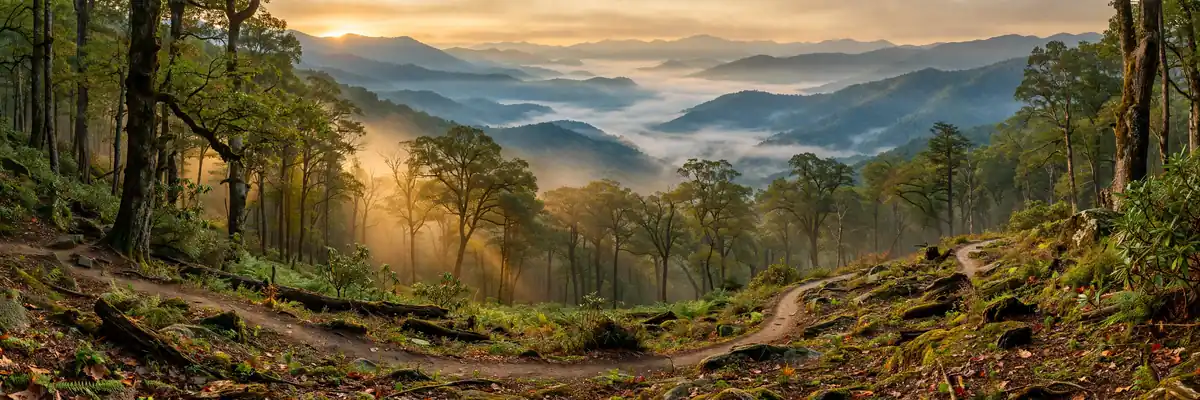
The Great Smoky Mountains hold a simple, staggering fact: this is the most visited national park in the entire United States, drawing more than 12 million people in a typical year. And yet the park hides its best moments on foot, not behind a windshield. Beyond the famous overlooks along Newfound Gap Road, more than 850 miles of trails thread through misty hollows, past 80-foot waterfalls, and up to grassy balds with views that stretch across three states. Choosing from that maze is the hard part, so this guide ranks the very best Great Smoky Mountains hikes — the trails that deliver the biggest payoff for the effort, the ones worth planning a whole trip around.
What makes these trails special is variety. In a single long weekend you can walk behind a waterfall, climb to the highest point in Tennessee, stand on a rocky knob above the Appalachian Trail, and drift through a valley where wild turkeys strut past 19th-century barns. The best hiking trails in the USA come in many flavors, but the Smokies’ combination of old-growth forest, black bears, synchronous fireflies, and honest-to-goodness mountain scale is genuinely one of a kind.
The Best Great Smoky Mountains Hikes, Ranked
1. Alum Cave to Mount LeConte — The Classic Smokies Day Hike
If you hike only one trail in the park, make it this one. The Alum Cave Trail climbs 11 miles round trip to the summit of Mount LeConte, the third-highest peak in the Smokies, and every section feels like a different hike. You start among old-growth hardwoods, pass through Arch Rock — a natural stone archway the trail ducks straight through — and climb to Alum Cave Bluffs, a towering concave cliff where the trail follows a narrow ledge. The last stretch opens onto a spruce-fir ridge and the summit at 6,593 feet, where LeConte Lodge sits as the highest guest lodge in the eastern United States, reachable only on foot. The lodge has operated since 1926, and hikers who arrive at lunchtime can buy a hot meal during the lodge season. With about 2,800 feet of elevation gain, this one is strenuous but absolutely achievable for fit beginners who pace themselves — a very different kind of challenge than a desert canyon descent. Arrive before 8 a.m. because the small parking lot fills fast.
2. Charlies Bunion — Appalachian Trail Views Without the Crowds
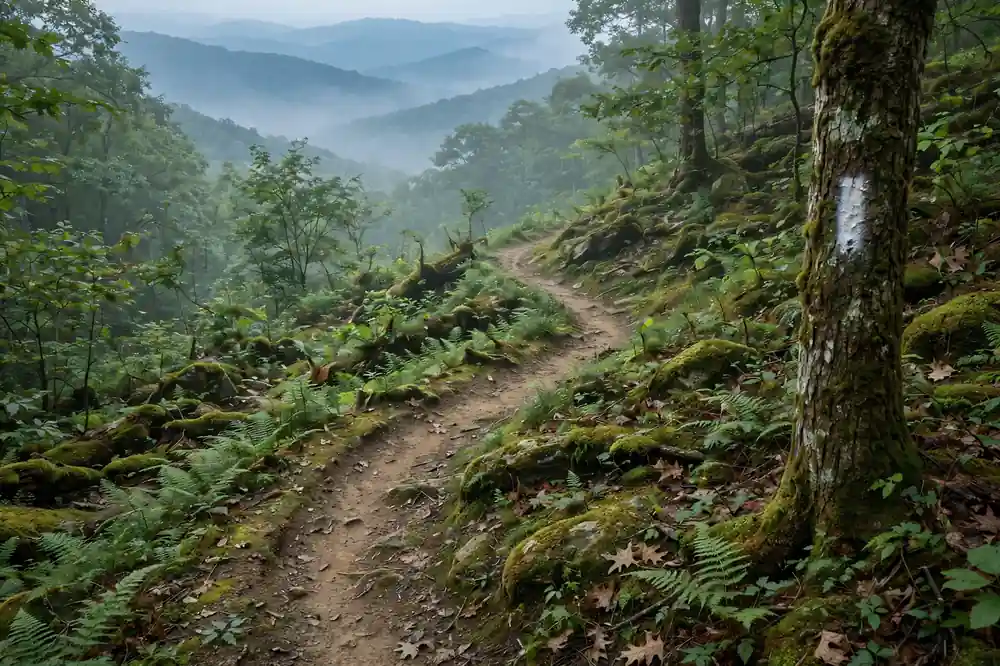
Charlies Bunion is an 8.1-mile round trip along the Appalachian Trail from Newfound Gap, and it offers one of the most dramatic viewpoints in the entire park. The trail follows the AT’s white blazes through a high-elevation forest recovering from an old fire, then climbs to a jagged rock outcrop with 360-degree views into the heart of the Smokies and across to the Tennessee side. The famous “Jump Off” spur adds a half mile for even wilder views. The climb is steady rather than brutal — about 1,640 feet of gain — and the first two miles are a gentle warm-up along the ridge. Because it starts at busy Newfound Gap (5,046 feet), parking fills by mid-morning, so treat it like an early start or a late-afternoon hike. Dreaming bigger? Our ultimate USA road trip planner shows how to string famous trails like this one into one great journey — this AT section is one of its most beautiful stretches.
3. Abrams Falls — The Smokies’ Most Popular Waterfall Hike
Abrams Falls plunges only 20 feet, but it pushes more water over its ledge than any other waterfall in the park, and the deep pool at its base glows a surreal green-blue. The 5.2-mile round trip from Cades Cove is mostly easy to moderate, winding through pine-oak forest along Abrams Creek with several footbridges. This is the waterfall hike to choose if you want maximum reward for modest effort, and it pairs perfectly with a morning driving the Blue Ridge Parkway in fall season or an afternoon in Cades Cove itself. Warning: the pool’s current is dangerously strong, and swimming is discouraged despite how tempting the water looks. Pair it with the best hikes in Zion if you want to compare waterfall hikes across the country — Zion’s slot canyons play a very different game.
4. Rainbow Falls — The Tallest Single-Drop Waterfall in the Park
Rainbow Falls drops 80 feet, the highest single drop in the Smokies, and on sunny afternoons the mist at its base catches the light in exactly the way the name promises. The 5.4-mile round trip climbs steadily — about 1,500 feet of gain — through hardwood forest that erupts in wildflowers each spring. This is one of the best waterfall hikes in national parks alongside Glacier’s cascades, though the Smokies version feels wilder and more intimate. In winter, the falls freeze into a cathedral of ice that ice climbers (with permits) sometimes attempt. The trailhead sits near Gatlinburg, so you can be on the trail minutes after leaving town — a huge advantage over more remote trailheads. Add the Smokies version of a turquoise waterfall to your life; here the water trades desert red rock for emerald forest.
5. Chimney Tops — Short, Steep, and Spectacular
At just 3.9 miles round trip, Chimney Tops is the shortest trail on this list and possibly the steepest, climbing nearly 1,500 feet. The old summit scramble was destroyed in the 2016 wildfires, and the rebuilt trail now ends at a viewing platform with new stone stairs and overlooks — safer, and honestly with views that lost nothing. From the top you stare straight down into the sugar-maple valleys and across to Mount LeConte’s long ridge. This is a superb sunset hike if you time it right, though you must carry a headlamp for the steep descent in the dark. The first mile’s rhododendron tunnels even echo the lush mood of our Olympic rainforest hikes. Compare it with the steep-but-short climbs in our Acadia hikes guide for more East Coast elevation thrills.
6. Andrews Bald — The Highest Grassy Bald in the Park
Andrews Bald sits at 5,820 feet, making it the highest grassy bald in the Smokies, and the 3.6-mile round trip from the Kuwohi (formerly Clingmans Dome) parking area is one of the finest easy-moderate hikes in the park. The trail descends through fragrant spruce-fir forest — the descent means the return climb feels steeper than it looks — and pops out onto an open meadow with sweeping views toward Fontana Lake and the hazy blue ridges beyond. In June the bald explodes with flame azalea and mountain laurel; in October the grass turns gold. Kuwohi itself, at 6,643 feet, is the highest point in Tennessee, and the observation tower half a mile up the paved path is worth the add-on. Note that Kuwohi Road closes December through March. If high-elevation meadows appeal to you, our Rocky Mountain hikes guide covers alpine tundra at even wilder altitudes.
7. Grotto Falls — Walk Behind the Waterfall
The 2.6-mile round trip to Grotto Falls is one of the few trails in America where you can walk behind the waterfall itself, and at 25 feet tall with a lush, fern-draped grotto, it is pure magic. The trail follows the Trillium Gap route — the same path the park’s llama trains use to resupply LeConte Lodge, so you might meet a string of pack llamas on your hike. It is an easy trail with gentle grades, making it ideal for families and for anyone who wants a big payoff without a big climb. In summer the grotto is refreshingly cool, and the salamanders the Smokies are famous for are everywhere along the damp trail. This is the hike to choose on a rainy day, when the forest drips and glows. Before you go, skim our beginner camping guide if you are pairing the hike with a night at Elkmont or Cades Cove Campground.
Best Time to Hike the Great Smoky Mountains
There is no bad season in the Smokies, only trade-offs. Spring (April–May) brings wildflowers — the park hosts the famous Spring Wildflower Pilgrimage — and the synchronous fireflies at Elkmont, one of the few places on Earth where fireflies flash in unison. For 2026, viewing was set for May 20–27 via a Recreation.gov lottery (1,600-plus hopefuls chase 960 vehicle passes), so mark next spring’s calendar now. Summer offers full trail and road access plus swimming holes, but afternoon thunderstorms are a daily threat and parking lots fill by 9 a.m. Fall is the crown season: colors peak from late October into early November, starting at the highest elevations. Winter is the locals’ secret — bears are denning, but with the leaves down, wildlife is easier to spot, and trails like Alum Cave sit nearly empty. Pack layers either way; temperatures drop about 3–5 degrees for every 1,000 feet you climb, and the summit can run 20 degrees colder than Gatlinburg.
Fees, Parking Tags, and Bear Safety: 2026 Logistics
Here is the best news about the Smokies: there is no entrance fee. It remains one of the last major national parks that charges nothing at the gate. What you do need is a parking tag for any vehicle parked longer than 15 minutes — $5 for a day, $15 for a week, or $40 for a year, available at kiosks, visitor centers, and online (print it; phone screenshots are not accepted). The Smokies host the densest black bear population in the eastern United States, so food storage rules are strict: use the bear-proof boxes at backcountry campsites, never leave food in your pack unattended at overlooks, and give bears at least 50 yards of space. Carry bear spray and know how to use it, make noise on blind corners, and hike in groups where possible. For a deeper dive into staying safe and fed in the backcountry, our budget backpacking tips cover food, gear, and planning without the guesswork.
Frequently Asked Questions About Great Smoky Mountains Hikes
Do I need a permit to hike in the Smokies?
Day hikers need no permit — just the parking tag. Backcountry campers need a backcountry permit and must use designated campsites and shelters, reservable on Recreation.gov.
Which Smokies hike is best for beginners?
Grotto Falls (2.6 miles) and Andrews Bald (3.6 miles) offer the best effort-to-reward ratio. Abrams Falls is a step up and still very doable. All three deliver a landmark payoff without punishing climbs.
Can I bring my dog on Smokies trails?
No — dogs are prohibited on all park trails except the Gatlinburg Trail and the Oconaluftee River Trail. This is one of the strictest pet policies in the national park system.
How crowded are the trails?
The famous trails are busy from 10 a.m. to 3 p.m. in summer and fall. Start before 8 a.m. or after 4 p.m. and you will find genuine solitude, even on Alum Cave. Midweek beats weekends dramatically.
Conclusion
The best Great Smoky Mountains hikes share one quality: they make the ancient scale of these mountains personal. Whether you are watching the sun ignite the mist from Charlies Bunion, walking behind Grotto Falls, or standing on the roof of Tennessee at Kuwohi, the Smokies reward the hiker willing to go one mile farther than the crowds. Pick your trail, buy your parking tag, start early, and let the mountains do the rest.