New Orleans is unlike anywhere else in the United States. It is a city where brass bands play on street corners, where dinner is an event, and where three centuries of French, Spanish, African, and American history mix on every block. If you are planning a first visit, this guide to the best things to do in New Orleans will help you enjoy it all without burning out.
Give the city at least three days. The French Quarter alone can fill one, and you will want slow mornings, long lunches, and late music-filled nights.
Wander the French Quarter Slowly
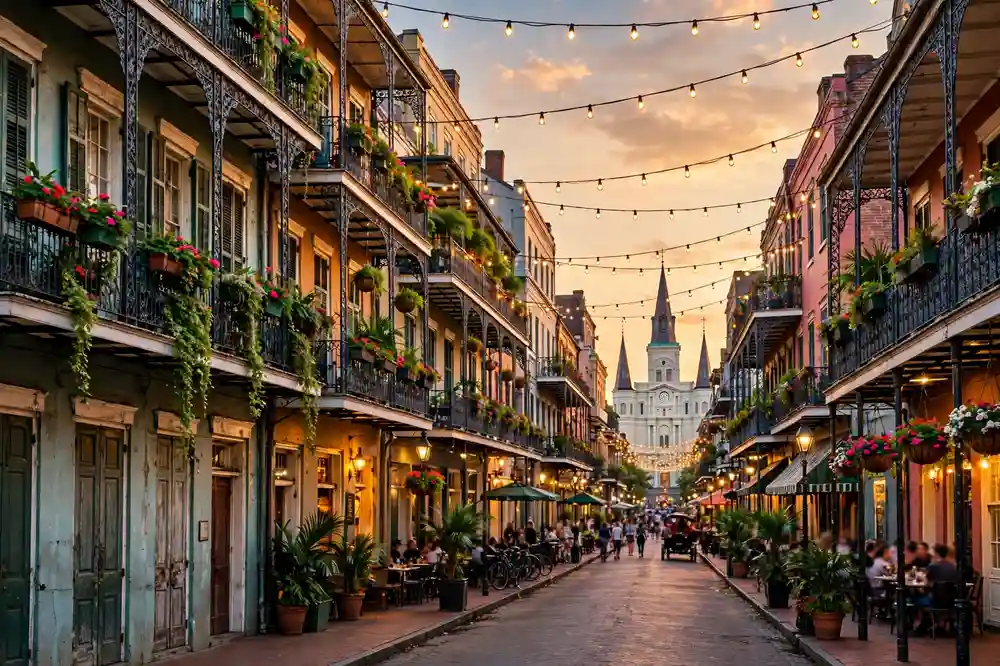
The French Quarter is the city’s historic heart, built largely during Spanish rule after fires destroyed the earlier French buildings. Its cast-iron balconies, hidden courtyards, and pastel facades are best enjoyed on foot, ideally in the morning before the crowds and heat build.
Start at Jackson Square, where the St. Louis Cathedral watches over street artists, fortune tellers, and horse-drawn carriages. The Cabildo museum next door explains Louisiana’s layered history well. Then drift down Royal Street, the Quarter’s elegant side, filled with antique shops, art galleries, and buskers playing on quiet corners.
Bourbon Street is the famous party strip, loud and neon-lit at night. Walk it once for the spectacle, then spend your evenings on the streets locals prefer. The Quarter rewards those who look up at the architecture and duck into courtyards whenever a gate stands open.
At the edge of the Quarter, the French Market has sold goods since the 1790s. Today it mixes food stalls, local crafts, and a flea market. Stop for a muffuletta, the giant Sicilian sandwich layered with cured meats, cheese, and olive salad that is a New Orleans original.
Eat and Drink Like the City Expects You To
New Orleans takes food seriously, and so should you. Start with beignets at Café du Monde, the open-air coffee stand serving fried dough under clouds of powdered sugar since 1862. Go early or late to dodge the longest lines, and wear dark colors at your own risk.
For classic Creole dining, the old-guard restaurants of the Quarter serve dishes like gumbo, shrimp remoulade, and bananas Foster, which was invented here. Across town, neighborhood joints perfect the po’boy, a French-bread sandwich stuffed with fried shrimp or roast beef and gravy. Order it “dressed” with lettuce, tomato, pickles, and mayo.
Seafood lovers should time a visit for crawfish season, roughly late winter through early summer, when backyard-style boils pile spicy crawfish, corn, and potatoes onto newspaper-covered tables. And because the city is proudly one of America’s best food cities, leave room for a modern Creole dinner in the Warehouse District or Uptown, where younger chefs are reworking the classics.
Coffee and cocktails carry history too. The Sazerac and the Ramos Gin Fizz were both born in New Orleans bars. Drink responsibly, pace yourself in the heat, and remember that water is your friend on long festival days.
Chase the Music: Frenchmen Street and Beyond
Music is not entertainment in New Orleans; it is the city’s heartbeat. For live jazz, blues, and brass in intimate rooms, go to Frenchmen Street in the Faubourg Marigny, just past the Quarter. Clubs stand shoulder to shoulder, cover charges are modest, and you can hear three bands in one evening simply by walking the block.
Preservation Hall, a small weathered room in the Quarter, has presented traditional jazz since 1961. Shows are short, seating is mostly benches, and the experience is unforgettable. Buy tickets in advance, because the room is tiny.
For a bigger night, look for brass bands and bounce shows in neighborhood venues, or time your trip for the New Orleans Jazz & Heritage Festival in late spring, when the whole city becomes a stage. Whatever you choose, tip the musicians. It is the local way.
Ride the Streetcar to the Garden District
The St. Charles Avenue streetcar, running since 1835, is the oldest continuously operating streetcar line in the world and the prettiest ride in the city. For the price of a coffee, it carries you under live oaks past the grand mansions of the Garden District.
Hop off and walk. The Garden District’s Greek Revival and Italianate houses, wrapped in gardens and iron fences, show how wealthy Americans built in the 1800s. Lafayette Cemetery No. 1, with its white above-ground tombs, sits at the district’s edge; check current access rules before visiting, as entry policies change.
Magazine Street, a few blocks away, stretches for miles with boutiques, cafes, and antique shops. It is the city’s best browsing street and a fine place for a slow afternoon. Uptown also puts you near Audubon Park and the city’s respected zoo.
History That Stays With You
The National WWII Museum, in the Warehouse District, is consistently ranked among the best museums in the country. Its exhibits follow ordinary soldiers, sailors, and home-front workers with honesty and scale. Plan half a day, and book tickets ahead on weekends.
For a deeper understanding of the city’s roots, smaller museums tell essential stories. The Backstreet Cultural Museum in Tremé celebrates Mardi Gras Indian traditions and second-line parades. Plantation tours outside the city vary widely in honesty; choose one that centers the lives of enslaved people, as Whitney Plantation does, for the fuller truth of the region’s history.
Speaking of Mardi Gras: if you visit during Carnival season, know that the real celebration is neighborhood parades, marching krewes, and families in costumes, far richer than the Bourbon Street stereotype. Our breakdown of the best time to visit New Orleans covers Carnival, festival season, and the hot, storm-prone summer in detail.
River, Swamps and Easy Escapes
The Mississippi River shapes everything here. Walk the Moonwalk promenade by Jackson Square at sunset, or board a historic steamboat for a harbor cruise with live jazz. The river’s scale explains why this port mattered so much to a young nation.
Half an hour out of town, the landscape turns to bayou. Swamp tours by flat-bottom boat glide past cypress trees draped in Spanish moss, herons, and usually alligators. Choose an operator that does not feed wildlife, and bring sunscreen and bug spray.
New Orleans also anchors longer Southern routes. The river itself leads north on the Great River Road, while the slow, oak-lined Natchez Trace road trip begins in nearby Natchez. Music fans often continue to the top things to do in Nashville or to an Austin travel guide for Texas live music, and both pair well with a Louisiana start.
Practical Notes for a Smooth Trip
The city is walkable in its core, and the streetcar network covers Uptown and Mid-City, including City Park and the cemeteries. A day pass makes hopping on and off easy. Basic travel safety awareness helps at night, as in any city: stick to lit, busy streets in the Quarter after dark and keep your phone tucked away while walking.
Weather is the big variable. Summers are hot and humid with afternoon storms, and hurricane season runs June through November. Spring and fall are the sweet spots, though festival weeks book hotels early and prices climb. A few proven cheap flight tips help, since New Orleans’ airport is well connected but event weekends sell out.
Train lovers can arrive in style on Amtrak’s City of New Orleans route, the famous overnight run from Chicago that inspired the classic song. First-timers to the country may also want our USA guide for first-time visitors for tipping and transit basics before arriving. Pack light layers, comfortable shoes, and an appetite. New Orleans will handle the rest.
Where to Stay in New Orleans
First-time visitors usually choose between the French Quarter and the Garden District, and both are good answers. The Quarter puts you inside the postcard, steps from the music and the restaurants, with hotels ranging from grand historic properties on Royal Street to small inns tucked behind courtyard gates. Rooms facing Bourbon Street can be loud, so ask for a courtyard or interior room if you sleep lightly.
The Garden District and Uptown offer a calmer base along the streetcar line, with elegant inns and guesthouses under the oaks. You trade a short streetcar ride for quieter nights and a more residential feel. The Warehouse District, between the two, has converted industrial buildings, modern hotels, and the WWII Museum nearby, which suits travelers who want space and art galleries.
Wherever you stay, being near a streetcar stop or a short walk from the Quarter matters more than a famous address. Book far ahead for Mardi Gras, Jazz Fest, and big game weekends, when the whole city fills and rates climb steeply.
Key Takeaways
- Explore the French Quarter in the morning, then graduate to Frenchmen Street for music at night.
- Eat the classics: beignets, gumbo, po’boys, and a muffuletta, plus one modern Creole dinner.
- Ride the St. Charles streetcar and walk the Garden District.
- Give the National WWII Museum half a day; it earns it.
- Time your visit with festivals in mind and book early for spring.
New Orleans does not rush, and neither should you. Eat slowly, listen to every band you pass, and let the city set the tempo. That is when it works its magic.