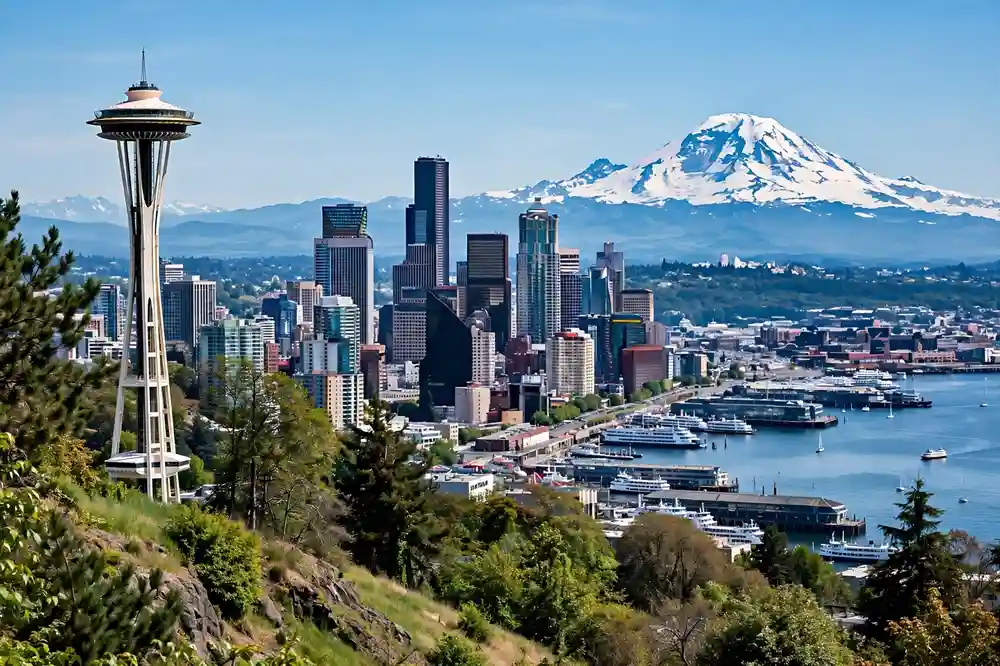
Seattle mixes a working waterfront, evergreen hills, and mountain views in a way few American cities can match. On a clear day, Mount Rainier fills the southern sky like a painting. If you are planning a first trip, this guide covers the essential things to do in Seattle, from its famous market to the wild country that begins almost at the city limits.
Three days is a comfortable amount of time. You can see the classic sights in two, then use the third for a ferry ride or a national park day trip.
Begin at Pike Place Market
Pike Place Market has been the city’s front porch since 1907. Fishmongers famously toss whole salmon through the air, flower stalls burst with seasonal bouquets, and small shops sell everything from handmade jewelry to comic books.
Come hungry and graze your way through. Try piroshky pastries, fresh crumpets, Greek yogurt, and samples of local cherries or apples depending on the season. The very first Starbucks store stands on Pike Place, though locals will gently tell you the city’s best coffee is found at independent cafes instead.
Below the main arcade, the lower levels hide vintage shops and quiet corners with water views. Do not miss the Gum Wall in Post Alley, a strange and colorful tradition where visitors stick chewed gum to a brick wall. It is oddly photogenic and completely free.
Ride Up the Space Needle and Seattle Center
The Space Needle, built for the 1962 World’s Fair, still defines the skyline. Its observation deck now has glass floors and rotating views, so you can look straight down at the city and out across Puget Sound in the same visit. Book timed tickets ahead on weekends.
The grounds around it, called Seattle Center, hold several worthwhile stops. The Museum of Pop Culture, in a wild Frank Gehry building, celebrates music, science fiction, and gaming. Chihuly Garden and Glass displays the blown-glass art of Dale Chihuly in glowing indoor halls and a garden that is magical near sunset.
The monorail, another World’s Fair survivor, zips you back downtown in two minutes and is a small joy in itself, especially for kids.
Get on the Water
Seattle is a city of water, and at least one boat ride belongs on your list. The Washington State Ferries sailing from Pier 52 to Bainbridge Island is the classic budget move. The 35-minute crossing gives you the full skyline view on the way back, and Bainbridge’s main street has bakeries, a bookstore, and ice cream waiting a short walk from the dock.
For a different angle, rent a kayak on Lake Union and paddle past houseboats and seaplanes, or stroll the waterfront piers. The Seattle Aquarium on Pier 59 is strong on local marine life, including playful sea otters and a window wall into Puget Sound’s ecosystem.
Photographers should note that the ferries and the West Seattle water taxi offer some of the best skyline angles in the city; our beginner travel photography tips will help you make the most of the changing light over the Sound.
Neighborhoods Worth Your Time
Ballard and the Locks
Ballard, once a Scandinavian fishing village, is now one of the city’s most enjoyable districts. The Ballard Locks let boats climb between the Sound and the lakes, and in summer you can watch salmon fight up the fish ladder through underwater windows. Nearby streets offer breweries, seafood shacks, and a beloved Sunday farmers market.
Fremont and Capitol Hill
Fremont calls itself the Center of the Universe and backs it up with a giant troll under the Aurora Bridge and a statue of Lenin salvaged from Slovakia. It is quirky, walkable, and full of small cafes.
Capitol Hill is the city’s nightlife and LGBTQ+ heart, packed with coffee shops, indie stores, and restaurants along Broadway and the Pike/Pine corridor. Volunteer Park here has a historic water tower with a free observation deck and one of the best sunset views in town.
Coffee, Food and Rainy-Day Plans
Seattle takes coffee seriously. Beyond the global giant it birthed, neighborhoods are dotted with roasters where baristas treat espresso as craft. A rainy afternoon spent cafe-hopping in Capitol Hill or Ballard is a legitimate Seattle experience, not a backup plan.
The food scene leans Pacific Northwest: salmon, oysters, and Dungeness crab when in season, plus strong Asian restaurants in the Chinatown-International District. The city’s teriyaki shops are a beloved local tradition, and food halls near South Lake Union make group dinners easy.
Rain deserves a honest word. Seattle’s drizzle is usually light, and locals simply carry on. Pack a waterproof jacket rather than an umbrella, and keep a museum or market in your pocket for wet spells. Speaking of planning, a few of the best travel apps for planning help track ferry schedules and timed tickets, and our guide to finding cheap flights can soften the cost of reaching the Pacific Northwest.
Day Trips Into Wild Country
Seattle’s superpower is what surrounds it. The waterfalls and alpine trails of Mount Rainier hikes sit about two hours away and make the classic national park day trip, with wildflower meadows in summer and serious scenery in every season.
North of the city, the rugged peaks in a North Cascades guide reward drivers with turquoise lakes and some of the wildest views in the lower 48 states. South and west, the temperate rainforests and wild beaches described in an Oregon Coast road trip can anchor a longer Pacific Northwest loop, while a Portland travel guide covers Seattle’s laid-back sister city three hours south.
If your trip extends down the coast, a San Francisco itinerary continues the theme of hills, water, and great food, and a Crater Lake guide covers Oregon’s astonishing blue lake for road-trippers. First-time visitors to the country can also brush up on basics with our USA guide for first-time visitors.
A Sample One-Day Plan If You Are Short on Time
Only have a single day? This order keeps travel time low and the highlights high. Start at Pike Place Market when stalls open, and eat breakfast as you wander. Ride the monorail to Seattle Center late morning for the Space Needle and one museum, choosing between pop culture and glass art based on your taste.
Walk back downtown through the Olympic Sculpture Park, a free outdoor space where big artworks frame views of the Sound. After lunch on the waterfront, take the mid-afternoon ferry to Bainbridge Island and back, timed so the return crossing catches the city’s lights coming on.
Finish with dinner in Capitol Hill or Ballard, and a nightcap coffee or dessert near your hotel. You will miss plenty, but you will leave with a fair taste of what makes Seattle special.
Getting Around and Where to Stay
Seattle’s Link light rail connects the airport to downtown and several neighborhoods, and it is the easiest way to arrive. Within the center, the free waterfront streetcar plans aside, most visitors simply walk, use the monorail, and take buses or rideshares to outlying districts like Ballard and Fremont. Driving downtown is rarely worth it, since parking is pricey and hills plus one-way streets slow everyone down.
For hotels, downtown and Belltown put you near the market, the waterfront, and the monorail. South Lake Union is newer and quieter, with good tram links. Travelers who prefer a local feel often choose Capitol Hill or the University District for lower prices and strong cafe scenes, accepting a short transit ride to the sights.
Hills are the one thing to respect. Seattle’s streets can be steep, so plan walking routes with that in mind and save energy for the viewpoints. Good shoes matter more here than in flatter cities.
When to Visit Seattle
Summer is Seattle’s glory season. From late June through September, days are long, skies are often clear, and the mountains show themselves for days at a stretch. This is when ferries, farmers markets, and outdoor concerts all peak, and when hotel prices do the same.
Spring and fall are quieter bargains. Expect more gray skies and some rain, but also open trails at lower elevations, blooming cherry trees around the University of Washington in spring, and far shorter lines at the Space Needle. Winter is the cheapest and wettest season, best for museum lovers and anyone who finds the moody, evergreen light romantic rather than gloomy. Whichever season you pick, book ferries and popular attractions with a little lead time, and the city will feel easy. A little flexibility with dates helps enormously with both prices and crowds.
Key Takeaways
- Start at Pike Place Market early, then graze your way through it.
- Book Space Needle tickets ahead and pair it with Seattle Center’s museums.
- Take the Bainbridge ferry for the best cheap view of the skyline.
- Spend real time in one or two neighborhoods, not just downtown.
- Save a day for Mount Rainier or the Cascades if the weather allows.
Seattle is easygoing, green, and quietly spectacular. Give it good coffee, a boat ride, and one mountain day, and you will leave already plotting a return visit.