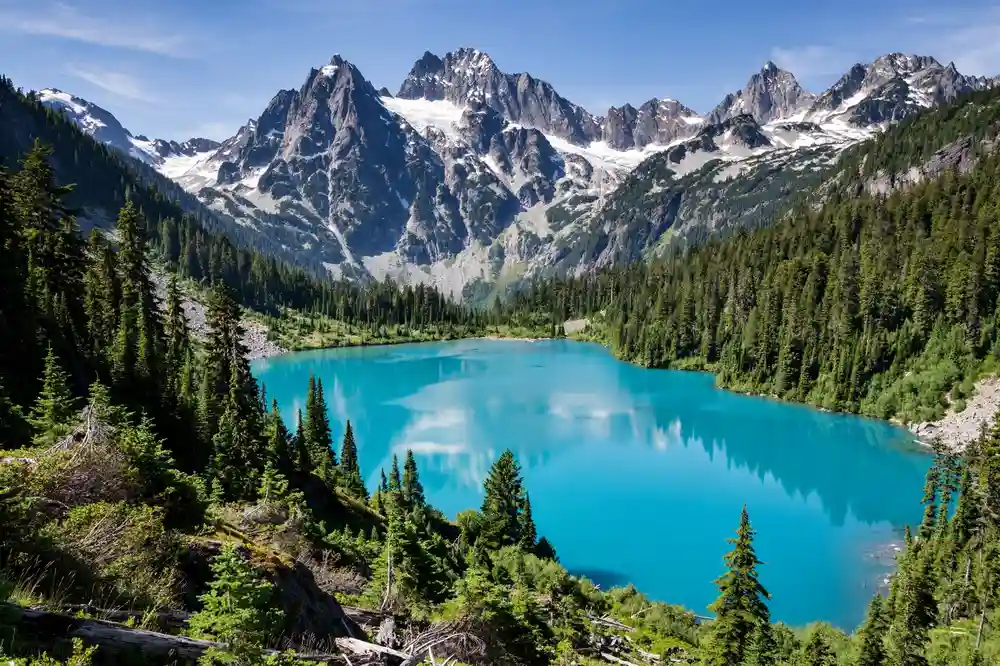
North Cascades National Park is the wildest corner of the American park system: jagged granite peaks, more than 300 glaciers, turquoise alpine lakes, and trails where you may not see another hiker all day. This north cascades national park guide covers everything you need to plan a trip, from the scenic highway that cuts through the park to the best lake hikes, campgrounds, and the short season when the high country is actually reachable.
The park sits in northern Washington, about two and a half hours northeast of Seattle. It protects the heart of the Cascade Range near the Canadian border, and it remains one of the least visited national parks in the country. That is not because it lacks scenery. It is because the terrain is steep, the weather is serious, and there are no lodges or towns inside the park itself. For hikers who want genuine wilderness, that is exactly the appeal.
How to Get to North Cascades National Park
State Route 20, the North Cascades Highway, is the only road that crosses the park, and it is one of the great scenic drives in the West. Most visitors pair the park with a few days in the city first, so our Seattle travel guide helps you plan that part of the trip. From Seattle, drive north on Interstate 5, then head east on SR 20 through Sedro-Woolley, Concrete, and Marblemount, the last town for fuel and supplies.
Two gateway towns anchor most trips. Marblemount, on the west side, sits close to the Cascade Pass trailhead and the park’s visitor center near Newhalem. Winthrop, a frontier-themed town on the east side, works well for the Maple Pass area and makes a pleasant overnight stop. If you are stringing together a longer Pacific Northwest loop, the park also pairs beautifully with our Oregon Coast road trip itinerary to the south.
A crucial detail: SR 20 closes every winter because of heavy snow and avalanche danger, typically from around November until April or May. The exact dates change every year, so check road status before you commit to a route. When the highway is closed, the east and west sides of the park are cut off from each other by a very long detour.
The Best Time to Visit
The hiking season in the North Cascades is short. Snow lingers on the high trails well into July in many years, and the best window for alpine lakes and passes usually runs from mid-July through early October. July and August bring the warmest weather and the most reliable trail conditions, along with wildflowers in the high meadows.
September is a local favorite. Crowds thin out, larch trees turn gold on the eastern slopes, and the air turns crisp. By October, storms return and trails start disappearing under fresh snow again. Winter visits are possible on the west side at low elevations, but expect rain, short days, and a closed highway.
Alpine Lakes You Should Not Miss
Diablo Lake
Diablo Lake is the park’s postcard view, and you barely have to walk to see it. The overlook on SR 20 sits high above water of an unreal milky turquoise, a color created by glacial flour — fine rock dust ground up by glaciers and suspended in the water. For a closer look, the Diablo Lake Trail follows the shore through old-growth forest, and the ferry across the lake serves the off-grid community of Ross Lake Resort’s floating cabins area and backcountry trailheads.
Ross Lake
Ross Lake stretches for more than 20 miles toward the Canadian border. It is a place of total quiet, reached on foot, by boat, or via a long gravel road from the British Columbia side. Water taxis from Ross Lake Resort drop hikers at remote trailheads, and lakeside campsites line the shore. If solitude is your goal, this is the place in the park to find it.
Cascade Pass and Sahale Arm
The hike to Cascade Pass is the most popular in the park, and for good reason. The trail climbs steadily through forest and talus to a saddle with views down Doubtful Lake and across a sea of peaks. Strong hikers continue up Sahale Arm, a wildflower meadow ridge that ends at a glacier camp with one of the finest views in Washington. Marmots, pikas, and occasionally black bears share the trail, so carry your food properly stored.
More Great Hikes in the Park
Maple Pass Loop, near Rainy Pass on the east side, is a ridge walk that rivals anything in the state. The loop climbs past Lake Ann, tops out on a knife-edge ridge with views in every direction, and is at its best in late September when the larches turn. It sits just outside the park boundary in national forest land, so a different parking pass applies — more on passes below.
Thornton Lakes and Trappers Peak offers a tougher day. The trail climbs steeply to a chain of deep blue lakes below jagged summits, and the scramble up Trappers Peak rewards experienced hikers with a panorama over the Picket Range, the park’s most rugged and remote mountains.
Hidden Lake Lookout is another classic: switchbacks through meadows and rock to a historic fire lookout perched above a turquoise lake. The final section crosses steep snowfields into summer, so check conditions and bring traction if you go early in the season.
Fans of alpine lake hiking will find the same magic in our Olympic National Park hikes guide to the west and among the best Grand Teton hikes further afield. This park simply delivers that scenery with a fraction of the foot traffic.
Driving the North Cascades Highway
Even without a long hike, SR 20 is worth the trip on its own. Stop at the Gorge Creek Falls viewpoint, the Diablo Lake Overlook, and Rainy Pass. Washington Pass, at 5,477 feet, is the high point of the road, with Liberty Bell Mountain towering overhead. The overlook trail there is short, paved, and delivers a huge view for almost no effort.
Allow a full day to drive the highway with stops, and far longer if you plan to hike. Fuel up in Marblemount or Winthrop, because there is no gas station along the remote middle stretch of the road.
Fees, Passes, and Permits
Here is a pleasant surprise: North Cascades National Park itself charges no entrance fee. However, many trailheads just outside the park boundary — including Maple Pass and Rainy Pass — sit in national forest land and require a Northwest Forest Pass or the interagency pass. If your trip includes several parks in one year, the math in our national park pass guide shows why the annual pass usually pays for itself quickly.
Backcountry camping requires a free permit from the park, issued on a first-come basis with some advance reservations for popular areas. Car campgrounds along SR 20, such as Colonial Creek on Diablo Lake, fill fast in summer. Practical planning details like permit timing and budgets are covered step by step in our guide to planning a national park trip.
Where to Stay
There is no lodge inside the park. Your options are front-country campgrounds along the highway, the unique floating cabins at Ross Lake Resort (reachable only by boat and foot), and motels in Marblemount, Concrete, and Winthrop. Campers new to the experience will find our camping guide for beginners useful before booking a site in bear country.
Book everything early. Summer weekends fill the campgrounds, and resort cabins often reserve out a year ahead. Many visitors extend the trip south afterward, where the trails in our Mount Rainier hikes guide make an excellent second act to a Cascades road trip.
Safety in Serious Mountain Country
The North Cascades demand respect. Weather changes fast at altitude, and a sunny trailhead can mean wind and sleet at the pass. Carry the ten essentials, download offline maps (cell service is nearly nonexistent), and tell someone your plan. Snowfields linger on steep trails into August; an ice axe or at minimum trekking poles and microspikes can be the difference between a summit and a turnaround.
This is also black bear and mountain goat country. Store food in the provided lockers or a canister, give goats a wide berth, and never approach wildlife for a photo. Hikers building a list of big American treks should also browse the best hiking trails in the USA for honest comparisons of difficulty before committing to the park’s steepest routes like Sahale Arm or Trappers Peak.
Frequently Asked Questions
How many days do you need in North Cascades National Park?
Two to three days covers the highway highlights and two or three major hikes. Serious hikers should plan four or five days to include Ross Lake or a backcountry night.
Is North Cascades National Park crowded?
No. It is consistently one of the least visited national parks in the Lower 48. Even popular trailheads like Cascade Pass feel quiet compared with Rainier or Olympic.
Can you visit North Cascades in winter?
Only partially. SR 20 closes with the first heavy snows, cutting off most trailheads. Low-elevation west-side trails remain open but are wet and dark. For a winter park trip, see our guide to the best national parks to visit in winter.
The Bottom Line
North Cascades is not the easiest park to visit, and that is precisely its gift. Come in late summer, drive the great highway, climb to one turquoise lake after another, and you will understand why hikers who find this place tend to keep it to themselves. Plan carefully, pack for real mountains, and let this north cascades national park guide be your starting point — the quietest great park in America is waiting.