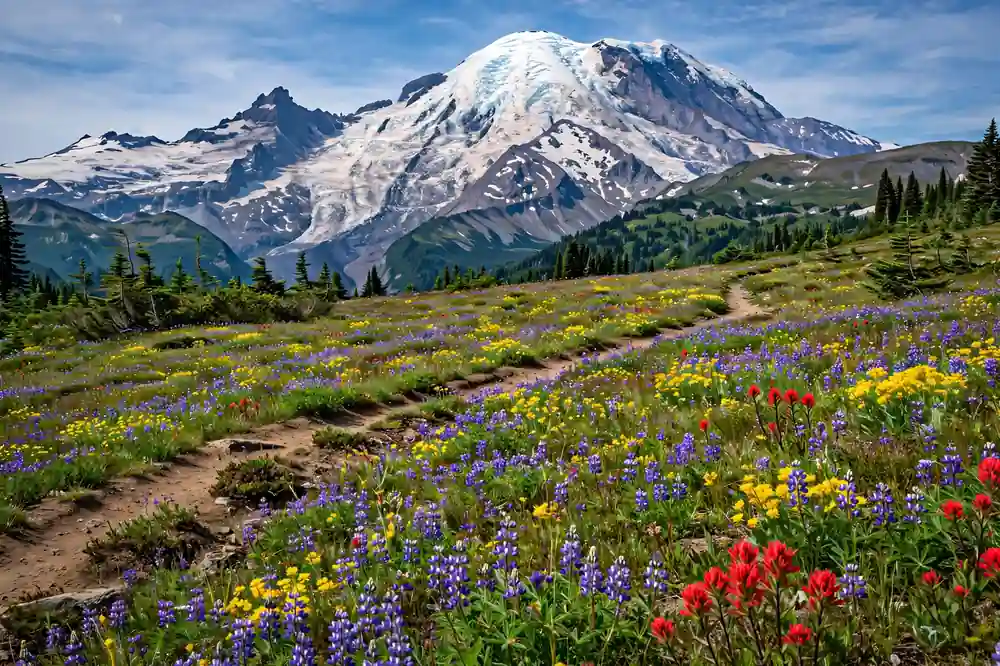
Mount Rainier fills the skyline southeast of Seattle like a promise. At 14,410 feet, it is the most glaciated peak in the contiguous United States, and its lower slopes hold some of the finest day hiking in the Pacific Northwest. The best Mount Rainier hikes combine two things no other park quite matches: wildflower meadows that peak in late summer and constant, enormous views of a glacier-covered volcano. Whether you have two hours or a full day, this guide covers the trails that deliver both.
Rainier rewards planners. The mountain creates its own weather, the wildflower season is short, and the two main visitor areas, Paradise and Sunrise, sit on opposite sides of the peak. Pick the right area for your time and fitness, check conditions before you drive up, and even a single trail here can become the highlight of a Washington trip.
The Best Mount Rainier Hikes at a Glance
If your time is short, start with these standouts. The Skyline Trail at Paradise is the classic all-rounder, the Burroughs Mountain Trail at Sunrise gets you closest to the glaciers, and the Grove of the Patriarchs walk is the gentlest option in the park. Families traveling the wider Northwest often pair a Rainier day with the alpine lakes in our North Cascades National Park guide, since the two parks sit within an easy road-trip loop of each other.
- Skyline Trail (Paradise): the essential Rainier loop, about 5.5 miles with big glacier views
- Burroughs Mountain (Sunrise): tundra-like ridges and the closest day-hike views of Emmons Glacier
- Myrtle Falls (Paradise): an easy paved stroll to a postcard waterfall
- Mount Fremont Lookout (Sunrise): a historic fire lookout with a huge panorama
- Comet Falls (southwest side): a powerful waterfall hike through old-growth forest
Paradise: Wildflowers and the Skyline Trail
Paradise, on the mountain’s south side, is the most famous trailhead area in the park, and in late July and August its meadows explode with lupine, paintbrush, and avalanche lilies. It is also the most reliable place to understand why the best Mount Rainier hikes earn their reputation: trails climb straight from the parking area into open alpine country.
Skyline Trail Loop
The Skyline Trail is the hike to choose if you only do one. The roughly 5.5-mile loop climbs past Myrtle Falls, crosses flower-filled slopes, and tops out at Panorama Point, where glaciers, the Tatoosh Range, and on clear days Mount Adams and Mount St. Helens fill the view. Go clockwise for the best pacing, start early to beat both crowds and afternoon clouds, and expect patches of snow on the upper trail well into summer. Hikers building toward longer alpine routes will find a similar high-country feel on the best hikes in Rocky Mountain National Park, though Rainier’s meadows are in a class of their own.
Easy Wins Near the Visitor Center
Not every great Rainier walk is a climb. The short paved path to Myrtle Falls frames the waterfall with the mountain behind it, one of the most photographed scenes in the park. The Nisqually Vista loop is another gentle option through meadow flowers with glacier views. Both work well for kids, grandparents, and anyone adjusting to the altitude, and both prove that the best Mount Rainier hikes include options for every energy level.
Sunrise: The High, Dry Side of the Mountain
Sunrise, on the northeast side, is the highest point in the park you can reach by car, and it feels wilder and drier than Paradise. The wildflowers bloom a little later here, the views face the massive Emmons Glacier, and the crowds thin out noticeably.
Burroughs Mountain Trail
For many regulars, Burroughs Mountain is the single best day hike at Rainier. The trail crosses open tundra to a series of flat-topped summits, each one closer to the glacier than the last. First Burroughs is a satisfying goal; Second and Third Burroughs push farther for hikers who want a bigger day. The scale is hard to overstate — you are walking toward a wall of ice that covers the entire northeast face of the volcano. The mountain light and open ridges also make Sunrise a favorite for photographers working through our list of the best hiking trails in the USA.
Mount Fremont Lookout and Sourdough Ridge
The hike to the Mount Fremont fire lookout follows Sourdough Ridge and ends at a historic lookout tower with views across the park and down to Grand Park’s broad meadow. It is a moderate climb with a constant payoff, and it pairs naturally with a Burroughs hike for a full Sunrise day. If you are continuing south afterward, the waterfall-and-canyon scenery in our guide to the best Yosemite hikes makes a natural next chapter for a western parks road trip.
Forest, Waterfalls, and Quieter Corners
Rainier is not only alpine meadows. The lowland forests hold giant old-growth trees and some of the prettiest waterfall hikes in Washington. The Grove of the Patriarchs, near the Stevens Canyon entrance, winds through towering Douglas-fir and cedar; check current conditions before you go, because river flooding has affected access to the grove in recent years. Comet Falls, reached from the road to Paradise, climbs a rugged trail to a 300-foot-plus cascade that drenches its viewpoint with spray. Bench and Snow Lakes, near Reflection Lakes, offers a gentler forest walk to two quiet lakes that are perfect for a picnic.
These lower trails matter on cloudy days, too. When the summit hides, the forest hikes still deliver, and building a flexible plan is one of the smartest moves in our guide to planning a national park trip. Keep one meadow hike and one forest hike on your list for each day, then choose based on the morning’s visibility.
When to Go: Wildflower Season and Weather
Timing decides everything at Rainier. Snow usually covers the high trails into July, and the famous wildflower peak generally lands from late July through mid-August, sliding earlier or later with the year’s snowpack. September brings clear air, golden larches at higher elevations, and smaller crowds. Paradise is accessible year-round on the road from Longmire (chains are required in winter), while the Sunrise road typically opens around early July and closes with the first heavy snows of fall.
Start hikes early. Clouds often build against the mountain by early afternoon, even on days that dawn clear. A 7 a.m. trailhead start routinely means summit views; a noon start can mean fog. Whatever the forecast, carry rain gear and a warm layer — conditions at 6,000 feet change fast, and the ten essentials in our beginner’s camping and hiking guide apply just as well to day hikes here.
Permits, Entry, and Practical Planning
In recent summers the park has used a timed-entry reservation system for the Paradise and Nisqually corridors during peak hours, so check the park’s official pages before your trip and reserve if required. A parks pass covers entry; if you are visiting several parks this year, the math in our America the Beautiful Pass guide shows when the annual pass pays for itself. Wilderness permits are only needed for overnight trips such as the 93-mile Wonderland Trail, not for day hikes.
Base yourself in Ashford or Packwood for Paradise, or in Enumclaw and Greenwater for Sunrise. Seattle visitors can do Rainier as a long day trip, and our Seattle travel guide helps you pair the mountain with the city’s highlights. Fill the gas tank before entering the park, download offline maps (cell service is patchy), and tell someone your plan before any big hike.
Finally, do not overlook the company Rainier keeps. The old-growth groves below the glaciers rival the famous redwood-family forests in our Sequoia National Park guide, and many hikers find that Rainier’s Patriarchs and Sequoia’s giants bookend the perfect West Coast tree pilgrimage. If you have three days, spend day one at Paradise, day two at Sunrise, and keep day three flexible for whichever side woke up clear. That loose structure, more than any single trail choice, is what turns a good Rainier visit into a great one — the mountain always has the final say, and the hikers who listen to it are the ones who come home with the views.
Quick Answers
What is the number one hike at Mount Rainier? The Skyline Trail loop at Paradise. It combines wildflowers, waterfalls, glaciers, and a summit panorama in one moderate loop.
When do the wildflowers peak? Usually late July to mid-August at Paradise, a week or two later at Sunrise. The exact peak shifts with snowmelt each year.
Paradise or Sunrise? Paradise for first-timers and flowers; Sunrise for glacier views, thinner crowds, and the Burroughs Mountain hike.
Do I need a permit to day hike? No permit is needed for day hikes, but a park pass is required for entry, and timed-entry reservations have been required in peak season in recent years — verify before you go.
The Bottom Line
The best Mount Rainier hikes share a simple formula: climb a little, and the mountain does the rest. Walk the Skyline Trail through peak-season flowers, cross the tundra on Burroughs Mountain, keep a forest hike in reserve for cloudy days, and start early enough to see the summit before the clouds do. Rainier is close enough to Seattle to visit on a whim, but it rewards the hikers who plan like it matters — because at 14,410 feet, it does. Pair it with the rainforest and coastal trails in our Olympic National Park hiking guide and you have the best one-two punch in Washington hiking.