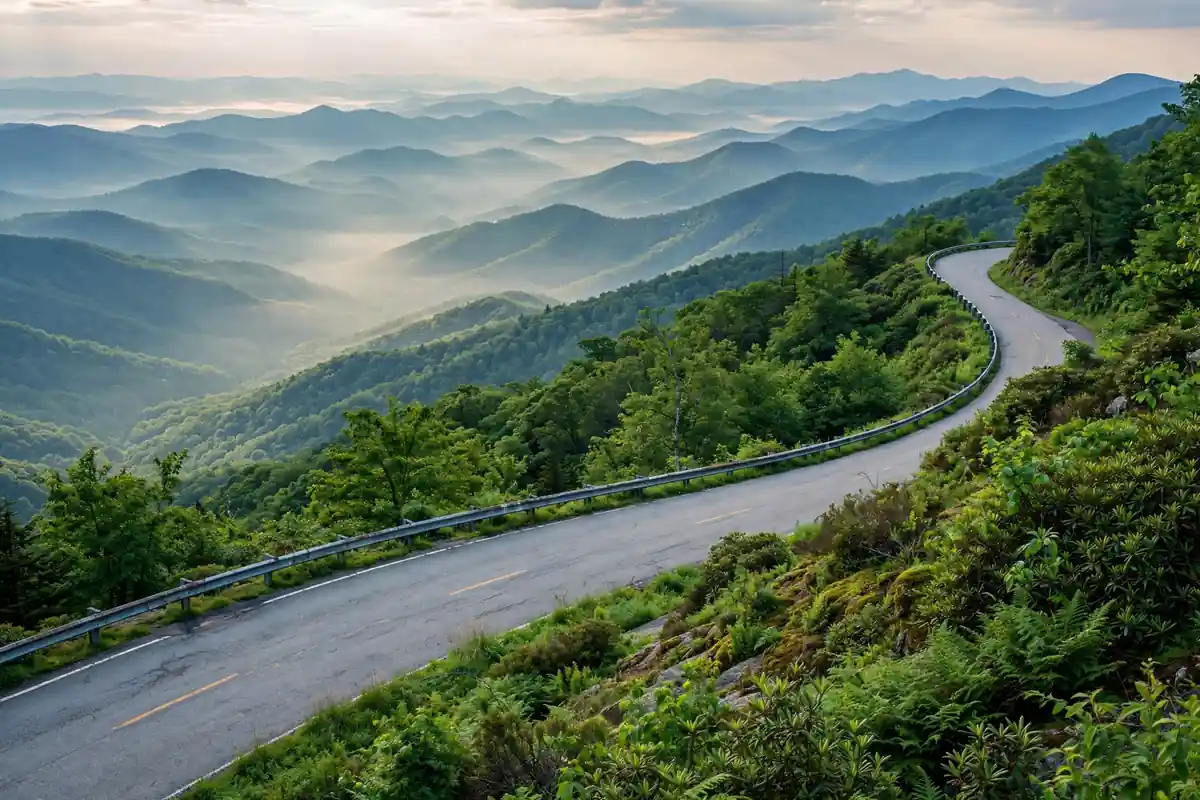
Shenandoah is the national park built around a single beautiful idea: a slow, winding road along a mountain crest, with a trail or waterfall never more than a few minutes away. This Shenandoah National Park guide shows you how to drive Skyline Drive, pick the best hikes for your energy level, and time your visit for wildflowers, summer green, or famous fall color.
The park stretches about 70 miles along Virginia’s Blue Ridge Mountains, yet it sits within an easy drive of Washington, DC and the cities of the mid-Atlantic. That makes it one of the most accessible national parks in the country — and one of the most rewarding for a weekend.
Shenandoah National Park Guide to Skyline Drive
Skyline Drive runs 105 miles from Front Royal in the north to Rockfish Gap near Waynesboro in the south. The speed limit is 35 mph, and that is the point: this road is for lingering. There are around 75 scenic overlooks, and the smart way to drive it is to stop often, stretch your legs, and let the layered blue ridges do their work.
Four entrance stations connect the drive to the outside world: Front Royal (north), Thornton Gap, Swift Run Gap, and Rockfish Gap (south). Mileposts count down from mile 0 at Front Royal, and every trailhead, lodge, and overlook is identified by its milepost number — learn to navigate by them, because cell service is spotty.
Most visitors drive the full length in one long day, but two days is better. Splitting the drive lets you add several real hikes, catch a sunset from an overlook, and stay for the stars. Shenandoah is an easy pairing with a city weekend, too: our washington dc travel guide shows how to combine the monuments with a mountain escape.
The Best Shenandoah Hikes by Difficulty
Easy Waterfall Walks
Dark Hollow Falls is the park’s most popular waterfall hike. From the trailhead near Big Meadows, the path descends about 1.4 miles round trip to a pretty cascade tumbling over dark rock ledges. The return is all uphill, so take your time and watch for wet, slick stones near the falls.
Limberlost Trail is a gentle, mostly level loop through mountain laurel and old-growth hemlocks, designed to be accessible. In late spring the laurel blooms turn it into one of the prettiest easy walks in the park.
Moderate Summit Hikes
Stony Man Trail climbs about 1.6 miles round trip to the park’s second-highest peak, where cliffs open onto a sweeping view of the Shenandoah Valley and Massanutten Mountain beyond. It is the best effort-to-view ratio in the park.
Hawksbill Summit reaches Shenandoah’s highest point at 4,051 feet. Several routes lead up; the shortest is a steady climb of about 1.7 miles round trip. On a clear day the panorama takes in both the valley and the Piedmont. Hikers comparing eastern summits will enjoy how these trails differ from the waterfall routes in our cuyahoga valley national park guide, Ohio’s gentler park.
Bearfence Mountain offers a short but spicy rock scramble — about a mile round trip — ending in a 360-degree view. It is not for anyone uncomfortable using hands and feet on rock, but confident scramblers love it.
The Big One: Old Rag
Old Rag Mountain is Shenandoah’s signature challenge: a strenuous loop of roughly nine miles with a long, famous rock scramble near the summit. It is thrilling, exhausting, and absolutely not a casual stroll. Be aware that Old Rag now requires a day-use ticket booked in advance, in addition to your park entrance pass — reserve as soon as you know your dates, because tickets for prime fall weekends go fast. The Appalachian Trail also threads about 101 miles through the park; our Appalachian Trail hiking guide explains how day hikers can sample its best Shenandoah sections.
Two More Waterfalls Worth the Walk
If Dark Hollow leaves you wanting more cascades, Whiteoak Canyon is the park’s waterfall showpiece. From the Skyline Drive trailhead, the path descends past a series of falls, the tallest dropping about 86 feet. Reaching just the upper falls and back makes a solid moderate hike of under three miles; continuing to the lower falls turns it into a strenuous day, because every step down must be climbed back up.
Rose River Falls offers a prettier, quieter alternative: a loop of about 2.6 miles through a hollow of tall hardwoods to a 67-foot waterfall. It pairs naturally with Dark Hollow Falls — the two trailheads sit near each other by Big Meadows — for a two-waterfall morning that still leaves the afternoon free for the drive.
Wildlife, Lodging, and Campgrounds
Shenandoah is famous for its approachable wildlife. White-tailed deer graze in Big Meadows at dawn and dusk, wild turkeys cross the drive, and black bears are seen regularly — always from a respectful distance. Store food in your vehicle, never feed animals, and give bears at least 150 feet of space.
For lodging, Skyland Resort sits at the drive’s highest elevation, and Big Meadows Lodge offers a rustic great-room atmosphere near the park’s biggest meadow. Both book out far ahead for October. Campers can choose among several campgrounds, with Big Meadows the largest and most central; some sites are reservable and others first-come, first-served. Backcountry camping is allowed with a free permit and careful food storage.
When to Visit Shenandoah
Spring brings waterfalls at full flow, migrating birds, and wildflowers from April into May. Summer is lush and green, with ranger programs, cool ridge-top temperatures compared with the hot valleys, and afternoon thunderstorms to plan around.
Autumn is the park’s star season. Fall color usually peaks sometime in mid-to-late October, though it varies with elevation and weather — the show starts high on the ridges and slides downhill. Expect Skyline Drive to be busy, especially on weekends, and start your day early. For a different autumn flavor, the rolling farmland drives in our natchez trace parkway road trip make a fine follow-up journey.
Winter is quiet and starkly beautiful, with leafless views and occasional ice and snow that can close Skyline Drive temporarily. Many services shut down, so winter trips suit self-sufficient travelers. Our best national parks to visit in winter covers what to expect across the system in the cold months.
Fees, Passes, and Practical Tips
Entry is charged per vehicle and is valid for several days, and the America the Beautiful annual pass is accepted — see our national park pass guide for the math on when the pass wins. Fuel is available inside the park at Big Meadows, but prices are higher than in the valley towns, so it is smart to top up before entering.
Download offline maps before you arrive, carry more water than you think you need on summit hikes, and pack layers: ridge-top weather runs cooler and windier than the forecast for nearby towns. If your trip is part of a longer eastern loop, our national park trip planning guide helps you sequence permits and reservations, while the great river road trip itinerary continues the slow-road theme all the way down the Mississippi.
A Sample Weekend on Skyline Drive
Day one: north to central. Enter at Front Royal in the morning and drive south, stopping at overlooks as the mood strikes. Hike Stony Man in the early afternoon, then settle in at Skyland or a Big Meadows campsite. Cap the day with sunset from an overlook near your lodging — the western-facing pullouts are made for it.
Day two: waterfalls and the southern drive. Walk to Dark Hollow Falls before breakfast crowds arrive, add Rose River if your legs agree, then continue south past Swift Run Gap. Detour up Hawksbill if the day is clear, and finish the drive to Rockfish Gap by late afternoon, exiting toward Charlottesville or Staunton for dinner. Two days, roughly a dozen overlooks, and three or four hikes will leave you feeling you have truly met this park.
Frequently Asked Questions
How long does it take to drive Skyline Drive?
Driving the full 105 miles without stops takes about three hours. With overlooks, a hike, and a meal, plan on a full day — or better, split it across two days with a night at a lodge or campground.
What is the best hike in Shenandoah for beginners?
Stony Man is the top beginner pick for a summit view, and Dark Hollow Falls is the best easy waterfall walk. Both are under two miles round trip.
When is peak fall color in Shenandoah?
Color usually peaks in mid-to-late October, starting at higher elevations. Exact timing shifts each year with temperature and rain, so check the park’s fall color reports as your trip approaches.
Do I need a reservation for Old Rag?
Yes. Old Rag requires a day-use ticket booked in advance, plus your park entrance pass. Numbers are limited, so book early — especially for autumn weekends.
Final Thoughts
Shenandoah rewards slowness: a 35-mph road, a waterfall before breakfast, a summit at sunset. Whether you come for fall color, spring wildflowers, or a quiet summer escape from the city, this park delivers the Blue Ridge at its best. Round out your planning with our Acadia National Park hikes guide for another eastern park, browse the best hiking trails in the USA for bigger ambitions, and save the ultimate USA road trip planner for the journey that strings them all together.