Wedged between Cleveland and Akron, Cuyahoga Valley is the national park that proves you do not need wilderness to have a worthy park. It protects a green, working valley of waterfalls, marshes, canal history, and small farms along the Cuyahoga River, and it does all of that within earshot of two Ohio cities. Best of all, entry is free. This cuyahoga valley national park guide covers the falls, the train, the towpath, and the quiet corners that turn a quick stop into a full, satisfying day.
A Park Built on a River’s Comeback
The Cuyahoga River was once so polluted that it famously caught fire in 1969, an event that helped spark the modern environmental movement and the creation of the Environmental Protection Agency. The valley became a national recreation area in 1974 and was redesignated a national park in 2000. Today herons hunt in marshes that were once industrial dumping grounds, and beavers engineer ponds a short walk from parking lots.
That story shapes everything here. Instead of one grand canyon or peak, Cuyahoga Valley offers dozens of small discoveries spread along about 33,000 acres of valley floor and forested hills. A historic canal runs through it, a scenic railroad runs through it, and a long towpath trail ties the whole thing together. Think of the park as a corridor to explore in segments, not a single destination.
Brandywine Falls and the Waterfall Walks
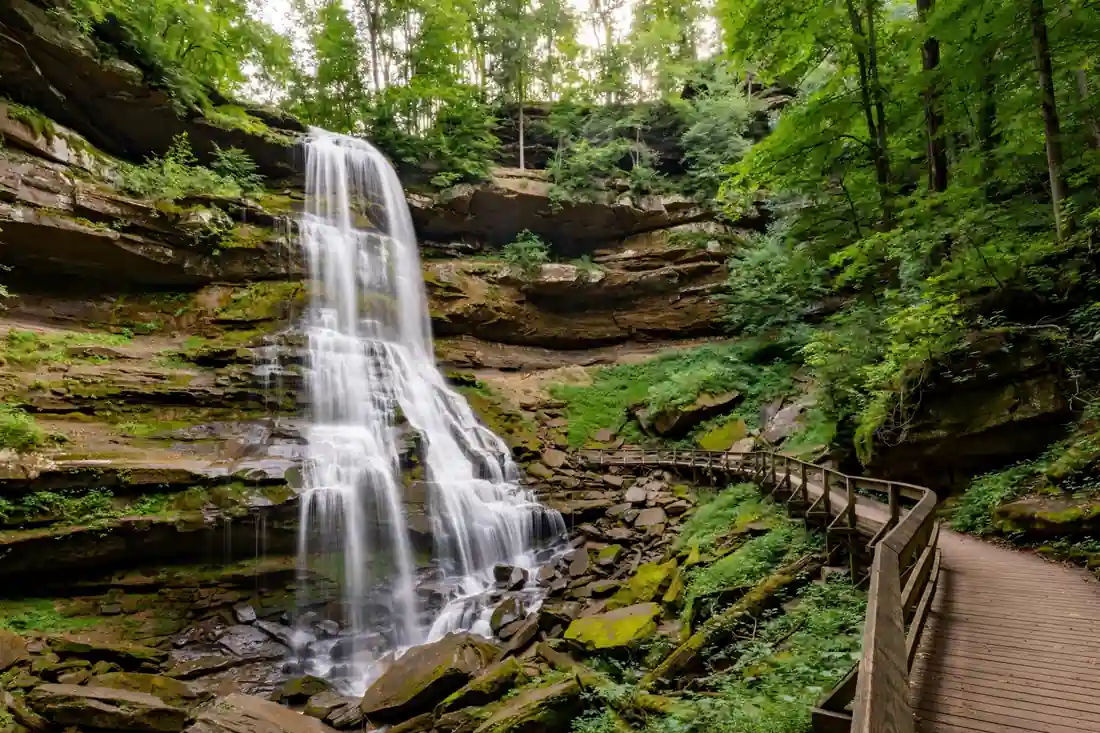
Brandywine Falls
The park’s signature sight drops about 65 feet over layered sandstone ledges into a leafy gorge, and a boardwalk system gives you both a quick upper view and a longer lower viewpoint. The full gorge loop is about 1.5 miles. After rain, the falls roar; in late fall and winter, ice formations turn the gorge into a sculpture garden. Parking is limited and the lot fills by mid-morning on nice weekends, so arrive before 10 a.m. or come on a weekday.
Blue Hen Falls and Buttermilk Falls
A short, sweet trail of about half a mile leads to Blue Hen Falls, a small cascade that pours over a ledge into a shaded ravine. It is one of the prettiest spots in the park in autumn. A rougher extension continues to the unofficial cascade known as Buttermilk Falls, better suited to confident hikers with good footwear.
Waterfall lovers building an eastern parks route should pair this valley with the Skyline Drive cascades in our Shenandoah National Park guide and the foliage-framed falls along the route in our Blue Ridge Parkway fall guide.
Riding the Cuyahoga Valley Scenic Railroad
The park’s most distinctive experience runs on rails. The Cuyahoga Valley Scenic Railroad operates excursion trains through the valley between the Akron and Independence areas, passing marshes, river bends, and eagle nests you cannot see from any road. Standard rides are an easy, relaxing way to see the park without hiking a step, and themed trips run through the year, from summer evening rides to the famous holiday trains that sell out far in advance.
The smartest move in the park is the railroad’s bike program. For a small fee, cyclists can ride the Towpath Trail one way, flag down the train at a station, load their bikes into the baggage car, and ride back in comfort. It turns a long linear trail into an easy point-to-point adventure, and it is one of the best deals in the national park system. Book themed trains early, because weekends go first.
The Ohio and Erie Canal Towpath Trail
Mules once pulled canal boats along this path; today it is the park’s spine. About 20 miles of the Towpath Trail run through the national park, part of a much longer route that follows the historic canal corridor between Lake Erie and the Ohio River. Inside the park the trail is flat, mostly crushed limestone, and dotted with canal locks, visitor stops, and trailheads every few miles.
Walkers, runners, and cyclists share the path, and you can build any distance you like. A favorite easy section runs between the Boston Mill area and Peninsula, where the small canal town offers food, a bike shop, and ice cream. History panels explain how the canal transformed Ohio in the 1800s, and the Canal Exploration Center at the park’s north end gives the full story with working lock demonstrations in season.
Travelers who enjoy slow, linear journeys will also love the drives in our Natchez Trace road trip guide and our national park trip planning guide, which shows how to budget time for corridor-style parks like this one.
The Ledges, Beaver Marsh, and Other Quiet Favorites
The Ledges and Virginia Kendall
In the park’s southern hills, the Ledges Trail circles a plateau of towering sandstone walls, skinny passages, and an ice box cave kept cool by stored winter air. The loop is about 2 miles, and the overlook near the trailhead frames one of the best sunset views in Ohio. The surrounding Virginia Kendall area adds fishing lakes, picnic shelters, and sledding hills in winter.
Beaver Marsh
A boardwalk over a beaver-made wetland north of Peninsula is the park’s best wildlife classroom. Dawn and dusk bring herons, kingfishers, muskrats, turtles, and the beavers themselves, and in spring the marsh rings with frog calls. Birders rank it among the finest stops in the valley, and it pairs easily with a Towpath walk since the trail passes right by.
Everett Covered Bridge
The park’s only covered bridge, a photogenic red span rebuilt after flood damage, anchors a short easy walk and a picnic area. It is a five-minute stop that explains the valley’s farming past better than any exhibit.
For hikers, the Buckeye Trail adds rugged miles beyond the greatest hits, and the park rewards repeat visits in a way the mega-parks rarely do. Our Acadia National Park hikes guide offers a similar east-coast mix of short trails and big scenery, while our places to visit near Ohio guide rounds out a regional itinerary.
When to Visit and Practical Tips
Each season has a claim. Spring brings waterfalls at full flow and wildflowers in the ravines. Summer is lush and busy, with train excursions and farmers markets at the park’s working heritage farms. Fall is the star: maples and oaks set the valley alight, which is why this park earns a mention in our best national parks in winter companion coverage of cold-season trips too, since hardy visitors come for frozen falls and quiet trails. Our West Virginia fall guide makes an easy pairing for a longer foliage road trip.
Practical notes that save headaches: there is no entrance fee and no entrance station, but trailhead parking is the park’s real bottleneck, so start early on weekends. Cell service fades in the valley bottom. Dogs are welcome on most trails on a leash, which is rare and wonderful for a national park. And because the park wraps around real towns, food and fuel are never more than a few minutes from a trailhead.
If you are visiting several parks on one trip, check the annual pass math in our America the Beautiful pass guide, because fee-charging parks like the one in our Badlands National Park guide add up quickly. Cuyahoga Valley is the rare exception: your budget here goes to train tickets and pie in Peninsula instead of gate fees.
Small Towns and Farm Stops Between Trailheads
One pleasure no wilderness park can match: lunch in a real town without leaving your route. Peninsula, sitting mid-valley on the Towpath, has cafes, galleries, and a bike shop that understands trail emergencies. Boston Township, near the Boston Mill Visitor Center, keeps the park’s most convenient cluster of services. Around the valley’s edges, heritage farm sites and seasonal farm markets sell Ohio sweet corn, apples, and baked goods, and the park’s own Countryside program supports working farms inside the park boundary, an experiment in keeping a lived-in landscape inside a national park.
These stops matter for pacing. Families can promise kids a train ride and an ice cream, cyclists can plan a real lunch at the halfway point, and everyone gets a break from the woods without a long drive. It is the working-landscape side of Cuyahoga Valley that first-time visitors underestimate, and the part many say they remember most.
Frequently Asked Questions
Is Cuyahoga Valley National Park really free?
Yes. There is no entrance fee. Some activities cost money, including scenic railroad tickets and rentals, but hiking, waterfalls, and the Towpath Trail are free.
How many days do I need?
One full day covers Brandywine Falls, a Towpath section, and the train. Two days lets you add the Ledges, Beaver Marsh at dawn, and a longer bike ride without rushing.
What is the best month to visit?
October for fall color, May for waterfalls and wildflowers. Both are popular, so lean on weekday visits and early starts.
Can I see the park without hiking?
Absolutely. The scenic railroad, the upper overlook at Brandywine Falls, Beaver Marsh boardwalk, and Everett Covered Bridge are all short, gentle walks from parking areas.
Making the Most of Ohio’s National Park
Cuyahoga Valley will not overwhelm you with a single famous view, and that is its charm. It rewards slowness: a dawn hour at the marsh, a bike ride beside a 200-year-old canal, a train whistle echoing off sandstone ledges. Use this cuyahoga valley national park guide to string those small moments together and you will understand why Ohioans defend their park fiercely, and why the once-burning river is now the heart of one of America’s great comeback stories.