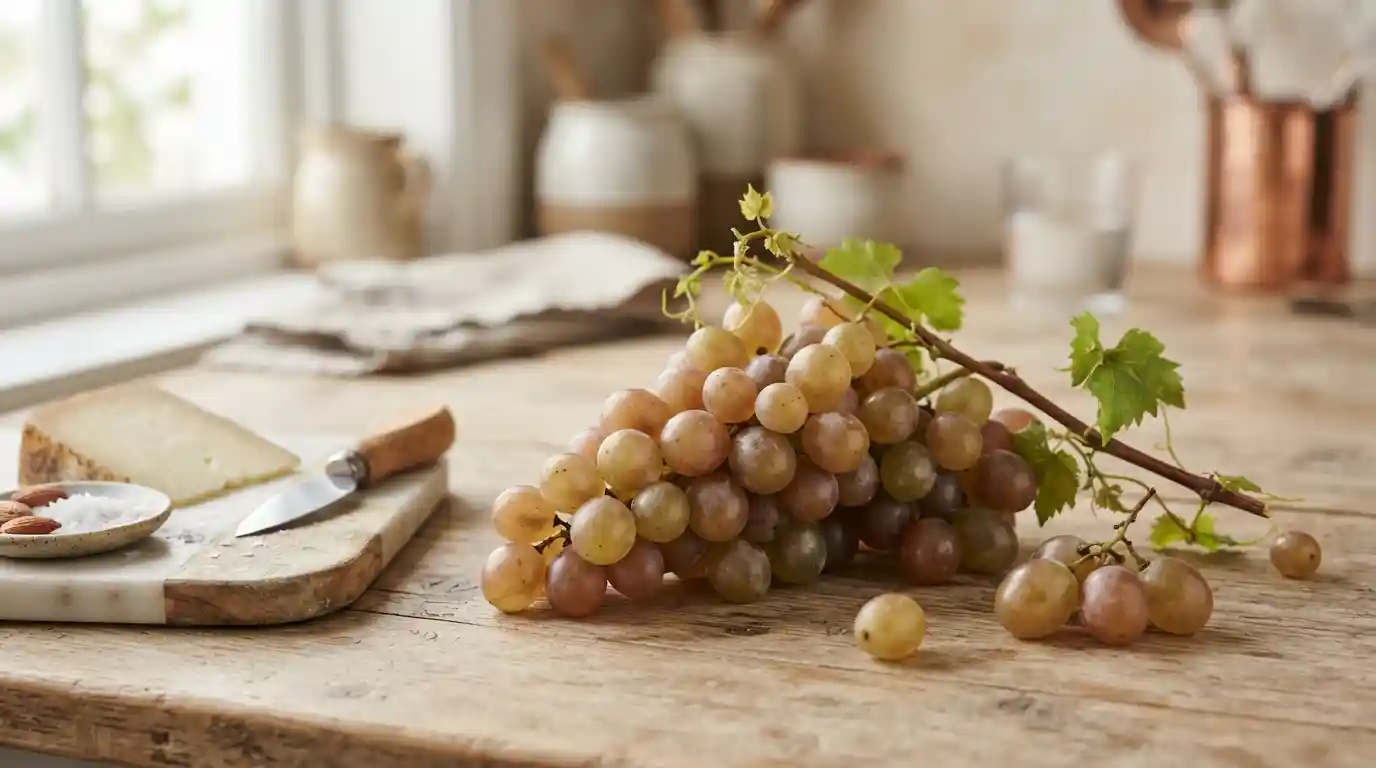
Muscat Beauty is particularly interesting for fresh-fruit lovers because its thin skin and tender flesh make it well suited to eating fresh. The berries are generally small to medium in size and can display attractive pink-brown tones with a subtle green translucence.
Whether you are discovering this grape for the first time, planning a fruit platter, or simply looking for a more aromatic alternative to everyday table grapes, understanding its flavor, texture, uses, storage, and buying considerations can help you get more from every bunch.
What Are Muscat Beauty Grapes?
Muscat Beauty is a table-grape variety associated with the broader Muscat family. The name “Muscat” covers a large group of grape varieties, rather than a single grape, and members of this family are widely recognized for their pronounced floral and fruity aromas.
Muscat Beauty has characteristics that make it particularly appealing as a fresh-eating grape. Its berries have a tender interior, relatively thin skin, and a juicy texture. The attractive pink-brown coloration can also make the fruit visually appealing when served on a platter or incorporated into a recipe.
That combination of aroma, appearance, and texture is what gives Muscat Beauty grapes their distinctive personality.
What Do Muscat Beauty Grapes Taste Like?
The most memorable characteristic of Muscat Beauty grapes is their aromatic profile. Muscat grapes are traditionally associated with floral, fruity, and distinctly “grapey” aromas, which can make them seem more fragrant than conventional table grapes.
Depending on ripeness and growing conditions, Muscat-style grapes can offer a combination of:
- Natural grape sweetness
- Floral aromas
- Fresh fruit notes
- A juicy, refreshing finish
- A gentle balance between sweetness and acidity
The exact flavor can vary from one harvest to another. Ripeness, growing conditions, handling, and storage all influence how a grape tastes when it reaches the consumer.
If you enjoy strongly aromatic fruits, Muscat Beauty can provide a noticeably different experience from more neutral-tasting table grapes.
Muscat Beauty Grapes: Texture and Appearance
Appearance is another reason these grapes attract attention. Muscat Beauty berries are described as small to medium, round, and capable of developing pink-brown coloring with a pale green translucence. The clusters are moderately loose, while the flesh is tender and very juicy.
The relatively thin skin contributes to an easy eating experience. When the grape is ripe, the tender flesh releases its juice quickly after biting into the berry.
This makes Muscat Beauty suitable for occasions when you want fruit that can be served with little preparation. A simple bowl of chilled grapes can work just as well as a more elaborate fruit presentation.
Why Aroma Matters So Much
One of the defining qualities of Muscat grapes is aroma. The Muscat family includes numerous grape varieties used as table grapes, raisins, and wine grapes, and many are recognized for their pronounced fragrance.
This aromatic character changes the way the fruit is experienced. Instead of relying only on sweetness, Muscat grapes combine taste and fragrance to create a fuller sensory profile.
For readers interested in the relationship between food, appearance, and sensory experience, this is one reason Muscat Beauty deserves more attention than its relatively simple appearance might suggest.
Are Muscat Beauty Grapes Good for Fresh Eating?
Yes, their characteristics make them well suited to fresh consumption. Their tender flesh, juicy texture, and aromatic flavor work particularly well when the grapes are served chilled.
They can be enjoyed as:
- A quick afternoon snack
- A breakfast fruit
- A lunchbox addition
- A fruit-platter ingredient
- A topping for yogurt or oatmeal
- A component of fresh salads
For another perspective on everyday food and lifestyle choices, readers may also enjoy exploring the ultimate comfort palette and spring-inspired lifestyle ideas.
How to Choose Good Muscat Beauty Grapes
When buying fresh grapes, appearance alone should not be the only consideration. Look for bunches that appear fresh and well hydrated, with berries that are reasonably firm for their variety.
Useful signs to consider include:
- Plump-looking berries
- Fresh-looking stems
- Even, natural coloration
- No widespread mold or leaking fruit
- No excessive shriveling
- A pleasant natural grape aroma
Because Muscat Beauty can have delicate fruit characteristics, gentle handling is important. Avoid crushing the bunch while transporting it home or storing it in a crowded refrigerator drawer.
How to Store Muscat Beauty Grapes
Fresh grapes generally benefit from refrigeration. Keep them in a breathable container or the packaging in which they were sold, and avoid washing the entire bunch until you are ready to eat it.
Moisture left on the berries can encourage deterioration during storage. For that reason, washing only the amount you plan to eat can help preserve the remaining fruit.
Before serving, remove damaged or spoiled berries so they do not affect the rest of the bunch.
Creative Ways to Enjoy Muscat Beauty Grapes
The simplest way to enjoy Muscat Beauty grapes is fresh and chilled, but their flavor can work with many other ingredients.
1. Cheese and Grape Platter
Pair the grapes with mild or creamy cheeses for a contrast between juicy sweetness and savory richness. Add nuts and fresh herbs to create an easy entertaining platter.
2. Fresh Fruit Salad
Combine halved grapes with berries, melon, citrus, or apples. The aromatic grape flavor can give an ordinary fruit salad a more distinctive character.
3. Yogurt and Breakfast Bowls
Add chilled grapes to plain yogurt with oats, nuts, and other fresh fruit. This creates a simple breakfast without requiring extensive preparation.
4. Green Salads
Halved grapes can introduce sweetness and moisture to salads containing leafy greens, nuts, cheese, or a light vinaigrette.
For readers who enjoy discovering new places and food experiences, related travel inspiration includes popular places to visit in Mexico, interesting places to visit in Spain, and Spain and Portugal travel ideas.
Muscat Grapes and the Broader Muscat Family
It is important not to treat every grape carrying the Muscat name as the same variety. The Muscat family includes many distinct grapes with different colors, growing characteristics, uses, and flavor profiles.
Some Muscat grapes are primarily associated with fresh eating, while others have important roles in winemaking or raisin production. Muscat of Alexandria, for example, is a distinct variety with its own cultivation and culinary history.
Understanding this distinction helps avoid confusing Muscat Beauty with other grapes simply because they share the Muscat name.
What Makes Muscat Beauty Different From Ordinary Table Grapes?
The biggest difference is often the aromatic intensity. Many common table grapes are selected primarily around sweetness, texture, appearance, productivity, and storage characteristics. Muscat-type grapes add another important dimension: fragrance.
That does not necessarily mean every Muscat Beauty grape will taste dramatically different from every other grape. Fruit flavor depends on maturity and growing conditions. However, the Muscat character can make the experience more floral and aromatic.
This distinction is especially useful for people who find standard grapes too mild and want something with a more noticeable personality.
Serving Muscat Beauty Grapes for Guests
For entertaining, presentation can be surprisingly simple. Chill the grapes thoroughly, keep them in attractive clusters, and place them alongside complementary fruit, cheese, and nuts.
They can also become part of a seasonal spread alongside desserts or light refreshments. If the gathering has a travel or international-food theme, fresh grapes provide an easy way to add color and freshness.
For additional destination inspiration, explore Toronto travel ideas, Mauritius experiences, San Diego attractions, and Napa Valley destinations.
Can You Use Muscat Beauty Grapes in Desserts?
Absolutely. Their natural sweetness and fragrance can complement simple desserts without requiring complicated preparation.
Try them with:
- Vanilla yogurt
- Light cakes
- Fruit tarts
- Custard-based desserts
- Frozen fruit preparations
- Simple chocolate and fruit platters
The key is to avoid overwhelming the grape’s delicate aroma with too many competing ingredients.
Buying and Seasonal Availability
Availability can vary by region, grower, and harvest period. Specialty produce stores, farmers’ markets, and well-stocked supermarkets may carry less-common table-grape varieties when they are in season.
Instead of assuming a fixed availability window everywhere, check the produce department or local growers for current stock. Freshness is generally more important than buying a particular variety simply because it is available.
If you’re planning a food-focused trip, the broader travel collection on ThinkRove also includes places to visit in Goa, California destinations in fall, and family destinations in New York State.
Final Thoughts on Muscat Beauty Grapes
Muscat Beauty grapes offer more than basic sweetness. Their attractive coloring, tender texture, juicy flesh, and distinctive Muscat-style aroma make them an interesting choice for fresh-fruit lovers.
The best way to appreciate them is to keep preparation simple: choose fresh berries, chill them properly, and let their natural flavor take center stage. They can be enjoyed alone, paired with cheese, added to salads, or incorporated into breakfast and dessert dishes.
Whether you are already familiar with Muscat grapes or discovering them for the first time, Muscat Beauty provides a flavorful reminder that table grapes can have remarkably different personalities. For readers interested in lifestyle, food, and travel inspiration, ThinkRove also offers related content such as Muscat Beauty grape insights, lifestyle ideas, and lifestyle guidance.