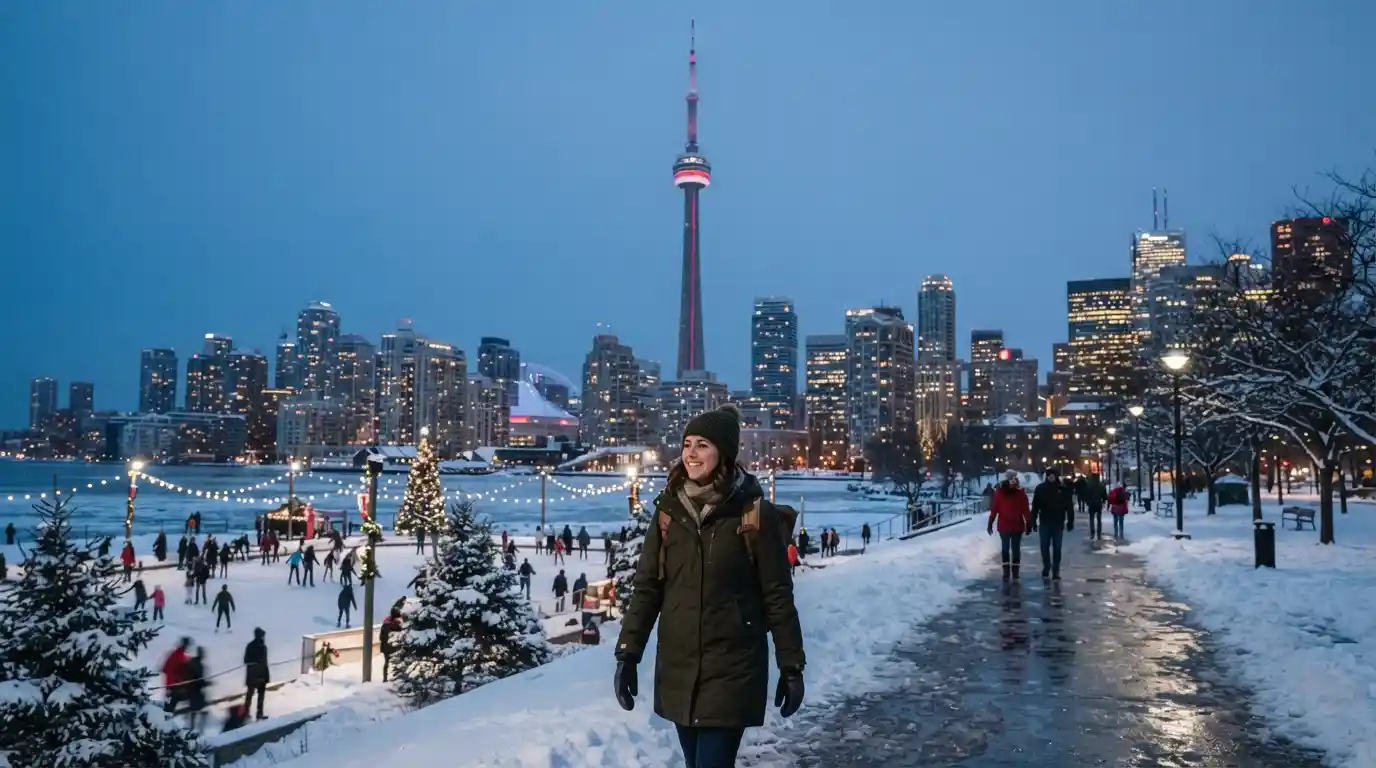
From the skyline views around the CN Tower to the historic atmosphere of the Distillery District, these are some of the best places to visit in Toronto during winter. The list also includes indoor attractions, scenic areas, markets, and winter-friendly neighborhoods so you can adapt your plans to the weather.
Why Visit Toronto in Winter?
Winter can be an excellent time to experience Toronto if you are prepared for cold conditions. The season brings shorter days and a distinctly snowy atmosphere, while many of the city’s museums, galleries, restaurants, markets, and entertainment venues remain active.
Outdoor activities such as ice skating and winter walks can be combined with indoor attractions. This makes Toronto especially practical for travelers who want variety rather than an itinerary built around one type of activity.
If you enjoy seasonal travel, you can also explore destinations covered in our guides to Alberta in winter, New Hampshire in fall, and California during fall.
Best Places to Visit in Toronto During Winter
1. Nathan Phillips Square
Nathan Phillips Square is one of the most recognizable places in central Toronto and becomes especially attractive during the colder months. The large public space sits in front of Toronto City Hall and features an outdoor skating rink during the winter season.
Bring warm clothing, enjoy a skate when conditions permit, and take photographs around the illuminated square. It is also an easy place to combine with other downtown attractions.
2. CN Tower
The CN Tower is one of Toronto’s defining landmarks and a useful stop during winter because much of the experience takes place indoors. The observation areas provide sweeping views across the city and Lake Ontario.
On a clear winter day, the combination of the skyline and snow-covered surroundings can create memorable views. Because visibility can change quickly with winter weather, check conditions before planning your visit around photography.
3. Royal Ontario Museum
The Royal Ontario Museum, commonly called ROM, is one of the city’s major cultural attractions and a particularly practical choice on a very cold or snowy day. Its collections cover art, culture, history, and natural science.
Allow several hours if you want to explore beyond the highlights. The museum works well as the indoor portion of an itinerary that also includes nearby neighborhoods and restaurants.
4. Casa Loma
Casa Loma brings a castle-like setting to Toronto. Its grand architecture, historic rooms, passageways, and distinctive interiors make it an interesting winter attraction.
Seasonal programming can add another dimension to a visit, particularly around the holiday period. Winter visitors should check current event schedules and opening arrangements before going.
5. Distillery Historic District
The Distillery Historic District is one of the most atmospheric areas to explore during winter. Its pedestrian streets, historic industrial architecture, cafés, restaurants, boutiques, galleries, and decorative lighting create a distinctive setting.
The neighborhood becomes particularly festive around the holiday season. Even when the weather is cold, you can combine a short outdoor walk with time inside restaurants, cafés, shops, and galleries.
6. St. Lawrence Market
St. Lawrence Market is a great choice when you want to combine sightseeing with food. The historic market area offers specialty vendors and a wide selection of ingredients, prepared foods, baked goods, and other products.
It is also a useful stop when the weather makes a long outdoor itinerary uncomfortable. Pairing the market with nearby historic streets and attractions can create an easy half-day downtown plan.
7. Ripley’s Aquarium of Canada
Ripley’s Aquarium of Canada provides a warm indoor alternative when snow, wind, or freezing temperatures make outdoor sightseeing less appealing. The aquarium offers a chance to explore marine environments while staying comfortably indoors.
Its downtown location also makes it convenient to combine with the CN Tower and other attractions around the waterfront district.
8. Kensington Market
Kensington Market is worth exploring for its independent shops, international food, street art, and multicultural atmosphere. Winter changes the experience, but the neighborhood remains a useful destination for travelers who enjoy food and urban exploration.
Dress warmly if you plan to walk between several stops, then use cafés and restaurants as opportunities to warm up along the way.
9. Toronto Islands
The Toronto Islands offer a completely different perspective on the city. Winter conditions can transform the landscape into a quieter, more scenic environment, although access and available activities can vary with weather and seasonal operations.
If you are interested in winter scenery, check transportation conditions before setting out and allow extra flexibility in your schedule.
10. Harbourfront
Toronto’s waterfront can be striking in winter, particularly when snow and ice create a different appearance around Lake Ontario. Harbourfront is a good place for a short scenic walk when conditions are comfortable.
Because waterfront temperatures can feel colder than inland areas, layers, gloves, and weather-resistant footwear are especially useful.
11. Hockey Hall of Fame
For sports fans, the Hockey Hall of Fame is one of the most obvious indoor attractions to include in a Toronto winter itinerary. The museum explores hockey history, memorabilia, players, and the cultural importance of the sport in Canada.
Its downtown location makes it easy to combine with St. Lawrence Market, the waterfront, or other central attractions.
12. Art Gallery of Ontario
The Art Gallery of Ontario is another strong indoor option for cold winter days. Visitors can spend time exploring its extensive art collections and exhibitions without worrying about outdoor weather.
It can also be paired with a visit to nearby neighborhoods, restaurants, and cultural attractions for a full day of indoor and outdoor exploration.
13. Evergreen Brick Works
Evergreen Brick Works provides an opportunity to experience Toronto’s connection with nature and sustainable urban spaces. Depending on conditions and seasonal programming, visitors can explore trails, public spaces, and winter activities.
It is a good option for travelers who want something different from conventional downtown sightseeing.
14. Rouge National Urban Park
Rouge National Urban Park can provide a more natural winter experience within the greater Toronto area. Snow-covered trails and winter landscapes can appeal to travelers who prefer outdoor exploration to museums and shopping.
Before visiting, check current trail conditions and prepare for changing weather. Winter daylight hours are limited, so plan outdoor activities accordingly.
15. Toronto’s Winter Skating Rinks
Ice skating is one of the classic ways to experience Toronto during winter. Public skating opportunities can be found at multiple rinks around the city, with Nathan Phillips Square being one of the most recognizable locations.
Skating is a flexible activity because it can fit into both short city breaks and longer winter vacations. Check current rink schedules before traveling because opening times and conditions can vary.
16. Scarborough Bluffs
The Scarborough Bluffs provide dramatic views along Lake Ontario and can look particularly striking during the colder months. Snow and winter light can change the appearance of the cliffs and surrounding landscape.
Choose viewpoints and trails carefully, especially after snowfall or icy conditions. Stay on designated paths and follow local safety instructions.
17. Queen Street West
Queen Street West is a lively urban area with independent stores, cafés, restaurants, galleries, and street-level culture. It is a useful choice when you want to spend time exploring Toronto’s city atmosphere rather than visiting a single attraction.
Winter shoppers can move between indoor businesses while taking shorter outdoor walks between stops, making the area easy to adapt to changing weather.
18. Yonge-Dundas Square and CF Toronto Eaton Centre
Yonge-Dundas Square and the nearby CF Toronto Eaton Centre provide an easy combination of urban sightseeing and indoor shopping. The area is particularly convenient when temperatures make extended outdoor exploration uncomfortable.
Spend some time around the square before heading indoors for shopping, dining, and a break from the cold.
19. The Bentway
The Bentway is an unusual urban space beneath Toronto’s Gardiner Expressway. Its programming and winter activities can make it an interesting stop for travelers looking for experiences outside the traditional attraction circuit.
Because outdoor programming changes seasonally, check what is available during your travel dates before building an itinerary around it.
20. Toronto’s Winter Festivals and Seasonal Events
Toronto’s winter calendar can add seasonal experiences to an otherwise standard sightseeing trip. Holiday markets, winter art programs, light displays, skating events, and food-focused activities can all provide reasons to visit during the colder months.
The exact event lineup changes from year to year, so travelers should check the current calendar before visiting. Seasonal events can also be a useful way to discover neighborhoods that you might otherwise overlook.
Best Winter Activities to Do in Toronto
Toronto offers more than traditional sightseeing during winter. Depending on weather and seasonal schedules, travelers can combine several different types of experiences.
- Go ice skating at a public rink.
- Explore Toronto’s museums and galleries.
- Walk through the Distillery Historic District.
- Try seasonal foods and warm drinks at local markets.
- Explore winter trails and parks.
- Visit the CN Tower for skyline views.
- Explore Casa Loma and its seasonal programming.
- Spend an afternoon shopping downtown.
- Explore Toronto’s diverse restaurant neighborhoods.
- Attend a winter festival or seasonal event.
If you enjoy planning trips around specific seasons, you may also want to explore our guides to Stockholm in autumn, Ireland in autumn, Kentucky in spring, and Colorado Springs in summer.
What to Wear in Toronto During Winter
Winter sightseeing is much more enjoyable when you dress for changing conditions. A warm insulated coat, layers, gloves, a hat, and a scarf are useful for extended outdoor periods. Waterproof or weather-resistant footwear is especially valuable if you expect snow or slush.
Layering is important because indoor attractions, restaurants, stores, and public transportation can feel considerably warmer than outdoor streets. Wearing several adaptable layers allows you to stay comfortable throughout the day.
Tips for Visiting Toronto in Winter
- Check the weather: Winter conditions can change quickly, so check the forecast before committing to outdoor activities.
- Build a flexible itinerary: Pair outdoor attractions with indoor museums, markets, restaurants, or shopping areas.
- Start outdoor activities early: Winter daylight hours are shorter than in summer.
- Wear suitable footwear: Snow, slush, and ice can make ordinary shoes uncomfortable or unsafe.
- Use public transportation: Toronto’s transit network can help reduce the amount of time spent walking between distant attractions.
- Check seasonal schedules: Winter events, skating rinks, attractions, and outdoor facilities can have seasonal operating hours.
- Keep indoor alternatives ready: Have at least one museum, market, gallery, or other indoor attraction available for particularly cold days.
How Many Days Do You Need in Toronto During Winter?
A long weekend can cover several major downtown attractions, while four or five days gives you more time to explore neighborhoods, museums, markets, parks, and seasonal activities without rushing.
For a two-day trip, focus on central attractions such as the CN Tower, Royal Ontario Museum, St. Lawrence Market, Distillery Historic District, and Nathan Phillips Square. With additional days, add Casa Loma, Kensington Market, the waterfront, winter parks, and attractions farther from the downtown core.
Final Thoughts
The best places to visit in Toronto during winter combine the city’s major landmarks with seasonal outdoor experiences, cultural attractions, historic districts, food destinations, and winter events. The key is not to treat cold weather as a reason to stay indoors all day. Instead, create an itinerary that alternates between outdoor exploration and warm indoor stops.
Whether you want skyline views, museums, skating, architecture, shopping, food, or snowy landscapes, Toronto provides plenty of options for a memorable winter trip. With suitable clothing and a flexible schedule, you can experience a very different side of the city while enjoying some of its most recognizable attractions.
For more destination inspiration, explore our guides to Germany, Salt Lake City in winter, Mauritius, and New Zealand.