Whether you are planning a first trip to Germany, a family vacation, a romantic getaway, or a scenic road trip, the country offers experiences for almost every type of traveler. This guide highlights 25 destinations worth considering when building a Germany itinerary, with a balance of cities, historic attractions, natural landscapes, and smaller towns.
If you enjoy comparing destinations before planning a trip, you can also explore our guides to the best places to visit in Europe with kids, popular destinations around the world, and top places to visit in the Middle East.
1. Berlin
Berlin is an excellent starting point for exploring Germany because the capital combines history, culture, art, architecture, nightlife, and modern city life. Visitors can explore the Brandenburg Gate, Museum Island, the Berlin Wall Memorial, and the historic Reichstag area.
The city is particularly rewarding for travelers interested in understanding Germany’s complex past. At the same time, its neighborhoods offer contemporary galleries, cafés, markets, parks, and creative spaces. Allow at least two or three days if you want to experience Berlin beyond its major landmarks.
2. Munich
Munich is one of the best places to visit in Germany for travelers who want a combination of Bavarian traditions, historic architecture, museums, parks, and easy access to the Alps. Marienplatz, the Neues Rathaus, Frauenkirche, and the Englischer Garten are among the city’s best-known attractions.
Munich is also a useful base for exploring southern Germany. Travelers interested in evening activities can read our guide to the best places to visit in Munich at night for additional ideas.
3. Neuschwanstein Castle
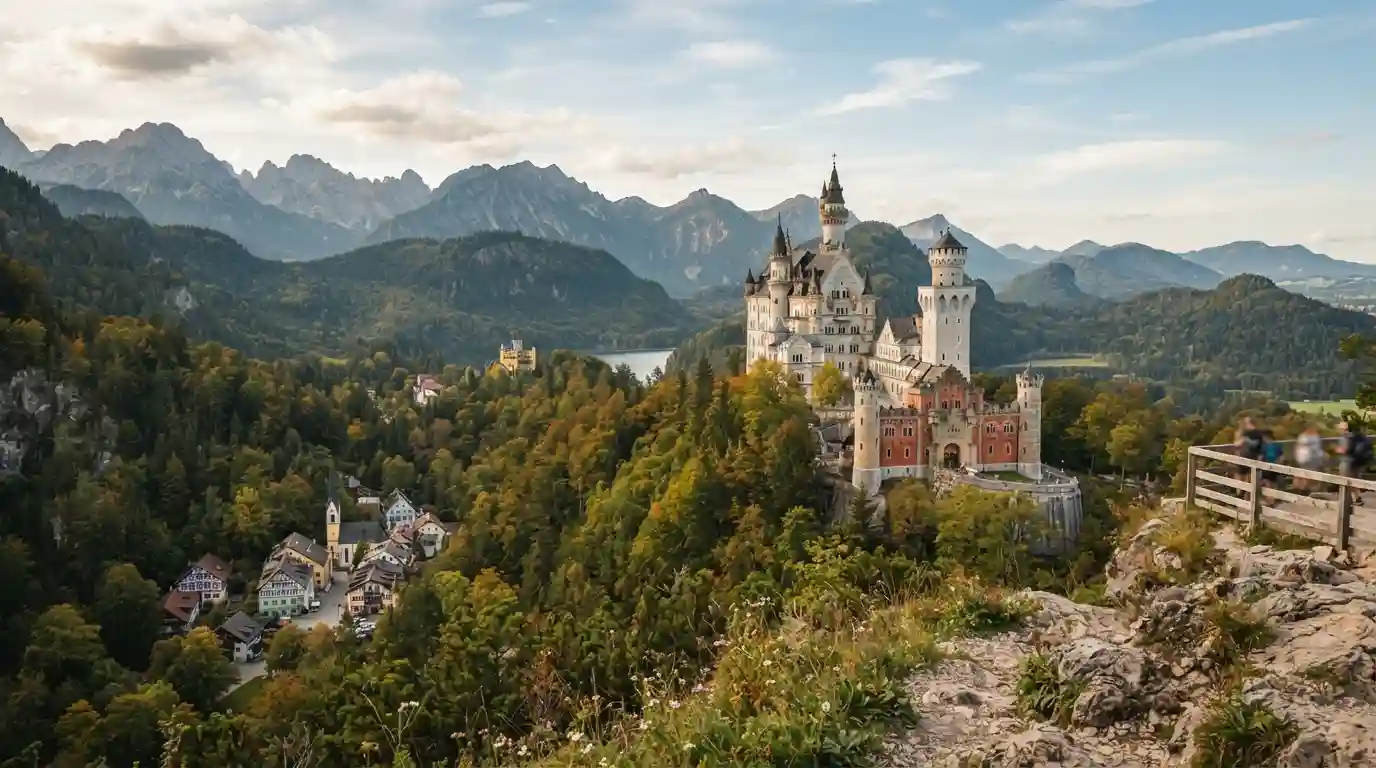
Neuschwanstein Castle is one of Germany’s most recognizable landmarks. Perched above the Bavarian countryside near Füssen, the castle has a dramatic mountain setting that makes it particularly appealing to photographers and first-time visitors.
The surrounding area is worth exploring rather than treating the castle as a quick stop. Forested hills, alpine scenery, nearby lakes, and traditional Bavarian villages make this region ideal for a day trip or longer stay.
4. Hamburg
Hamburg offers a completely different atmosphere from southern Germany. As a major northern port city, it has a strong maritime identity, impressive architecture, waterfront attractions, and a lively cultural scene.
The Speicherstadt warehouse district, Elbphilharmonie, harbor area, and surrounding neighborhoods provide plenty to explore. Hamburg is a good choice for travelers who prefer large cities with distinctive local character.
5. Cologne
Cologne is best known for its magnificent cathedral, but the city offers much more than its most famous landmark. The Rhine waterfront, historic areas, museums, bridges, and lively neighborhoods make Cologne an enjoyable destination for a city break.
The Cologne Cathedral is especially impressive when viewed from different points around the city. Travelers can also use Cologne as a convenient base for exploring parts of western Germany.
6. Heidelberg
Heidelberg is one of Germany’s most atmospheric historic cities. Located along the Neckar River, it is famous for its old town, castle ruins, stone bridge, and surrounding hills.
The compact historic center makes Heidelberg easy to explore on foot. A walk through the old town followed by views from Heidelberg Castle offers a strong combination of architecture, history, and scenery.
7. Rothenburg ob der Tauber
Rothenburg ob der Tauber is a classic destination for travelers looking for medieval Germany. Its preserved walls, narrow streets, timber-framed buildings, towers, and historic squares create an unmistakable old-world atmosphere.
The town is especially appealing for photographers and travelers who enjoy smaller destinations. Walking along parts of the old town walls and exploring the historic center can easily fill a day.
8. Black Forest
The Black Forest is one of the best regions in Germany for travelers who prefer forests, hiking, scenic roads, traditional villages, and outdoor activities. Dense woodland covers much of the region, while small towns and mountain viewpoints provide plenty of opportunities to slow down.
The area works well for road trips because travelers can combine nature with villages, viewpoints, lakes, and regional food experiences. It is also an excellent choice for visitors who want a break from major cities.
9. Rhine Valley
The Rhine Valley is known for dramatic river scenery, historic castles, vineyards, and charming towns. A journey along the river can include scenic viewpoints, walking trails, historic settlements, and boat trips.
The section between Bingen and Koblenz is particularly well known for its concentration of castles and cultural landscapes. Travelers who enjoy scenic European journeys will find the region especially rewarding.
10. Frankfurt
Frankfurt is Germany’s major financial center and one of its most internationally connected cities. Its modern skyline contrasts with the reconstructed historic center around Römerberg.
Frankfurt can be a practical arrival or departure point for international travelers, but it is also worth exploring independently. Museums along the Main River, the old town, shopping districts, and nearby destinations give visitors several ways to spend a couple of days.
11. Nuremberg
Nuremberg combines medieval architecture with important twentieth-century history. The city’s imperial castle, old town walls, churches, bridges, and traditional streets make it an interesting destination for history-focused travelers.
Nuremberg is also an important place for understanding Germany’s modern history. Visitors should allow time to explore both its historic center and its major historical sites.
12. Dresden
Dresden is famous for its elegant architecture, museums, art collections, and location along the Elbe River. The historic center features impressive buildings including the Frauenkirche, Semperoper, and Zwinger complex.
The city’s combination of cultural attractions and riverside scenery makes it one of the most rewarding destinations in eastern Germany. It can also be combined with nearby Saxon destinations for a longer itinerary.
13. Leipzig
Leipzig is a lively city with a strong connection to music, art, literature, and contemporary culture. Historic buildings sit alongside modern creative spaces, cafés, galleries, and cultural venues.
The city is a good option for travelers who want something different from Germany’s most heavily visited tourist destinations. Leipzig’s cultural identity and walkable central areas make it suitable for a relaxed city break.
14. Lübeck
Lübeck is one of northern Germany’s most beautiful historic cities and is closely associated with the country’s Hanseatic heritage. Its old town sits on an island surrounded by waterways and contains historic churches, merchant buildings, gates, and narrow streets.
The city’s architecture and maritime history make it particularly attractive for travelers interested in medieval trade and northern European culture.
15. Lake Constance
Lake Constance, known locally as Bodensee, sits near Germany’s borders with Austria and Switzerland. The lake provides a scenic setting for boating, cycling, walking, and relaxing in lakeside towns.
Visitors can combine the German shoreline with nearby islands and towns, making the region suitable for both active vacations and slower scenic trips.
16. Zugspitze
Zugspitze is Germany’s highest mountain and one of the country’s most spectacular destinations for alpine scenery. The mountain area offers panoramic views, mountain activities, and a very different experience from Germany’s historic cities.
The destination can be particularly appealing during winter, while warmer months provide opportunities for hiking and enjoying the surrounding alpine landscape.
17. Garmisch-Partenkirchen
Garmisch-Partenkirchen is one of Bavaria’s best-known mountain destinations. It combines traditional architecture with dramatic alpine scenery and provides access to outdoor activities throughout the year.
The town is an excellent base for travelers interested in hiking, mountain views, winter sports, and scenic drives. Its location also makes it convenient for exploring the wider Bavarian Alps.
18. Potsdam
Potsdam is located close to Berlin and is famous for its palaces, gardens, and historic landscapes. Sanssouci Palace and its surrounding gardens are the main attraction, but the city offers several other historic districts and cultural sites.
Potsdam works particularly well as a day trip from Berlin. Travelers who want to combine a major capital with a quieter historic destination can easily include both in the same itinerary.
19. Trier
Trier is one of Germany’s most historically significant cities and is particularly notable for its Roman heritage. Ancient monuments, historic churches, medieval architecture, and the city’s compact center provide a fascinating look at different periods of European history.
The Porta Nigra is among Trier’s most recognizable landmarks. The city’s historic atmosphere makes it a strong choice for travelers who enjoy archaeology and architecture.
20. Bamberg
Bamberg is a charming historic city in Bavaria known for its preserved old town, riverside buildings, bridges, churches, and distinctive architecture. Its historic center is ideal for walking and photography.
The city has a relaxed atmosphere compared with larger German destinations. It is a good addition to an itinerary focused on traditional towns and regional culture.
21. Berchtesgaden
Berchtesgaden is surrounded by spectacular mountain scenery in southeastern Bavaria. The region offers alpine landscapes, forests, lakes, hiking routes, and scenic viewpoints.
Nearby Königssee is one of the area’s major attractions, with clear mountain water surrounded by steep slopes. Travelers who prioritize nature should consider spending more than one day in this region.
22. Wismar
Wismar is another northern German destination with a well-preserved historic center and strong Hanseatic character. Brick Gothic architecture, historic squares, and the nearby Baltic coastline make it a worthwhile stop for travelers exploring northern Germany.
Its smaller scale makes Wismar a good alternative to Germany’s major cities when you want to experience a quieter historic environment.
23. Schwerin
Schwerin is known for its picturesque castle set on an island in Lake Schwerin. The combination of water, gardens, historic architecture, and the surrounding city creates one of northern Germany’s most photogenic landscapes.
Schwerin is particularly appealing for travelers who enjoy castles without the crowds associated with Germany’s most famous attractions.
24. Regensburg
Regensburg is a historic Bavarian city on the Danube River with a remarkably well-preserved medieval center. Its stone bridge, cathedral, historic buildings, and narrow streets make it a rewarding destination for walking tours.
The city is also a useful stop for travelers exploring Bavaria by train or road. Its historic character provides a strong contrast with modern Munich.
25. Sylt
Sylt offers a completely different side of Germany. Located in the North Sea, the island is known for beaches, dunes, coastal landscapes, and seaside communities.
Sylt is an excellent choice for travelers who want to add a coastal experience to a Germany itinerary. Long walks beside the sea and time in the island’s smaller communities provide a slower alternative to city sightseeing.
How to Choose the Best Places to Visit in Germany
The right destinations depend on the type of trip you want to create. Germany is large enough that trying to visit every major attraction in a single trip can make the journey unnecessarily rushed.
For First-Time Visitors
Berlin, Munich, Cologne, Heidelberg, and Neuschwanstein Castle provide a strong introduction to Germany. Together, they cover major cities, history, architecture, Bavarian culture, and iconic scenery.
For Nature Lovers
The Black Forest, Rhine Valley, Lake Constance, Zugspitze, Garmisch-Partenkirchen, Berchtesgaden, and Sylt are strong choices for travelers who prefer outdoor experiences.
For History and Architecture
Berlin, Nuremberg, Dresden, Trier, Rothenburg ob der Tauber, Bamberg, Regensburg, and Lübeck provide a broad mix of historical periods and architectural styles.
For Families
Germany offers a useful mix of castles, museums, outdoor destinations, scenic towns, and interactive attractions. Families planning a wider European trip can also explore our guide to family-friendly European destinations for additional itinerary ideas.
Best Time to Visit Germany
The best time to visit Germany depends on your priorities. Spring generally brings pleasant temperatures and blooming landscapes, while summer offers longer days and favorable conditions for sightseeing and outdoor activities.
Autumn can be especially attractive for travelers who enjoy colorful landscapes, historic towns, and a quieter atmosphere. Winter transforms many cities and mountain regions with seasonal markets, snow, and festive events.
If your trip focuses on hiking or alpine scenery, check local mountain conditions before planning outdoor activities. Weather can vary considerably between cities, forests, and high-altitude destinations.
How Long Do You Need in Germany?
A short trip of four to five days can cover one major city and a nearby destination. Around seven to ten days gives travelers enough time to combine major cities with historic towns or natural areas.
For a two-week itinerary, you can create a more balanced route that includes Berlin, central Germany, Bavaria, and one or two scenic regions. Avoid trying to cover too much ground simply to increase the number of destinations on your itinerary.
Germany Travel Tips
- Plan major attractions in advance when visiting during busy travel periods.
- Use Germany’s rail network where practical, especially between major cities.
- Allow extra time when traveling into mountainous or rural areas.
- Wear comfortable shoes because many historic centers are best explored on foot.
- Check local opening schedules before visiting museums, castles, and smaller attractions.
- Consider staying overnight in smaller towns instead of visiting everything as a rushed day trip.
- Keep some flexibility in your itinerary because weather can influence outdoor plans.
Travelers who enjoy building multi-country itineraries can also compare Germany with destinations featured in our guides to the best places to visit in Belgium, Salento, Italy, Dublin, and Edinburgh.
Final Thoughts
The top places to visit in Germany showcase how much variety the country offers. Berlin provides major historical and cultural experiences, Munich introduces visitors to Bavarian traditions, and destinations such as Neuschwanstein, the Black Forest, the Rhine Valley, and Zugspitze deliver unforgettable scenery.
Smaller destinations such as Rothenburg ob der Tauber, Bamberg, Lübeck, Wismar, and Schwerin are equally valuable for travelers who want to experience Germany beyond its largest cities.
The best Germany itinerary is not necessarily the one with the most destinations. Choosing a few places that match your interests and giving yourself enough time to experience them can create a much more enjoyable trip.
Frequently Asked Questions
What is the number one place to visit in Germany?
Berlin is often the strongest all-around choice for first-time visitors because it combines major historical landmarks, museums, culture, architecture, food, and modern city life.
What is the most beautiful place in Germany?
Beauty is subjective, but Neuschwanstein Castle, the Bavarian Alps, the Black Forest, the Rhine Valley, and Lake Constance are among the country’s most scenic destinations.
Is Germany good for a first European trip?
Yes. Germany has major international cities, historic towns, efficient transportation options, natural landscapes, and a wide variety of attractions, making it suitable for many first-time European travelers.
What are the best places in Germany for nature lovers?
The Black Forest, Zugspitze, Berchtesgaden, Lake Constance, Garmisch-Partenkirchen, Rhine Valley, and Sylt are excellent choices for travelers who enjoy nature and outdoor activities.
How many days are enough to visit Germany?
Seven to ten days is a useful starting point for combining several destinations, while two weeks allows for a more relaxed itinerary covering cities, historic towns, and scenic regions.