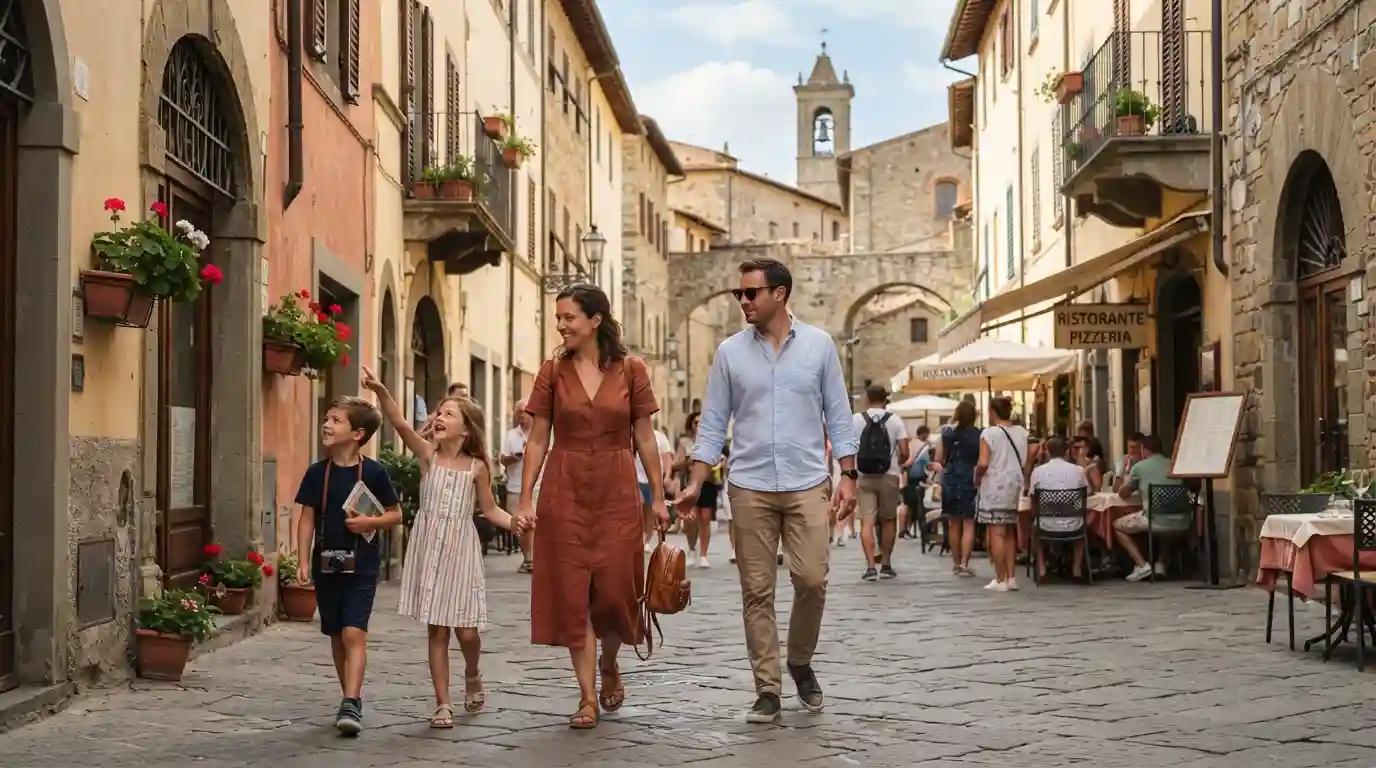
The key is choosing a destination that works for both children and adults. A successful family trip should offer attractions that keep kids interested while also providing parents with comfortable transportation, manageable sightseeing, family-friendly activities, and enough opportunities to slow down between major attractions.
Whether you are planning your first European family vacation or looking for a new destination for a school-break trip, these destinations provide a useful starting point.
What Makes a European Destination Good for Families?
The best family destinations usually combine several important factors. Attractions should appeal to different age groups, transportation should be reasonably convenient, and the itinerary should allow enough flexibility for children to rest.
Families should also consider the length of their trip. A destination with many attractions can be excellent for a week-long vacation, while a compact city may be better for a shorter break. Weather, accommodation, walking distances, food options, and the interests of your children should all influence the final choice.
1. Paris, France
Paris is one of the strongest choices when looking for the best place to visit in Europe with kids. Although the city is famous for its art, architecture, and romantic atmosphere, it also offers plenty of experiences that children can enjoy.
Families can visit the Eiffel Tower, explore parks and gardens, take a boat ride along the Seine, and discover museums that offer engaging experiences for younger visitors. The city’s wide range of cafés and casual food options also makes it relatively easy to build flexible family days.
One of the biggest attractions for children is Disneyland Paris. Combining a few days in central Paris with time at the theme park can create a balanced vacation with both cultural experiences and entertainment.
Paris works particularly well for families who want a destination where children can experience famous landmarks while adults enjoy history, architecture, food, and culture.
2. Rome, Italy
Rome turns history into something children can see rather than simply read about. Ancient ruins, enormous monuments, fountains, piazzas, and fascinating streets make the city feel like an open-air history lesson.
The Colosseum is an obvious highlight, but families can also explore Roman streets, public squares, fountains, and parks. Children may particularly enjoy the sense of discovery that comes from walking through areas where ancient and modern Rome exist side by side.
Families planning a longer Italian vacation can also consider places to visit near Florence by train after exploring Rome. This makes it possible to combine major cities with smaller destinations and scenic day trips.
For families staying in Rome, choosing accommodation near convenient transportation can also make a major difference. A central base can make it easier to return for a break before continuing sightseeing.
3. London, United Kingdom
London is another excellent answer to the question of where to travel in Europe with children. The city offers royal landmarks, museums, parks, historic buildings, river views, and attractions that can appeal to different age groups.
Children may enjoy seeing Buckingham Palace, Tower Bridge, the Tower of London, and the London Eye. Museums can provide educational experiences, while parks give families space to slow down after several hours of sightseeing.
If your family has limited time, our guide to London places to visit in one day can help organize major attractions into a practical route.
Families extending their UK vacation can also explore places to visit in South West UK and places to visit in the Midlands England for additional destinations beyond London.
4. Amsterdam, Netherlands
Amsterdam combines canals, museums, parks, historic architecture, and outdoor experiences in a relatively compact city. That combination makes it attractive for families who want both educational activities and relaxed sightseeing.
Children can enjoy canal cruises, open spaces, interactive museums, and cycling culture. A canal cruise can also be a useful way to see the city without requiring children to walk continuously throughout the day.
Families should build some downtime into an Amsterdam itinerary. Exploring too many museums or attractions in one day can make the experience tiring, particularly for younger children.
5. Barcelona, Spain
Barcelona is an excellent family destination because it combines architecture, beaches, parks, food, and outdoor activities. Children can enjoy the colorful designs associated with Antoni Gaudí while parents explore the city’s cultural and architectural character.
Park Güell is particularly appealing because of its unusual shapes, colorful mosaics, and open spaces. Families can also spend time near the waterfront and combine sightseeing with a more relaxed beach experience.
For families planning a wider Iberian trip, our guide to must-visit places in Spain and Portugal provides additional destination inspiration.
Barcelona is especially useful for families who do not want a vacation based entirely around museums and historical buildings. A single trip can include architecture, food, beaches, parks, and neighborhood exploration.
6. Copenhagen, Denmark
Copenhagen is a strong option for families who prefer a relaxed European city with attractions designed around children as well as adults. The city is known for its parks, waterfront areas, colorful streets, and family-oriented attractions.
Tivoli Gardens is one of the most recognizable family attractions in the city, while museums and interactive experiences can add an educational element to the trip.
The compact nature of central Copenhagen also makes it easier to combine several activities without spending the entire day traveling between distant neighborhoods.
7. Vienna, Austria
Vienna offers a different kind of family vacation, combining imperial architecture, parks, museums, music, palaces, and traditional attractions with experiences that can appeal to children.
Families can explore Schönbrunn Palace and its surrounding grounds, visit museums, enjoy public parks, and experience the city’s historic atmosphere. Vienna can work particularly well for families with older children who enjoy history and architecture.
The city also provides opportunities to slow down between attractions, which is important when traveling with younger children.
8. Munich, Germany
Munich offers families a mixture of historic architecture, parks, museums, and access to Bavaria’s wider landscapes. Children can enjoy exploring the city’s central areas while parents appreciate its cultural and architectural character.
Families visiting during warmer months can enjoy outdoor spaces and parks, while museums and indoor attractions provide alternatives when the weather is less predictable.
For families interested in seeing the city after sunset, our guide to the best places to visit in Munich at night can provide additional ideas for an evening itinerary.
Travelers interested in exploring more of Germany can also use our guide to the top 25 places to visit in Germany when building a longer family trip.
9. Edinburgh, Scotland
Edinburgh can feel like a real-life storybook destination for children. The city’s castle, historic streets, dramatic hills, and distinctive architecture create plenty of opportunities for exploration.
Families can visit Edinburgh Castle, walk along the Royal Mile, explore museums, and discover viewpoints across the city. Older children may particularly enjoy the city’s historic atmosphere and stories.
Families planning evening activities can also explore the best places to visit in Edinburgh at night, although activities should always be selected according to children’s ages and energy levels.
10. Dublin, Ireland
Dublin is another family-friendly European city that combines history, parks, museums, and outdoor experiences. Its relatively approachable size makes it possible to explore major attractions without creating an overly complicated itinerary.
Families can visit historic landmarks, explore green spaces, walk through the city center, and choose museums and attractions according to their children’s interests.
Parks can be particularly useful during a family vacation because children need opportunities to move around after spending time inside museums or historic buildings.
For more destination ideas, see our guide to the top ten places to visit in Dublin.
11. Stockholm, Sweden
Stockholm combines historic neighborhoods, waterfront scenery, museums, parks, and family-friendly attractions. Its island-based geography also gives the city a distinctive visual character that can make sightseeing more interesting for children.
Families can explore Gamla Stan, visit Djurgården, enjoy museums, and spend time outdoors. Skansen is particularly suitable for families interested in Swedish history and traditional culture.
Families considering a seasonal trip can also explore the best places to visit in Stockholm in autumn for ideas about experiencing the city during the fall.
12. Bruges, Belgium
Bruges can be an excellent choice for families who prefer a smaller destination rather than a huge capital city. Medieval buildings, canals, cobbled streets, and compact sightseeing areas create a memorable setting for a short family break.
Canal cruises can give children a different perspective of the historic city, while walking through the old center allows families to explore at their own pace.
Families visiting Belgium can also combine Bruges with Brussels, Ghent, or Antwerp. Our guide to the best places to visit in Belgium can help expand the itinerary.
13. Lisbon, Portugal
Lisbon offers families a combination of historic neighborhoods, viewpoints, trams, waterfront areas, and cultural experiences. The city’s distinctive streets and hills can make simply moving through the city part of the adventure.
Families should avoid packing too many steep walking routes into one day, especially when traveling with young children. Mixing sightseeing with parks, cafés, waterfront walks, and rest periods can make the experience more enjoyable.
Lisbon also works well as part of a wider Spain and Portugal itinerary, especially for families who want to experience several cultures during one European vacation.
14. Athens, Greece
Athens provides an exciting combination of ancient history, city exploration, food, and outdoor sightseeing. Older children may find the Acropolis and other historic landmarks especially interesting because they can connect places they have studied with real-world locations.
Families should balance historical sightseeing with relaxed activities. Spending several hours visiting archaeological sites in hot weather can become tiring for younger travelers, so shorter sightseeing sessions followed by meals or rest can work better.
Families looking at Greece as part of a wider European trip can also explore our guide to the best places to visit in Greece for broader destination ideas.
15. Florence, Italy
Florence is particularly attractive for families with older children who enjoy art, architecture, history, and beautiful city streets. The compact historic center makes it possible to experience major attractions without constantly relying on transportation.
Families can explore the Duomo area, historic squares, bridges, markets, and museums while leaving time for relaxed meals and outdoor walks.
Florence can also serve as a base for day trips. Our guide to places to visit near Florence by train provides additional ideas for families who want to explore Tuscany beyond the city.
16. Salento, Italy
Families who prefer beaches and slower-paced travel may enjoy southern Italy. Salento combines coastal scenery, historic towns, beaches, and a more relaxed atmosphere than some of Europe’s busiest capitals.
The region can be particularly appealing when children need more outdoor time during a vacation. Instead of spending every day inside museums or navigating busy city streets, families can combine beaches with town exploration and local food.
For more inspiration, explore our guide to the best places to visit in Salento, Italy.
How to Choose the Best European Destination for Your Kids
There is no single destination that is perfect for every family. The right choice depends on your children’s ages, interests, energy levels, and the type of vacation you want.
For Young Children
Choose destinations with parks, short travel distances, simple transportation, family attractions, and plenty of opportunities for breaks. Copenhagen, Amsterdam, Paris, and Barcelona can all work well when the itinerary is kept flexible.
For School-Age Children
School-age children may enjoy destinations where learning and entertainment can be combined. London, Rome, Paris, Athens, and Edinburgh offer history and culture alongside attractions that can keep children interested.
For Teenagers
Teenagers often appreciate destinations that provide independence, photography opportunities, food experiences, shopping, outdoor activities, and interesting neighborhoods. Barcelona, Amsterdam, London, Munich, and Stockholm can provide a broad range of experiences.
For Beach-Focused Family Trips
If your children would rather spend time outdoors than inside museums, consider destinations such as Barcelona, Salento, or other coastal areas where sightseeing can be balanced with beach time.
Best Time to Visit Europe With Kids
The best time for a European family vacation depends on your destination and priorities. Spring can provide comfortable sightseeing conditions and outdoor opportunities, while summer offers longer days and school-holiday flexibility.
Autumn can be particularly attractive for families who prefer cooler temperatures and a different atmosphere. Winter can work well for families interested in Christmas markets, seasonal attractions, museums, and city breaks.
Before booking, consider school schedules, local weather, accommodation prices, attraction opening times, and how comfortable your children are with long days of walking.
Tips for Planning a Family Trip to Europe
- Do not overcrowd the itinerary: Leave enough time for rest and unexpected delays.
- Choose accommodation carefully: A central location can reduce unnecessary transportation.
- Mix attractions: Combine museums and historical sites with parks, food, outdoor activities, or entertainment.
- Plan around children’s energy: A full sightseeing schedule may look good on paper but can become exhausting.
- Book major attractions ahead when appropriate: Popular attractions can have limited entry times during busy periods.
- Keep snacks available: Small breaks can make long sightseeing days much easier.
- Use public transportation strategically: Walking is enjoyable, but transportation can save energy when distances become significant.
- Build flexibility into each day: Families should have room to change plans if children become tired.
How Many Days Should a Family Spend in Europe?
The ideal trip length depends on how many destinations you plan to visit. For a single major city, four to six days can provide enough time to explore without rushing. A longer trip can combine two or three nearby destinations.
Families should avoid trying to visit too many countries during a short vacation. Constantly changing hotels and transportation can take time away from the experiences that children actually remember.
A slower itinerary often creates better family memories than attempting to check every famous attraction off a list.
Final Thoughts
The best place to visit in Europe with kids is ultimately the destination that matches your family’s interests and travel style. Paris offers landmarks and theme-park excitement, Rome brings ancient history to life, London combines museums and iconic attractions, while Barcelona adds beaches and colorful architecture.
Amsterdam, Copenhagen, Vienna, Munich, Edinburgh, Dublin, Stockholm, Bruges, Lisbon, Athens, Florence, and Salento provide equally interesting alternatives for different types of family vacations.
The most important part of planning is not simply choosing the most famous destination. Think about your children’s ages, how much walking they can comfortably handle, the activities they enjoy, the season of travel, and how much downtime your family needs.
With a balanced itinerary, comfortable accommodation, and a mixture of education, entertainment, outdoor activities, and relaxation, a European family vacation can become an experience that children remember for years.
As families embark on their European adventures, the allure of diverse landscapes and experiences often extends beyond traditional attractions. While cities rich in history and charming villages are popular, destinations that offer unique outdoor experiences can also be incredibly enriching for children and adults alike. For instance, exploring natural wonders through hiking and outdoor activities can foster a sense of adventure and connection to nature. One such remarkable destination that exemplifies this is Canyonlands National Park, where families can immerse themselves in breathtaking vistas and engage in invigorating hikes. Such experiences not only provide excitement but also create lasting memories, encouraging a love for exploration that can be cherished for years to come.
As families embark on their European adventures, it’s essential to consider not only the iconic landmarks and cultural experiences but also the natural wonders that can elevate a trip from ordinary to extraordinary. For example, while exploring the vibrant streets of Paris or the enchanting canals of Venice, families may also seek moments of tranquility and adventure in nature. One such destination that offers a unique blend of outdoor activities, breathtaking scenery, and family-friendly attractions is Cuyahoga Valley National Park. This gem in Ohio features stunning waterfalls, scenic railroads, and accessible trails that are perfect for families looking to immerse themselves in the great outdoors. For a comprehensive overview of what this park has to offer, refer to the cuyahoga valley national park guide, which details the best spots and tips for making the most of your visit.
As families embark on their European adventures, the journey often ignites a desire for exploration that extends beyond the continent. For those seeking a unique experience that combines stunning natural beauty with family-friendly activities, a trip to Haleakala National Park offers a compelling contrast to the bustling cities and cultural landmarks found in Europe. Here, families can witness breathtaking sunrises above the clouds, embark on invigorating crater hikes, and immerse themselves in the lush landscapes of Kipahulu. This destination not only enriches the travel experience with outdoor adventures but also provides a serene backdrop to connect with nature, making it an exceptional addition to any family’s travel itinerary. Such diverse options ensure that every family member, from the curious child to the adventurous parent, can create lasting memories together.
As families explore the rich tapestry of experiences that Europe has to offer, it’s important to remember that adventure and discovery are not limited to the continent’s borders. For those looking to blend cultural exploration with family-friendly activities, destinations like San Antonio, Texas, emerge as hidden gems. Known for its vibrant River Walk, historic missions, and delectable Tex-Mex cuisine, San Antonio provides an array of engaging activities that cater to both children and adults. Families can immerse themselves in the city’s rich history while enjoying leisurely strolls and outdoor fun. For a deeper dive into the diverse offerings, consider the numerous things to do in san antonio that guarantee a memorable experience for every member of the family.