The good news is that Madrid makes it easy to experience several sides of the city in a relatively short trip. The Royal Palace, Plaza Mayor, Puerta del Sol, Prado Museum, and El Retiro Park are among the essential sights, while neighborhoods such as Malasaña, La Latina, and Salamanca offer a different perspective on everyday Madrid.
Madrid is also a useful starting point for a wider European trip. Travelers planning a multi-country itinerary can combine the Spanish capital with destinations featured in our guides to Spain and Portugal, Germany, or Belgium.
Why Madrid Is One of Spain’s Best City Destinations
Madrid offers an unusually balanced city-break experience. You can begin the morning inside a historic palace, spend the afternoon viewing masterpieces in an art museum, walk through a monumental park, enjoy tapas in a traditional neighborhood, and finish the evening in a lively central square.
The city is especially appealing to travelers who enjoy combining culture with relaxed exploration. Many major attractions are concentrated around central neighborhoods, making it possible to cover a lot on foot while still having convenient public transportation when distances become longer.
Its position in central Spain also makes Madrid a practical base for travelers interested in exploring more of the country. If your trip extends beyond the capital, a broader Spain travel itinerary can add coastal cities, historic towns, and other regions to your plans.
Best Places to Visit in Madrid Spain
1. Royal Palace of Madrid
For many first-time visitors, the Royal Palace of Madrid is the best place to begin exploring the city’s historic side. The enormous palace complex reflects centuries of Spanish royal history and contains grand ceremonial rooms, ornate interiors, works of art, furnishings, and architectural details.
The palace is particularly impressive for travelers interested in European history and architecture. Its location also makes it easy to combine the visit with nearby attractions, including Almudena Cathedral, Plaza de Oriente, and the historic streets around Madrid’s old center.
Allow enough time to explore rather than treating the palace as a quick photo stop. The surrounding area is also worth walking through, especially if you want to understand the relationship between Madrid’s royal landmarks and its historic neighborhoods.
2. Prado Museum
The Prado Museum is one of Madrid’s essential attractions for art lovers. Its collection includes major works associated with artists such as Velázquez, Goya, El Greco, Titian, Rubens, and Bosch.
Even travelers who do not normally spend much time in museums can find the Prado worthwhile because the collection provides a deeper understanding of Spanish and European art history. Rather than trying to see everything, choose a manageable selection of galleries and give yourself time to appreciate the major works.
The museum is part of Madrid’s famous art corridor, making it easy to combine with other cultural attractions during the same day.
3. El Retiro Park
El Retiro Park provides a welcome change from Madrid’s busy streets. This expansive green space is ideal for walking, relaxing, photography, and enjoying a slower part of the city.
Visitors can explore landscaped gardens, monuments, paths, and the famous lake area. The park is particularly attractive when you want to break up a day of museum and sightseeing visits with outdoor time.
El Retiro is also part of Madrid’s UNESCO-listed Landscape of Light together with the Paseo del Prado area. That makes the park more than simply a recreational space; it is an important part of the city’s cultural landscape.
4. Plaza Mayor
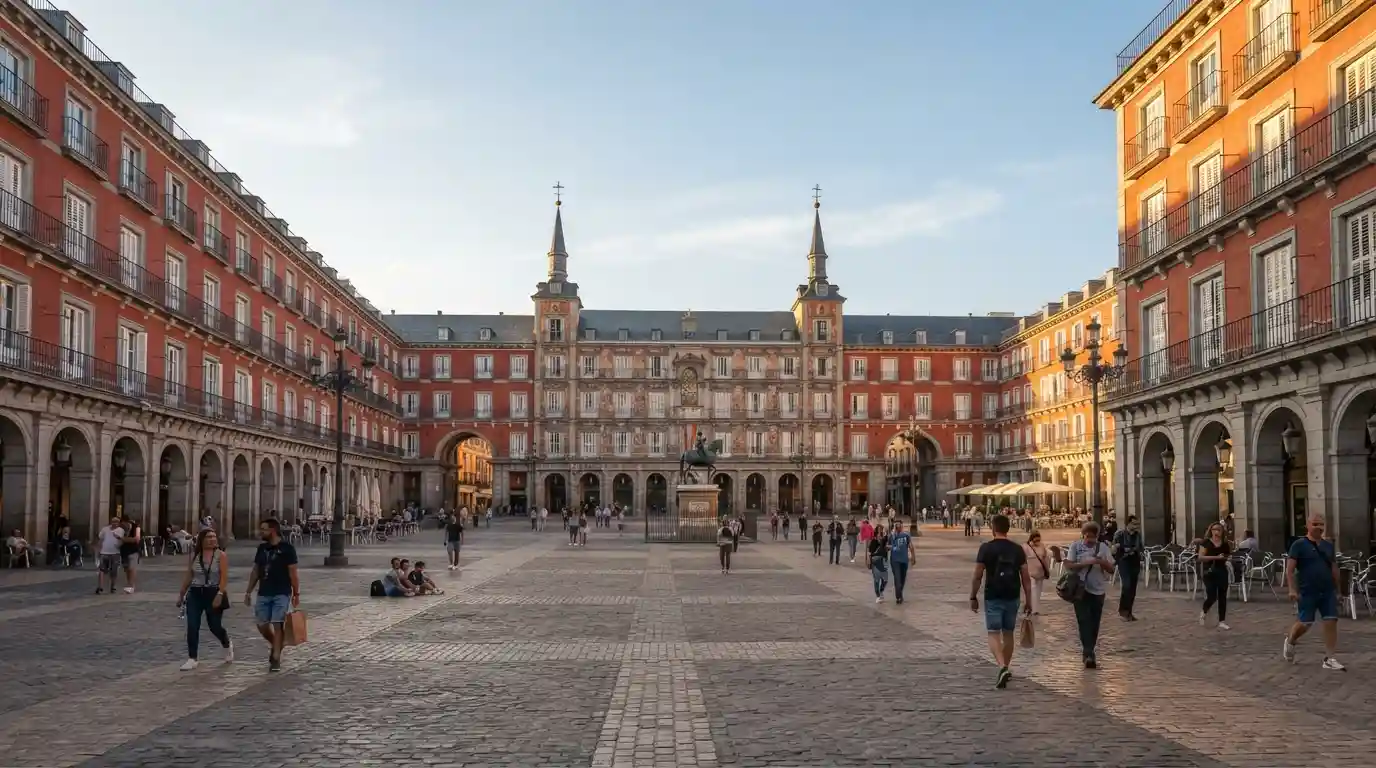
Plaza Mayor is one of Madrid’s most recognizable historic squares. Surrounded by traditional architecture and arcaded buildings, it provides a strong introduction to the city’s older character.
The square is centrally located and works well as part of a walking route through historic Madrid. From here, you can continue toward nearby streets, traditional restaurants, small shops, and other landmarks in the old city.
For travelers who enjoy European squares and historic urban architecture, Plaza Mayor is one of the easiest attractions to add to a first-time Madrid itinerary.
5. Puerta del Sol
Puerta del Sol is one of the busiest and most recognizable gathering points in Madrid. The central square connects several important streets and is a natural starting point for exploring the city center.
Look for the famous Bear and the Strawberry Tree statue, the Kilometre Zero marker, and the historic Casa de Correos clock. The square is pedestrianized, making it particularly suitable for walking and people-watching.
Because Sol sits close to other major attractions, it is easy to combine with Plaza Mayor, the Royal Palace area, Gran Vía, and surrounding shopping streets.
6. Gran Vía
If you enjoy shopping, architecture, restaurants, theaters, and the energetic side of city life, Gran Vía deserves a place on your Madrid itinerary. The avenue is one of the city’s best-known urban landmarks and is especially lively during the evening.
Walk the avenue rather than simply passing through it. The surrounding buildings provide excellent examples of Madrid’s early 20th-century architectural development, while the nearby streets lead toward shopping areas, restaurants, entertainment venues, and historic neighborhoods.
7. Puerta de Alcalá
Puerta de Alcalá is one of Madrid’s most recognizable monuments and an excellent stop when visiting El Retiro and the Paseo del Prado area.
The monumental gate dates from the reign of Charles III and provides an impressive example of Madrid’s historic architecture. Its position near El Retiro makes it particularly convenient for travelers who want to combine several major sights in one walking route.
8. Museo Nacional Centro de Arte Reina Sofía
Art enthusiasts should also consider the Reina Sofía Museum. The museum is particularly famous for modern and contemporary Spanish art and is closely associated with Pablo Picasso’s Guernica.
Combining the Reina Sofía with the Prado and Thyssen-Bornemisza museums creates a strong cultural itinerary for visitors interested in European art. If you have limited time, choose the museums that best match your interests rather than attempting to visit every collection in one day.
9. Mercado de San Miguel
Food is an important part of the Madrid experience, and Mercado de San Miguel is a convenient place to sample a range of Spanish flavors in one central location. It is particularly useful for visitors who want to explore different foods without committing to a long restaurant meal.
For a more traditional experience, explore Madrid’s surrounding neighborhoods and look for local tapas bars, bakeries, cafés, and traditional restaurants. The city rewards travelers who leave the main tourist routes and explore smaller streets.
10. La Latina and El Rastro
La Latina is one of the neighborhoods worth exploring when you want to experience a more local side of Madrid. Its narrow streets, traditional establishments, restaurants, and lively atmosphere make it especially enjoyable for walking and evening dining.
The nearby El Rastro flea market is another well-known attraction, particularly on Sundays and public holidays. It can be a fun addition to an itinerary for travelers interested in browsing vintage goods, clothing, antiques, and everyday items.
11. Santiago Bernabéu Stadium
Football fans have another major reason to visit Madrid: Santiago Bernabéu Stadium, home of Real Madrid. A stadium tour offers visitors an opportunity to explore the football club’s history, museum displays, and stadium spaces.
Even if you are not a dedicated football supporter, the stadium can be an interesting addition for travelers who want to experience an important part of Madrid’s sporting culture.
12. Temple of Debod
The Temple of Debod offers one of Madrid’s more unusual sightseeing experiences. This ancient Egyptian temple was reconstructed in Madrid and is surrounded by a park with open views toward the city.
It is especially popular around sunset because of the combination of historic stonework, open skies, and city scenery. Bring a camera and allow some time to enjoy the surrounding park rather than treating it as a quick stop.
Best Neighborhoods to Explore in Madrid
Malasaña
Malasaña is known for its independent character, cafés, bars, boutiques, and creative atmosphere. It is a good choice for travelers who prefer contemporary city culture over formal sightseeing.
Salamanca
Salamanca provides a more polished experience, with upscale shopping, elegant streets, restaurants, and attractive architecture. It is a useful area to explore if shopping and sophisticated dining are part of your Madrid plans.
La Latina
La Latina combines historic streets with restaurants, tapas bars, and a lively social atmosphere. It is particularly appealing in the late afternoon and evening.
Best Things to Do in Madrid Besides Sightseeing
Madrid is not a destination where you need to spend every hour moving from one monument to another. Some of the best experiences come from slowing down and enjoying the city’s everyday rhythm.
- Enjoy traditional Spanish tapas.
- Spend a relaxed afternoon in El Retiro.
- Walk through Madrid’s historic center.
- Explore independent shops and cafés in Malasaña.
- Visit an art museum during the afternoon.
- Watch the city become livelier after sunset.
- Explore local markets and traditional food spots.
- Take an evening walk along Gran Vía.
If you enjoy comparing European destinations before planning a larger trip, you may also want to explore our guides to Dublin, Munich, London, and Sarajevo.
Best Time to Visit Madrid
Madrid can be visited throughout the year, but spring and fall are particularly attractive for travelers who want comfortable conditions for walking and sightseeing. These seasons can provide a good balance between pleasant weather and the city’s cultural attractions.
Summer can be hot, especially during the afternoon, so visitors may prefer to schedule outdoor sightseeing earlier or later in the day and use the middle of the day for museums, restaurants, or indoor attractions.
Winter offers a different atmosphere, with cooler temperatures and a festive feel around the holiday period. If you enjoy seasonal European travel, Madrid can also work well as part of a broader winter itinerary. Our guide to cold-weather destinations around the world can provide additional inspiration.
How Many Days Do You Need in Madrid?
A two-day trip can cover many of the city’s major highlights, but three days gives you a more comfortable experience. With three days, you can combine the Royal Palace, historic center, major museums, El Retiro, shopping streets, neighborhoods, and food experiences without rushing constantly.
If you have four or more days, consider adding day trips or exploring Madrid’s less touristy neighborhoods. A longer stay also gives you more flexibility to revisit favorite areas and enjoy the city at a slower pace.
Sample Three-Day Madrid Itinerary
Day 1: Historic Madrid
Start around Puerta del Sol and walk toward Plaza Mayor. Continue through the historic center to the Royal Palace and Almudena Cathedral. In the evening, explore Gran Vía and nearby streets for dinner and entertainment.
Day 2: Art and Parks
Spend the morning at the Prado Museum before walking through the Paseo del Prado area. Continue toward El Retiro and Puerta de Alcalá. If you still have energy, visit another museum or explore the nearby neighborhoods.
Day 3: Local Madrid
Begin with a relaxed breakfast before exploring La Latina and, when operating, the El Rastro market. Spend the afternoon in Malasaña or Salamanca depending on your interests. Football fans can include the Santiago Bernabéu, while sunset at the Temple of Debod provides a scenic ending.
Madrid as Part of a Larger European Trip
Madrid works particularly well for travelers creating a multi-city European itinerary. After Spain, you can continue toward Portugal, France, Italy, Germany, or other parts of Europe depending on your route and available transportation.
Travelers looking for more inspiration can compare Madrid with destinations covered in our guides to affordable European destinations, European destinations for families, and South West England.
If you want to continue farther north, guides to New Zealand or Iceland’s Ring Road can help with planning a completely different style of trip.
Travel Tips for First-Time Visitors
- Wear comfortable shoes: Madrid is best experienced on foot, particularly around the historic center.
- Plan major museums: Popular museums can take several hours, so avoid overloading the same day.
- Use public transportation: Metro and local transit make it easier to reach attractions outside the immediate center.
- Take breaks: Madrid’s parks, cafés, and plazas are part of the experience.
- Explore beyond the main attractions: Neighborhoods such as Malasaña and La Latina reveal another side of the city.
- Keep evenings flexible: Madrid’s dining and social culture often extends later than visitors from some countries expect.
- Check attraction schedules: Opening hours, exhibitions, events, and access arrangements can change.
Is Madrid Worth Visiting?
Absolutely. Madrid is an excellent choice for travelers who want a European city that combines history, art, architecture, food, parks, shopping, and nightlife without requiring a complicated itinerary.
The best place to visit in Madrid Spain ultimately depends on your interests. History lovers may prefer the Royal Palace and historic center, art enthusiasts can spend hours around the Prado and Reina Sofía, outdoor travelers can relax in El Retiro, and food-focused visitors can build their trip around markets, tapas bars, and traditional neighborhoods.
For first-time visitors, the strongest approach is not to choose only one attraction. Instead, combine Madrid’s major landmarks with time in its neighborhoods. That balance allows you to see the city’s famous sights while also experiencing the relaxed, social character that makes Madrid such a memorable destination.
And if Madrid is only one stop on your wider travel plans, keep exploring. From other parts of Spain and Portugal to Germany, Belgium, Ireland, the UK, and destinations farther afield, a well-planned itinerary can turn a Madrid city break into the beginning of a much larger European adventure.