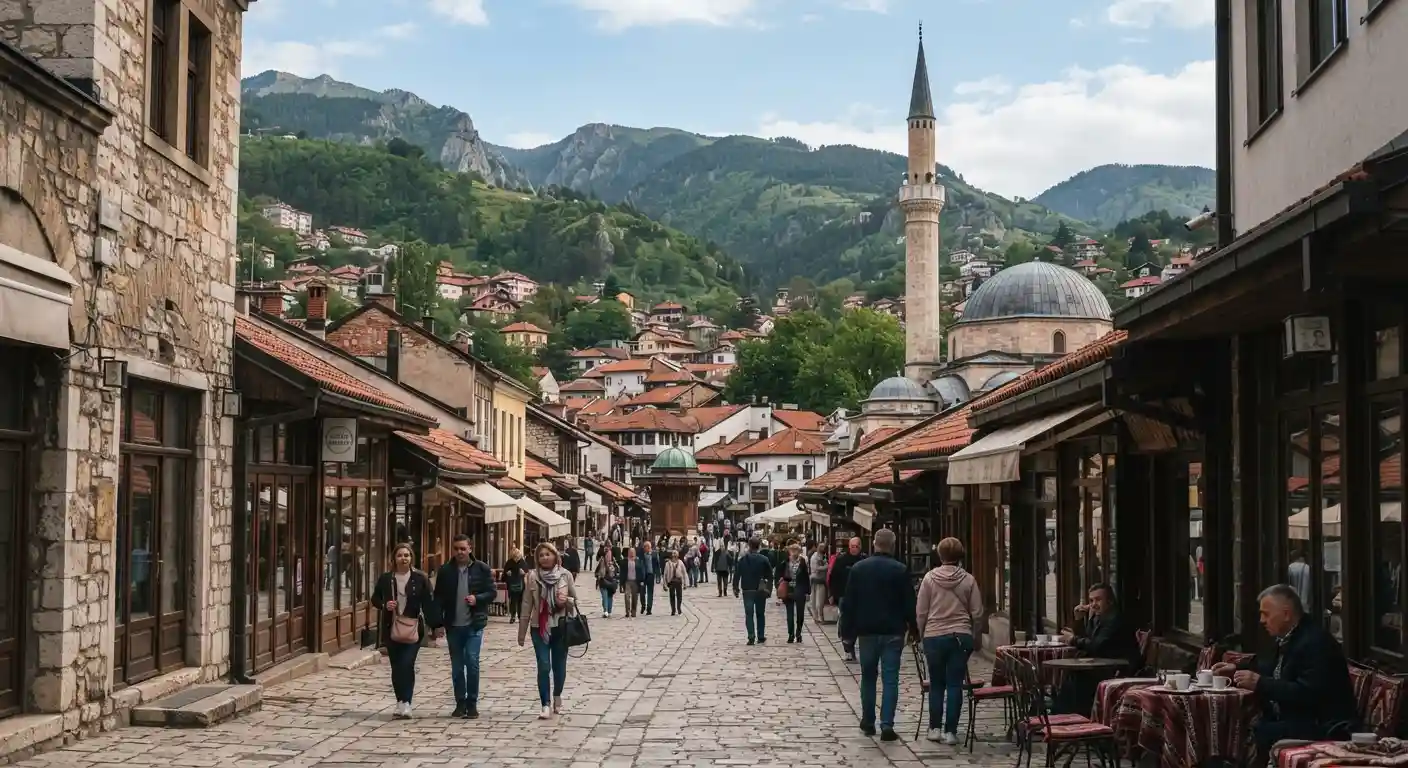
The best places to visit in Sarajevo, Bosnia and Herzegovina range from the historic streets of Baščaršija and the famous Latin Bridge to panoramic viewpoints, museums, religious landmarks, and peaceful mountain escapes. The city is particularly rewarding for travelers who enjoy walking, history, architecture, food, and cultural experiences.
If you are planning a wider European journey, Sarajevo can also complement trips through destinations such as Spain and Portugal, Germany, and Belgium.
Why Visit Sarajevo?
Sarajevo stands out because several cultural influences exist side by side. Ottoman-era streets and bazaars meet Austro-Hungarian buildings, while mosques, churches, synagogues, and modern neighborhoods contribute to the city’s distinctive character.
The city is also surrounded by mountains, making it possible to combine urban sightseeing with outdoor activities. Visitors can spend the morning exploring historic streets, enjoy traditional Bosnian food for lunch, and finish the day at a viewpoint overlooking the valley.
Travelers interested in European destinations can also compare Sarajevo with other seasonal experiences such as Salento, Italy, or Stockholm in autumn.
1. Baščaršija
Baščaršija is the historic heart of Sarajevo and one of the first places most visitors should explore. The neighborhood developed during the Ottoman period and remains filled with narrow streets, traditional shops, cafés, restaurants, and historic buildings.
Take your time walking through the cobbled lanes rather than rushing from one attraction to another. The area is especially atmospheric in the morning and early evening when visitors can experience its traditional character at a relaxed pace.
2. Sebilj Fountain
Located in the center of Baščaršija, the Sebilj Fountain is one of Sarajevo’s most recognizable landmarks. The wooden fountain has become a popular meeting point and a familiar symbol of the old city.
It is an easy stop during a walking tour because many of Baščaršija’s shops, cafés, and historic attractions are located nearby. The surrounding square is also a convenient place to pause and observe daily life in Sarajevo.
3. Gazi Husrev-beg Mosque
The Gazi Husrev-beg Mosque is one of the most important Ottoman-era landmarks in Sarajevo. Its architecture, courtyard, fountain, and surrounding complex provide an excellent introduction to the city’s Islamic heritage.
Visitors should remember that this remains an active religious site, so respectful clothing and behavior are important. Check current visitor arrangements before entering, particularly around prayer times.
4. Latin Bridge
The Latin Bridge crosses the Miljacka River near the historic center and is closely associated with the events that preceded World War I. Its location makes it an easy addition to a walking itinerary through central Sarajevo.
Rather than viewing the bridge in isolation, combine it with nearby historic streets and museums to better understand Sarajevo’s role in European history.
5. Sarajevo City Hall
Sarajevo City Hall, commonly known as Vijećnica, is one of the city’s most impressive architectural landmarks. The building showcases an elaborate historic style influenced by the Austro-Hungarian period.
After extensive restoration, the building once again serves as an important cultural and historical landmark. Its ornate exterior makes it particularly attractive for photography, while the interior provides another perspective on Sarajevo’s architectural heritage.
6. Sarajevo Tunnel Museum
The Sarajevo Tunnel Museum offers a powerful look at the city’s experience during the Bosnian War. The tunnel was constructed during the siege of Sarajevo and provided a vital connection for people and supplies.
The museum is different from the city’s traditional sightseeing attractions because it focuses on firsthand historical realities. Allow enough time to absorb the exhibits rather than treating it as a quick stop.
7. Yellow Fortress
Yellow Fortress is one of the best places to visit in Sarajevo for panoramic views. Positioned above the historic center, it offers a broad perspective across the city and surrounding mountains.
Sunset is particularly popular because the changing light creates an attractive view over the valley. If you want a quieter experience, consider visiting earlier in the day.
8. White Fortress
White Fortress, or Bijela Tabija, provides another elevated viewpoint over Sarajevo. The historic defensive structure sits above the city and combines historical interest with expansive scenery.
Its elevated position also helps visitors understand Sarajevo’s geography. The city stretches through a narrow valley surrounded by hills and mountains, which has influenced both its history and urban development.
9. Sarajevo Cable Car and Trebević Mountain
For travelers who want to experience Sarajevo beyond its historic center, a trip toward Trebević Mountain is an excellent option. The cable car connects the city with the mountain and provides scenic views during the journey.
Trebević is also associated with Sarajevo’s Olympic history. Depending on the season and current conditions, visitors can combine sightseeing with hiking, photography, and outdoor exploration.
If you enjoy mountain destinations, you may also be interested in travel guides covering the Smoky Mountains and mountain destinations near Oslo.
10. Sarajevo Olympic Bobsleigh and Luge Track
The abandoned Olympic bobsleigh and luge track on Trebević is one of Sarajevo’s most unusual attractions. Built for the 1984 Winter Olympics, the track later became a visible reminder of the city’s turbulent history.
Today, parts of the track can be explored as an atmospheric outdoor site. Its combination of Olympic history, forest scenery, and visible wartime damage makes it unlike most conventional European attractions.
11. Eternal Flame
The Eternal Flame is a prominent memorial in central Sarajevo. It commemorates the military and civilian victims of World War II and has remained an important landmark in the city.
The monument is easy to include in a walking route because it is located close to other central streets, shops, cafés, and architectural landmarks.
12. Sarajevo Cathedral
The Sacred Heart Cathedral is one of Sarajevo’s most recognizable religious buildings. Its presence within the historic center reflects the city’s long-standing religious and cultural diversity.
Exploring the cathedral alongside nearby mosques, Orthodox churches, and the historic Jewish quarter helps explain why Sarajevo is often described as a city where different religious traditions exist within a compact urban area.
13. Gazi Husrev-beg’s Bezistan
Gazi Husrev-beg’s Bezistan is a historic covered market in the heart of the old city. The traditional commercial environment provides another opportunity to experience Sarajevo’s Ottoman-era heritage.
Visitors can explore the surrounding shops and streets while looking for traditional crafts, souvenirs, and locally inspired products. It is best enjoyed as part of a broader walk through Baščaršija.
14. Museum of Crimes Against Humanity and Genocide
The Museum of Crimes Against Humanity and Genocide presents difficult but important material about the Bosnian War and its human consequences. It is intended for visitors who want to understand more about the country’s recent history.
The subject matter can be emotionally challenging, so travelers should decide whether this type of museum fits their itinerary. For those interested in history, however, it can provide meaningful context that is difficult to gain from sightseeing alone.
15. Miljacka River and Its Bridges
The Miljacka River runs through Sarajevo and connects many of the city’s historic neighborhoods and landmarks. Several bridges cross the river, creating opportunities for photographs and relaxed walks.
A stroll along the river is especially enjoyable when combined with visits to nearby landmarks such as Latin Bridge and Sarajevo City Hall. The route provides a different perspective on the relationship between Sarajevo’s architecture and surrounding landscape.
Best Time to Visit Sarajevo
The best time to visit Sarajevo depends on what you want to do. Spring and early autumn are generally appealing for walking tours because temperatures are often comfortable for exploring the historic center and surrounding viewpoints.
Summer can be a good choice for longer days and outdoor activities, although some periods can be warmer and busier. Winter offers a completely different atmosphere, particularly for travelers interested in mountain scenery and winter sports.
For travelers planning seasonal European trips, guides such as Ireland in autumn, Edinburgh at night, and the Midlands of England can provide additional itinerary inspiration.
How Many Days Do You Need in Sarajevo?
A two- to three-day Sarajevo itinerary is a good starting point for first-time visitors. Two days can cover the historic center, major landmarks, museums, viewpoints, and a traditional meal, while three days allow more time for Trebević and less hurried exploration.
If Sarajevo is part of a longer Balkan trip, additional time can be useful for exploring areas outside the city. The compact nature of the historic center makes it possible to see many major attractions without spending the entire trip on transportation.
What to Eat in Sarajevo
Food is an important part of the Sarajevo experience. Traditional dishes worth trying include ćevapi, burek, sogan-dolma, and various grilled or slow-cooked specialties. Bosnian coffee is another essential part of the local café culture.
Baščaršija is one of the easiest places to sample traditional food because restaurants and cafés are concentrated throughout the historic district. Try to leave room in your itinerary for slow meals rather than treating food as simply a quick stop between attractions.
Tips for Exploring Sarajevo
- Wear comfortable shoes because the historic center is best explored on foot.
- Allow extra time for museums and historical sites with emotionally difficult subject matter.
- Carry some local currency for smaller purchases and traditional cafés.
- Respect local customs when visiting mosques and other religious buildings.
- Use elevated viewpoints such as Yellow Fortress and White Fortress for city photography.
- Consider combining the old town with Trebević for a balance of culture and nature.
- Check opening hours and visitor arrangements before traveling to specific museums or religious sites.
Planning a Wider European Trip
Sarajevo works particularly well as part of a broader European itinerary. Travelers interested in historic cities can continue toward destinations such as Madrid, while those building a northern European route may consider Stockholm or Norway near Oslo.
For southern European travel, Salento, Spain and Portugal, and Greece offer very different landscapes and cultural experiences.
Other European travel ideas include Dublin, western Ireland, London, and destinations around Florence. Travelers looking for special holiday experiences can also explore European destinations for New Year’s Eve.
Final Thoughts
The best places to visit in Sarajevo, Bosnia and Herzegovina reveal a city shaped by centuries of cultural exchange, dramatic history, mountain geography, and resilient local traditions. From Baščaršija and the Sebilj Fountain to Sarajevo City Hall, historic bridges, museums, and Trebević Mountain, the city offers much more than a conventional sightseeing checklist.
For first-time visitors, the ideal approach is to combine Sarajevo’s historic core with several viewpoints and at least one deeper historical experience. Take time to walk, eat locally, explore the old neighborhoods, and appreciate the mountain setting. That combination is what makes Sarajevo one of Europe’s most memorable and distinctive city destinations.