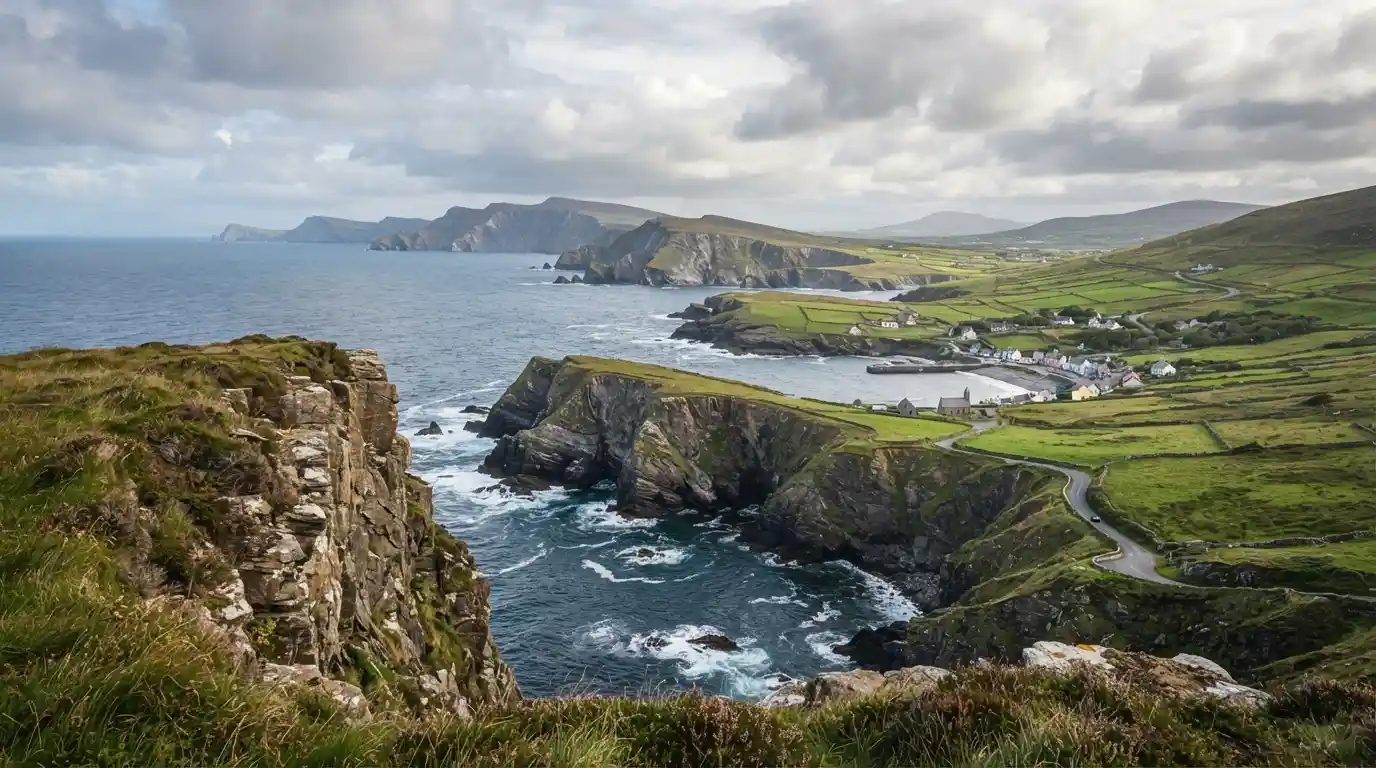
Whether you are planning a road trip, a romantic getaway, a family holiday, or a photography-focused adventure, there are plenty of best places to visit in West Ireland to add to your itinerary. The region is particularly appealing to travelers who enjoy coastal drives, historic landmarks, hiking, traditional music, and small towns surrounded by spectacular landscapes.
If you are exploring Ireland more broadly, you may also want to see this guide to the best places to visit in Ireland in autumn, especially if your trip is planned for the quieter shoulder season.
Why Visit West Ireland?
West Ireland offers a different pace from Ireland’s larger urban destinations. Instead of concentrating your trip around major cities, you can spend your days following coastal roads, exploring ancient sites, walking through small villages, and stopping whenever a mountain, beach, lake, or viewpoint catches your attention.
The Atlantic coast is one of the region’s biggest attractions. The scenery can change dramatically within a short drive, moving from green farmland to rocky cliffs, sandy beaches, mountain valleys, and remote islands.
West Ireland is also an excellent choice for travelers interested in Irish culture. Galway has a strong connection to traditional music and the arts, while smaller communities throughout the west preserve local traditions, storytelling, and Irish-language heritage.
1. Galway City
Galway is one of the best starting points for exploring western Ireland. Located on the coast of County Galway, the city combines historic streets, lively cultural venues, independent shops, restaurants, and easy access to some of the region’s most famous landscapes.
The Latin Quarter is particularly enjoyable for a relaxed walk, with colorful buildings, cafés, pubs, and pedestrian-friendly streets. Eyre Square provides another convenient place to begin exploring the city.
Galway also works well as a base for day trips. From here, travelers can reach the Cliffs of Moher, the Burren, Connemara, and other destinations in western Ireland.
If you enjoy city-based travel as well as scenic destinations, compare Galway with other European city experiences through guides such as top places to visit in Dublin and places to visit in Edinburgh at night.
2. Cliffs of Moher
The Cliffs of Moher are among the most recognizable natural attractions in Ireland. Rising dramatically above the Atlantic Ocean, the cliffs provide expansive views across the western coastline.
Walking along the designated viewing areas gives visitors several perspectives of the cliffs and surrounding coastline. On clear days, the views stretch across the Atlantic, while changing weather can create an entirely different atmosphere within minutes.
The cliffs are especially memorable around sunrise and later in the day when softer light emphasizes the texture of the rock formations. Visitors should be prepared for strong winds and rapidly changing weather conditions.
3. The Burren
The Burren is a striking limestone landscape in County Clare and one of the most unusual places to visit in western Ireland. Its exposed limestone pavement creates a distinctive landscape unlike the lush green countryside found elsewhere in the region.
Despite its rugged appearance, the Burren supports a remarkable variety of plant life. The area also contains archaeological remains, ancient monuments, caves, and historic sites.
The Burren pairs naturally with a visit to the Cliffs of Moher because both destinations can be incorporated into the same western Ireland itinerary.
4. Connemara National Park
Connemara is one of the most scenic areas in County Galway. Its landscape includes mountains, lakes, bogs, stone walls, forests, and open countryside.
Connemara National Park is an excellent destination for travelers who want to experience West Ireland away from the busiest tourist centers. Hiking trails provide opportunities to explore the landscape on foot, while nearby roads offer spectacular driving routes.
Diamond Hill is one of the area’s best-known hiking destinations. The higher sections provide wide views across the surrounding mountains and countryside.
Travelers who enjoy nature-focused trips can also compare this type of experience with other destinations featured in our guide to the best places to visit in Africa and our guide to nature places to visit in Karnataka.
5. Westport
Westport is one of County Mayo’s most attractive towns and a popular base for exploring the western coast. Its planned Georgian-style town center features attractive streets, bridges, shops, cafés, restaurants, and traditional pubs.
The town is also close to several major natural attractions. Croagh Patrick, one of Ireland’s best-known mountains, rises nearby and is an important destination for hikers and pilgrims.
Westport works particularly well for travelers who want a combination of outdoor activities and a comfortable town atmosphere.
6. Achill Island
Achill Island is one of the most dramatic destinations on Ireland’s western coast. Connected to the mainland by a bridge, the island features rugged mountains, sea cliffs, beaches, and small coastal communities.
Keem Bay is among the island’s most famous scenic locations. Surrounded by steep hills and facing the Atlantic, the bay provides an impressive setting for photography and coastal walks.
Achill is particularly rewarding for road-trip travelers because the journey itself is part of the experience. Coastal viewpoints and small beaches appear throughout the island.
7. Doolin
Doolin is a small village in County Clare known for its connection to traditional Irish music and its location near the Cliffs of Moher.
The village makes a convenient base for travelers exploring the surrounding coastline. Traditional pubs provide opportunities to experience live Irish music, while the nearby coast offers walking routes and dramatic Atlantic views.
Doolin is also useful as a starting point for trips toward the Aran Islands.
8. The Aran Islands
The Aran Islands sit off the coast of County Galway and offer a glimpse into a quieter side of Irish coastal life. The three principal islands—Inis Mór, Inis Meáin, and Inis Oírr—each have their own character.
Stone walls, traditional cottages, archaeological sites, cliffs, and coastal landscapes define much of the islands’ visual character.
Inis Mór is the largest and most frequently visited of the three. Its ancient stone fortifications and elevated coastal viewpoints make it especially popular with visitors interested in history and scenery.
9. Killarney and the Surrounding Region
Killarney is technically in County Kerry rather than the far western counties of Galway, Clare, and Mayo, but it is often included in wider western Ireland itineraries because of its spectacular landscapes and convenient location for exploring the southwest.
Killarney National Park features lakes, woodland, mountains, waterfalls, and historic estates. The area is especially attractive to travelers who want to combine outdoor scenery with historic attractions.
If your itinerary covers more of Ireland and the British Isles, you can also explore places to visit in southwest UK for ideas on extending a coastal-focused trip.
10. Dingle Peninsula
The Dingle Peninsula is another spectacular destination in County Kerry. The region is known for winding coastal roads, dramatic cliffs, beaches, mountains, archaeological sites, and traditional communities.
The Slea Head Drive is particularly popular because it connects several scenic locations along the western edge of the peninsula.
Dingle town itself is a good place to slow down after a day of sightseeing. Its harbor, restaurants, traditional pubs, and colorful streets give travelers a relaxed base for exploring the peninsula.
11. Clifden
Clifden is often described as the capital of Connemara and makes a useful base for exploring western County Galway. The town has a compact center with restaurants, cafés, shops, and accommodation options.
Its location makes it particularly convenient for exploring Connemara’s mountains, lakes, coastal roads, and beaches.
One of the highlights near Clifden is the Sky Road, a scenic route offering elevated views over the Atlantic coastline and surrounding countryside.
12. Kylemore Abbey
Kylemore Abbey is one of the most recognizable historic attractions in Connemara. The dramatic Victorian-era building sits beside a lake and is surrounded by mountains and woodland.
The setting is one of the main reasons visitors include Kylemore Abbey in a western Ireland itinerary. The combination of architecture, gardens, lake views, and mountain scenery creates a memorable stop during a Connemara road trip.
13. Sligo
Sligo provides an excellent introduction to the northwestern part of Ireland. The town and surrounding county combine coastal scenery, mountains, beaches, archaeological sites, and literary history.
Benbulben is one of the area’s most recognizable natural landmarks. The distinctive mountain dominates the surrounding landscape and creates excellent opportunities for photography.
Strandhill is another popular destination near Sligo, particularly for travelers interested in beaches, surfing, and coastal scenery.
14. Donegal
Donegal offers some of the wildest and most remote scenery in western Ireland. The county is known for rugged coastlines, mountains, beaches, traditional communities, and long scenic drives.
Slieve League is one of the area’s most spectacular attractions. The sea cliffs rise dramatically above the Atlantic and provide expansive views over the surrounding coastline.
Donegal is particularly suitable for travelers who prefer less urbanized destinations and want to spend more time outdoors.
15. Downpatrick Head
Downpatrick Head, on the Mayo coast, is another striking Atlantic viewpoint. The area is known for its dramatic cliffs and offshore sea stack, creating a landscape that captures the rugged character of Ireland’s western coastline.
The location is especially appealing to photographers and travelers who enjoy less conventional scenic stops. It can also be combined with other attractions around County Mayo.
16. Galway Bay
Galway Bay stretches along the coast of County Galway and provides numerous opportunities to experience the Atlantic landscape without traveling deep into remote areas.
Coastal villages, beaches, walking routes, islands, and viewpoints make the bay an excellent part of a relaxed itinerary. The area also offers beautiful sunsets when weather conditions are favorable.
For travelers planning a broader European journey, our guides to places to visit in Belgium, places to visit in Germany, and Spain and Portugal can help with additional itinerary ideas.
17. Inis Oírr
Inis Oírr is the smallest of the three Aran Islands and offers a compact experience of traditional island landscapes. Stone walls, narrow roads, historic ruins, beaches, and traditional buildings give the island a distinctive atmosphere.
Because of its smaller size, visitors can explore many parts of the island during a day trip. Cycling and walking are popular ways to experience the scenery.
18. The Wild Atlantic Way
The Wild Atlantic Way is not a single destination but a long coastal touring route connecting many of Ireland’s western and northern attractions.
For travelers planning a road trip, it provides a useful framework for connecting destinations such as Galway, Connemara, Mayo, Sligo, Donegal, Clare, and Kerry.
The biggest advantage of traveling this way is flexibility. Instead of rushing between a fixed list of attractions, you can stop at viewpoints, beaches, villages, hiking trails, and historic sites along the route.
19. Best Time to Visit West Ireland
The best time to visit West Ireland depends on what you want from the trip.
Summer
Summer generally provides longer daylight hours and favorable conditions for road trips, hiking, sightseeing, and coastal exploration. It is also a popular travel period, so major attractions can be busy.
Spring
Spring can provide fresh green landscapes, longer days, and fewer visitors than the busiest summer period. Weather can remain changeable, so flexible planning is useful.
Autumn
Autumn offers a quieter atmosphere and changing colors across parts of the countryside. Travelers interested in seasonal scenery can also explore our guide to places to visit in Stockholm during autumn for comparison with another European shoulder-season destination.
Winter
Winter brings shorter days and more unpredictable weather, but coastal landscapes can feel particularly atmospheric. Travelers visiting during winter should allow extra time for driving and check local conditions before heading into exposed areas.
How Many Days Do You Need in West Ireland?
A long weekend can cover Galway, the Cliffs of Moher, and parts of the Burren, but a longer trip allows you to explore the region without constantly rushing.
Three to four days: Focus on Galway, the Cliffs of Moher, the Burren, and Connemara.
Five to seven days: Add Westport, Achill Island, Sligo, or additional coastal destinations.
Seven to ten days: Consider a larger road trip incorporating Galway, Clare, Connemara, Mayo, Sligo, Donegal, or Kerry.
Travelers with children may prefer a slower itinerary with fewer daily driving hours. For family-oriented European travel inspiration, see places to visit in Europe with kids.
Tips for Exploring West Ireland
- Allow extra driving time: Rural roads can be slower than expected.
- Pack for changing weather: Rain and wind can arrive quickly along the Atlantic coast.
- Book popular accommodation early: Coastal towns can become busy during peak travel periods.
- Do not rush scenic drives: Some of the best experiences come from unplanned viewpoints and villages.
- Wear suitable footwear: Coastal walks and rural trails can become wet and uneven.
- Check attraction schedules: Opening hours can vary by season.
- Keep your itinerary flexible: Weather can influence visibility at cliffs and mountain viewpoints.
West Ireland vs. Other European Destinations
West Ireland is particularly appealing to travelers who prioritize natural landscapes and scenic road trips. If you prefer historic cities, you may want to combine Ireland with destinations elsewhere in Europe.
For example, travelers interested in Mediterranean scenery can explore Salento, Italy, while those looking for northern European landscapes can consider destinations near Oslo, Norway.
Travelers planning a broader itinerary can also explore interesting places to visit in Spain or Madrid for a contrasting urban experience.
Final Thoughts
The best places to visit in West Ireland combine dramatic Atlantic scenery with historic towns, traditional culture, mountain landscapes, and memorable road-trip routes. Galway provides an excellent starting point, while destinations such as the Cliffs of Moher, Connemara, Westport, Achill Island, Doolin, Sligo, and Donegal reveal different sides of the western coast.
The region rewards travelers who leave room for flexibility. Rather than treating West Ireland as a checklist of attractions, consider building an itinerary around a few key destinations and allowing time to explore the landscapes between them.
Whether you are visiting for coastal scenery, hiking, photography, history, traditional music, or simply the chance to experience Ireland at a slower pace, West Ireland offers plenty of memorable places to explore.