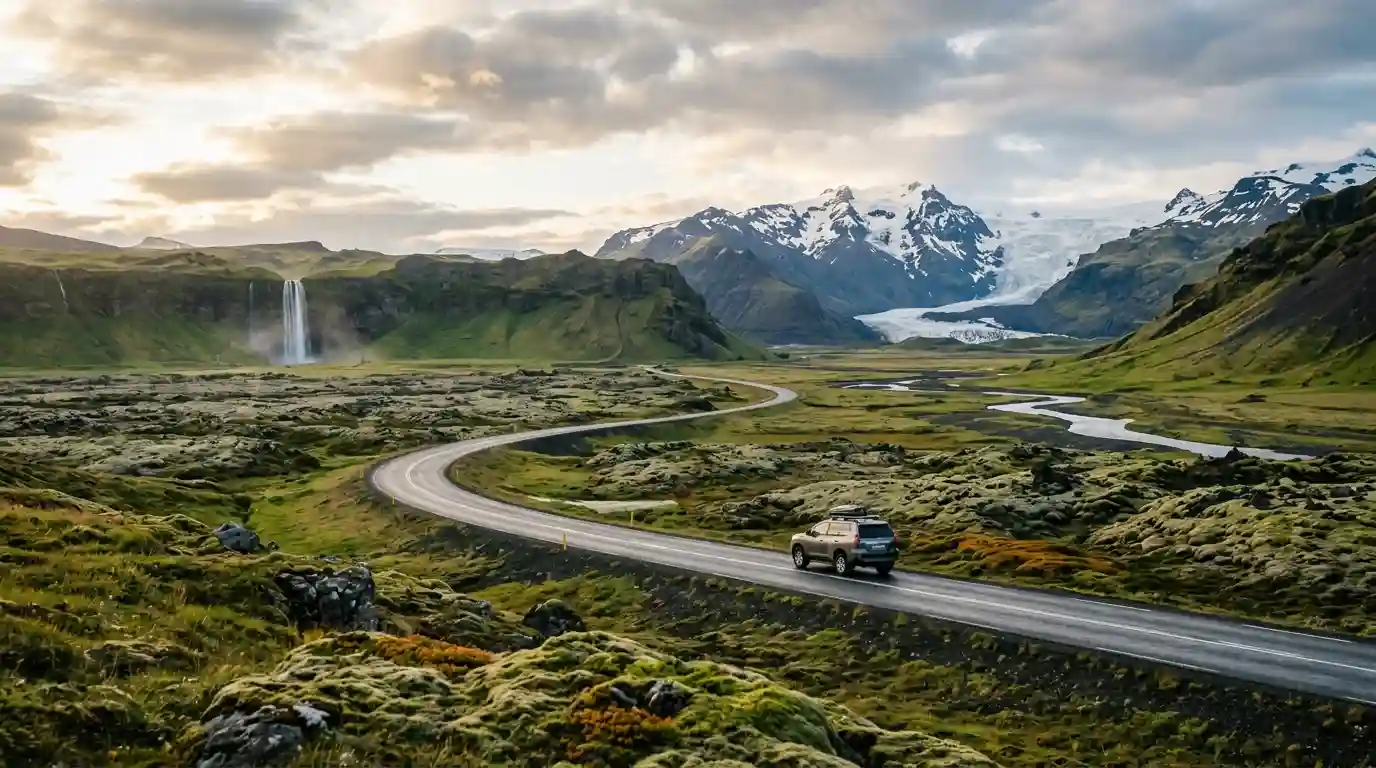
Road tripping the Ring Road in Iceland is one of the most rewarding ways to experience the country’s dramatic natural beauty. This famous route circles the island, connecting volcanic landscapes, powerful waterfalls, glacier-covered mountains, black sand beaches, quiet fishing villages, and spectacular coastal viewpoints. Instead of staying in one destination, travelers can explore Iceland at their own pace and discover how dramatically its scenery changes from one region to another.
Whether you are planning a summer adventure under the midnight sun or a winter journey in search of snowy landscapes and the northern lights, Iceland’s Ring Road offers a memorable travel experience. The key to a successful trip is choosing the right season, allowing enough time for stops, preparing for unpredictable weather, and understanding the distances between destinations.
This guide covers the best route highlights, a practical 7–10 day itinerary, driving advice, accommodation tips, seasonal considerations, and essential planning details for an unforgettable Iceland road trip.
What Is Iceland’s Ring Road?
Iceland’s Ring Road, also known as Route 1, is the main highway that loops around much of the island. It connects several of the country’s most accessible towns, natural attractions, and coastal regions. The complete circuit is approximately 1,300–1,400 kilometers long, depending on the route and measurement used, before adding detours to individual attractions.
Although it is possible to drive the highway relatively quickly, doing so would leave little time to enjoy the scenery. Most travelers should plan at least seven days for a fast-paced circuit, while eight to ten days or longer allows for more relaxed sightseeing, photography, and weather-related flexibility.
The Ring Road is primarily paved, but conditions vary by location and season. Smaller access roads to waterfalls, viewpoints, beaches, and mountain areas may be gravel, steep, or temporarily inaccessible. Travelers should never assume that every attraction is immediately beside the main highway.
Why Take a Road Trip Around Iceland?
Discover Remarkable Natural Diversity
Iceland offers an extraordinary variety of landscapes within a relatively compact island. On a single journey, you can encounter green valleys, lava fields, glacier tongues, geothermal areas, rugged coastlines, and wide-open plains. The changing scenery makes the journey itself as memorable as the individual destinations.
Travel at Your Own Pace
A self-drive itinerary gives you the flexibility to stop for photographs, spend additional time at a waterfall, explore a coastal village, or change your plans when weather conditions shift. You can also choose accommodations that match your budget and preferred travel style.
Experience Iceland Beyond Reykjavík
Reykjavík is an excellent starting point, but the Ring Road reveals a different side of Iceland. Small communities, local cafés, fishing harbors, regional food, and quieter landscapes help visitors appreciate the country’s character beyond its capital.
For more inspiration for dramatic landscapes and colder destinations, explore this guide to the best cold places to visit in the world.
Best Time for Road Tripping the Ring Road in Iceland
Summer: June Through August
Summer is generally the easiest season for completing the Ring Road. Longer daylight hours provide more time for sightseeing, photography, and driving between overnight stops. Many seasonal services and accommodation options operate more consistently during this period.
Summer is particularly suitable for first-time visitors who want to explore waterfalls, beaches, hiking areas, and remote viewpoints without the shorter daylight hours associated with winter. However, popular attractions can be busy, and accommodation should be booked well in advance.
Spring: April and May
Spring brings gradually increasing daylight, flowing waterfalls, and the transition from winter conditions to milder weather. Snow may remain in some areas, and road conditions can change quickly. Travelers should build flexibility into their itinerary rather than relying on a rigid schedule.
Autumn: September and October
Autumn offers changing colors, quieter periods at some attractions, and opportunities to see the northern lights when skies are dark and clear. Daylight decreases as the season progresses, so daily driving plans should be realistic.
Travelers who enjoy seasonal landscapes can also explore the best places to visit in Ireland in autumn for another destination known for dramatic coastal scenery.
Winter: November Through March
Winter transforms parts of Iceland into a landscape of snow, ice, and long twilight hours. It can also bring strong winds, snowstorms, icy roads, and sudden travel disruptions. A complete Ring Road circuit may be possible in favorable conditions, but it is not guaranteed to be safe or practical on a fixed timetable.
Winter visitors should consider a longer itinerary, flexible accommodation arrangements, and the option to skip sections when conditions deteriorate. Drivers who are inexperienced with icy roads may prefer guided excursions or a shorter route from Reykjavík.
Recommended 7–10 Day Iceland Ring Road Itinerary
The following itinerary provides a practical overview of the main regions along Route 1. It assumes a summer or shoulder-season trip with suitable driving conditions. Distances and driving times vary according to the chosen stops, road conditions, and detours.
Day 1: Reykjavík and the Golden Circle
Begin in Reykjavík, where you can collect your rental car, purchase supplies, and explore the capital before heading into the countryside. If time permits, consider a Golden Circle excursion to experience geothermal activity, waterfalls, and landscapes shaped by Iceland’s geological forces.
Popular stops in the wider Golden Circle area include Þingvellir National Park, the Geysir geothermal area, and Gullfoss waterfall. These attractions are not all directly on the Ring Road, so allow additional time for the detour.
Spend the night in Reykjavík or the surrounding area, depending on your departure time and how many attractions you want to visit.
Day 2: South Coast Waterfalls and Black Sand Beaches
Travel east along the South Coast, one of Iceland’s most recognizable sightseeing regions. Begin with Seljalandsfoss, a waterfall known for its distinctive setting and walking paths. Continue toward Skógafoss, where a broad curtain of water drops beside steep green cliffs.
Further east, visit the Vík area and the surrounding black sand coastline. Reynisfjara is famous for its dark volcanic sand, basalt formations, and powerful Atlantic waves. Keep well back from the water because dangerous sneaker waves can reach farther up the beach than expected.
Vík is a convenient overnight base, with access to food, accommodation, and nearby viewpoints.
Day 3: Vík, Skaftafell, and Glacier Country
Continue east through expansive lava fields and open coastal landscapes toward Vatnajökull National Park. The region is home to enormous glaciers, mountain scenery, and hiking opportunities that range from short walks to longer guided excursions.
Skaftafell is a particularly useful stopping point for travelers who want to stretch their legs and explore marked trails. The exact hikes available depend on conditions, seasonal access, and your fitness level.
Consider an overnight stay near the national park or farther east toward Höfn. Avoid scheduling too many activities on the same day because glacier excursions and longer walks require additional time.
Day 4: Jökulsárlón Glacier Lagoon and the Eastward Drive
Make time for Jökulsárlón Glacier Lagoon, where icebergs break away from a glacier and drift through a deep lagoon toward the sea. The nearby Diamond Beach is known for pieces of ice resting on dark sand, creating striking contrasts for photography.
Conditions and the appearance of the ice change throughout the year. Boat excursions operate seasonally and depend on local conditions, so check availability before building one into your schedule.
Continue toward Höfn or another suitable overnight stop. The surrounding scenery includes mountain views, open coastal stretches, and broad horizons that make this section especially rewarding for photographers.
Day 5: The Eastfjords and Coastal Villages
The Eastfjords provide a slower and often quieter part of the journey. The road winds through coastal landscapes, around fjords, and past small communities with fishing traditions and scenic harbors.
Rather than treating this region as a stretch to cross quickly, allow time for viewpoints and short walks. Seyðisfjörður is a worthwhile detour for travelers interested in colorful buildings, a picturesque setting, and local culture, although reaching it requires leaving the main highway.
Stay in an eastern town or village that keeps the following day’s drive manageable.
Day 6: Lake Mývatn and Northern Iceland
Continue toward Lake Mývatn, an area known for volcanic formations, geothermal features, and unusual geological landscapes. Depending on access and conditions, visitors can explore lava formations, pseudocraters, and geothermal areas around the lake.
The region is an excellent place to slow down and appreciate Iceland’s volcanic character. Stay on designated paths and observe warning signs around geothermal features, where ground temperatures and water conditions can be dangerous.
Spend the night around Mývatn or continue toward Akureyri if your schedule and daylight allow.
Day 7: Dettifoss and Akureyri
Dettifoss is one of Europe’s most powerful waterfalls by volume and is a major attraction in northeastern Iceland. Access depends on the approach road, season, and current conditions, so confirm whether your intended route is open before departing.
After exploring the area, continue toward Akureyri, the principal town of northern Iceland. Akureyri offers restaurants, shops, cafés, and a useful opportunity to rest after several days on the road.
If you enjoy exploring northern landscapes in other countries, this guide to places near Oslo, Norway offers another perspective on Nordic scenery and outdoor travel.
Day 8: Northern Coast and Westward Travel
Use the day to enjoy Akureyri and continue along Route 1 toward western Iceland. Travelers with extra time can consider suitable coastal or cultural detours, provided they do not make the day’s driving schedule too demanding.
The route back toward the southwest includes broad valleys, mountain views, and changing countryside. Take regular breaks and keep an eye on the weather, especially when traveling outside the summer months.
Day 9: West Iceland and Additional Scenic Stops
With an extra day, explore selected attractions in West Iceland or take a slower drive toward the capital region. Detours can include waterfalls, volcanic landscapes, coastal viewpoints, and small settlements.
As travelers embark on the breathtaking journey along Iceland’s Ring Road, it’s essential to recognize that road trips can take many forms, each offering its own unique tapestry of experiences. For those seeking a blend of history and scenic beauty, the Natchez Trace Parkway provides an intriguing contrast to Iceland’s dramatic landscapes. This picturesque route meanders through the heart of the American South, connecting the vibrant city of Nashville to the historic town of Natchez, Louisiana. Along the way, visitors can immerse themselves in a rich narrative of American history, exploring charming small towns and uncovering hidden waterfalls. Just as the Ring Road captivates with its natural wonders, the natchez trace parkway road trip invites travelers to explore the cultural and historical significance of the regions it traverses, making it a compelling alternative for those who appreciate the stories that landscapes can tell.
Travelers who enjoy combining natural scenery with cultural attractions may also appreciate the best places to visit in West Ireland, another region where coastal landscapes and smaller communities are important parts of the journey.
Day 10: Return to Reykjavík
Use the final day to return to Reykjavík, explore any attractions you missed, and prepare for departure. If you have an international flight, leave a generous buffer for weather, road conditions, refueling, and returning your rental vehicle.
A ten-day itinerary provides a better balance between driving and sightseeing than attempting to cover the island in only a few days. If you want to include substantial hiking, glacier excursions, or additional peninsula detours, consider extending the trip.
Best Attractions to Include Along the Ring Road
Seljalandsfoss
Seljalandsfoss is one of the South Coast’s signature waterfalls. Its tall, narrow cascade and surrounding cliffs make it a favorite photography stop. Walking conditions can be slippery, and the route behind the waterfall may be closed when conditions are unsafe.
Skógafoss
Skógafoss is known for its broad waterfall and the mist that rises from the river below. A staircase provides access to higher viewpoints when open, while the area at the base offers a closer view of the falling water.
Reynisfjara Black Sand Beach
Reynisfjara is famous for its dark volcanic sand, basalt columns, and offshore rock formations. The beach is beautiful but hazardous because powerful waves can surge unexpectedly onto the shore. Follow local safety instructions and maintain a safe distance from the water.
Vatnajökull National Park
Vatnajökull National Park protects extensive glacial and volcanic landscapes. The park offers a range of outdoor experiences, from accessible viewpoints to guided glacier activities. Some areas require specialist equipment or a qualified guide.
Jökulsárlón Glacier Lagoon
Jökulsárlón is a highlight for visitors interested in glaciers and ice formations. Icebergs shift in size, shape, and color, making every visit different. Nearby viewpoints offer opportunities to enjoy the landscape without joining a boat excursion.
Lake Mývatn
Lake Mývatn combines volcanic scenery, birdlife, geothermal features, and unusual lava formations. It is an excellent base for exploring northeastern Iceland, particularly for travelers interested in geology and nature.
Dettifoss
Dettifoss offers a dramatic view of water plunging into a rugged canyon. Because access roads can be seasonal, check conditions before planning a visit and never approach exposed edges for photographs.
Akureyri
Akureyri provides a welcome urban stop in northern Iceland. Visitors can explore local dining, gardens, shops, and the waterfront while using the town as a base for nearby attractions.
How Much Time Do You Need for the Ring Road?
The right duration depends on your priorities, driving experience, season, and tolerance for long days behind the wheel.
- 5–6 days: A very fast circuit with limited time for detours. It is generally not ideal for travelers who want to enjoy the attractions without rushing.
- 7 days: A possible summer itinerary for travelers who prioritize the main highlights and accept longer driving days.
- 8–10 days: A more balanced option with time for popular attractions, short walks, and occasional schedule changes.
- 11–14 days: Better for travelers who want longer hikes, extra nights in scenic regions, and additional detours.
These are planning ranges rather than guarantees. Winter travel, road closures, and severe weather may require extra time or a different route altogether.
Choosing the Right Rental Car
The best vehicle depends on when you travel and where you plan to go. For a summer trip that stays on paved main roads, a standard two-wheel-drive car may be sufficient. A larger vehicle or four-wheel-drive model can be useful for certain conditions, but it does not eliminate the risks associated with ice, snow, wind, or poor visibility.
Before booking, consider the following:
- Choose a vehicle suitable for your intended route and season.
- Understand the rental agreement, insurance exclusions, and permitted road types.
- Check whether winter tires are fitted when required and appropriate.
- Confirm luggage capacity and passenger comfort for longer journeys.
- Learn the vehicle’s fuel type, refueling process, and emergency features.
- Keep the rental company’s contact details available in case of a breakdown.
Do not drive onto roads marked for vehicles with capabilities you do not have. Iceland’s highland F-roads are different from the Ring Road and often require an appropriate four-wheel-drive vehicle. They are seasonal and are not necessary for completing the main Ring Road circuit.
Accommodation Along the Route
Accommodation is available in towns, villages, rural guesthouses, hotels, cottages, and selected camping areas. Availability varies by region, and options can be limited near popular attractions during peak summer months.
Booking overnight stays in advance can help reduce unnecessary driving and ensure that you have a practical base near the attractions planned for the next day.
Consider these accommodation strategies:
- Choose overnight stops that divide the route into manageable driving sections.
- Book early for summer travel and popular glacier or lagoon areas.
- Check cancellation policies if weather could affect your plans.
- Confirm check-in times, parking arrangements, and kitchen facilities where relevant.
- Use towns with fuel, food, and essential services as practical overnight bases.
Travelers who enjoy comparing destinations with different accommodation styles can also explore places to visit in Stockholm in autumn for another Nordic travel perspective.
Budgeting for an Iceland Road Trip
Iceland can be an expensive destination, especially when accommodation, car rental, fuel, restaurant meals, and guided excursions are combined. Your total budget depends on the travel season, group size, vehicle, accommodation standard, and activities.
Plan your budget around the following categories:
- Car rental: Compare total rental costs, insurance, mileage terms, and seasonal vehicle requirements.
- Fuel: Estimate fuel needs based on your planned route, detours, and vehicle efficiency.
- Accommodation: Compare hotels, guesthouses, cottages, and legal campsites.
- Food: Combine restaurant meals with groceries and simple self-catered options where practical.
- Activities: Set aside money for guided glacier walks, boat excursions, geothermal bathing, or other paid experiences.
- Contingency: Reserve funds for unexpected overnight stays, route changes, or travel disruptions.
For broader budget-conscious travel ideas, see this guide to affordable destinations in Europe and these ideas for less expensive places to visit worldwide.
Essential Safety Tips for Driving in Iceland
Check Weather and Road Conditions Every Day
Icelandic weather can change quickly, and wind, snow, ice, fog, and heavy rain can affect driving. Review the forecast and road conditions before setting out, then reassess them throughout the day. If conditions are unsafe, postpone the journey or change the itinerary.
Allow More Time Than Your Navigation App Suggests
Driving time estimates rarely account for every photo stop, slow-moving traffic, changing weather, or time spent exploring attractions. Plan shorter daily distances whenever possible, particularly during winter.
Never Stop in Unsafe Road Locations
Use designated parking areas and established viewpoints. Avoid stopping on narrow shoulders, blind bends, or exposed stretches of highway just to take photographs. Other drivers may not expect a stationary vehicle in these locations.
Respect Wind Conditions
Strong gusts can make driving difficult and may damage car doors. Hold doors firmly when opening them and follow the rental company’s guidance about severe wind conditions. High-sided vehicles can be especially vulnerable.
Stay on Marked Trails
Fragile vegetation, geothermal ground, unstable cliffs, and glacier environments can present serious hazards. Follow signs, remain on designated paths, and use qualified guides for activities that require specialist knowledge or equipment.
Prepare for Limited Services
Some stretches have fewer fuel stations, shops, and dining options than travelers expect. Keep your fuel level comfortable, carry water and snacks, charge your phone, and make sure you know how to contact roadside assistance.
What to Pack for the Ring Road
Weather-resistant clothing is important in every season. Even summer visitors should be prepared for cold wind and rain, particularly near waterfalls, coastlines, and glaciers.
- Waterproof outer jacket and trousers
- Warm layers and comfortable walking clothing
- Water-resistant walking shoes or hiking boots
- Hat, gloves, and warm socks
- Reusable water bottle and snacks
- Phone charger, car charging adapter, and power bank
- Offline maps and a practical driving itinerary
- Swimwear and a small towel for suitable geothermal bathing facilities
- Camera, spare batteries, and protective gear for wet conditions
- Any personal medication and essential travel documents
In winter, add clothing and supplies appropriate for severe cold and potential delays. Do not rely exclusively on a mobile phone for navigation or emergency communication in remote areas.
Photography Tips for Iceland’s Ring Road
Iceland is ideal for landscape photography because its scenery changes constantly. Waterfalls, glaciers, beaches, mountains, and volcanic terrain all offer different opportunities for composition and light.
- Plan photography stops around safe parking areas rather than stopping suddenly on the highway.
- Carry a microfiber cloth and protective cover for your camera in rain and waterfall spray.
- Use a wide-angle lens for expansive landscapes and a longer lens for distant mountain details.
- Allow extra time for changing cloud cover and softer light.
- Protect equipment from windblown sand and moisture near the coast.
- Never move beyond barriers or approach dangerous water and cliff edges for a photograph.
Travelers who enjoy photographing different landscapes can also find inspiration in scenic places near Jasper National Park, the drive from Los Angeles to San Francisco, and Spain’s most interesting destinations.
More Travel Inspiration for Nature and Scenic Journeys
If Iceland’s combination of natural scenery, changing seasons, and long-distance exploration appeals to you, these additional ThinkRove travel guides offer ideas for future adventures:
- Explore the landscapes of West Ireland for rugged coastlines, historic sites, and countryside drives.
- Discover scenic places near Oslo for forests, lakes, and Nordic outdoor experiences.
- Explore Stockholm in autumn for seasonal scenery and city experiences.
- Find more cold-weather destinations for travelers who enjoy dramatic winter landscapes.
- Discover Toronto in winter for a different kind of cold-season trip.
- Explore winter attractions in Salt Lake City for mountain views and seasonal activities.
- Compare affordable European destinations when planning a future trip around your budget.
- Consider family-friendly European destinations if you are planning a trip with children.
- Experience Ireland’s autumn scenery for another landscape-focused itinerary.
- Discover western Ireland’s coastal and countryside attractions for a slower travel experience.
Frequently Asked Questions
How long does it take to drive Iceland’s Ring Road?
The main circuit is approximately 1,300–1,400 kilometers, depending on measurement and route details. Seven days can work for a fast-paced summer trip, but eight to ten days or more provides a more comfortable balance between driving and sightseeing.
Is Iceland’s Ring Road suitable for first-time visitors?
Yes, provided the itinerary matches the traveler’s driving experience and season. Summer generally offers more forgiving conditions, while winter requires greater flexibility and experience with challenging weather.
Can you drive the Ring Road in winter?
It may be possible when conditions allow, but a full circuit is not guaranteed to be safe or practical. Snow, ice, wind, and temporary road closures can affect travel. Check conditions frequently and be willing to shorten or postpone the route.
Is a four-wheel-drive vehicle necessary?
Not necessarily for the main Ring Road in favorable conditions. A suitable standard car may be adequate in summer, while winter conditions and certain detours may require a different vehicle. Four-wheel drive does not remove the need for careful driving or safe weather conditions.
Can the Ring Road be completed in five days?
A five-day circuit is possible for some travelers under favorable conditions, but it is extremely rushed and leaves little room for longer stops or unexpected delays. A longer trip is preferable if you want to enjoy the major attractions.
What are the best attractions along the Ring Road?
Popular highlights include Seljalandsfoss, Skógafoss, Reynisfjara, Vatnajökull National Park, Jökulsárlón Glacier Lagoon, Lake Mývatn, Dettifoss, and Akureyri. The best selection depends on your available time, interests, and seasonal access.
Is Iceland expensive for a road trip?
Costs can be high because rental vehicles, accommodation, fuel, dining, and guided activities add up quickly. Booking ahead, planning fuel stops, choosing suitable accommodation, and balancing paid excursions with free outdoor attractions can help manage the budget.
Final Thoughts
Road tripping the Ring Road in Iceland is an opportunity to experience one of the world’s most striking combinations of waterfalls, glaciers, volcanic terrain, coastal villages, and wide-open landscapes. The route rewards travelers who leave room for exploration rather than treating every day as a race to the next destination.
Choose a realistic itinerary, book suitable accommodation, prepare for the season, and check weather and road conditions before every drive. With sensible planning and a flexible approach, the Ring Road can become a memorable journey through Iceland’s remarkable natural scenery.