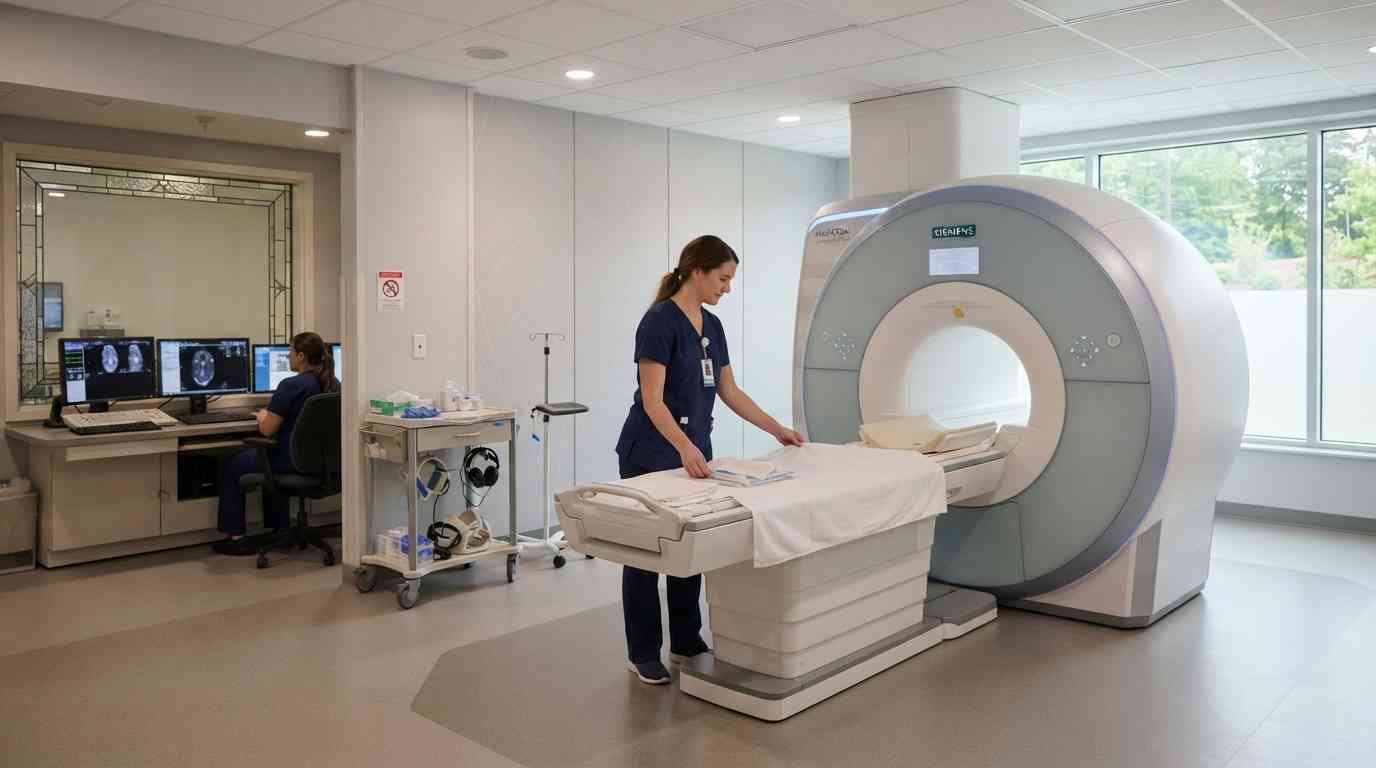
For patients, the goal of diagnostic imaging is straightforward: provide healthcare professionals with detailed information that can help them evaluate symptoms, investigate injuries, monitor conditions, or plan appropriate care. Understanding what imaging services are available and what to expect can make an appointment feel less unfamiliar.
What Is American Health Imaging Douglasville?
American Health Imaging Douglasville is an outpatient diagnostic imaging center serving patients in the Douglasville area. Its services are designed around medical imaging rather than inpatient hospital care, giving patients a dedicated setting for scheduled diagnostic examinations.
Diagnostic imaging is an important part of modern healthcare. Depending on the reason for an examination, a physician may request an MRI, CT scan, ultrasound, or another type of imaging study. Each technology produces different types of information and is selected according to the patient’s clinical needs.
Patients researching healthcare facilities may also find it useful to explore related resources such as community health services and information about health and rehabilitation services.
Diagnostic Imaging Services Available
The imaging technology used for an examination depends on what the referring healthcare professional needs to evaluate. American Health Imaging Douglasville offers several major diagnostic imaging options.
MRI Scans
MRI uses magnetic fields and radio waves to create detailed images of structures inside the body. It can be used to examine areas such as the brain, spine, joints, muscles, and other soft tissues.
MRI does not use ionizing radiation. However, because it uses a powerful magnetic field, patients should tell the imaging staff about implants, medical devices, or other relevant medical information before the examination.
CT Scans
Computed tomography, commonly called a CT scan, uses X-rays to produce cross-sectional images of the body. CT imaging can provide detailed views of internal structures and may be ordered for a variety of diagnostic purposes.
Patients should follow the preparation instructions provided for their specific examination. Some CT procedures have special requirements involving food, beverages, medications, or contrast material.
Ultrasound Imaging
Ultrasound uses high-frequency sound waves to create images of internal structures. Because it does not use ionizing radiation, ultrasound is commonly used for examining soft tissues and certain organs and is also widely used during pregnancy.
The type of preparation required depends on the examination. Patients should follow the instructions supplied by their healthcare provider or imaging center.
Specialized Imaging
Some patients may require more specialized imaging technologies. Depending on the clinical indication, advanced imaging can provide additional information that supports a physician’s evaluation.
Technology also plays an increasingly important role throughout healthcare. For readers interested in the broader field, electroneurodiagnostic technology provides another example of how specialized technology is used in medical settings.
Why Diagnostic Imaging Matters
Imaging can help healthcare professionals look inside the body without relying solely on a physical examination. Depending on the test, images may help identify abnormalities, evaluate injuries, monitor changes, or provide additional information when symptoms require further investigation.
Imaging should not be viewed as a diagnosis by itself. A qualified healthcare professional considers imaging findings alongside symptoms, medical history, physical examination results, and other relevant information.
This broader approach is important across healthcare. Patients researching different types of medical services can also explore healthcare cost considerations and healthcare career opportunities to better understand the wider healthcare environment.
What to Expect Before an Imaging Appointment
Preparation varies considerably depending on the type of examination. Some imaging appointments require little preparation, while others may require specific instructions.
Follow Your Preparation Instructions
The most important step is to follow the instructions provided for your particular examination. Do not assume that preparation requirements are identical for MRI, CT, and ultrasound appointments.
Bring Relevant Information
Patients may need to provide identification, insurance information, referral details, or other paperwork requested when scheduling the examination. If you have relevant medical records or information about previous imaging, ask whether those records are needed.
Tell the Staff About Medical Devices or Implants
This is particularly important before an MRI. Inform the imaging team about implants, devices, previous procedures, or other medical considerations before entering the scanning area.
Insurance can also be an important part of planning healthcare appointments. Thinkrove’s resources on insurance coverage, health insurance considerations, and insurance services provide additional context for readers researching coverage-related topics.
How to Make an Imaging Visit Easier
A little preparation can make a scheduled imaging appointment more comfortable.
- Confirm the appointment time and location before leaving home.
- Review all preparation instructions in advance.
- Arrive with enough time for check-in and paperwork.
- Wear clothing that follows the instructions provided for your examination.
- Tell the staff about relevant medical conditions, implants, devices, or medications.
- Ask questions if you are unsure about preparation requirements.
- Follow post-examination instructions provided by the healthcare team.
Patients interested in the broader healthcare environment may also benefit from reading about healthcare apparel and clinical environments and specialized healthcare education.
Diagnostic Imaging and Modern Healthcare Technology
Medical imaging continues to evolve as healthcare technology advances. Imaging systems are increasingly designed around image quality, efficiency, patient comfort, and the ability to provide healthcare professionals with useful diagnostic information.
This technological development is part of a much larger transformation in healthcare. From specialized diagnostic systems to digital health tools, technology is changing how medical information is collected, analyzed, and used.
Readers interested in technology-related healthcare topics can also explore health and cognitive technology discussions and science and healthcare technology topics.
Questions to Ask Before Your Imaging Appointment
If you are unfamiliar with the imaging process, asking a few questions beforehand can help you prepare.
- What type of imaging examination has been ordered?
- Do I need to fast or change my normal routine before the appointment?
- Should I take my regular medications?
- Will contrast material be used?
- How long should I expect the examination to take?
- Are there clothing or jewelry restrictions?
- Should I provide information about previous imaging examinations?
- When and how will my healthcare provider receive the results?
Patients should always follow instructions from their own healthcare provider and the imaging center because preparation requirements can differ between examinations.
Who May Need Diagnostic Imaging?
Diagnostic imaging can be requested for many different clinical situations. A physician may order an examination to investigate unexplained symptoms, evaluate an injury, assess a suspected condition, monitor an existing problem, or gather information before or after treatment.
The appropriate examination depends on the individual situation. MRI, CT, ultrasound, and other imaging technologies are not interchangeable, so the referring healthcare professional determines which examination is appropriate.
Healthcare professionals also rely on specialized diagnostic expertise in many other areas. For example, readers interested in healthcare education can explore educational diagnostician certification as an example of another specialized professional field.
American Health Imaging Douglasville as an Outpatient Imaging Option
For people in Douglasville who have been referred for diagnostic imaging, an outpatient imaging center can provide a focused environment for scheduled examinations. The available services may include MRI, CT, ultrasound, and specialized imaging depending on the location and clinical need.
Before scheduling, patients should confirm the exact examination ordered by their healthcare provider, check preparation requirements, verify insurance and payment information, and ask the imaging center any questions related to their appointment.
The most useful imaging experience begins with good communication between the patient, referring provider, and imaging team. Understanding the purpose of the examination and preparing correctly can help the appointment proceed smoothly.
Final Thoughts
American Health Imaging Douglasville is an outpatient diagnostic imaging option for patients who need medical imaging in the Douglasville, Georgia, area. MRI, CT, ultrasound, and other imaging technologies can provide valuable information that healthcare professionals use alongside other clinical evidence.
If you have been referred for an imaging examination, focus on understanding the type of test, following the preparation instructions, providing accurate medical information, and asking questions whenever something is unclear. With the right preparation, a diagnostic imaging appointment can be a straightforward part of the healthcare process.