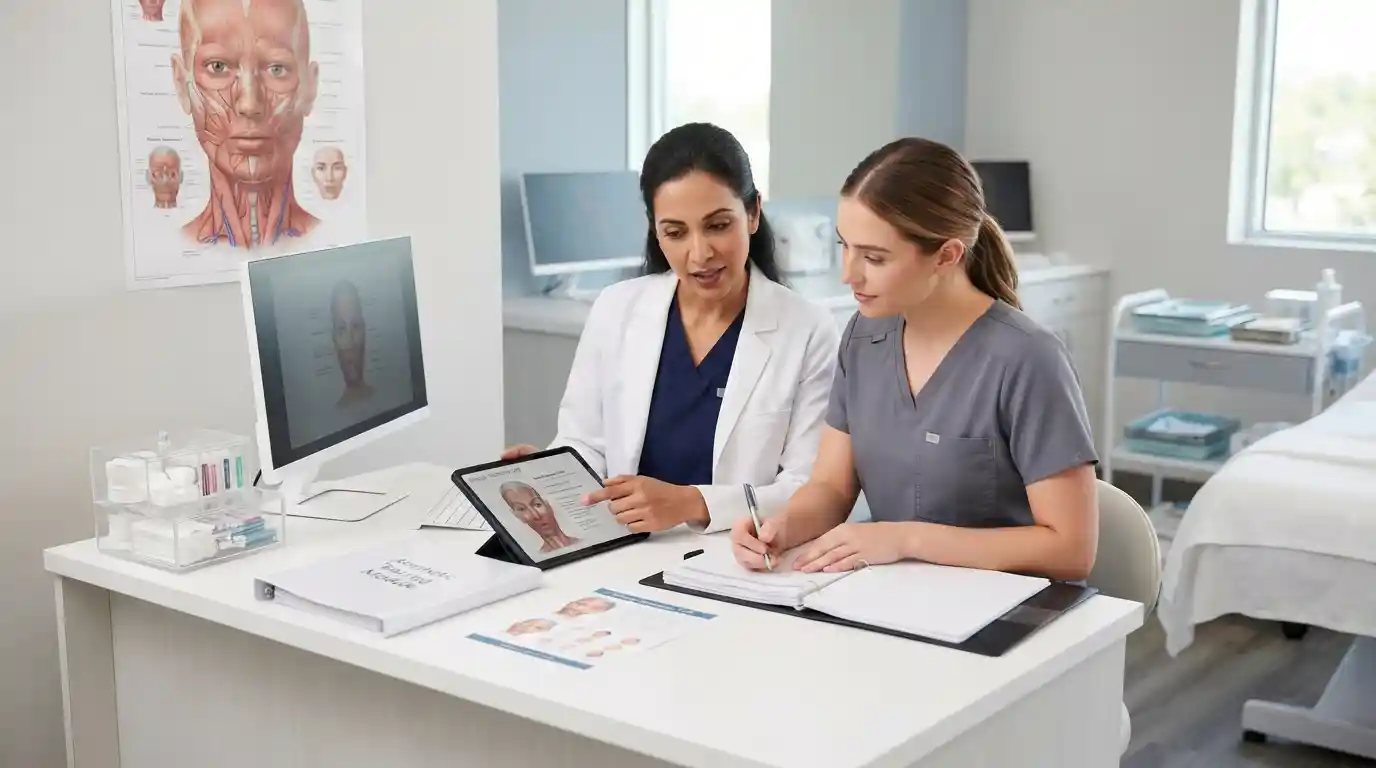
Aesthetic nursing combines clinical knowledge, patient care, advanced cosmetic procedures, and a strong understanding of facial and skin aesthetics. For registered nurses who want to move into this specialized field, aesthetic nurse education provides the foundation needed to develop safe techniques, understand treatment principles, communicate effectively with patients, and build a sustainable career.
The field extends beyond learning how to perform cosmetic procedures. Successful aesthetic nurses need strong assessment skills, detailed knowledge of anatomy, careful patient selection, ethical judgment, infection-control awareness, and the ability to recognize potential complications. Education therefore plays an important role before and throughout an aesthetic nursing career.
This guide explains what aesthetic nurse education involves, which skills aspiring professionals should develop, what training may cover, how to choose educational opportunities, and how continuing education can support long-term professional growth.
What Is Aesthetic Nurse Education?
Aesthetic nurse education refers to specialized learning designed to help nurses develop knowledge and practical skills related to non-surgical aesthetic and cosmetic care. Depending on the program, education may include facial anatomy, skin assessment, consultation techniques, treatment planning, injectable therapies, laser-based treatments, skincare, patient safety, and complication management.
It is important to distinguish specialized aesthetic training from the foundational education required to become a licensed nurse. Aesthetic courses generally build on existing nursing knowledge rather than replacing professional nursing education or state-specific licensing requirements.
For nurses considering a broader healthcare career, related educational pathways can also provide useful context. For example, educational diagnostician certification demonstrates how specialized credentials can create focused professional opportunities within healthcare and education.
Why Education Matters in Aesthetic Nursing
Aesthetic treatments can affect appearance, confidence, and patient satisfaction, but they also involve real clinical considerations. Proper education helps nurses approach treatments with a patient-safety mindset rather than viewing aesthetic care simply as a beauty service.
A strong educational foundation can help an aesthetic nurse:
- Understand relevant facial and skin anatomy.
- Conduct structured patient assessments.
- Recognize appropriate and inappropriate treatment candidates.
- Understand treatment indications and limitations.
- Develop informed consultation skills.
- Identify potential adverse reactions and complications.
- Follow appropriate infection-control practices.
- Communicate realistic treatment expectations.
- Document consultations and treatments accurately.
- Continue developing skills as aesthetic techniques evolve.
This combination of clinical competence and aesthetic understanding is what makes specialized education valuable for nurses entering the field.
What Does an Aesthetic Nurse Learn?
The exact curriculum varies between programs, but comprehensive aesthetic nurse education usually covers several interconnected areas. The goal is not simply to teach a procedure but to develop the reasoning required to determine when, why, and how a treatment may be appropriate.
Facial and Applied Anatomy
Anatomy is one of the most important components of aesthetic education. Nurses working with facial treatments need a detailed understanding of muscles, nerves, blood vessels, tissue planes, and other anatomical structures relevant to aesthetic procedures.
This knowledge supports safer treatment planning and helps professionals understand why technique, treatment location, patient anatomy, and product selection matter.
Skin Assessment
Aesthetic nurses may work with patients who have different skin types, concerns, sensitivities, and treatment histories. Learning how to assess the skin helps professionals understand the patient’s goals while identifying factors that may affect treatment suitability.
Skin assessment can also support better communication between the nurse and patient because it creates an opportunity to discuss realistic outcomes rather than promising unrealistic changes.
Patient Consultation
Consultation is a major part of aesthetic nursing. Before treatment, the nurse may need to understand the patient’s concerns, medical history, previous procedures, medications, allergies, expectations, and desired outcome.
Effective consultation also involves explaining possible benefits, limitations, risks, aftercare considerations, and alternative approaches. This patient-centered process is essential for informed decision-making.
Aesthetic Treatment Principles
Depending on the educational program and the nurse’s professional scope, training may introduce different categories of aesthetic treatments. These can include injectable treatments, skin rejuvenation approaches, laser or light-based procedures, chemical exfoliation, microneedling, skincare programs, and other non-surgical aesthetic services.
Education should focus on the principles behind each treatment rather than encouraging nurses to approach procedures as isolated techniques.
Injectable Aesthetic Training
Injectable treatments are an important area of aesthetic nursing education. Training may address facial anatomy, treatment planning, product characteristics, patient assessment, injection principles, adverse-event awareness, and appropriate follow-up.
Because injectable procedures can involve clinically significant risks, theoretical knowledge and supervised practical learning are particularly important. Nurses should also understand the limits of their professional scope and the requirements that apply in their jurisdiction.
Quality education should emphasize patient safety and clinical judgment rather than simply promoting speed or volume of treatments.
Laser and Energy-Based Treatment Education
Some aesthetic nurses work with laser, light, radiofrequency, ultrasound, or other energy-based technologies. Training in these areas may cover device principles, treatment indications, patient selection, skin considerations, safety precautions, contraindications, and aftercare.
Because different devices have different operating characteristics, education should be specific to the technology being used. Nurses should not assume that experience with one device automatically qualifies them to operate another.
Skin Care and Non-Invasive Aesthetic Treatments
Aesthetic nursing can also involve non-invasive approaches focused on skin health and appearance. Education may include topics such as skin barrier function, cleansing, exfoliation, hydration, sun protection, product selection, and treatment planning.
A broader understanding of beauty and personal-care services can help nurses communicate more effectively with patients, although clinical decisions should remain grounded in professional training and evidence-based practice.
For readers interested in the wider beauty sector, related topics such as beauty supply businesses and products illustrate the broader ecosystem surrounding personal appearance and skincare.
Patient Safety and Complication Management
One of the strongest indicators of quality aesthetic education is the attention given to patient safety. Cosmetic procedures may appear straightforward, but every intervention has potential risks.
Education should therefore help nurses recognize warning signs, understand appropriate escalation procedures, document concerns, and know when additional medical evaluation is necessary.
Important areas may include:
- Patient screening and medical history.
- Contraindications and precautions.
- Infection prevention.
- Recognition of adverse reactions.
- Emergency preparedness.
- Post-treatment monitoring.
- Clear aftercare instructions.
- Accurate clinical documentation.
- Appropriate referral and escalation.
These skills are particularly important because patient trust depends on more than achieving an aesthetic result. Patients also need confidence that their provider understands safety and knows how to respond if something does not go as expected.
How to Choose an Aesthetic Nurse Education Program
Not every aesthetic training program offers the same level of educational depth. Before enrolling, nurses should carefully evaluate the curriculum, instructors, practical opportunities, safety content, and relevance to their professional goals.
Review the Curriculum
Look beyond a course title and examine what the program actually teaches. A strong curriculum should cover foundational concepts such as anatomy, patient assessment, consultation, safety, treatment planning, and complication awareness alongside procedure-specific material.
Evaluate Instructor Experience
Instructor qualifications and practical experience matter. Look for educators who can explain both the technical and clinical sides of aesthetic care and who understand the responsibilities associated with treating real patients.
Look for Practical Learning
Hands-on education can be valuable when it is appropriately supervised. Practical sessions should complement theoretical learning and should emphasize controlled technique, patient assessment, safety, and professional judgment.
Consider Continuing Education
Aesthetic nursing is not a field where learning necessarily ends after one course. New technologies, products, techniques, safety information, and patient expectations can change over time.
Continuing education can help professionals maintain competence and identify areas where additional supervised learning may be beneficial.
The broader healthcare sector also demonstrates the importance of ongoing professional development. For example, healthcare career opportunities often involve continuing development as professionals progress through different roles.
Core Skills Every Aesthetic Nurse Should Develop
Technical knowledge is only one part of becoming an effective aesthetic nurse. Strong professionals combine clinical skills with communication, observation, organization, and ethical decision-making.
Clinical Assessment
Patients do not all respond to aesthetic treatments in the same way. Strong assessment skills help nurses consider individual anatomy, skin condition, medical history, expectations, and treatment objectives.
Communication
Aesthetic consultations can involve sensitive conversations about appearance and self-image. Nurses should listen carefully, avoid judgment, explain options clearly, and make sure patients understand realistic outcomes.
Attention to Detail
Aesthetic care often requires careful observation and precise documentation. Small differences in anatomy, skin condition, previous treatments, or patient expectations can influence the overall treatment plan.
Professional Judgment
Sometimes the best clinical decision is to delay or decline a treatment. Education should help nurses recognize when a patient’s expectations, health history, or treatment circumstances indicate that additional assessment or referral is appropriate.
Patient Follow-Up
Follow-up supports continuity of care. It gives the nurse an opportunity to review the patient’s response, answer questions, reinforce aftercare, and identify concerns that may require further attention.
Aesthetic Nurse Education and Career Development
Aesthetic nursing can become a specialized career path for nurses interested in combining healthcare with cosmetic and wellness-oriented services. Career opportunities may exist in medical spas, dermatology practices, plastic surgery settings, aesthetic clinics, and other healthcare environments, depending on local regulations and employer requirements.
Professional development can occur gradually. A nurse may begin by strengthening foundational knowledge, then pursue focused education in selected treatment areas before developing broader expertise.
This approach is often more sustainable than attempting to master every aesthetic treatment at once.
How to Build an Aesthetic Nursing Learning Plan
A structured learning plan can make professional development more effective. Instead of collecting unrelated certificates, nurses can organize education around specific competency areas.
- Review your current nursing knowledge. Identify strengths and areas that require additional study.
- Strengthen anatomy knowledge. Focus on anatomy directly relevant to the aesthetic procedures you plan to study.
- Learn consultation principles. Develop structured approaches to patient assessment and expectation management.
- Choose one treatment area. Build depth before expanding into additional procedures.
- Seek supervised practical experience. Apply theoretical knowledge under appropriate professional supervision.
- Study safety and complications. Understand warning signs and appropriate escalation procedures.
- Review local requirements. Confirm licensing, scope-of-practice, supervision, and facility requirements applicable to your location.
- Continue professional development. Reassess your knowledge regularly and pursue additional education where needed.
The Role of Ethics in Aesthetic Nursing
Aesthetic nursing involves more than technical procedures because patients may have strong emotional motivations for seeking treatment. Ethical practice requires nurses to respect patient autonomy while maintaining professional boundaries.
This includes avoiding unrealistic promises, communicating limitations honestly, protecting patient privacy, and recommending treatments based on appropriate clinical considerations rather than pressure to sell services.
Ethical decision-making is especially important when a patient requests a treatment that may not be suitable or when expectations are unrealistic.
Technology and the Future of Aesthetic Nursing
Technology continues to influence healthcare and aesthetic practice. New devices, digital consultation systems, imaging technologies, skincare products, and treatment approaches can change how aesthetic professionals work.
However, technology does not replace clinical judgment. Nurses still need to understand the patient, evaluate the available information, recognize limitations, and make decisions within their professional responsibilities.
Professionals who combine technology awareness with strong clinical fundamentals may be better prepared to adapt as the field evolves.
Common Mistakes When Starting Aesthetic Nursing Education
New professionals can make avoidable mistakes when selecting or approaching aesthetic education. Recognizing these issues early can help create a stronger learning path.
Choosing a Course Based Only on Price
The cheapest course is not necessarily the best value. Curriculum depth, instructor expertise, practical training, safety education, and post-course support may be more important than the initial price.
Focusing Only on Procedures
Learning how a procedure is performed without understanding patient selection, anatomy, contraindications, and complication management creates an incomplete educational foundation.
Collecting Certificates Without Building Competence
Certificates can document educational participation, but competence develops through knowledge, supervised practice, reflection, and continued learning.
Ignoring Local Regulations
Professional requirements can vary significantly by location. Nurses should verify the rules that apply to their own license, workplace, and intended services before practicing.
Frequently Asked Questions About Aesthetic Nurse Education
Do You Need to Be a Nurse Before Studying Aesthetic Nursing?
Aesthetic nursing is generally built on professional nursing education and licensure. Specialized aesthetic courses are typically intended to add skills to an existing nursing foundation rather than replace the education required for nursing practice.
What Subjects Are Covered in Aesthetic Nurse Training?
Common subjects include facial anatomy, skin assessment, consultation, treatment planning, injectable and non-invasive aesthetic procedures, patient safety, infection control, adverse-event awareness, aftercare, and professional ethics.
Is Aesthetic Nursing a Good Career Option?
It can be a rewarding specialization for nurses who enjoy patient interaction, aesthetics, detailed clinical work, and continuous professional development. Career suitability depends on individual interests, qualifications, local regulations, and employment opportunities.
How Long Does Aesthetic Nurse Education Take?
The duration varies widely depending on the type of education, the subject being studied, the provider, and the nurse’s existing qualifications. Short focused courses may cover individual skills, while broader programs may require considerably more study and practical learning.
Does Aesthetic Nursing Require Continuing Education?
Ongoing education is valuable because aesthetic practice can change as technologies, techniques, products, safety information, and professional standards develop. Nurses should also follow any continuing-education requirements applicable to their license or jurisdiction.
Final Thoughts on Aesthetic Nurse Education
Aesthetic nurse education is about much more than learning cosmetic procedures. The strongest educational foundation combines anatomy, patient assessment, consultation, safety, treatment planning, technical knowledge, ethical practice, and continuing professional development.
Nurses who approach aesthetic practice as a clinical specialty can build skills more thoughtfully and make patient safety a central part of their work. Whether the goal is to enter an aesthetic clinic, expand an existing nursing career, or develop expertise in a specific treatment area, a structured education plan can provide a stronger path toward professional growth.
The most valuable investment is not simply completing another course. It is developing the knowledge, judgment, communication skills, and practical competence required to provide responsible patient-centered aesthetic care.