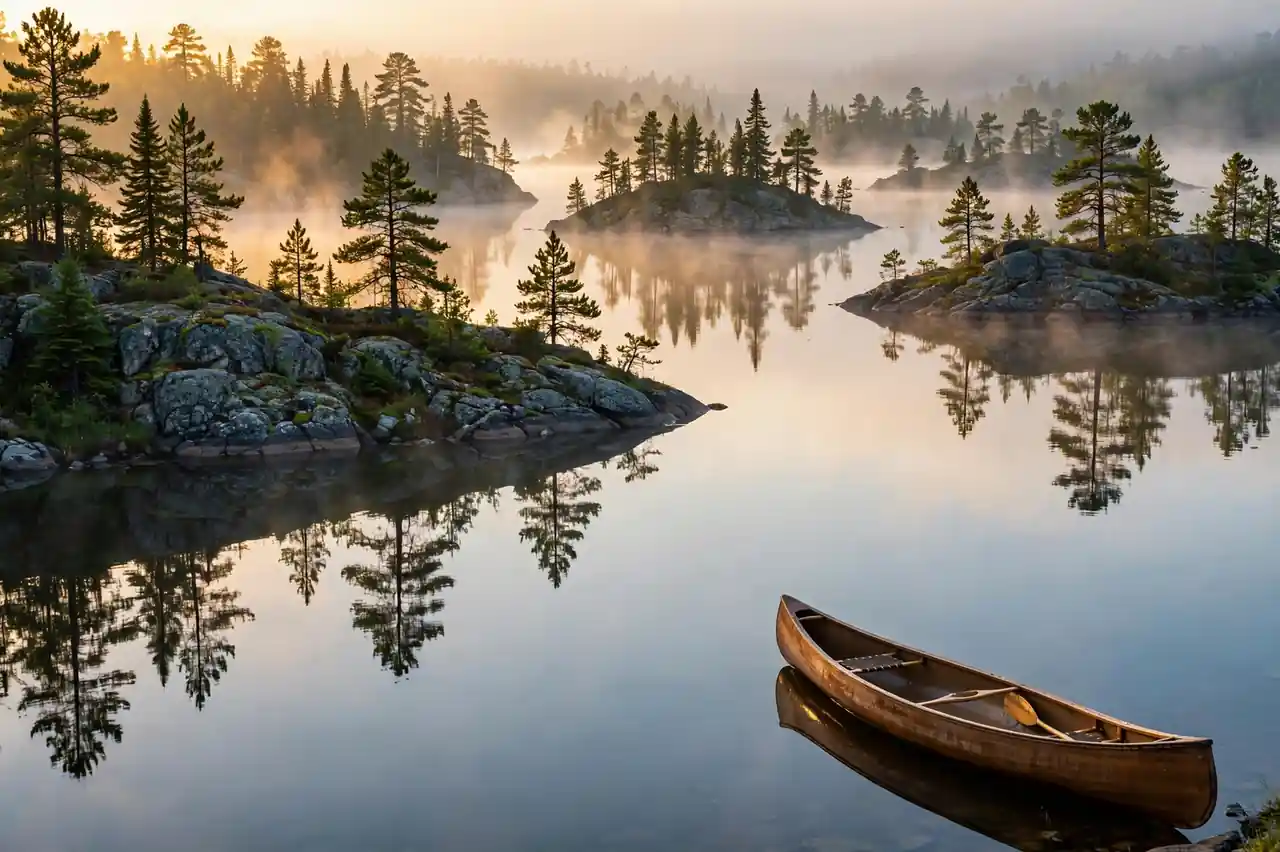
Most national parks are explored on foot. Voyageurs National Park is explored by water. Spread across the Minnesota-Canada border, this 218,000-acre park is a maze of lakes, islands, and rocky shorelines, where loons call at dawn, eagles patrol the sky, and the best campsites can only be reached by boat. If you have ever dreamed of paddling to your own island for the night, this is the park that makes it real.
Voyageurs takes its name from the French-Canadian fur traders who paddled these same waters in the 1700s and 1800s, hauling canoes loaded with beaver pelts between Montreal and the interior. Their routes became the park’s water trails, and the spirit of their journeys still shapes every visit. Here, the journey is not a way to reach the destination. The journey is the destination.
This guide covers how to plan a Voyageurs trip, from houseboat rentals and canoe routes to fishing, hiking, wildlife, and the practical details that first-time water travelers need. Whether you have a week or a long weekend, you will find the advice that turns a complicated-looking park into an unforgettable adventure.
Why Voyageurs National Park Is Unlike Any Other
About 40 percent of Voyageurs is water, and there are no roads inside the park at all. Four large lakes, Rainy, Kabetogama, Namakan, and Sand Point, anchor the park, connected by narrows and channels that reward exploration. More than 500 islands dot the lakes, and many hold campsites, trails, or quiet beaches.
The park also protects a remarkable slice of North Woods ecology. Old-growth pine forests, rocky outcrops shaped by glaciers, and wetlands that support moose, otters, beavers, and black bears all thrive here. In winter, the park transforms again, with ice roads, snowmobile trails, and some of the best northern lights viewing in the lower 48 states.
For travelers tired of crowded overlooks and trailhead traffic jams, Voyageurs offers something rare: genuine solitude. Even in summer, you can paddle for hours and see more eagles than people. That quiet is the park’s greatest luxury, and it is worth planning carefully to enjoy.
Best Time to Visit Voyageurs National Park
Summer, from June through August, is the classic season for boating, paddling, fishing, and camping. Days are long, water temperatures become swimmable by July, and all visitor centers and boat tours operate. Bugs can be fierce in June and early July, so pack repellent and a head net if you plan to camp.
Fall brings fewer bugs, crisp air, and spectacular color as the maples and birches turn gold and red. September is a favorite month for experienced paddlers, though nights grow cold and some services wind down. Spring arrives late here, with ice often lingering into May, so check conditions before planning an early trip.
Winter is a different world entirely. From roughly January through March, the park offers ice fishing, cross-country skiing, snowshoeing, and snowmobile routes, plus a real chance to see the aurora borealis. If you visit in winter, prepare for serious cold, check ice conditions with rangers, and book lodging early, since options are limited.
Getting to Voyageurs and Getting Around
Voyageurs sits in far northern Minnesota, near the town of International Falls. Most visitors drive, and the journey itself is part of the experience, passing through forests and small towns. The nearest major airport is in Duluth, about three hours south, or Minneapolis-Saint Paul, about five hours south.
The park has three visitor centers: Rainy Lake, Kabetogama Lake, and Ash River. Each offers exhibits, maps, ranger advice, and boat tour information. Stop at one before heading out, since rangers can advise on water levels, campsite availability, and weather, which matter far more here than in a typical park.
Inside the park, you travel by boat. Options include renting a motorboat, houseboat, or canoe, joining a ranger-led boat tour, or hiring a guide. If you have never operated a boat, a guided tour or a houseboat with a captain briefing is the safest first step. Water travel demands respect: weather changes fast on big lakes, and waves can build quickly.
Houseboat Trips: The Classic Voyageurs Experience
A houseboat is the most popular way to experience Voyageurs, and for good reason. You sleep on the water, wake to loon calls, and move your home from bay to bay as you explore. Houseboats range from basic models to comfortable cruisers with kitchens, bathrooms, and upper decks for sunset watching.
Book well ahead for summer weekends, and study the rental company’s briefing carefully. You will need to know how to anchor, tie up, manage water and fuel, and follow the park’s houseboat site rules. Most companies offer a thorough orientation, and first-time houseboaters do well with a shorter first trip to build confidence.
Houseboat sites are designated spots where you tie up for the night, and many are first-come, first-served. Arrive early in the afternoon for the best sites, especially on holiday weekends. For general camping skills that apply on the water too, our camping for beginners guide covers gear, food storage, and Leave No Trace basics.
Best Canoe and Kayak Routes
Canoeing is the quietest, most intimate way to explore Voyageurs. The park’s water trails range from short day paddles near the visitor centers to multi-day routes through island chains. Beginners should start with protected bays on Kabetogama or Namakan, where the water stays calmer and help is closer.
Experienced paddlers can tackle longer routes, including the voyageurs’ historic paths through the Namakan Narrows and the islands of Rainy Lake. Always check the wind forecast before crossing open water, wear a life jacket at all times, and keep your gear in dry bags. A capsized canoe in cold northern water is a serious emergency, not an inconvenience.
Day paddles from the Kabetogama Visitor Center area offer a gentle introduction, with island campsites and rocky shorelines to explore. If you want to build paddling skills before your trip, the thrilling adventure activities in the USA guide includes water sports ideas that help you judge what suits your comfort level.
Fishing in Voyageurs National Park
Voyageurs is one of America’s great fishing destinations. Walleye, northern pike, smallmouth bass, lake trout, and crappie all swim these lakes, and the park’s remote bays hold fish that see far less pressure than lakes near cities. Early morning and evening are prime times, and local guides know the seasonal patterns.
You will need a Minnesota fishing license, and you should learn the park’s regulations on limits, live bait, and invasive species before you cast. Clean your boat and gear between lakes to prevent spreading aquatic invasive species, which threaten the park’s ecology. Catch-and-release for large fish helps keep the fishery healthy for future visitors.
Even if you are not an angler, watching an eagle dive for fish at dawn or hearing a loon at dusk is part of the park’s magic. Bring binoculars, keep a respectful distance from wildlife, and let the lake set the pace of your day.
Hiking Trails Worth Your Time
Though Voyageurs is a water park, its land trails deserve attention. The Oberholtzer Trail near the Rainy Lake Visitor Center offers an easy boardwalk through wetlands and forest, with excellent birdwatching. The Blind Ash Bay Trail on Kabetogama Peninsula climbs to rocky overlooks with sweeping lake views.
The Cruiser Lake Trail is a longer, more rugged route through old-growth forest to a remote interior lake, best for experienced hikers prepared for mud, bugs, and route-finding. The Ellsworth Rock Gardens, reached by boat on Kabetogama, combine a short hike with an astonishing folk-art landscape of terraced rock gardens built by a Chicago contractor in the mid-1900s.
For trail inspiration elsewhere, compare these quiet forest paths with the Appalachian Trail hiking guide or the Smoky Mountains best hikes, which offer very different terrain and crowds. Voyageurs trails feel wilder and emptier than both.
Wildlife Watching and Safety
Voyageurs rewards patient wildlife watchers. Moose feed in shallow bays at dawn and dusk. Beavers slap their tails on still water. Otters play along rocky shores. Eagles and ospreys nest on island pines, and loons, the park’s signature bird, call across the lakes at night.
Keep a safe distance from all wildlife, especially moose, which can be aggressive when startled. Store food properly at campsites, never approach bear cubs, and make noise on trails. On the water, give loons and nesting birds wide berth, since wakes and close approaches can disturb nests.
Water safety deserves equal attention. Wear a life jacket, check the weather, and avoid crossing large open water in high wind. Cold water shock can incapacitate even strong swimmers, so treat every outing with respect. Our travel safety tips guide covers the planning habits that keep adventures safe.
Where to Stay Near Voyageurs
Inside the park, camping is by boat-in sites and houseboats. Campsites are reservable through the national park system, and popular sites fill fast for summer weekends, so book early. Sites include tent pads, fire rings, and bear-proof food lockers.
Outside the park, resorts and lodges around Kabetogama, Ash River, and International Falls offer cabins, motel rooms, and boat rentals. Many are family-run and full of local knowledge, so ask hosts for fishing tips and route advice. In winter, these lodges become bases for ice fishing and snowmobile trips.
For travelers comparing water-based parks, the Everglades park guide offers a warmer, subtropical contrast, with airboats and alligators instead of canoes and moose. Both parks prove that America’s best adventures are not always on dry land.
Planning Tips for First-Time Visitors
Start by choosing your travel style: houseboat, motorboat, canoe, or guided tour. Each demands different skills, gear, and planning. Then pick a lake and a base, and build your days around weather and water conditions rather than a rigid schedule. Flexibility is the most valuable thing you can pack.
Pack for bugs, sun, rain, and cold, sometimes all in one day. Bring a head net, repellent, rain gear, warm layers, and a dry bag for electronics. Carry a paper map and compass, since cell service is unreliable across much of the park. Tell someone your float plan, including where you expect to camp each night.
Finally, slow down. The best Voyageurs days are not the ones with the most miles, but the ones where you watch an eagle fish, swim off a rocky island, and fall asleep to loons. Let the lake set your rhythm, and you will understand why voyageurs kept coming back.
Frequently Asked Questions
Do I need a boat to visit Voyageurs? To experience most of the park, yes, but ranger-led boat tours from the visitor centers offer an excellent introduction without renting a boat. Hiking trails near the visitor centers also work for a short visit.
Is Voyageurs good for families? Yes, especially families who enjoy water, fishing, and camping. Houseboats work well for multi-generational trips, and kids love swimming, exploring islands, and spotting wildlife.
When can I see the northern lights? The aurora is most likely on dark, clear nights from late fall through early spring, though it can appear any time of year. Check the forecast, get away from lights, and be patient.
Conclusion
Voyageurs National Park asks more of its visitors than most parks, and it gives more in return. It asks you to travel by water, read the weather, and embrace a slower pace. In exchange, it offers island campsites, loon-filled dawns, and a wilderness that still feels genuinely wild.
Whether you choose a houseboat, a canoe, or a guided tour, plan carefully, respect the water, and leave room for wonder. For more trip planning, explore our best hikes in Zion National Park, our Yellowstone 3-day itinerary, our backpacking on a budget guide, and our best travel apps for 2026 before you go.