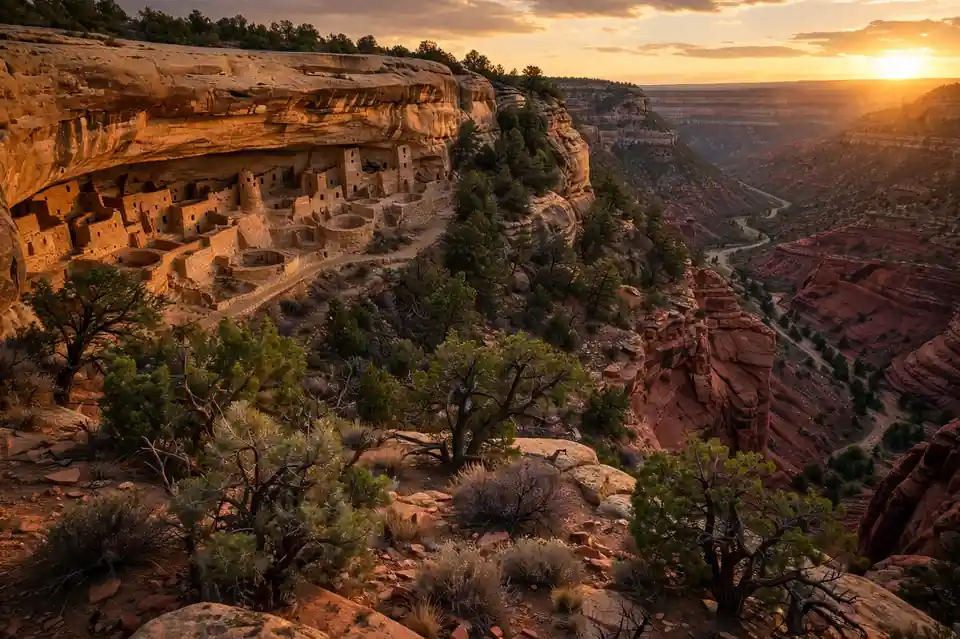
High on a green-topped mesa in southwest Colorado, Mesa Verde National Park protects one of the most remarkable chapters of American history. Here, nearly 5,000 archaeological sites hide among canyons and cliffs, including 600 cliff dwellings built by the Ancestral Puebloans more than 700 years ago. Walking into Cliff Palace, the park’s largest dwelling, feels less like visiting a museum and more like stepping into a neighborhood that time forgot. Rooms, kivas, and towers still stand where families cooked, worked, and raised children centuries ago.
What makes Mesa Verde different from other national parks is the way history and landscape work together. You can hike a quiet canyon trail in the morning, join a ranger-led tour of a cliff dwelling in the afternoon, and watch the sun set over the Montezuma Valley in the evening. The park rewards slow travel.
This guide covers everything you need for a great visit: the best cliff dwelling tours, the top hikes, when to go, where to stay, and the practical details that first-time visitors often miss. Whether you are planning a family road trip or adding Mesa Verde to a longer Colorado and Utah national parks road trip, you will find the honest, useful advice you need right here.
Why Mesa Verde National Park Deserves a Spot on Your List
Mesa Verde became a national park in 1906, and it remains the only national park in the United States created specifically to protect cultural heritage. In 1978, UNESCO named it a World Heritage Site, placing it alongside places like the Grand Canyon and Yellowstone in global importance. Yet it stays far less crowded than those famous parks, which means you can often explore its overlooks and trails without fighting for space.
The Ancestral Puebloans lived on the mesa tops from about 550 to 1300 CE, farming corn, beans, and squash in a dry, demanding landscape. Around 1200, many moved into large cliff dwellings tucked beneath overhanging sandstone. Why they left the region by about 1300 remains one of the great questions of Southwestern archaeology, and rangers do an excellent job of explaining what researchers know and what they are still learning.
For modern travelers, the park offers a rare combination. History lovers get world-class archaeology. Hikers get canyon trails with real solitude. Photographers get golden light on red rock. And families get ranger programs that turn ancient history into something kids genuinely remember. Few parks in America deliver that much variety in a single day.
Best Time to Visit Mesa Verde National Park
The cliff dwelling tours run from roughly late spring through mid-fall, and that window shapes the best time to visit. Late May through September offers the full experience: all major tours operating, the visitor center and museum open long hours, and ranger programs running daily. Summer brings heat, though, with daytime highs often reaching the upper 80s Fahrenheit, and afternoon thunderstorms are common in July and August.
Spring and fall are the sweet spots for many visitors. April, May, September, and October bring mild temperatures, smaller crowds, and beautiful light for photography. In fall, the cottonwoods in the canyons turn gold, and the air feels crisp in the morning. Winter has its own quiet charm, but most cliff dwellings close to tours, and snow can shut the park road temporarily, so check conditions before you go.
If your schedule is flexible, aim for a weekday in May, June, or September. You will have an easier time getting tour tickets, finding parking at popular overlooks, and enjoying the mesa-top trails without crowds. Arrive early in the day for the best light and the coolest hiking conditions.
Top Cliff Dwelling Tours You Should Not Miss
Most cliff dwellings can only be entered on a ranger-led tour, and tickets sell out on busy days, so plan ahead. You can buy tickets at the visitor center, and during peak season it pays to arrive early. Here are the tours that matter most.
Cliff Palace
Cliff Palace is the largest cliff dwelling in North America, with around 150 rooms and 23 kivas. The one-hour tour involves climbing ladders and uneven stone steps, but the effort pays off the moment you stand inside this ancient village. Rangers explain how families lived here, how the rooms were used, and how the community was organized. This is the single must-do experience in the park.
Balcony House
Balcony House suits adventurous visitors. The tour includes climbing a 32-foot ladder, crawling through a short tunnel, and walking along a narrow ledge. It is thrilling without being frightening for most people, and it gives you a vivid sense of how the dwellings were reached and defended. If you are comfortable with heights and ladders, book this one.
Long House
Long House, on Wetherill Mesa, is the second-largest cliff dwelling in the park and often quieter than Cliff Palace. Reaching it takes a bit more driving, but the reward is a longer, more relaxed tour with fewer people. Families with younger children often enjoy Long House because the pace feels calmer.
Spruce Tree House
Spruce Tree House sits near the museum and is the easiest dwelling to see up close. When open, it offers a self-guided experience that works well for visitors with limited mobility or tight schedules. Check current status before your visit, since access can change with preservation work.
Best Hikes in Mesa Verde National Park
Beyond the dwellings, Mesa Verde has excellent hiking. The Petroglyph Point Trail, a 2.4-mile loop from the museum area, combines canyon views with a panel of ancient rock art. It is moderately challenging, with some rocky sections, but the petroglyphs at the far end make every step worthwhile.
The Spruce Canyon Trail drops into a quiet canyon below the museum and gives you a sense of the landscape the Ancestral Puebloans farmed and traveled through. For an easier walk, the mesa-top trails near Far View offer gentle paths with sweeping views across the valley. Pair a morning hike with an afternoon tour for a full, balanced day.
Hiking here demands respect for the desert. Carry more water than you think you need, wear a hat and sunscreen, and start early in summer. Stay on marked trails at all times, since the park protects fragile archaeological sites that are easily damaged by wandering off path. If you love desert hiking elsewhere, you will appreciate how different the hiking in Arches National Park feels by comparison, with its open slickrock and towering fins.
Planning Your Route Through the Park
Mesa Verde rewards a simple plan. Enter through the park entrance near Cortez, Colorado, and stop at the visitor center to confirm tour times and pick up a map. Then drive the 20-mile mesa-top road to the Chapin Mesa area, where the museum, Spruce Tree House, and Cliff Palace sit close together. Save Wetherill Mesa for a second day if you have one.
Driving in the park takes longer than the mileage suggests. The road winds along the mesa top with many overlooks, and you will want to stop. Budget at least 45 minutes each way between the entrance and Chapin Mesa.
Many travelers pair Mesa Verde with nearby wonders. A day trip to the Canyonlands National Park guide helps you plan the Utah side of the journey, while a stop at the Four Corners Monument adds a fun detour for families. If you are building a longer itinerary, our USA road trip planner ideas pair naturally with a Mesa Verde visit.
Where to Stay Near Mesa Verde
Inside the park, Far View Lodge offers comfortable rooms with sweeping valley views, plus a restaurant and gift shop. Staying inside the park saves driving time and lets you enjoy sunrise and sunset without rushing. Book well ahead for summer weekends, since the lodge fills quickly.
The park campground at Morefield offers sites among juniper and pinon trees, with showers, laundry, and a small store during the main season. It suits travelers who enjoy camping and want an affordable base. Outside the park, Cortez has the widest choice of motels, restaurants, and grocery stores, while Durango, about 35 miles east, offers a livelier downtown with breweries and shops.
For a different kind of overnight experience, consider how desert camping compares with the Death Valley camping guide, which covers heat, water, and site selection in an even harsher landscape. The lessons transfer well: shade, water, and an early start matter everywhere in the desert Southwest.
Practical Tips for First-Time Visitors
Buy tour tickets as early in the day as you can, and keep your schedule flexible in case a tour sells out. Wear sturdy shoes with good grip, since ladders and stone steps can be slick. Bring water, snacks, and sun protection on every outing, and keep a paper map handy, because phone service fades in the canyons.
Respect the archaeology. Never touch walls, climb on structures, or pick up artifacts. These sites survived for centuries because people protected them, and one careless moment can damage something irreplaceable. Photography is welcome on tours, but flash and tripods may be restricted, so ask your ranger.
Finally, give yourself time to simply look. Stand at an overlook and imagine the valley below filled with farms and trading routes. Watch the light change on the cliffs. The park’s quiet moments often become the memories that last longest, long after the photos fade.
One-Day and Two-Day Mesa Verde Itineraries
With one day, start at the visitor center, tour Cliff Palace in the late morning, walk the Petroglyph Point Trail, visit the museum, and finish at a sunset overlook. With two days, add Balcony House, the Wetherill Mesa and Long House tour, and a slow morning on the mesa-top trails. Two days also leaves room for a detour to Cortez or the nearby Ute Mountain Tribal Park.
If you are comparing desert parks for your next trip, the best hikes in Zion National Park offer a very different experience, with towering canyon walls and river walks, while the best hikes in Yosemite trade desert light for granite cliffs and waterfalls. Each park teaches you something new about the American West.
Frequently Asked Questions
Do I need a reservation for cliff dwelling tours?
Tickets are sold at the visitor center on a first-come basis during the season, not online in advance, so arrive early on busy days. Tour availability changes with staffing and preservation work, so confirm at the visitor center when you arrive.
Is Mesa Verde good for kids?
Yes, especially children who enjoy climbing, exploring, and asking questions. Balcony House has ladders and a tunnel, so check height and comfort levels before booking that tour. The museum and junior ranger program work well for younger kids.
How much time should I spend at Mesa Verde?
One full day covers the highlights, but two days let you see both mesas without rushing. If you are driving a longer Southwest route, treat Mesa Verde as a two-night stop rather than a quick detour.
Conclusion
Mesa Verde National Park is not just another stop on a national park checklist. It is a place where human history feels close enough to touch, where a stone wall can tell you how a family lived 800 years ago, and where the desert light turns ordinary overlooks into something unforgettable. Plan your tours early, hike in the cool morning hours, and leave room in your day for quiet looking.
Whether you come for the archaeology, the hiking, or the simple wonder of standing inside a cliff dwelling, Mesa Verde rewards the traveler who slows down. Add it to your Southwest itinerary, and you will leave with a deeper respect for the people who called this mesa home long before it became a park. For more trip planning ideas, explore our best scenic drives in the USA, our Grand Canyon South Kaibab Trail guide, and our camping for beginners guide before you hit the road.