Cuyahoga Valley National Park in Ohio proves that you do not need to travel to the West to find a great national park. Between Cleveland and Akron, the Cuyahoga River winds through forests, waterfalls, wetlands, and historic farmland. The park is one of the most visited in the country, yet it still feels peaceful on its quiet trails, especially in the early morning.
This guide covers the best hikes, waterfalls, the scenic railroad, the Ohio and Erie Canal Towpath Trail, and practical tips for visiting Cuyahoga Valley National Park. Whether you have a few hours or a full weekend, this park offers an easy, rewarding escape into nature.
What Is Cuyahoga Valley National Park?
Cuyahoga Valley became a national park in 2000, after decades as a national recreation area. The park protects 33,000 acres along 22 miles of the Cuyahoga River, and it tells a story of recovery: a river that once caught fire from pollution now supports wildlife, clean water, and thriving forests.
The park is unusual because it includes working farms, historic villages, a scenic railroad, and a canal towpath, all within a national park boundary. You can hike to a waterfall in the morning, ride a train in the afternoon, and eat at a farm market in the evening, all without leaving the park area.
Best Hikes in Cuyahoga Valley National Park
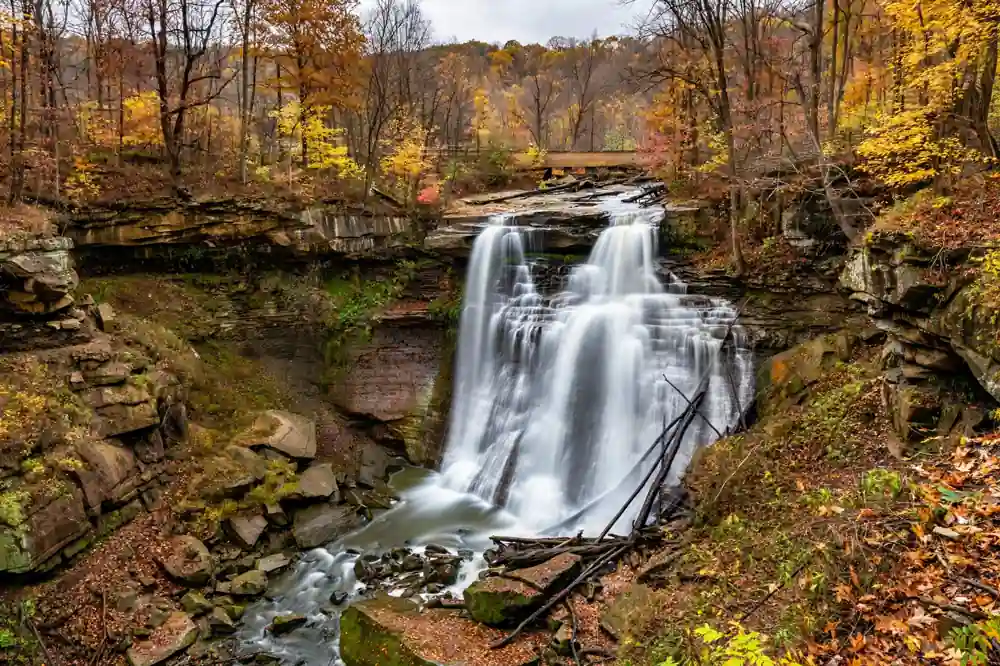
Start with Brandywine Falls, the park’s most famous sight. A short boardwalk trail leads to overlooks of the 65-foot waterfall, which cascades over layers of sandstone and shale. The falls are most impressive after rain or during spring snowmelt, and they are beautiful in every season, including winter, when ice forms on the cliffs.
The Ledges Trail is another favorite, a 2.2-mile loop through a forest of towering rock formations, mossy crevices, and an overlook with views across the valley. In fall, the trail is spectacular, with red and gold leaves framing the rock walls. The trail is moderately challenging, with some rocky steps and uneven ground.
For a longer walk, try the Salt Run Trail or the Buckeye Trail section through the park. The Buckeye Trail circles the entire state of Ohio, and its Cuyahoga Valley section offers a good taste of the longer route. Families will enjoy the Beaver Marsh boardwalk, where you can spot herons, turtles, and muskrats in a restored wetland.
The Ohio and Erie Canal Towpath Trail
The Towpath Trail follows the historic Ohio and Erie Canal for 87 miles, with about 20 miles inside the park. The trail is flat, paved or finely crushed stone, and perfect for walking, running, and cycling. Mules once pulled canal boats along this path, and today you can still see canal locks, lock keeper’s houses, and historic structures along the way.
Rent a bike in Peninsula, the village at the heart of the park, and ride a section of the towpath in either direction. The trail is accessible, well signed, and suitable for all ages and abilities. Stop at the Boston Store Visitor Center for maps, exhibits, and advice on the best sections for your time and fitness.
Riding the Cuyahoga Valley Scenic Railroad
The Cuyahoga Valley Scenic Railroad runs through the park, offering a relaxing way to see the valley. You can ride the full route, hop off at a trailhead and hike back, or combine a train ride with a bike ride using the Bike Aboard program, which lets you ride the train one way and cycle the other.
The railroad runs on select days, and schedules change by season, so check the railroad website before you visit. Special themed rides run throughout the year, including fall foliage tours and holiday trains. The train is a great option for visitors who want to see the park without hiking long distances.
Waterfalls, Wildlife, and Seasons
Brandywine Falls gets the most attention, but the park has other waterfalls worth finding, including the small cascades along the Blue Hen Falls Trail. Blue Hen Falls is a short hike from the Boston Mills area, and it is a quieter alternative to Brandywine, especially on busy weekends.
Wildlife in the park includes white-tailed deer, beavers, otters, bald eagles, and great blue herons. The Beaver Marsh is one of the best places to watch wildlife, especially at dawn and dusk. Bring binoculars, move quietly, and give animals plenty of space.
Each season offers something different. Spring brings wildflowers and rushing waterfalls, summer brings lush green forests and farm markets, fall brings brilliant foliage, and winter brings quiet trails and frozen waterfalls. Fall is the busiest season, so visit on weekdays if you can.
Fees, Visitor Centers, and Practical Tips
Cuyahoga Valley National Park has no entrance fee, which makes it one of the most accessible national parks in America. The main visitor centers are the Boston Store Visitor Center and the Hunt Farm Visitor Information Center, both of which offer maps, exhibits, and ranger advice.
Parking can fill up at popular trailheads on weekends, especially at Brandywine Falls and the Ledges. Arrive early, carpool if you can, and consider starting at a less popular trailhead. Wear sturdy shoes, carry water, and check trail conditions after rain, when some paths can be muddy.
Farms, Markets, and Food in the Park
Cuyahoga Valley is one of the few national parks with working farms inside its boundary. The Countryside Initiative leases farms to local farmers, who grow produce and raise livestock using sustainable methods. You can buy fresh produce at farm stands and markets in the park, and some farms offer tours and events.
The village of Peninsula, in the center of the park, has restaurants, cafes, and shops, and it is a good place to stop for lunch during a day in the park. The nearby towns of Hudson, Peninsula, and Brecksville also offer lodging and dining options for visitors staying overnight.
Where to Stay Near Cuyahoga Valley
Most visitors stay in Cleveland, Akron, or the suburbs between them, and drive to the park as a day trip. The park is less than 30 minutes from downtown Cleveland and about 20 minutes from Akron, which makes it an easy addition to a city trip.
If you want to stay closer to nature, look at bed-and-breakfasts in Peninsula or Hudson, or camp at nearby state parks. The park itself has no campgrounds, but several campgrounds are within a short drive. For trip planning help, see our travel safety tips and 25 best hiking trails in the USA.
Cuyahoga Valley and Other Great Parks
If you enjoy Cuyahoga Valley, you will love other eastern parks too. Compare the scenery with our guides to Shenandoah National Park, Acadia National Park hikes, and the best hikes in the Smoky Mountains. Each park offers a different flavor of eastern forest, waterfall, and mountain scenery.
For fall color, see our Blue Ridge Parkway fall guide and Appalachian Trail hiking guide. If you want desert contrast, check the best hikes in Sedona, best hot springs in the USA, Joshua Tree hikes, and Rocky Mountain hikes, and for a classic road trip, read our Pacific Coast Highway itinerary.
Events and Programs in Cuyahoga Valley
Throughout the year, Cuyahoga Valley National Park hosts ranger-led walks, concerts, art programs, and volunteer events. Summer brings outdoor concerts at the Happy Days Lodge, while fall brings guided foliage walks and harvest events at the farms. Check the park calendar before your visit, because a special event can add a memorable highlight to your trip.
The park also offers programs for children, including junior ranger activities and hands-on nature explorations. These programs are a great way for families to learn about the river, the canal, and the wildlife of the valley together. Even a short ranger talk at a visitor center can deepen your understanding of how this valley recovered from industrial pollution to become a thriving national park.
One-Day Cuyahoga Valley Itinerary
Start at Brandywine Falls in the morning, then drive to the Ledges Trail for a midday hike. Have lunch in Peninsula, ride a section of the Towpath Trail by bike in the afternoon, and finish with a walk at Beaver Marsh at dusk, when wildlife is most active.
If you have a second day, ride the scenic railroad, hike to Blue Hen Falls, and explore the farm markets and historic villages in the park. This slower pace lets you appreciate the park’s mix of nature, history, and community.
Conclusion: An Easy Park With a Big Story
Cuyahoga Valley National Park is easy to visit, free to enter, and full of surprises. Waterfalls, forests, a historic canal, a scenic railroad, and working farms all fit into one compact valley between two cities. Visit in fall for color, in spring for waterfalls, or any time for a quiet walk on the towpath. This park proves that a national park does not need to be remote to be remarkable, and it deserves a place on every Ohio travel list. Arrive early, take your time, and enjoy every waterfall, trail, and quiet bend of the river.