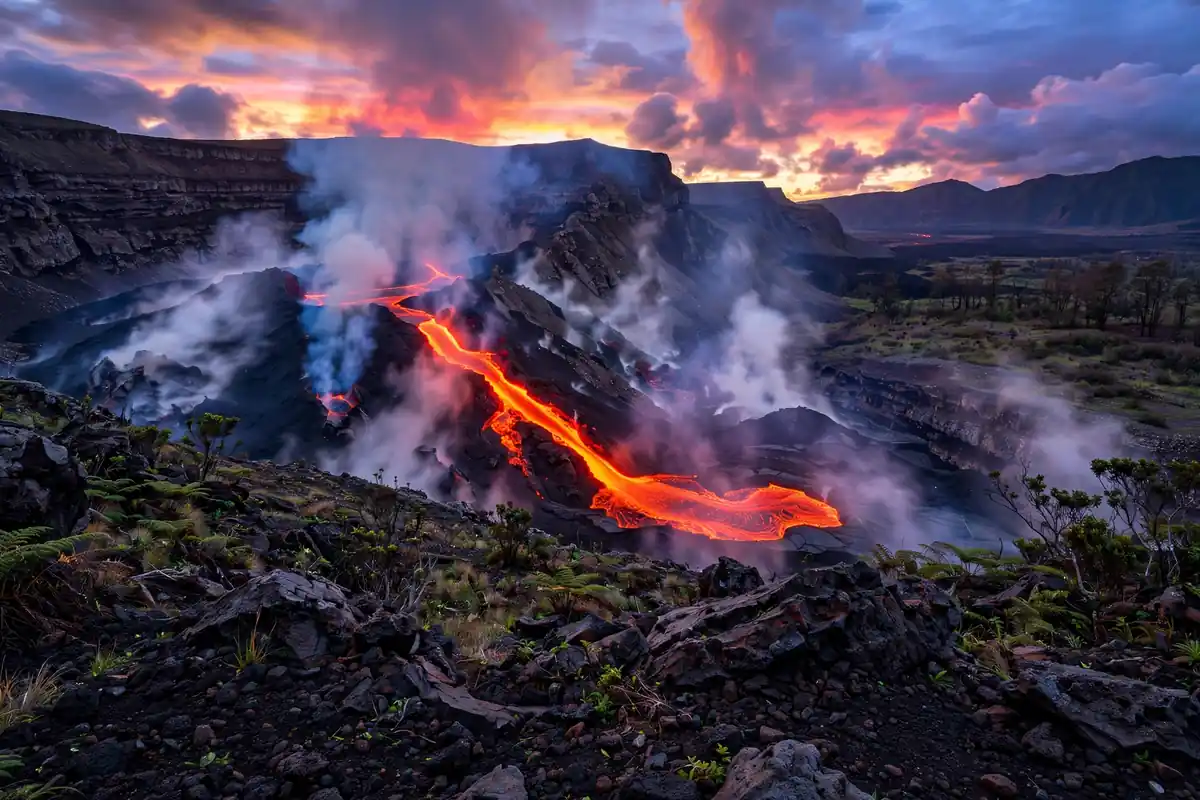
There is nowhere else in the United States where you can stand on land younger than you are, watch steam rise from a living caldera, and walk through a tunnel carved by molten rock. This hawaii volcanoes national park guide explains how to visit the Big Island’s volcanic heartland safely and well: where to see lava, which trails to hike, how the park’s two great volcanoes behave, and the safety rules that genuinely matter here.
The park protects two of the world’s most active volcanoes, Kilauea and Mauna Loa, on the southeastern coast of the island of Hawaii. It stretches from sea level to nearly 13,700 feet, which means a single day can include black-sand coastline, fern rainforest, sulfur fields, and a windswept summit area that feels like another planet.
Understanding the Two Volcanoes
Kilauea: The Active One
Kilauea is one of the most active volcanoes on Earth. Its summit caldera, Halemaumau crater, has hosted lava lakes and episodic eruptions in recent years, and conditions can change within days or even hours. Eruptions here are generally not explosive like Mount St. Helens, but they are unpredictable, and the park opens and closes viewing areas as activity shifts. Never assume a lava view is guaranteed; treat any glow you see as a gift.
Mauna Loa: The Giant
Mauna Loa is the largest active volcano on the planet by volume. Its summit trail is a serious multi-day backpack for experienced hikers only, but even drivers feel its scale: the park’s high roads climb its flanks, and its broad shield shape dominates the island’s skyline. Its most recent eruption, in late 2022, was its first in 38 years — a reminder that quiet volcanoes are still volcanoes.
Can You See Lava? Setting Realistic Expectations
This is the question every visitor asks, and the honest answer is: it depends entirely on current activity. When Kilauea is erupting inside the park, rangers open designated overlooks — often best after dark, when the glow of lava fountains or a lava lake reflects off the crater walls and steam. Arrive before sunset to claim a spot, because parking fills quickly on eruption nights.
When no eruption is active, the park is still remarkable. Steam vents hiss along the caldera rim, the landscape of the 2018 summit collapse is visible, and the craters, lava tubes, and coastline repay slow exploration. Before you go, check the park’s current conditions page and build flexibility into your plans, a habit our guide to planning a national park trip recommends for every volcano and wildlife destination.
Many travelers combine the park with time in the capital, and our Honolulu travel guide covers that Oahu stop well. Remember that Honolulu is on a different island; the park is reached by flying into Hilo (closest) or Kona and driving across the Big Island.
Best Things to Do in the Park
Crater Rim Drive and the Summit Overlooks
Start at the Kilauea Visitor Center for current alerts, then explore the summit area: the caldera overlooks, the steaming Sulphur Banks trail, and the Steam Vents, where groundwater heated by magma rises through cracks in the earth. Portions of Crater Rim Drive have been closed or rerouted since the 2018 collapse, so follow current signage rather than any old map.
Nahuku (Thurston Lava Tube)
A short, family-friendly loop leads through lush rainforest into a 500-year-old lava tube — a tunnel formed when a river of lava crusted over and drained away. The lit section is easy walking, though the floor can be wet and uneven. Arrive early or late in the day to avoid the tour-bus peak.
Kilauea Iki Trail
This is the park’s signature hike. The trail descends about 400 feet through rainforest to the floor of Kilauea Iki crater, which held a fountaining lava lake in 1959, then crosses the still-warm, cracked crater floor past steam vents before climbing back out. Budget two to three hours, carry water, and expect sun exposure on the crater floor.
Chain of Craters Road
This spectacular 19-mile drive drops 3,700 feet from the summit area to the coast, threading past pit craters and old lava flows. Highlights include the Puu Loa petroglyph field — a short boardwalk hike to more than 20,000 ancient carvings — and the Holei Sea Arch at the road’s end, where waves have carved the lava cliff. There is no food, water, or fuel on this road; bring everything you need. Afterward, many visitors drive on to Punaluu Black Sand Beach, where honu (green sea turtles) often rest on volcanic sand — a worthy entry in any personal version of our best beaches in the USA guide.
Devastation Trail
This short paved walk crosses a landscape buried by the 1959 Kilauea Iki eruption, where cinder killed the forest and new ohia trees now push through the rubble. It is the park’s most vivid lesson in how quickly this land destroys and rebuilds itself.
Best Time to Visit Hawaii Volcanoes
The park is open year-round, 24 hours a day. Weather at the summit, around 4,000 feet, is far cooler and wetter than the coast — bring a rain layer even on a beach-perfect day. For broader timing advice across the islands, see our guide to the best time to visit Hawaii, and note that lava viewing is best in the dry, clear hours before dawn or after dusk, when the glow shows most clearly and crowds thin.
Fees and Passes
The park charges a per-vehicle entrance fee that is valid for several days, and it accepts the interagency annual pass. If the Big Island is one stop on a longer parks trip — many visitors add our Haleakala sunrise guide on Maui to the same vacation — the math in our national park pass guide will show whether the annual pass beats paying at each gate.
Safety: The Rules That Matter Here
Volcanic country punishes carelessness, so take these seriously:
- Stay on trails and behind barriers. The ground near craters can be a thin crust over hollow lava tubes or scalding cracks. Closed areas are closed for lethal reasons.
- Respect volcanic gases. Sulfur dioxide and vog can irritate lungs, eyes, and skin. People with asthma, heart conditions, pregnant visitors, and young children should avoid high-gas areas like Sulphur Banks when emissions are up. The broader advice in our travel safety guide applies doubly here.
- Prepare for the summit climate. Temperatures drop fast after sunset, and rain is common. Bring layers, a headlamp for evening viewing, sturdy closed-toe shoes, and more water than you think you need.
- Never approach flowing lava or enter the ocean near lava entry points if an eruption reaches the coast; the steam plumes contain hydrochloric acid and glass particles.
- Check conditions daily. Eruptions, earthquakes, and weather can close roads and trails without warning. The park’s alerts page and visitor center boards are your ground truth.
Where to Stay
The village of Volcano, five minutes from the park entrance, offers lodges, vacation rentals, and the historic Volcano House hotel inside the park overlooking the caldera — book it far ahead. Hilo, about 45 minutes away, has more hotels and restaurants, while Kona’s resorts sit roughly two and a half hours across the island. First-time Hawaii visitors will also benefit from the practical orientation in our USA travel guide for first-time visitors.
Photographers chasing the glow should study our travel photography tips for beginners before the trip; lava at dusk demands a tripod, manual focus, and patience, and the park’s dark skies reward anyone who stays late.
A Simple One-Day Itinerary
If you have just one day, spend the morning in the summit area while it is quietest: visitor center first for the day’s alerts, then Sulphur Banks, the Steam Vents, and the caldera overlooks. Walk the Kilauea Iki Trail late in the morning, before the crater floor heats up. After lunch in Volcano village, browse Nahuku lava tube, then drive Chain of Craters Road slowly, stopping for the petroglyphs and finishing at the Holei Sea Arch as the light turns golden. If the volcano is erupting and an evening viewing area is open, return to the rim after dark with a headlamp and warm layers — the finale most day visitors miss.
Frequently Asked Questions
How many days do you need at Hawaii Volcanoes National Park?
One full day covers the summit area and Chain of Craters Road. Two days let you add the Kilauea Iki hike, the petroglyphs, and an evening lava-viewing session at a relaxed pace.
Is it safe to visit an active volcano?
Yes, when you follow park rules. The NPS manages viewing areas conservatively and closes zones when hazards rise. Follow current alerts, stay behind barriers, and be ready for plans to change.
What should I pack for the park?
Closed-toe hiking shoes, a rain jacket, warm layers for evening, sun protection for the coast, a headlamp, and plenty of water. Our guide to the best travel apps can also help you track eruption alerts and weather on the go.
The Bottom Line
Hawaii Volcanoes is the rare destination that rewrites itself between visits. Whether you catch Kilauea glowing after dark or spend a quiet day walking a crater floor that was a lava lake within living memory, you are standing on the newest land in America. Use this hawaii volcanoes national park guide, check conditions before you go, respect the closures, and give this extraordinary park the slow, careful attention it deserves.