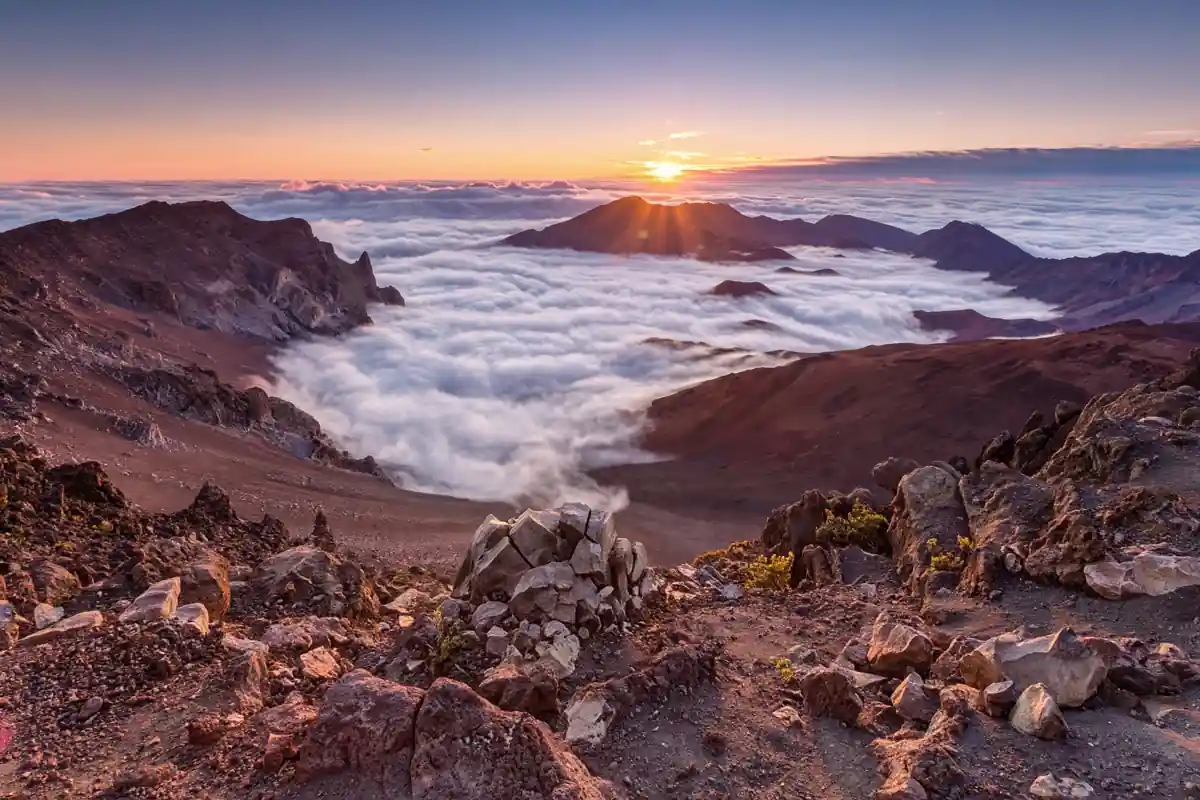
Watching the sun rise above a sea of clouds from the summit of Haleakala is one of the most unforgettable experiences in Hawaii. At 10,023 feet above sea level, the volcano rises above the clouds that wrap the island of Maui, and dawn breaks over a vast, silent crater that looks more like another planet than a tropical island. Visitors travel up the mountain in the dark, wait in the cold, and then watch the sky turn from black to gold in a matter of minutes.
This guide to Haleakala National Park covers everything you need to know: how to book a sunrise reservation, the best hikes into the crater, the road to the summit, the coastal Kipahulu district, and practical tips for altitude, weather, and safety. Whether you visit for sunrise, sunset, or a full day of hiking, Haleakala rewards careful planning.
What Is Haleakala National Park?
Haleakala is a massive shield volcano that forms more than 75 percent of Maui. The park has two distinct districts. The Summit District, near the top of the volcano, protects the crater, cinder cones, and high-altitude desert. The Kipahulu District, on the southeast coast, protects lush waterfalls, pools, and rainforest along the famous Road to Hana.
The name Haleakala means “house of the sun” in Hawaiian, and legend says the demigod Maui stood on the summit and lassoed the sun to slow its journey across the sky. Geologists tell a different story, but no less dramatic: the volcano last erupted in the late 1700s, and its crater is seven miles long, two miles wide, and nearly 3,000 feet deep. Walking into that crater feels like stepping onto the moon.
How to See the Haleakala Sunrise
Sunrise at Haleakala requires a reservation. You must book a sunrise parking reservation online in advance, and reservations sell out quickly, especially in summer and around holidays. Book as early as the system allows, and have backup dates ready in case your first choice is full.
Arrive at least an hour before sunrise. The drive from Kahului takes about 90 minutes, and the road climbs steadily with many switchbacks. Bring warm layers, because temperatures at the summit can drop into the 30s and 40s Fahrenheit even when the beach is 80 degrees. A jacket, long pants, and closed shoes are essential, and many visitors also bring a blanket and a hot drink.
Watch the sunrise from the main summit overlook or from the visitor center area, and stay for at least 30 minutes after the sun appears. The colors keep changing, and the clouds below the summit often glow pink and orange long after dawn. If you miss a sunrise reservation, sunset is an excellent alternative, and it requires no reservation at all.
Best Hikes in Haleakala National Park
The Sliding Sands Trail, also called Keoneheehee Trail, drops from the summit into the crater. The full route to the crater floor is about 11 miles round trip, but many hikers walk partway down and return the same way. The landscape is stark and colorful, with red, black, and ochre cinder cones rising from the crater floor.
The Halemauu Trail offers another way into the crater, with a gentler start along the rim before a series of switchbacks down to the floor. Strong hikers can combine the two trails into a long loop through the crater, but this requires a full day, plenty of water, and a wilderness cabin or campsite reservation if you plan to stay overnight.
For a shorter walk, try the Pa Kaaoao Trail, also known as the White Hill Trail, a short climb to a viewpoint above the clouds. In the Kipahulu District, the Pipiwai Trail is a must-do: a four-mile round trip through bamboo forest to the 400-foot Waimoku Falls. It is one of the most beautiful short hikes in all of Hawaii, and it pairs perfectly with a drive along the Road to Hana.
Driving to the Haleakala Summit
The road to the summit is paved and well maintained, but it climbs nearly 10,000 feet in about 37 miles, with more than 30 switchbacks. Take your time, use lower gears on the descent, and stop at the overlooks along the way. The Leleiwi Overlook and the Kalahaku Overlook both offer stunning views of the crater and the island below.
There are no gas stations on the mountain, so fill up before you leave Kahului or Makawao. The visitor center at the summit offers exhibits, ranger programs, and current weather information. Check conditions before you drive up, because clouds and rain can hide the sunrise even on a clear morning at sea level.
Altitude, Weather, and Safety at Haleakala
Altitude affects many visitors at the summit. You may feel short of breath, develop a headache, or feel tired more quickly than usual. Walk slowly, drink water, and avoid strenuous hiking on your first day at altitude if you feel unwell. People with heart or lung conditions should talk to a doctor before visiting the summit.
Weather at Haleakala changes fast. Clouds can roll in within minutes, temperatures can swing by 30 degrees in a single day, and rain is common in the Kipahulu District. Pack layers, rain protection, and sun protection for every trip. Never hike into the crater during a storm, and always tell someone your hiking plan before you set out.
Exploring the Kipahulu District
The Kipahulu District feels like a different world from the summit. Here, waterfalls tumble through rainforest, and the Oheo Gulch pools, often called the Seven Sacred Pools, cascade toward the ocean. Swimming is allowed only when conditions are safe, and rangers may close the pools after heavy rain because of flash flood danger.
Reach Kipahulu by driving the Road to Hana, one of the most scenic drives in America. The road is narrow and winding, with more than 600 curves and dozens of one-lane bridges. Allow a full day for the drive, stop at waterfalls and viewpoints along the way, and return before dark if you are not staying overnight in Hana.
Where to Stay Near Haleakala National Park
Most visitors stay in Kahului, Kihei, Lahaina, or Upcountry Maui, and drive to the park as a day trip. Upcountry towns like Makawao and Kula are closest to the summit road and offer charming bed-and-breakfasts, farms, and cooler temperatures. Beach resorts in Kihei and Wailea are a longer drive but offer more amenities.
Inside the park, wilderness cabins and tent campsites in the crater are available by reservation, and they offer a rare chance to sleep inside a volcano. These fill up months in advance, so plan early if you want this experience. For general trip planning, read our guide on how to find cheap flights and USA travel guide for first-time visitors.
Wildlife and Plants You Might See
Haleakala protects rare Hawaiian species found nowhere else on Earth. The silversword plant grows only on the slopes of Haleakala, and its tall flowering stalks appear in summer. The endangered Hawaiian goose, called the nene, grazes in the high-altitude grasslands, and visitors often spot it near the summit parking areas.
Keep your distance from all wildlife, never feed the nene, and stay on marked trails to protect fragile plants. Coastal hikers will also enjoy our Acadia National Park hikes guide, which covers another spectacular ocean-and-mountain landscape. The volcanic soil is thin and easily damaged, and a single footstep off trail can harm plants that took decades to grow. Responsible visitors help keep Haleakala wild for the next generation.
Haleakala and Other Great American Hikes
If Haleakala inspires you to hike more, the United States offers endless options. Compare volcanic and alpine landscapes with our guides to the Olympic National Park hikes, Mount Rainier hikes, and best hikes in Glacier National Park. Each park has a different climate and challenge, and Haleakala stands out for its combination of altitude, ocean views, and otherworldly crater scenery.
For photography inspiration, see our travel photography tips for beginners, and for packing and planning help, check the 15 best travel apps for 2026. If you want more adventure after Maui, explore the 15 thrilling adventure activities in the USA and our backpacking on a budget guide for affordable ways to keep exploring.
One-Day Haleakala Itinerary
Start before dawn for the sunrise, watch the colors change over the crater, then hike partway down the Sliding Sands Trail in the morning light. Return to the summit for lunch at the visitor center area, then drive down the mountain for an afternoon in Upcountry Maui, where you can visit farms, gardens, and small towns.
If you have a second day, drive the Road to Hana to Kipahulu, hike the Pipiwai Trail to Waimoku Falls, and swim at a safe beach on the way back. This two-day plan shows you both faces of Haleakala: the stark volcanic summit and the lush tropical coast.
Conclusion: Why Haleakala Is Worth the Early Alarm
Haleakala National Park asks for an early start and a warm jacket, and it pays you back with one of the greatest sunrises on Earth. Book your reservation early, dress for cold and wind, hike slowly at altitude, and give yourself time to explore both the summit and the coast. The crater, the clouds, and the quiet above the world will stay with you long after you return to sea level, and you will understand why Hawaiians call this place the house of the sun.