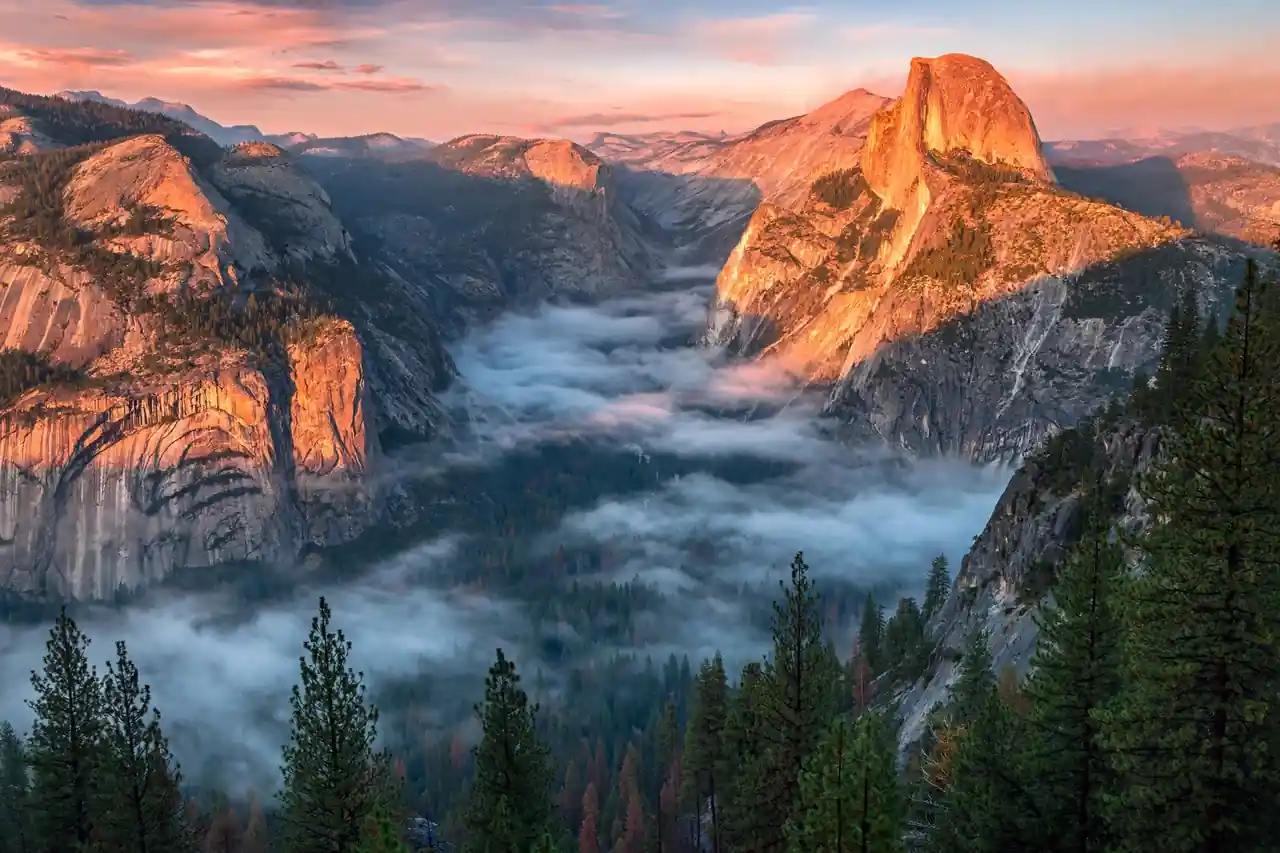
Yosemite National Park is the cathedral of American hiking. Nowhere else in the United States do granite cliffs, thundering waterfalls, and ancient sequoia groves come together in a single valley the way they do here in California’s Sierra Nevada. Every year, millions of visitors arrive hoping to find the best hikes in Yosemite, and the park delivers at every fitness level — from flat, stroller-friendly meadow loops to the legendary cables of Half Dome.
This guide covers 12 of the finest trails in Yosemite National Park, grouped by difficulty so you can pick exactly the right adventure for your trip. Whether you have half a day or a full week, these are the trails worth lacing up your boots for in 2026.
The Best Hikes in Yosemite for Beginners
Yosemite Valley’s floor is remarkably flat, which means some of the park’s most spectacular scenery is available with almost no climbing at all. These easy trails are perfect for families, first-time hikers, and anyone arriving the same day they plan to walk.
1. Lower Yosemite Fall Trail
This one-mile loop is the single most rewarding easy walk in the park. The trail leads through the forest to the base of Lower Yosemite Fall, where you stand in the spray of one of the tallest waterfalls in North America. Go in late spring, when snowmelt is at its peak, and the roar of the water is something you feel in your chest. The path is paved and wheelchair-accessible, making it a must-do no matter who is in your group.
2. Cook’s Meadow Loop
Across from the Lower Yosemite Fall trailhead, the Cook’s Meadow boardwalk loops through open grassland with postcard views of Half Dome, Glacier Point, and Sentinel Rock. In early summer the meadow glows green; by autumn it turns gold. Come at sunrise or sunset for the best light, and keep your eyes open — deer graze here almost every morning. It is one of the quietest easy walks in the valley, and photographers love it.
3. Bridalveil Fall Trail
A short, mostly paved path of about half a mile round trip leads to the base of Bridalveil Fall, the 620-foot waterfall that greets you as you first enter Yosemite Valley. Afternoon breezes often blow the mist sideways across the trail, which is how the waterfall earned its name. It takes under an hour, and the payoff per step is enormous — a strong contender among the best hikes in Yosemite for anyone short on time.
4. Mirror Lake Trail
This mostly level trail follows Tenaya Creek to Mirror Lake, famous for its glassy reflections of Half Dome. The full loop is around five miles, but you can turn it into a shorter out-and-back of about two miles and still see the lake. In spring the lake is full and mirror-perfect; by late summer it often shrinks to a meadow, which is beautiful in its own way. Go early in the morning for the calmest water and the fewest crowds.
The Best Moderate Yosemite Hikes
If you are reasonably fit and want a real workout with a big payoff, these moderate trails are the sweet spot. They climb a few hundred feet, take a few hours, and end at viewpoints that will genuinely stop you in your tracks.
5. Vernal Fall via the Mist Trail
The Mist Trail is arguably the most famous day hike in the national park system, and the climb to the top of Vernal Fall is its crown jewel. The round trip is roughly three miles with about 1,000 feet of elevation gain. You climb 600 granite steps beside the fall itself, and in spring the “mist” is more like a downpour — bring a rain jacket even on a sunny day. The view from the top, looking down at the waterfall and across the valley, is unforgettable. For a longer day, continue to the top of Nevada Fall, which adds about four more miles and doubles the reward. Many hikers training for bigger adventures use this route as a warm-up, much like the approachable trails featured in our roundup of the best hiking trails in the USA.
6. Sentinel Dome and Taft Point Loop
Starting from the Glacier Point Road, this roughly five-mile loop delivers two of the park’s greatest viewpoints for a fraction of the effort of the valley climbs. Sentinel Dome is a gentle granite dome with a full 360-degree panorama — Half Dome, Yosemite Falls, and the high Sierra spread out before you. Taft Point, a short detour off the loop, is a dramatic cliff edge with fissures dropping straight down and an unobstructed view of El Capitan. Do the full loop counterclockwise and you will hardly meet another soul between the two highlights.
7. Four Mile Trail (One Way)
Do not let the name fool you: this trail from Yosemite Valley to Glacier Point is closer to five miles one way, with a relentless 3,200-foot climb. Hike up and take the shuttle or a tour bus back down — or arrange a car shuttle. The reward is a slowly unfolding panorama of the valley as you climb, and Glacier Point itself, with its sweeping view of Half Dome and the high country. It is strenuous but steady, and the grade is manageable for determined hikers.
The Best Challenging Yosemite Hikes
These are the legendary trails — the ones that require an early alarm, serious preparation, and a full day of effort. They are also the experiences you will talk about for the rest of your life.
8. Half Dome via the Cables
The summit of Half Dome is the most coveted day hike in America. The round trip is roughly 14 to 16 miles with nearly 5,000 feet of elevation gain, ending with the famous steel cables up the final 400 feet of near-vertical granite. A permit is required and is awarded by lottery, so apply well in advance of your trip. Start before dawn, carry far more water than you think you need, and be off the cables before afternoon thunderstorms. The view from the top — the entire park spread out at your feet — is the single greatest reward among the best hikes in Yosemite. If big alpine objectives excite you, you will also love the high-country routes in Glacier National Park and Zion National Park.
9. Upper Yosemite Fall Trail
This is the big valley-wall climb: about 7 miles round trip with 2,700 feet of gain to the top of North America’s tallest waterfall. The trail switchbacks relentlessly up the cliff, and every viewpoint on the way up is better than the last. At the top, you can walk to the lip of the falls and look straight down the 1,430-foot drop, or continue to Yosemite Point for one of the finest panoramas in the park. Start at sunrise to beat the heat on the exposed switchbacks.
10. Clouds Rest
Many seasoned Yosemite hikers will tell you Clouds Rest — not Half Dome — is the park’s finest summit. At nearly 10,000 feet, it stands about 1,000 feet higher than Half Dome, and the knife-edge summit ridge offers a jaw-dropping, unobstructed view straight down at Half Dome itself. The most common route starts at Tenaya Lake and covers roughly 14 miles round trip with significant elevation gain. There are no cables and no permit lottery, which makes it a fantastic alternative when Half Dome permits sell out.
11. Cathedral Lakes
For a taste of Yosemite’s high country without a punishing climb, the trail to Upper Cathedral Lake from Tuolumne Meadows is about 7 miles round trip and mostly gentle. Cathedral Peak rises like a Gothic spire above the lake, and the shoreline is one of the most peaceful picnic spots in the Sierra. This is a perfect acclimatization hike if you are planning bigger objectives later in your trip, and wildflowers carpet the meadows in July and August.
12. Mariposa Grove of Giant Sequoias
No list of the best hikes in Yosemite is complete without the giant sequoias. The Mariposa Grove, near the park’s south entrance, holds hundreds of mature giant sequoias, including the Grizzly Giant — one of the largest trees on Earth. Trails range from a two-mile loop to the upper grove’s longer routes, and the hushed, cathedral-like atmosphere of the grove is a completely different Yosemite experience. Pair it with a drive day or use it as a rest-day walk between bigger hikes. It makes a wonderful complement to a dedicated giant-tree trip like the one in our Sequoia National Park guide.
Best Time to Hike in Yosemite
Late May through June is waterfall season, when the falls thunder at full force and the valley is lush and green. July and August bring warm weather, fully open high-country trails, and the biggest crowds. September and early October are the sweet spot for many hikers: smaller crowds, crisp air, and golden light, though the waterfalls run low. Winter transforms the valley into a quiet wonderland, but high-country trails close with snow and tire chains are often required.
Whatever the season, the valley shuttle system makes it easy to reach trailheads without fighting for parking — one more reason to plan your days around early starts. For more ideas on pairing Yosemite with other western icons, see our guides to Grand Teton hikes, Rocky Mountain National Park hikes, and Olympic National Park hikes.
Essential Yosemite Hiking Tips
Book lodging early. Valley lodging and campgrounds sell out months in advance. If they are full, look at gateway towns like Mariposa, Oakhurst, and Groveland — the drives are scenic and straightforward.
Start early. Trailhead parking fills by mid-morning in summer, and afternoon thunderstorms are a real hazard on exposed summits. On the trail by 7 a.m. is a good rule.
Carry more water than you think. There is no water on most of the big climbs. A good rule is at least three liters for a full-day hike, plus a filter or purification as backup.
Store food properly. Yosemite’s black bears are expert food thieves. Use the bear lockers at every trailhead and never leave food or scented items in your car — it is both the law and simple respect for the wildlife. Our travel safety tips cover bear-country basics in more detail.
Check permits. Half Dome requires a lottery permit, and overnight wilderness trips need wilderness permits. Day hikes on all other trails in this guide need no permit beyond park entry — but check current reservation requirements before you go, as the park periodically requires entry reservations in peak season.
Pairing Yosemite With a Longer Western Adventure
Yosemite sits within easy reach of several other legendary parks, which makes it a natural anchor for a bigger road trip. Head south to Joshua Tree for desert contrast, east over Tioga Pass to the high desert and hot springs country, or north to the volcanic landscapes of Lassen Volcanic National Park. With the park’s valley, high country, and sequoia groves, you could easily spend a week here and still leave trails unexplored — which is exactly why hikers keep coming back.
Conclusion
The best hikes in Yosemite reward every kind of traveler: the first-time visitor who walks the misty loop beneath Lower Yosemite Fall, the weekend warrior grinding up the Mist Trail steps, and the seasoned mountaineer standing on the cables of Half Dome at sunrise. Pick the trails that match your fitness, start early, respect the mountains, and give yourself more days than you think you need. Yosemite has a way of turning a planned three-day trip into a lifelong tradition — one trail at a time.