Most Californians have driven past the exit for Lassen Volcanic National Park a dozen times without stopping, and that is the park’s secret and its tragedy. Lassen packs all four types of volcanoes found in the world into one park, plus boiling mud pots, steaming fumaroles, wildflower meadows that rival the Alps, and one of the great summit hikes in the West — and it does it with a fraction of the crowds of its famous neighbors. The Lassen Volcanic National Park hikes in this guide range from boardwalk strolls to a genuine mountain summit, and the planning section covers the fees, the famously fickle road season, and the fire recovery that has reshaped the park in recent years.
The single most important thing to know about Lassen: the park highway closes every winter under enormous snowfall and reopens somewhere between late May and July depending on snowpack. In 2026, a below-average winter let crews open the road in late May — one of the earliest openings in recent memory. Even then, high-elevation trails lag the road: Bumpass Hell was still snowed in at the road’s opening and did not clear until late June. July through September is the reliable window; October is beautiful but facilities start closing. Check the park’s current conditions page before you drive.
Fees, Entrances, and Practical Basics
Lassen adjusted its fee structure in January 2026, so confirm current rates on the park’s fee page before you go: expect roughly $25 per vehicle in summer (the winter rate, December through April, is lower at about $10), with the America the Beautiful pass accepted. The park has two main entrances — the Southwest Entrance at the Kohm Yah-mah-nee Visitor Center and the Northwest Entrance at Manzanita Lake — plus remote eastern entrances at Butte Lake, Juniper Lake, and Warner Valley that require unpaved roads and suit high-clearance vehicles.
No entry reservations are required, but summer campgrounds should be booked on recreation.gov. The park is cashless at entrance stations. Cell service is limited inside the park — download offline maps before you arrive. And note that recent fire seasons have left their mark: the 2021 Dixie Fire and the 2024 Park Fire both affected the park, and some areas and trails operate under recovery closures. Check the alerts page; this park changes more year to year than most. The same advance-checking habit our guide to staying safe on adventure trips recommends is essential here.
1. Bumpass Hell: The Signature Hydrothermal Hike
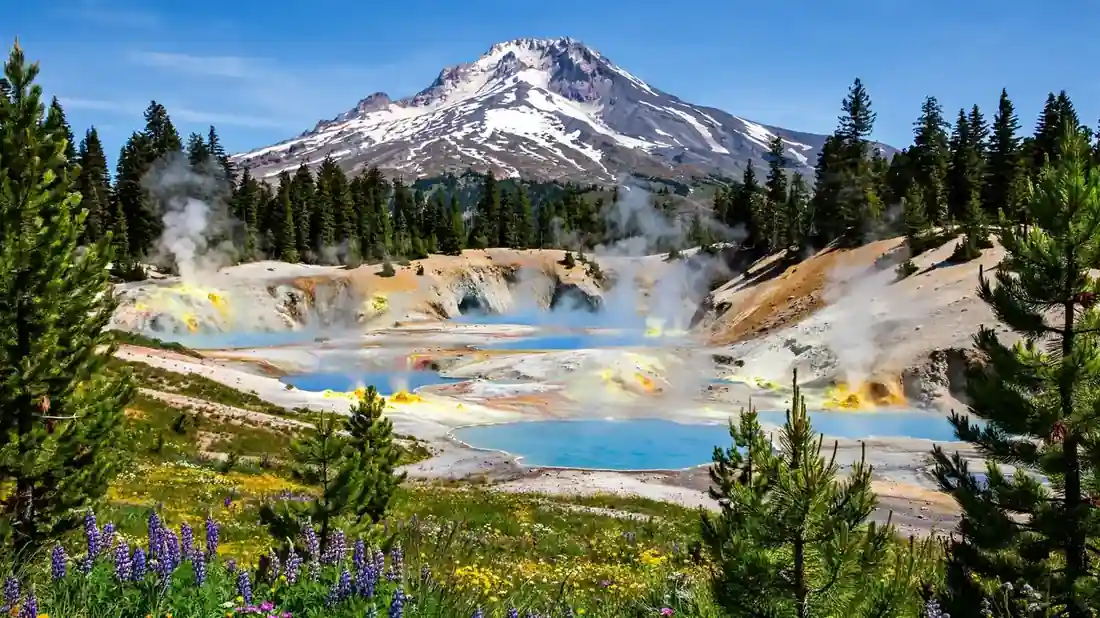
Bumpass Hell is the largest hydrothermal area in the park and the single most important stop: a three-mile round-trip hike to a basin of boiling mud pots, steaming fumaroles, and milky blue pools in impossible colors. The trail descends into the basin on a boardwalk — stay on it, because the ground beside the path is literally boiling — and the smell of sulfur tells you this is a living volcano.
The trail’s snowpack is the annual drama: in heavy years it has stayed closed into August. Late June or July is the realistic target in most years. Go early in the day for the best light and thinnest crowds, and combine it with the nearby Sulphur Works if you want hydrothermal sights without the hike. For more of America’s strangest geothermal ground, our Yellowstone itinerary covers the geyser basins of the greater volcanic West.
2. Lassen Peak Summit: The Crown Jewel Climb
Lassen Peak — 10,457 feet, the southernmost volcano in the Cascades — is the park’s crown jewel hike: five miles round trip with about 2,000 feet of climbing on a well-built trail of switchbacks and talus. The summit panorama runs from the Sacramento Valley to Mount Shasta on clear days, and standing on a volcano that erupted in the 1910s (the most recent Cascade eruption before Mount St. Helens) is a genuine thrill.
Allow a full morning and start early to beat afternoon thunderstorms. Snow can linger on the upper trail into August — check conditions. This is a strenuous hike at real altitude; pace yourself, carry two to three liters of water, and turn back if weather builds. Strong hikers will find comparable summit challenges in our roundup of the best USA hiking trails for every skill level.
3. Sulphur Works: The No-Hike Hydrothermal Fix
If Bumpass Hell is closed for snow or you are short on time, Sulphur Works is the answer: boiling mud pots and steam vents right beside the park highway, with a short boardwalk and no hiking required. It is the most accessible hydrothermal area in the park and nobody has an excuse to skip it. The bubbling mud pots here are endlessly watchable, and the short walk works for every fitness level.
4. Manzanita Lake Loop: The Easy Classic
The 1.8-mile loop around Manzanita Lake is the park’s great easy walk: flat, shaded, and framed by the postcard reflection of Lassen Peak in the water. It is the trail for arrival day, for kids, and for photographers — dawn and dusk light on the peak’s reflection is the park’s most photographed scene. The Loomis Museum nearby adds the human history, including the story of the 1915 eruption.
The Manzanita Lake area also hosts the park’s most convenient campground and camper store, making it the natural base for a multi-day visit. For photography technique at spots like this, see our travel photography guide.
5. Cinder Cone: The Painted Dunes Climb
The Cinder Cone, in the park’s remote Butte Lake area, is a different kind of volcano: a symmetrical cone of loose cinders you climb on a steep, sliding trail to a double-cratered summit. The real reward is the view from the top — the Painted Dunes, a field of red and orange pumice, spread below like a lava rainbow, with the Fantastic Lava Beds beyond.
The four-mile round trip is short but strenuous — every step slides backward on the cinders. The Butte Lake road is unpaved and the area feels wonderfully remote. This is the hike for your second or third day, when you want Lassen’s wilder side.
6. Kings Creek Falls: The Waterfall Walk
Kings Creek Falls is the park’s best waterfall hike: about 2.3 miles round trip through meadow and forest to a 30-foot cascade. It is moderate, family-friendly, and at its best in early summer when snowmelt swells the falls. The upper meadow stretch is one of the park’s great wildflower walks in July.
7. Chaos Crags and Chaos Jumbles: The Youngest Lava
The Chaos Crags are the youngest lava domes in the park — about 1,100 years old — and the trail to their base passes the Chaos Jumbles, a field of house-sized boulders from a massive rock avalanche. The 1.8-mile trail to the Crags viewpoint is easy; the full climb to the dome is a strenuous, unmaintained scramble for experienced hikers only.
8. Mill Creek Falls: The Quiet Cascade
Mill Creek Falls, in the park’s southwest, is a 2.4-mile round-trip walk to a waterfall that sees a fraction of the visitors of Kings Creek. Check current status before you go — trail access here has been affected by fire recovery work in recent years — but when open, it is the park’s best crowd-avoidance hike.
9. Brokeoff Mountain: The Locals’ Summit
Brokeoff Mountain is Lassen Peak’s quieter sibling: a 7.4-mile round trip with about 2,600 feet of climbing to a summit with arguably better views than the famous peak — including a straight-on look at Lassen itself. It is strenuous and exposed, with far fewer hikers. If Lassen Peak’s parking lot is full, this is your answer.
10. Ridge Lakes and Terrace Lakes: The Alpine Quiet
For the park’s deepest quiet, the Ridge Lakes trail (about two miles round trip) climbs to small alpine lakes beneath alpine ridges, and the Terrace Lakes trail offers similar solitude. These are the trails for your last day, when you have seen the icons and want to just sit beside cold mountain water and listen to the wind.
Where to Stay: Camping and Lodging
Manzanita Lake Campground is the most convenient base — reservable, with a camper store for supplies, laundry, and showers. Summit Lake campgrounds serve the park’s center. All campgrounds should be booked on recreation.gov for summer; fire restrictions in recent seasons have limited campfires, so check current rules. There is no lodging inside the park, but the towns of Mineral, Chester, and Redding offer options within an hour.
New to camping in the mountains? Our beginner camping guide covers the gear and skills, and our budget backpacking guide keeps the trip affordable.
Wildflowers, Wildlife, and the Volcanic Story
July is wildflower season at Lassen, and the meadows around the park highway — particularly near Kings Creek and the summit trailhead — erupt in lupine, paintbrush, and mule’s ears. The park’s wildlife includes black bears (use the bear boxes), mule deer, and the occasional glimpse of a mountain lion’s absence — they are there, you will not see them.
The volcanic story is the thread that ties it together: Lassen is where the Cascades meet their southern end, and the park’s four volcano types — plug dome, shield, cinder cone, and composite — are all visible from the highway. The Kohm Yah-mah-nee Visitor Center’s film and exhibits make the geology click; start there. If the volcano bug bites, Olympic’s glacier-carved trails and Rocky Mountain’s alpine routes continue the mountain education, and Acadia’s coastal hikes offer the East Coast counterpoint.
Conclusion: The Park You Should Have Visited Years Ago
Lassen Volcanic National Park is the park for the traveler who has done the famous ones and wants the next thing — or for the first-timer who wants volcanoes, wildflowers, and a real summit without the crowds. Time your visit for July through September, check the road and trail status before you drive, book the campground early, and give the park three days: one for Bumpass Hell and the highway, one for the Lassen Peak summit, and one for Cinder Cone or the quiet lakes. Pair it with the northern California coast on our Pacific Coast Highway itinerary, and you have one of the great underrated weeks in American travel.