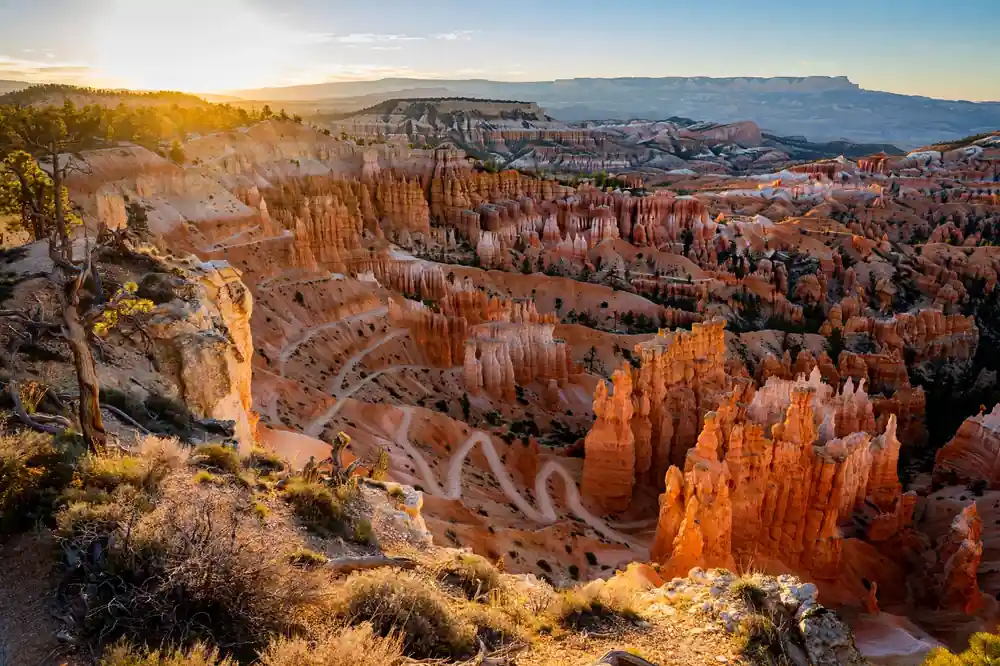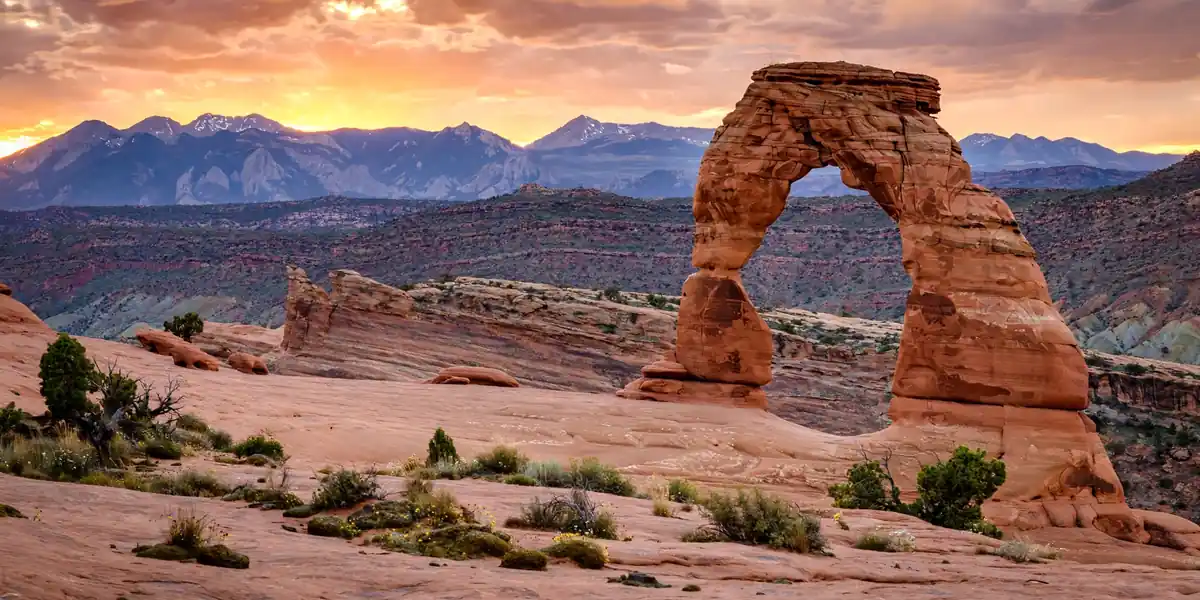
Utah’s red rock country holds a lot of wonders, but Arches National Park distills the region into one compact package: more than 2,000 natural stone arches in 76,000 acres, plus fins, spires, and balanced rocks that look like geology showing off. The icons are visible from the road and even better on foot — and the trails are short enough to stack several into a single perfect day.
This guide covers the seven best Arches National Park hikes, from the pilgrimage to Delicate Arch to the quiet backcountry of Devils Garden. You will get honest distances and difficulty ratings, the big 2026 access change every visitor needs to know, fee details, and the seasonal strategy that keeps you hiking in comfort instead of heat.
Why Arches National Park Hikes Are a Must for Every Traveler
Arches sits just outside Moab, Utah, in the heart of the Colorado Plateau, and it has become one of the most visited parks in the system — more than 1.5 million people a year come to walk beneath spans of Entrada sandstone sculpted by wind, water, and time. Delicate Arch alone is among the most photographed natural features on Earth, gracing Utah’s license plates. But the park’s real magic is density: nowhere else can you stand beneath a 300-foot natural bridge in the morning, thread a slot canyon at noon, and watch sunset fire up a sandstone fin in the evening, all within a 36-mile scenic drive.
For hikers, Arches is unusually generous. Most headline trails are under three miles round trip, suiting everyone from families to serious backpackers — and the longer Devils Garden trail rewards those who go farther with arches the crowds never see. If you are building a national-parks hiking resume, America’s best trails roundup shows where Arches ranks among the country’s great walks.
2026 Access Update: No Timed Entry This Year
Here is the single most important planning fact for 2026: Arches has discontinued its timed-entry reservation system. After running timed entry from 2022 through 2025, the park lifted the requirement in February 2026, so visitors can now enter at any time during operating hours without booking an advance window for the first time in years. The $30 private-vehicle entrance pass (valid seven days) still applies, and the America the Beautiful annual pass ($80 for US residents) covers it. A few caveats: parking lots at popular trailheads still fill by mid-morning in peak season, rangers may temporarily pause entry when lots are full, and Fiery Furnace hikes and Devils Garden Campground still require their own separate reservations. Arrive before 8 a.m. or after 4 p.m. for the smoothest experience.
When to Visit: Seasons in the Desert
Spring (March–May) and fall (September–November) are the golden seasons: daytime highs in the 60s and 70s and comfortable hiking all day. October is arguably the single best month — crisp air, golden cottonwoods along the Colorado River, and thinner crowds than spring. Summer brings highs over 100°F; if you visit then, hike at dawn, carry a gallon of water per person, and be off exposed trails by 10 a.m. Winter is the insider’s season: snow-dusted arches, empty trails, highs in the 40s. Whenever you go, desert safety basics are mandatory reading.
The 7 Best Arches National Park Hikes
1. Delicate Arch Trail — the Icon
Distance: 3 miles round trip · Elevation gain: 480 feet · Difficulty: moderate · Best season: spring and fall
This is the hike — the 65-foot freestanding arch on Utah’s license plate, reached by a trail that climbs open slickrock with the La Sal Mountains looming behind. The final approach threads a narrow rock ledge before the amphitheater opens up and Delicate Arch frames the mountains through its span. Go for sunset, when the arch glows orange and the crowd (yes, there will be a crowd) falls silent as the light changes. The slickrock section is brutally exposed with no shade and no trail markers except rock cairns — follow them carefully, carry plenty of water, and wear shoes with real grip. It is the most famous of all Arches National Park hikes and absolutely worth the hype.
2. Devils Garden Trail to Landscape Arch — the Arch Collection
Distance: 1.9 miles round trip (to Landscape Arch) · Elevation gain: 300 feet · Difficulty: easy to moderate · Best season: spring and fall
The Devils Garden trailhead at the end of the scenic drive is the gateway to the park’s greatest concentration of arches. The maintained trail to Landscape Arch — at 306 feet, the longest natural stone span in North America — is an easy walk past Tunnel Arch and Pine Tree Arch. But the real reward goes to hikers who continue past Landscape Arch on the primitive loop: Partition Arch, Navajo Arch, Double O Arch, and the Dark Angel spire unfold over a 7.2-mile loop with some scrambling and narrow fin-top traverses. Do the short version with kids; do the full primitive loop if you want the best half-day among Arches National Park hikes. Start early — this trailhead’s parking lot is the first to fill.
3. The Windows Section — the Easy Classics
Distance: 1-mile loop · Elevation gain: 150 feet · Difficulty: easy · Best season: year-round
The Windows are the park’s most accessible giants: North Window, South Window, and Turret Arch clustered around a one-mile loop that any fitness level can handle. Climb through the opening of North Window for the classic framed-desert photo, then walk the short spur to Double Arch — two massive spans sharing a single rock fin, and the tallest arch opening in the park. This is the best sunrise spot in Arches: the rising sun fires the Windows’ eastern faces while Turret Arch glows through its opening. It is also the finest easy Arches National Park hike for visitors with limited time or mobility.
4. Balanced Rock Trail — the Quick Marvel
Distance: 0.3-mile loop · Elevation gain: minimal · Difficulty: easy · Best season: year-round
A 128-foot boulder perched impossibly atop a sandstone pedestal, Balanced Rock is visible from the road — but walk the short loop trail around its base and the scale hits differently. The loop takes fifteen minutes and delivers the park’s best geology lesson in miniature: look for the debris pile that will one day be all that remains when the balancing act ends. Photographers love it at sunset when the rock turns deep red. Pair it with the Windows (five minutes away) for a perfect first hour in the park.
5. Park Avenue Trail — the Canyon Corridor
Distance: 2 miles round trip (or 1 mile one-way with shuttle) · Elevation gain: 320 feet · Difficulty: easy to moderate · Best season: spring and fall
The first trailhead inside the park drops you into a canyon of towering sandstone fins that early visitors thought resembled a city street — hence the name. The trail descends into the wash and walks between monoliths with names like the Three Gossips and the Tower of Babel. It is the best introduction to the park’s scale, it is usually far less crowded than the arch trails, and the morning light raking down the canyon walls is spectacular. Hike it one-way downhill by spotting a car (or catching the shuttle in season) at the Courthouse Towers end.
6. Fiery Furnace — the Ranger-Led Maze
Distance: 2 miles · Elevation gain: 500 feet · Difficulty: moderate (scrambling) · Best season: spring and fall
The Fiery Furnace is a labyrinth of narrow sandstone canyons and fins that you may only enter with a ranger-led tour or a hard-won self-guided permit — and it is worth every bit of the effort. Rangers lead small groups through dead-end canyons, under arches, and across narrow rock bridges while explaining the geology and desert ecology. Book the moment reservations open; tours sell out weeks ahead in peak season. Wear sturdy shoes you can scramble in, expect to squeeze through tight spots and climb short rock faces, and leave the claustrophobia at home. It is the most adventurous of the Arches National Park hikes and the one experienced hikers rave about most.
7. Sand Dune Arch and Broken Arch — the Quiet Pair
Distance: 2.3 miles round trip (combined loop) · Elevation gain: 200 feet · Difficulty: easy to moderate · Best season: spring and fall
Near the Devils Garden trailhead, a short sandy spur slips between towering fins into a hidden pocket where Sand Dune Arch spans a cool, shaded slot — a natural air conditioner on a hot day and a favorite with kids who love the deep sand. Continue across the open grassland to Broken Arch, a graceful span with the La Sals framed perfectly through its opening. Loop the two together via the Devils Garden Campground connector for a crowd-free morning while everyone else queues for Delicate Arch. It is the sleeper pick among Arches National Park hikes.
Where to Stay: Moab and Beyond
Moab, fifteen minutes from the park entrance, is one of America’s great adventure towns — motels, vacation rentals, restaurants, gear shops, and guiding outfits for everything from canyoneering to mountain biking. Book lodging well ahead for spring and fall; Moab sells out. Inside the park, Devils Garden Campground (reservations required March–October) puts you at the trailhead for the park’s best long hike — reserve the instant your dates are set. For the full rundown on gear and reservations, our beginner camping guide covers everything a first-time desert camper needs.
Desert Hiking Safety in Arches
Arches’ short trails fool people into under-preparing — don’t be one of them. Carry at least a gallon of water per person on any hike over an hour; there is no water on the trails. The slickrock reflects heat upward, so it feels 10–15 degrees hotter than the forecast; hike early, rest midday. Cairns mark routes across bare rock — if you lose them, stop and retrace rather than guessing. Cryptobiotic soil crust, the black bumpy layer between plants, is a living organism: stay on trails and slickrock. And check the weather for flash-flood risk before entering any narrow canyon.
Photography: Shooting the Red Rock
Arches is a photographer’s playground with simple rules: shoot the east-facing features (Windows, Turret Arch) at sunrise and the west-facing ones (Delicate Arch) at sunset. A polarizing filter deepens the red rock against blue sky; a tripod is essential for the low light at the day’s edges. Delicate Arch at sunset is the money shot — arrive 90 minutes early for a front-row seat on the slickrock. For a full treatment of desert light and composition, our travel photography guide is written for exactly these landscapes. And these trail and photo apps help you plan shots around the light.
Extending Your Trip: Utah’s Mighty Five and Beyond
Arches is the perfect anchor for a southern Utah road trip. Our USA road trip planner lays out the classic Mighty Five loop — Arches, Canyonlands (30 minutes away), Capitol Reef, Bryce Canyon, and Zion — which most travelers do in 7–10 days. Pair Arches with the Grand Canyon’s South Kaibab Trail for the ultimate red-rock week, or head south to Havasu Falls for turquoise water to match the red rock. Visiting in winter? Arizona’s winter destinations combine perfectly with a Moab base. And if you are flying in, first-time USA visitors should read up on rental cars and park passes before landing.
Final Checklist Before You Go
Run this before you leave Moab in the morning: park pass on the dashboard; a gallon of water per person; sun protection and a hat; sturdy shoes with grip for slickrock; offline maps downloaded (no signal in the park); Fiery Furnace permit or tour booked if that’s on your list; sunset plan picked (Delicate Arch or the Windows); someone knows your hiking plan. Check those boxes, and the best Arches National Park hikes will give you the red-rock greatest-hits day that keeps this park at the top of so many bucket lists.