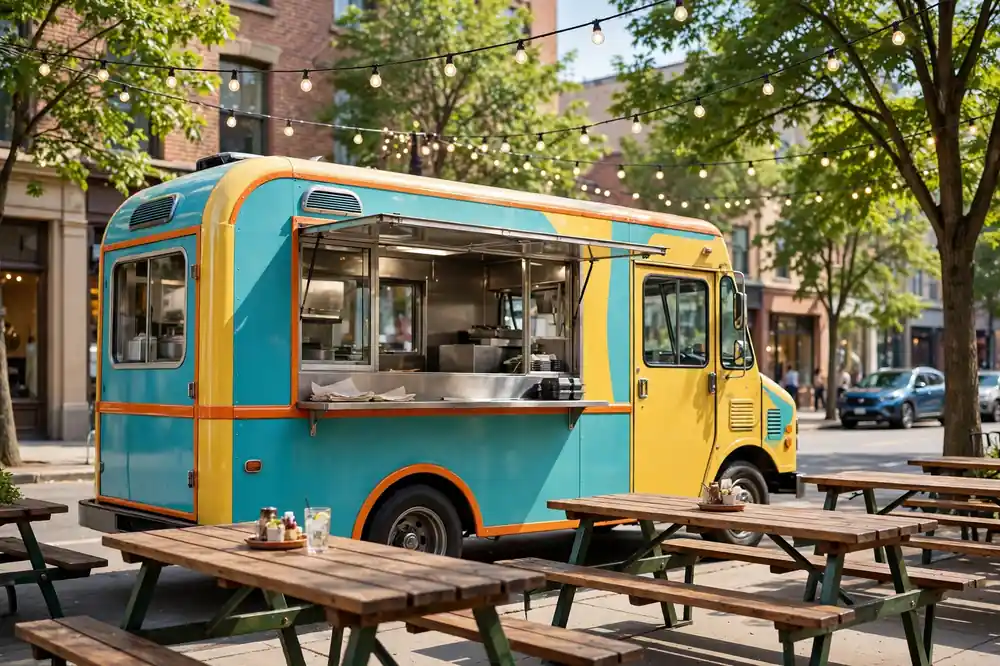
If you love cooking and want your own restaurant without the crushing rent of a storefront, learning how to start a food truck business is a practical first step. Food trucks have lower startup costs than traditional restaurants, and you can move toward your customers instead of waiting for them to find you. The trade-off is hard physical work, tight spaces, and strict health rules. This guide covers the real steps: choosing a concept, understanding costs, getting permits, pricing your menu, and finding locations that actually make money.
Step 1: Pick a Concept and a Tight Menu
Successful trucks do one thing well. A short menu of five to eight items cooks faster, wastes less food, and keeps lines moving, which is the whole game at a busy lunch spot. Choose food that travels well, holds its quality for a few minutes in a box, and can be assembled in about three minutes per order.
Test your concept before you buy anything. Cook for events, sell at a farmers market, or run a weekend pop-up. Feedback from strangers who paid money is worth ten times more than compliments from friends. A lean validation process like this is the heart of doing market research on a small budget, and it can save you from buying a truck for a menu nobody wants.
Step 2: Write a Simple Business Plan
You do not need a fifty-page document, but you do need numbers on paper: startup costs, monthly expenses, your break-even sales per day, and where the money comes from. Lenders and commissary kitchens will ask for it, and it forces you to confront weak points early. Our step-by-step guide on how to write a business plan shows the sections lenders actually read.
Most owners fund the truck with savings, a loan, or a mix of both. If you plan to borrow, read how to get a small business loan before you apply, so your credit, documents, and down payment are ready.
Step 3: Understand the Real Startup Costs
The truck itself is the biggest expense. A used truck costs far less than a new one but may need a kitchen build-out and repairs. A fully equipped new truck costs significantly more. Beyond the truck, budget for:
- Kitchen equipment: grills, fryers, refrigeration, and a generator or shore-power setup.
- Permits, licenses, and inspection fees.
- Your first inventory of food and packaging.
- Commissary kitchen rent, which many cities require for prep and storage.
- Insurance, a point-of-sale system, signage, and a wrap for the truck.
- A cash cushion for the slow first months.
Exact prices vary a lot by state and by truck condition, so get written quotes instead of relying on averages you see online. Owners who skip the cash cushion are the ones who close in month three, right before business picks up.
Step 4: Permits, Licenses, and Health Rules
Food trucks are regulated at several levels, and skipping a permit can shut you down on your busiest day. Typically you will need:
- A business license and employer identification number.
- A mobile food vendor permit from your city or county.
- A health department permit after your truck passes inspection.
- Food handler certifications for you and your staff.
- A fire safety inspection, especially if you fry or use propane.
- Permission or permits for the specific places you plan to park.
Start this paperwork early, because inspections and approvals can take weeks. The order matters too: many jurisdictions will not inspect a truck you have not bought, and lenders will not fund a business with no path to permits. Our overview of how to register a business in the USA explains the state-level basics that come before the food-specific rules.
Step 5: Insurance You Actually Need
At minimum, most truck owners carry commercial auto insurance, general liability coverage, and equipment coverage. If you hire staff, workers’ compensation is usually required. Events and commissaries often demand proof of liability insurance before they let you park. A plain-language overview of artisan and truck insurance for business owners is a useful starting point before you compare quotes.
Step 6: Price Your Menu for Profit
A common rule of thumb in food businesses is that ingredients should be roughly a quarter to a third of the menu price, leaving room for labor, fuel, commissary rent, and fees. Price too low and you will be busy and broke; price too high for your market and the line goes elsewhere. Track your food cost per dish precisely, and raise prices in small steps when ingredient costs climb. The margin logic in how to price your services applies just as well to a menu.
As you embark on your food truck journey, it’s essential to recognize that entrepreneurship in the culinary space is not solely confined to mobile kitchens. The digital marketplace offers vast opportunities for food entrepreneurs to expand their reach and revenue streams. For instance, understanding the intricacies of e-commerce can significantly complement your food truck business. Learning how to sell on amazon can provide you with a platform to sell your unique sauces, spices, or pre-packaged meals, allowing you to capitalize on your culinary creations even when your truck is parked. Diversifying your business model not only enhances profitability but also builds a robust brand presence that can thrive across multiple channels.
Step 7: Find Locations That Make Money
Location is your rent, marketing, and foot traffic in one decision. Busy lunch districts, breweries without kitchens, office parks, festivals, farmers markets, and private catering all pay differently. Catering and private events often produce the most reliable income because the revenue is booked in advance. Build relationships with event organizers and property managers, show up when promised, and leave every spot cleaner than you found it. Getting booked repeatedly is simply how to get your first clients applied to wheels: reliability is the marketing.
Daily Operations and Honest Profit Expectations
A typical day includes prep at the commissary, driving, setup, a three-to-four-hour service rush, cleaning, restocking, and propane and water refills. Profit margins in mobile food are often thin, and they depend on food cost control, event fees, and how many days a week you operate. Owners who do well treat it as an operations business, not just a cooking business: they track numbers daily, cut slow menu items, and protect their best locations.
Keep clean books from day one. Separate business and personal accounts, save for tax payments, and review small business taxes for beginners so deductions and deadlines do not surprise you. If the truck proves the concept, many owners later add a second truck or a small storefront, the same way other owners grow from starting a service business with low startup costs into a stable local company.
Surviving Slow Weeks and Off-Seasons
Food truck income is uneven by nature. Rain empties a lunch spot, winter slows festival season, and a cancelled event can erase a planned week’s profit. Plan for this from the start instead of treating every good week as normal. Keep business and personal money in separate accounts, pay yourself a steady amount, and let strong weeks build the cushion that carries weak ones. The system in how to budget with irregular income was written for exactly this pattern and works just as well for truck owners as for freelancers.
Use slow periods productively instead of simply closing. Winter is the season for truck repairs, menu testing, commissary deep-cleaning, and booking next year’s events while organizers are still planning. Many owners add indoor income in the off-season through catering, holiday parties, and corporate lunches, which depend less on weather and foot traffic. A truck that earns even modest catering income in January is far safer than one waiting for spring festivals.
Hiring Your First Helper
Most owners start alone and quickly learn that one person cannot prep, cook, serve, and handle payments during a rush. Your first hire is usually a part-time helper for peak hours. Hire for reliability and a valid food handler card before cooking talent; you can teach your menu, but you cannot teach someone to show up. Put prep lists, opening and closing checklists, and cash-handling rules in writing from the first shift. Clear systems protect food quality, keep the health inspector happy, and let you step away from the truck without the day falling apart.
Your First Ninety Days: What to Expect
Expect the first three months to feel slower than your projections. You will be learning your commissary routine, discovering which locations actually draw crowds, and fixing small equipment surprises. Track every service in a simple log: location, hours, gross sales, food cost, and fees paid. After a month, patterns appear clearly. One weekday lunch spot may quietly outperform the big weekend event that charges you a steep fee. Adjust your schedule toward the winners without sentimentality, and drop locations that lose money twice in a row. Owners who review this log weekly reach profitability far sooner than owners who rely on gut feeling, because the truck rewards data just as much as it rewards good cooking.
Frequently Asked Questions
How much money do I need to start a food truck?
It depends mainly on the truck. A modest used setup costs a fraction of a new custom build, but most owners should also budget several months of operating expenses as a cushion. Get local quotes for the truck, equipment, and permits before committing.
Do I need a commissary kitchen?
In many cities, yes. Health codes often require mobile vendors to operate from a licensed commissary for prep, storage, and waste disposal. Confirm your local rule before signing anything.
Is a food truck more profitable than a restaurant?
Not automatically. Trucks have lower overhead but also limited seating, weather risk, and shorter selling hours. Profit comes from cost control and smart locations in both models.
What is the most common reason food trucks fail?
Running out of cash in the first season, usually because startup costs were underestimated and the menu was too large to run efficiently.
Key Takeaways
- Test your menu with paying customers before buying a truck.
- Budget the truck, equipment, permits, and a cash cushion together.
- Start permit paperwork early; inspections take time.
- Keep the menu short and price it from real food costs.
- Reliable locations and catering bookings stabilize income.
A food truck rewards people who love both cooking and logistics. Plan the money carefully, respect the permit process, and serve a small menu consistently well, and the truck can become the first chapter of a much bigger food business.