Learning how to start a cleaning business is one of the most realistic paths to self-employment in the USA. Homes and offices always need cleaning, you can begin with supplies that fit in a car trunk, and recurring weekly or biweekly clients create income you can count on. Many owners start solo on weekends, then hire help once the schedule fills. This guide covers the full path: choosing services, keeping startup costs low, setting prices, handling licenses and insurance, and winning your first paying clients.
Why Cleaning Works as a First Business
Cleaning has three advantages most startups do not. First, demand is steady and local, so you are not competing with the whole internet. Second, the work repeats: a happy client books you again and again, which means you do not have to find new customers every week. Third, you can start while keeping a day job, then go full-time when revenue justifies it. It belongs on any honest list of small business ideas with low startup costs, and it pairs naturally with the lean approach in how to start a business with no money: spend on what clients notice, delay everything else.
Step 1: Choose Your Services and Customers
Decide early whether you will clean homes, offices, or both. Residential cleaning is easier to start and schedule during the day. Commercial cleaning often happens in the evening, pays through contracts, and takes longer to win but stays loyal once you are in. Specialty services pay more per hour: move-in and move-out cleans, deep cleans, post-construction cleanup, and short-term rental turnovers for Airbnb hosts.
Pick two or three services, define exactly what each includes, and write it down. A clear checklist prevents the most common dispute in this business: the client expected something you never offered. If you need ideas for filling gaps in your week, the options in home-based business ideas can complement cleaning income while you build your client base.
Step 2: Keep Startup Costs Truly Low
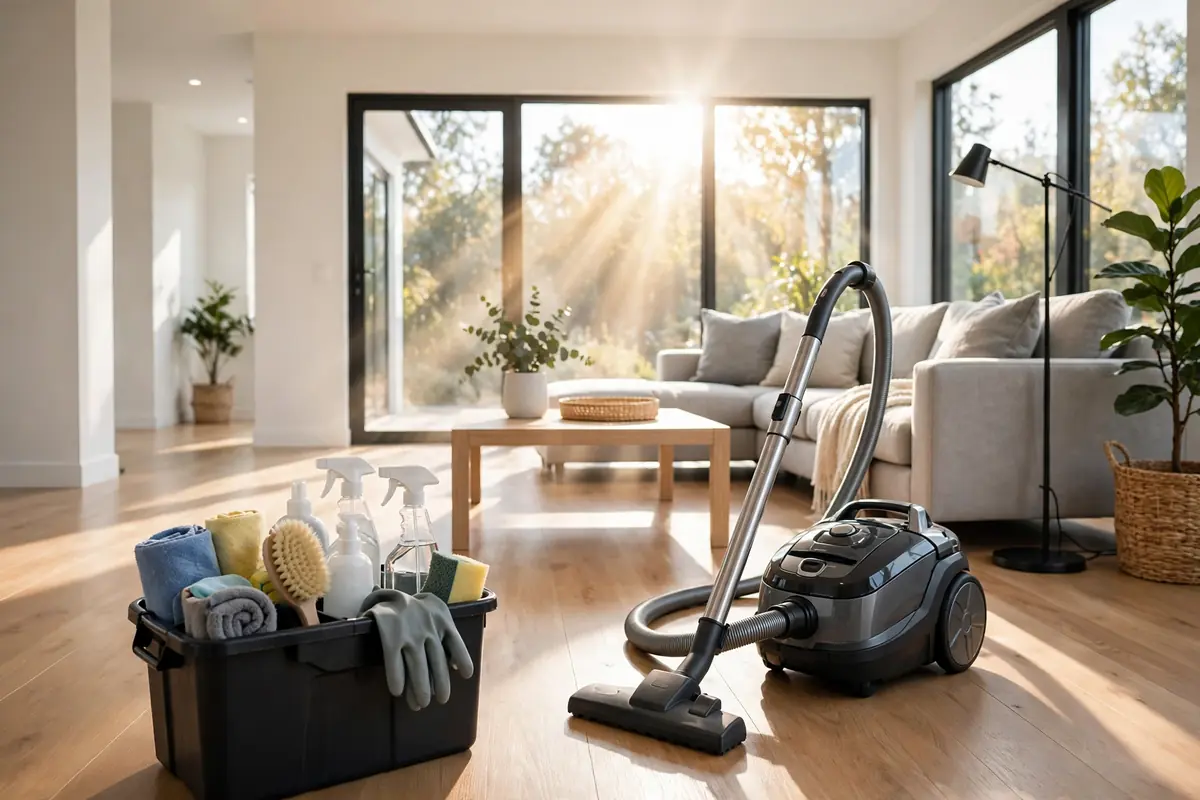
Your essential kit is small: a decent vacuum, mops, microfiber cloths, scrub brushes, caddies, and basic cleaning solutions. Buy mid-range tools that survive daily use; the cheapest vacuum costs more in the long run because it breaks mid-job. Many residential cleaners use the client’s vacuum and supplies at first, which cuts costs further, though your own kit looks more professional.
Skip the expensive mistakes beginners make: a fancy logo package, a wrapped vehicle, and office rent. A simple business name, a basic website or Google Business Profile, and printed price sheets will carry you surprisingly far. Choose the name carefully using the principles in how to name a business, because you will say it on the phone hundreds of times.
Step 3: Register, License, and Insure the Business
Formal steps protect you and unlock bigger clients. Register the business with your state, get an employer identification number, and open a separate business bank account. Many owners form an LLC for liability protection once revenue is steady. Our plain-English overview of how to register a business in the USA walks through the state basics.
Insurance matters more in cleaning than in many trades because you work inside people’s homes around their valuables. General liability insurance is the baseline, and bonding reassures clients and is often required for commercial contracts. An overview of insurance options for small service businesses explains the main coverage types in simple terms. Some cities also require a local business license, so check before your first job, not after a complaint.
Step 4: Price Jobs So You Actually Profit
New cleaners usually underprice, then burn out. Price by the job, not the hour, once you know how long homes of a given size take you. Your rate must cover drive time, supplies, taxes, insurance, and the unpaid hours spent quoting and scheduling. A two-bedroom home that takes three hours is not a three-hour business day; it is closer to four with travel and admin.
Offer simple tiers: standard clean, deep clean, and move-out clean, each with a written checklist. Transparent tiers make quoting fast and upsells easy. For the thinking behind rates and raising them without losing clients, see how to price your services.
Step 5: Get Your First Clients
Your first ten clients come from effort, not advertising. Tell everyone you know, post in local community groups, list your business on Google so you appear in “cleaning service near me” searches, and ask satisfied friends for referrals. A starter discount on the first clean is fine, but avoid training clients to expect permanent low prices.
The playbook in how to get your first 10 clients fits this business perfectly: show up on time, communicate clearly, and ask for the referral while the sparkling kitchen is still fresh in the client’s mind. Reviews on Google are gold for local services, so ask every happy client, every time.
Step 6: Systemize Before You Hire
When your schedule fills, growth means hiring, and hiring means systems. Written checklists for each service, a simple scheduling app, and supply restocking routines keep quality consistent when you are not on site. Hire slowly, train in person on real jobs, and check the first several cleans yourself. Owners who skip this step discover problems through bad reviews instead of quiet fixes.
Keep your finances equally tidy. Track income and expenses per client, set aside money for taxes with every payment, and review small business taxes for beginners before your first quarterly deadline. If demand eventually pushes you toward vehicles and equipment, plan purchases with the same caution you would apply to starting a food truck business: cash flow first, growth second.
Marketing That Costs Almost Nothing
Local services win on visibility and trust, not big ad budgets. Claim your free Google Business Profile with your service area, hours, and photos of your work setup, because most residential clients start with a “near me” search. Ask every satisfied client for a review on the same day you clean, while the result is visible and the goodwill is fresh. Five honest reviews will outperform a beautiful website with none.
Partnerships are the second free channel. Real estate agents need reliable move-out cleaners, property managers need turnover crews, and Airbnb hosts constantly lose cleaners to burnout. Introduce yourself with your price sheet, insurance proof, and two references. One busy realtor can feed you work for years. Local community groups and neighborhood apps also allow service recommendations; be helpful there rather than spammy, and let residents mention your name for you.
Handling Supplies, Keys, and Client Trust
Trust is your real product. Clients hand you alarm codes and house keys, so treat that responsibility visibly and seriously. Keep a written log of keys, never label them with addresses, and store them locked. Agree in advance which products you use, especially for homes with babies, pets, allergies, or delicate surfaces like marble and hardwood. Offering a green or fragrance-free option wins clients who have been burned by harsh chemicals before.
Small professional habits add up: wear clean branded or plain work clothes, text when you are on your way, leave a short checklist of what was done, and report anything you notice, from a leaking faucet to a pet that slipped out. Clients fire cleaners for silence and surprises far more often than for a missed baseboard. These habits cost nothing, and they are exactly what turns a one-time deep clean into a standing biweekly booking.
Setting Expectations With a Simple Service Agreement
Even for friendly residential clients, a short written agreement prevents most arguments. It should list the services included, the price, how rescheduling works, and what happens if a visit must be cancelled at short notice. State clearly what you do not do: many cleaners exclude windows above a certain height, laundry, dishes, and moving heavy furniture, and that is fine as long as clients know before the first visit. Include your policy for accidental damage and explain that you carry insurance, which reassures clients and separates you from casual competitors. Review the agreement once a year as your prices and services change. Clear paperwork feels formal at first, but clients read it as professionalism, and it protects your income when a friendly arrangement is tested by a missed appointment or a disputed charge.
Frequently Asked Questions
How much does it cost to start a cleaning business?
Most solo cleaners can start with a modest budget covering basic supplies, insurance, and registration. Costs rise when you add employees, vehicles, or commercial equipment, so grow in stages.
Do I need experience to start?
No formal experience is required, but you do need consistent quality and attention to detail. Practice full cleans on your own home against a timer to learn realistic pacing.
Should I clean homes or offices first?
Homes are simpler to win and schedule. Offices offer stable contracts but longer sales cycles and evening hours. Many owners start residential and add commercial clients later.
How do I handle a client who says something is missing or broken?
Stay calm, document the situation, and respond quickly. Photograph rooms before and after when a client requests it, and let your insurance handle genuine damage claims.
Key Takeaways
- Start with two or three clearly defined services and written checklists.
- Keep startup spending on tools and insurance, not branding extras.
- Price by the job and include travel and admin time in your math.
- Referrals and Google reviews are your cheapest marketing.
- Systemize checklists and scheduling before you hire.
A cleaning business grows the old-fashioned way: reliable work, fair prices, and clients who trust you in their homes. Start lean, protect yourself with insurance, and let recurring bookings turn a side income into a real company.