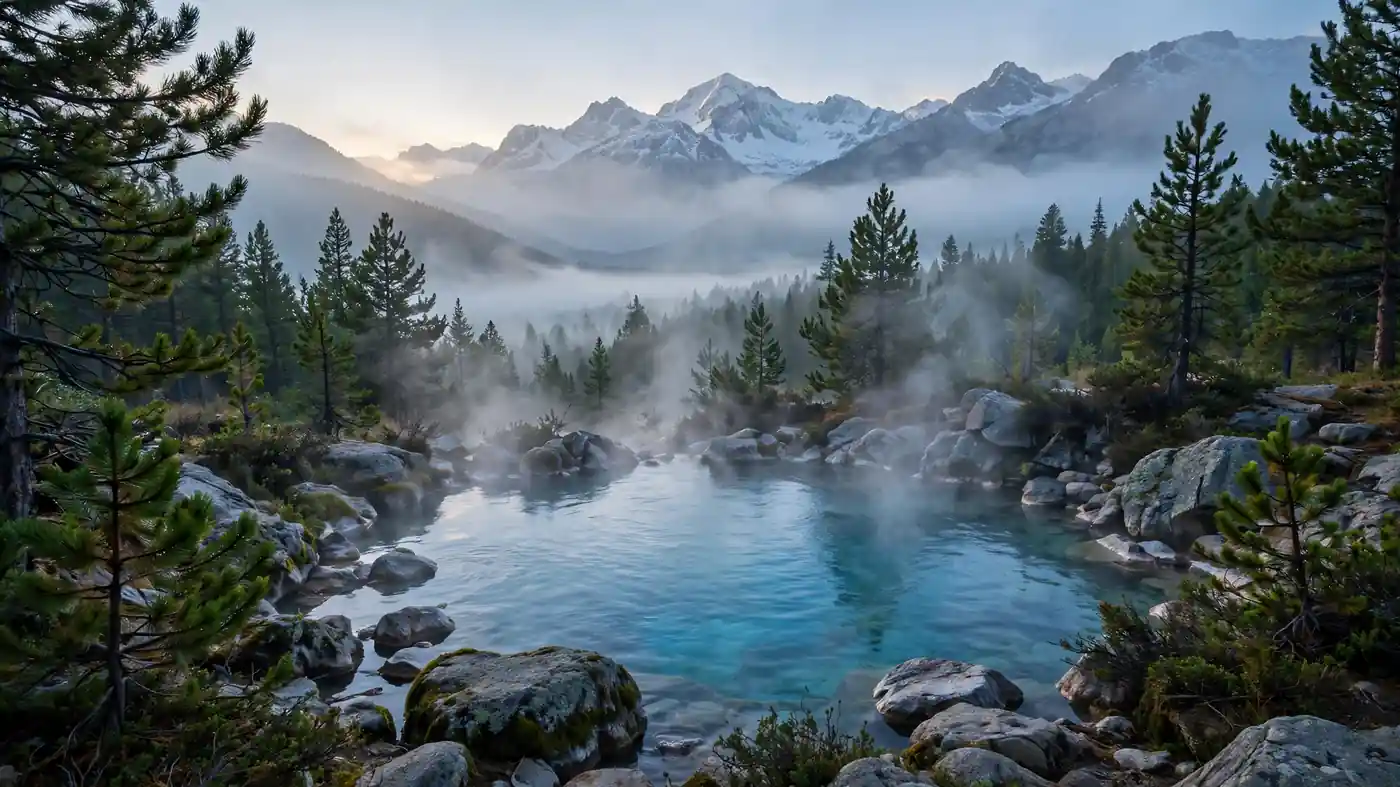
There is a particular happiness in lowering yourself into steaming water while snow falls on your shoulders, or while a desert sunset sets the mountains on fire. The United States sits on some of the most geothermally active ground on Earth, so the best hot springs in the USA are not one place — they are a spectrum, from million-gallon developed pools in Colorado to an Idaho backcountry pool you reach only by foot or horse. This guide covers twelve of the finest, plus the etiquette, safety, and timing that make a soak genuinely great.
A note on expectations: hot spring access changes. Floods, wildfires, and management decisions close pools and trailheads. Always verify current conditions before you drive hours to a remote pool, and always follow the rules — the future of wild soaking depends on visitors behaving well.
How to Soak: Etiquette and Safety for Hot Springs
At developed springs, shower before entering, wear a swimsuit, and respect quiet hours and capacity limits. At wild springs, Leave No Trace is absolute: pack out everything, no glass, bury waste properly, and camp at least 200 feet from water. Never soak alone at remote pools or drive to one after dark on an unfamiliar dirt road.
Heat is the main safety factor. Spring water near the source can scald — test the water before committing, move slowly in pools with thermal vents, and limit continuous soaking to 15–20 minutes in very hot water, especially for children, pregnant visitors, and anyone with heart conditions. Stay hydrated; the water warms you from the inside out, and dehydration sneaks up fast. For more backcountry safety thinking that applies anywhere remote, see our guide to staying safe on adventure trips.
1. Glenwood Hot Springs, Colorado: The Biggest Pool in the World
Glenwood Springs has been a soaking destination since the 1880s, and its main pool — over two million gallons of mineral water at about 90–93°F — remains the largest hot springs pool in the world. The smaller therapy pool runs hotter, around 104°F, for a classic contrast soak. The town sits in the heart of the Rockies between Denver and Aspen, making it an easy add to any Colorado trip, and winter soaking here while snow falls is a bucket-list experience.
The resort keeps adding new pools and features, so check what is new for the current season. If you are hiking the area, pair the soak with hikes in Rocky Mountain National Park or a winter stop in our roundup of winter destinations worth the cold.
2. Chena Hot Springs, Alaska: Soak Under the Northern Lights
An hour northeast of Fairbanks, Chena Hot Springs Resort pairs a natural outdoor rock lake at about 106°F with one of the best aurora-viewing positions in the country. The lodge offers aurora tours from fall through spring, and there is nothing quite like floating in steaming water while green light ripples overhead. Day-use passes make it accessible even if you are staying in Fairbanks.
Winter is the point: come between late fall and early spring, dress for real cold, and book lodging early. Summer brings the midnight sun and a completely different, flower-filled version.
3. Ojo Caliente, New Mexico: Ancient Waters and Zero Cell Service
Ojo Caliente, north of Santa Fe, claims some of the oldest natural hot springs in the country — the Tewa people have soaked here for centuries, and the Great Bath has been in continuous use since the 1800s. The resort offers multiple mineral pools, each with different mineral compositions and temperatures, plus private outdoor tubs. It is an adults-focused, quiet property: no phones at the pools, no kids in certain areas, and a genuine unplugged atmosphere.
This is the soak for the traveler who wants ritual, not a water park. Arrive early on weekdays for the thinnest crowds, and book private tubs in advance. The high desert setting pairs perfectly with a Santa Fe weekend.
4. The Springs Resort, Pagosa Springs, Colorado: 25 Pools on the San Juan River
Pagosa Springs is named for the geothermal water that made it famous — the word comes from a Ute term for healing waters — and The Springs Resort takes full advantage, with 25 developed soaking pools along the San Juan River ranging from the 60s to 114°F. It is one of the deepest known geothermal vents in the world, and the variety of pools means everyone in your group finds their temperature.
Summer brings river tubing and festival season; winter brings the deepest contrast between freezing air and steaming water. The town is a genuine mountain community, not a resort bubble, with hot spring pricing far kinder than the big-name Colorado resorts.
5. Mammoth Hot Springs Terraces, Yellowstone: Soak With Your Eyes
Yellowstone’s hot springs are look-but-don’t-touch — the park’s thermal features are far too dangerous for soaking — but the Mammoth Hot Springs terraces deserve a place on any hot springs bucket list for their sheer strangeness. The travertine terraces grow inches per year, spilling milky blue and orange water down hillsides of mineral stone. The boardwalk walk through Upper and Lower Terraces is one of the great free sights in the national park system.
Combine the terraces with the rest of the park’s geothermal wonders — Old Faithful, the Grand Prismatic Spring — on the route in our three-day Yellowstone itinerary. For the real soaking nearby, licensed outfitters run trips to natural springs outside park boundaries.
6. Goldmyer Hot Springs, Washington: The Permit-Protected Wilderness Soak
Deep in the Cascade foothills near North Bend, Goldmyer is the hot spring for people who hate what hot springs have become. Access is by permit only — 20 people per day, booked well in advance — via a rough forest road and a short hike. The payoff is a series of caves and pools in old-growth forest with the kind of quiet that no longer exists at roadside springs. Cold plunge pools fed by the adjacent creek complete the contrast.
Booking opens on a set schedule and sells out fast; plan months ahead. Bring everything you need and pack everything out. This is backcountry etiquette at its purest, and the experience it buys is priceless.
7. Umpqua Hot Springs, Oregon: Terraced Pools in the Cascades
A short hike up a forested hillside in southern Oregon’s Cascade foothills leads to a series of terraced soaking pools with a view over the North Umpqua River canyon. The pools cascade downhill, with the top pool hottest — a natural temperature gradient you choose by descending. The setting, in old-growth forest along one of America’s wildest rivers, is as much the point as the water.
This is a popular spot that has struggled with overcrowding, so go on weekday mornings, keep your group small, and follow every posted rule. Northwest Forest Passes are required for parking. The Umpqua area makes a strong pairing with Oregon’s other natural wonders on a Pacific Northwest road trip.
8. Hot Springs, Arkansas: America’s Original Spa City
Long before Colorado had resorts, Hot Springs, Arkansas was the country’s spa capital. The historic Bathhouse Row in Hot Springs National Park — technically a national park built around urban hot springs — offers traditional thermal baths in restored 1920s buildings. Fordyce Bathhouse serves as the park’s visitor center, while the Buckstaff and Quapaw bathhouses still operate.
The water emerges at 143°F and is cooled to body temperature for bathing. This is the hot springs experience as history: stained glass, marble, and the grand ritual of the American spa era. Combine it with hiking in the surrounding Ouachita foothills for a full wellness weekend.
9. Dunton Hot Springs, Colorado: Ghost Town Turned Luxury Camp
At the far end of the scale from public bathhouses, Dunton is a restored 1800s mining ghost town in the San Juan Mountains that now operates as one of the country’s most exclusive hot springs resorts — a handful of hand-hewn cabins, natural springs piped into bathhouses, and meals in the original saloon. Rates run high, but the experience — soaking in a frontier cabin’s outdoor tub under absurdly dark skies — is singular.
This is the splurge pick, the anniversary trip, the one you remember for decades. Book far ahead; there are very few rooms.
10. Wild Idaho Soaks: The Backcountry Payoff
Idaho has more soakable wilderness hot springs than anywhere in the Lower 48, and the best of them require effort. Kirkham, a cluster of riverside pools along the South Fork of the Payette, offers the classic roadside-adjacent experience. Deeper in, pools along the Middle Fork of the Salmon are reachable only by raft, foot, or horse — the reward for multi-day commitment.
The rules for wild Idaho soaking are the rules for all wild soaking, squared: no glass, pack out everything, keep noise down, and share the pool graciously. Check river and road conditions before you go — spring runoff and fire closures are real constraints. Our budget backpacking guide covers the gear and planning for trips like these.
11. Calistoga, California: Wine Country Mud and Mineral Water
Calistoga, at the north end of Napa Valley, has been a spa town since the 1860s, built on the region’s volcanic geology. The signature experience is the mud bath — volcanic ash mixed with hot mineral water, followed by a mineral-water soak and a blanket wrap — offered by the town’s historic bathhouses. It is quirky, old-California, and genuinely relaxing after days of wine tasting.
Most visitors do Calistoga as a day trip or one-night stay within a Napa or Sonoma itinerary. The town itself is small and walkable, and the geyser at the edge of town — one of only three known “cold water” geysers in the world — makes a fun side stop.
12. Strawberry Park Hot Springs, Colorado: Rustic Pools Near Steamboat
A few miles outside Steamboat Springs, Strawberry Park keeps things deliberately rustic: a series of stone pools cascading down a hillside, the water cooling as it descends, all surrounded by pines and mountains. Night soaking under the stars is a tradition here, and the winter experience — steam rising off the pools into falling snow — is legendary.
Access is by a rough road in winter; check conditions and bring a vehicle that can handle it. This is the anti-resort soak: simple, beautiful, and best done after a day on the slopes or trails. For trip-planning context, our first-time USA visitor guide covers the logistics of multi-state winter trips.
When to Visit: Timing Your Soak
The paradox of hot springs is that they are best when the air is cold. Fall and winter deliver the contrast that makes soaking magical — steam, snow, cold air on your face — and the darkest skies for night soaks. Summer soaks work best at high-elevation pools where evenings cool off, or at developed springs with cooler pools for hot afternoons.
For wild springs, spring runoff and fire season are the two big variables. Snowmelt can make backcountry roads impassable through early summer, and fire closures can shut entire regions in late summer. Shoulder seasons — late spring and early fall — often hit the sweet spot of access, weather, and thinner crowds.
Conclusion: Pick Your Temperature
The best hot springs in the USA are not a ranking to memorize — they are a menu. Want history? Hot Springs, Arkansas. Want the aurora? Chena. Want wilderness solitude? Goldmyer or the Idaho backcountry. Want to bring the kids? Glenwood. Whatever you choose, verify conditions before you go, follow the etiquette that keeps wild springs wild, and give yourself the full soak — hot water, cold air, and nowhere to be for a while. For the camping skills that unlock the wilder pools, start with our beginner camping guide; for desert soaks, the skills in our Death Valley camping guide transfer directly. After the water cools, the trails around Grand Teton and these adrenaline activities are waiting.