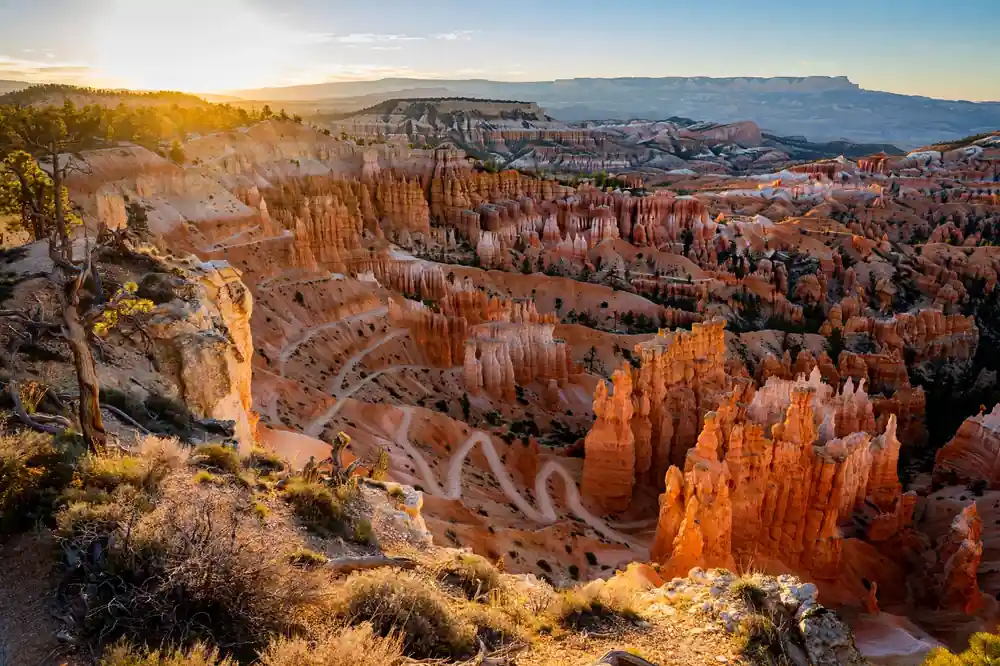
Stand at the rim of Bryce Canyon at sunrise and something strange happens: the amphitheater below you — packed with thousands of orange, pink, and cream stone spires called hoodoos — catches fire with light in about ten minutes, turning from gray ghost to molten city. Here is the twist that surprises most visitors: Bryce Canyon is not actually a canyon at all. It is a series of natural amphitheaters carved into the edge of the Paunsaugunt Plateau, where frost wedging shatters the Claron limestone into towers faster than anywhere else on Earth. The rim loses an estimated two to four feet every century, which means you are watching a slow-motion demolition of one of the strangest landscapes in America. The only way to truly feel it is to descend into it. These are the best Bryce Canyon hikes, ranked from essential to adventurous.
The best hiking trails in the USA reward the hiker who goes below the rim, and Bryce is the single best proof of that rule. From the rim, hoodoos look like a sculpture garden. From inside, among towering walls of stone, they feel like a lost city. Every trail below starts with the same warning: the elevation runs 8,000 to 9,100 feet, so the thin air makes even short hikes feel harder than expected. Take it slow, drink water, and let the rock do the talking.
The Best Bryce Canyon Hikes, Ranked
1. Queen’s Garden + Navajo Loop — The Essential Bryce Hike
If you hike exactly one trail at Bryce Canyon, make it this combination, and do it at sunrise. Start at Sunrise Point, descend the Queen’s Garden Trail past the famous Queen Victoria hoodoo, and connect to the Navajo Loop’s tight switchbacks through Wall Street — a slot-like corridor of towering fins that is one of the most photographed trail sections in the American Southwest. The loop totals about 3 miles with roughly 600 feet of elevation gain, and it packs more scenery per step than almost any trail its length in Utah. Compare it with the red-rock classics in our Arches hikes guide, where the stone arranges itself horizontally instead of vertically. Arrive at the trailhead before sunrise, descend as the light pours in, and you will understand why rangers call this the park’s signature hike.
2. Peekaboo Loop — The Most Rewarding Backcountry Trail
Peekaboo Loop is a 5.5-mile strenuous loop that starts at Bryce Point and weaves through the densest hoodoo forest in the park, including the Wall of Windows — a fin pierced with natural arches. Because it starts at the less-visited Bryce Point and demands real effort (about 1,500 feet of climbing), the crowds thin dramatically after the first mile. This is the trail for hikers who want the amphitheater’s full drama without sharing every viewpoint. It is also a horse trail, so watch your step and yield to riders. Pair it mentally with the South Kaibab Trail: both descend through layered stone, but Peekaboo’s towers feel intimate where the Grand Canyon feels infinite.
3. Fairyland Loop — The Quiet Giant
The 8-mile Fairyland Loop is the longest day hike in the main amphitheater area and the least crowded, because most visitors never make it to the Fairyland Point trailhead. The trail traverses a quieter northern amphitheater past Tower Bridge — a natural bridge that genuinely resembles its London namesake — and through hoodoo gardens that feel untouched. With about 1,700 feet of elevation change, it is a full-day commitment, best hiked in the cooler months or starting at dawn in summer. The payoff is solitude among formations as fine as anything on the main loop. If you love big-mile quiet trails, our Rocky Mountain hikes guide offers the same solitude at even higher altitude.
4. Rim Trail (Sunrise Point to Sunset Point) — The Easy Classic
Not every great hike has to be hard. The paved, mostly flat mile between Sunrise and Sunset Points is the easiest walk in the park and one of its most rewarding, with the entire main amphitheater unfolding at every step. It is wheelchair accessible, stroller friendly, and perfect for sunset, when the hoodoos glow deepest red. Extend it north to Inspiration Point or south toward Bryce Point for more distance. This is also the trail to choose on your arrival afternoon, when you are still adjusting to the 8,000-foot air. Sunrise from Sunrise Point is non-negotiable: be at the railing twenty minutes before the listed sunrise, dress warmly (the rim runs cold even in July), and watch ten minutes of stone turn to fire. For more iconic sunrise hikes, our Zion hikes guide pairs beautifully with a Bryce trip — the two parks sit about 90 minutes apart.
5. Bristlecone Loop — Ancient Trees Above the Amphitheater
The 1-mile Bristlecone Loop at Rainbow Point (the park’s highest developed viewpoint at 9,115 feet) winds through an ancient bristlecone pine forest, with some trees pushing 1,800 years old — among the oldest living things on the planet. The loop is easy and mostly shaded, a gentle contrast to the exposed amphitheater trails, and the views from Rainbow Point stretch across the entire park and into the Grand Staircase. It is the perfect cooldown hike or a bad-weather backup, and the gnarled, wind-twisted trees are endlessly photogenic. The southern scenic drive to get here (18 miles from the visitor center) is itself one of the great scenic drives in the USA, with overlooks at Natural Bridge, Agua Canyon, and Ponderosa Canyon along the way.
6. Mossy Cave — Waterfall and Ice in a Side Canyon
Mossy Cave is the park’s odd one out: a 0.8-mile round-trip trail in a separate section of the park, off Highway 12 near Tropic, leading to a mossy overhang and a small waterfall fed by the Tropic Ditch. In winter, the waterfall freezes into a curtain of ice that draws photographers from across the region. The trail is short, mostly flat, and ideal for families or for a quick stop on a scenic parkway drive day. Do not skip it just because it sits outside the main amphitheater — the contrast between desert rim and dripping grotto is one of Bryce’s quiet surprises.
7. Tower Bridge — The Fairyland Shortcut
If the full Fairyland Loop is too much but you want a taste of its solitude, the 3-mile round trip to Tower Bridge along the Fairyland Trail delivers the highlight reel: the bridge itself, hoodoo gardens, and bristlecone pines, with about 800 feet of elevation change. It is an excellent shoulder-season hike when the main amphitheater trails are crowded, and the morning light on Tower Bridge is superb. Afterwards, the nearby desert waterfall hikes of the region make a natural next-day contrast — different stone, same sense of discovery.
Best Time to Visit Bryce Canyon
May through October is the prime window, with full shuttle service (early April through late October), all trails open, and ranger programs running nightly. Summer afternoons bring thunderstorms — start hikes early and be below the rim’s exposed ridges by noon. Winter is Bryce’s secret season: snow dusts the red hoodoos in a contrast photographers dream about, the park empties, and snowshoeing the rim is magical. Just know that some trails ice over and the southern scenic drive can close with snow. Spring and fall offer the sweet spot of mild weather and thinner crowds, though nights stay cold at 9,000 feet in every season. For more on timing desert trips, our Pacific Northwest hikes show the opposite extreme — rainforest instead of red rock.
2026 Fees, Shuttle, and Logistics
The 2026 entrance fee is $35 per private vehicle for a seven-day pass, $30 per motorcycle, and $20 per person 16 and older entering on foot or bike. One important 2026 change: non-US residents aged 16 and over pay an additional $100 per person surcharge at Bryce Canyon (one of 11 major parks with this policy), unless entering with an annual or America the Beautiful pass. The park is cashless — cards only. There is no timed-entry reservation system, and the free shuttle runs from early April to late October, stopping at the visitor center, campgrounds, the lodge, and the main viewpoints; during shuttle season, private cars cannot park at the busiest trailheads, so use it. Parking is extremely limited — arrive before 9 a.m. or after 4 p.m. Before any desert hike, review our beginner camping guide for water, sun, and gear basics that apply double at altitude.
Stargazing: Bryce After Dark
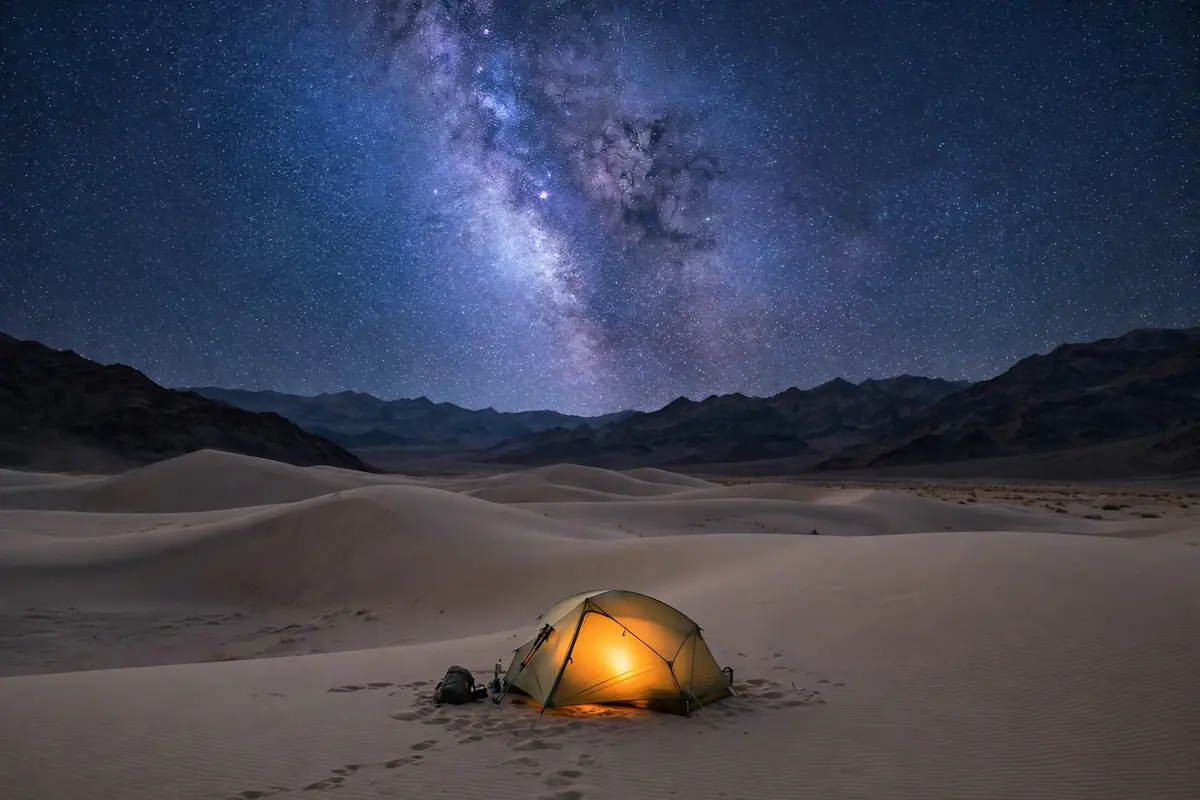
Bryce Canyon was designated an International Dark Sky Park in 2019, and the designation is earned nightly. At 9,000 feet with almost no light pollution, the Milky Way shows up as a thick smear even to the naked eye, and the park’s annual Astronomy Festival each June draws thousands. Even without the festival, ranger-led night sky programs run through the summer, and simply standing at Sunset Point after dark — hoodoo silhouettes against a starfield — is one of the great free experiences in the national park system. Bring layers; the same thin air that makes the stars sharp makes midnight cold.
Frequently Asked Questions About Bryce Canyon Hikes
How many days do I need at Bryce Canyon?
One full day covers the rim and the Queen’s Garden/Navajo Loop. Two days lets you add Peekaboo or Fairyland plus a sunrise and a night-sky session — the ideal pace.
Is Bryce harder than Zion?
Zion’s famous hikes (Angels Landing, The Narrows) are more technically demanding, but Bryce’s 8,000-plus-foot elevation makes its moderate trails feel harder than their mileage suggests. The two parks complement each other perfectly.
Can I hike below the rim in winter?
Yes, and it is spectacular — but trails ice over. Traction devices are strongly recommended, and check the park’s conditions page before descending.
Do I need reservations to enter?
No. Bryce Canyon has no timed-entry system in 2026. Just pay the entrance fee and arrive early for parking.
Conclusion
The best Bryce Canyon hikes all share one moment: the descent below the rim, when the hoodoos stop being a view and become a place. Whether you choose the essential Queen’s Garden/Navajo Loop, the solitude of Fairyland, or a simple sunset stroll along the rim, Bryce rewards the hiker who goes down among the stone. Start early, respect the altitude, stay for the stars — and you will understand why this “not-a-canyon” outshines the real thing.