Yellowstone is bigger than most people imagine — 2.2 million acres across Wyoming, Montana, and Idaho, with more geysers than the rest of the planet combined. First-time visitors often try to “see it all” and end up exhausted, having rushed past the very things that make the park magical. This Yellowstone 3-day itinerary is built differently: it paces the park by geography, puts the wildlife-rich valleys at dawn when animals are active, and leaves evenings free for the wandering that turns a good trip into a great one.
Before You Go: Yellowstone Essentials
Yellowstone has five entrances and a figure-eight Grand Loop Road connecting the park’s regions. Book lodging a year ahead if you want to stay inside the park; gateway towns like West Yellowstone, Gardiner, and Cody work fine too. You’ll need a private vehicle — the park is enormous and public transport doesn’t exist inside it. Bear spray is non-negotiable for any hike, sold at gateway stores. And download everything offline: cell service covers only a few developed areas.
Season matters enormously. Late May through September is the sweet spot; high-elevation roads stay snowbound well into May. Shoulder-season visits have their own magic — see our guide to America’s best snow destinations for the mindset, though winter access requires booking guided snowcoach trips.
Day 1: The Upper Loop — Wildlife, Waterfalls, and the Grand Canyon of the Yellowstone
Start early and enter through the North Entrance at Gardiner, Montana — the historic Roosevelt Arch is a worthy photo stop. Head straight to Lamar Valley, the park’s legendary wildlife corridor. At dawn, this is where wolves, grizzlies, bison herds, elk, and pronghorn converge. Bring binoculars and pullouts are your friend; the wolf-watchers with spotting scopes are happy to point things out.
Mid-morning, drive east toward Tower Junction and then south to the Grand Canyon of the Yellowstone. This is the park’s sleeper highlight — a 20-mile gorge in impossible shades of yellow and white, with Lower Falls plunging 308 feet, nearly twice the height of Niagara. Walk the rim trail from Lookout Point to Artist Point (2 miles round trip, mostly easy), then take the steep switchbacks down to the brink of Lower Falls for the full thunder.
Afternoon options: the Lamar Valley again for evening wildlife, or the short trails around Mammoth Hot Springs with its terraced travertine formations — one of the most unusual places in the United States. Overnight in or near the Canyon or Mammoth area to stay positioned for Day 2.
Day 2: The Lower Loop — Geysers and the Grand Prismatic Spring
Today belongs to Yellowstone’s geothermal wonders. Drive south to the Upper Geyser Basin and start at the Old Faithful Visitor Education Center. Old Faithful erupts roughly every 90 minutes (check posted prediction times), and the eruption lasts just a few minutes — arrive 20 minutes early for a good seat on the viewing benches.
Don’t leave after one eruption. The boardwalk loop through the Upper Geyser Basin (about 5 miles, mostly flat) passes hundreds of thermal features: deep-blue Morning Glory Pool, Grand Geyser, and Riverside Geyser, which arcs its plume over the Firehole River. Slow walkers see the most.
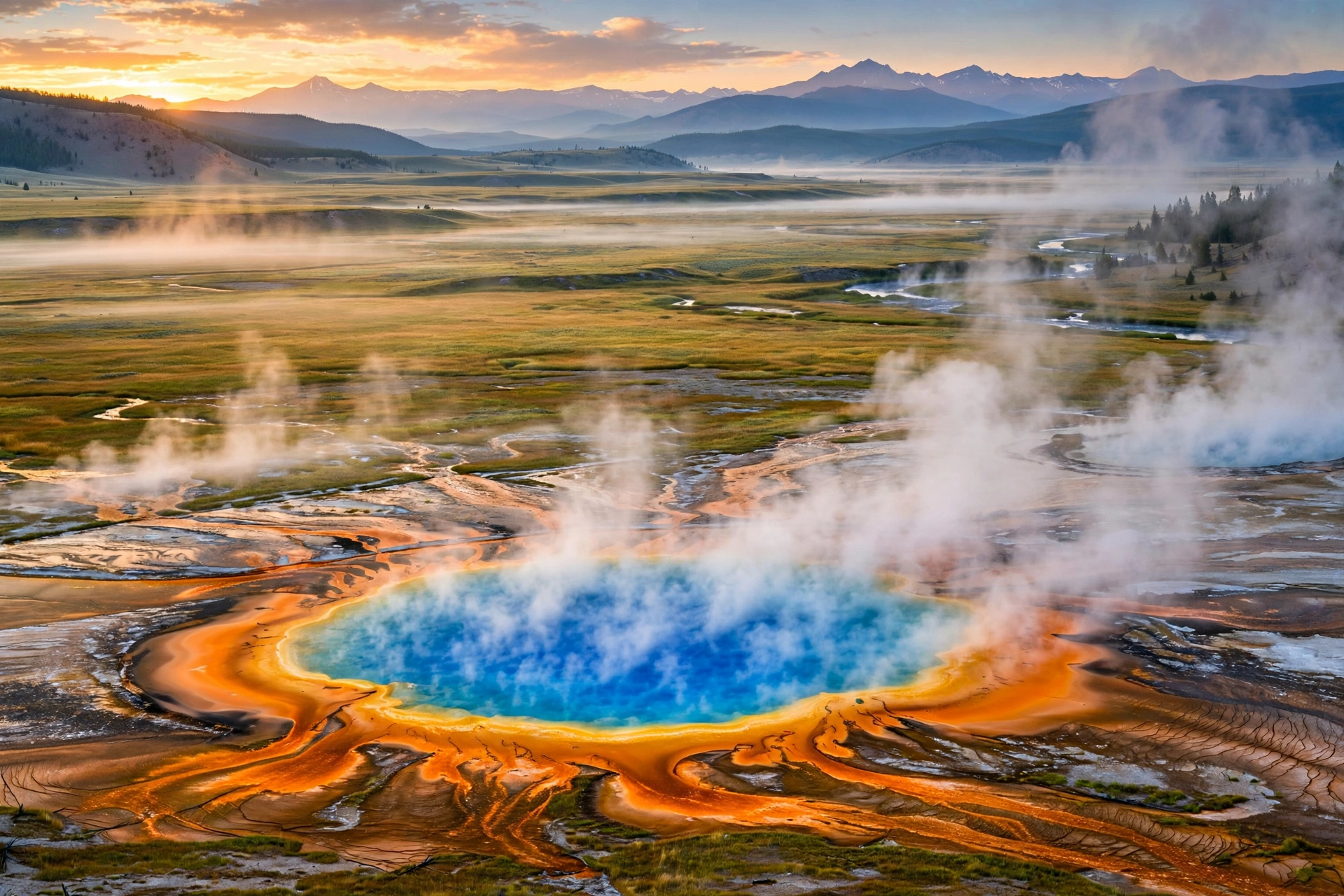
Midday, drive north to the Grand Prismatic Spring. See it from ground level at the Midway Geyser Basin boardwalks, then hike the Fairy Falls trail to the overlook for the famous aerial view — the spring’s rainbow rings are caused by heat-loving bacteria, and they’re at their most vivid in bright sun. Photographers: this is the shot of your trip, so skim our adventure photography tips before you go. End the day with a sunset drive through Hayden Valley, the park’s other great wildlife corridor, where bison herds and grizzlies are common at dusk.
Day 3: Yellowstone Lake, Hayden Valley, and the Road Less Taken
Slow down for Day 3. Start at Yellowstone Lake — one of the largest high-elevation lakes in North America at nearly 8,000 feet. Walk the Storm Point trail (2.3 miles round trip, easy) for shoreline views and possible marmot sightings, or rent a boat at Bridge Bay for an hour on the water.
Midday, drive the Hayden Valley slowly — this stretch is where many visitors have their best bison encounters, sometimes with herds crossing right in front of you. Stay 100 yards from bears and wolves, 25 from everything else; these rules are enforced, and travel safety basics matter doubly in bear country.
Afternoon: pick one trail and do it properly. The Mount Washburn hike (6.2 miles round trip, 1,393 feet of elevation) is the park’s classic alpine summit with bighorn sheep sightings and a fire lookout at the top. Or keep it gentle with the Natural Bridge trail near the lake. End your trip where it began — back in Lamar Valley at golden hour, watching bison move through the grass as the light turns amber. If three days left you hungry for more American hiking, our roundup of the best hiking trails in the USA will keep you busy for years.
Where to Stay: Park Lodges vs. Gateway Towns
Inside the park, Old Faithful Inn (historic, often books out a year ahead), Canyon Lodge (central, modern), and Roosevelt Lodge (rustic, near Lamar Valley) are the big three. Staying inside saves 1–2 hours of driving daily — real money on a short trip. Gateway towns — West Yellowstone, Gardiner, Cody — offer more dining and better availability. For a different kind of park basecamp, check what to look for in lodging near Capitol Reef — the same principles apply anywhere in canyon country.
Practical Tips That Make or Break the Trip
Food and fuel
Gas stations inside the park are sparse and pricey — fill up at every opportunity. Restaurants inside the park range from cafeterias to the Old Faithful Inn dining room (reservations needed). Pack trail lunches and a cooler; picnicking at pullouts is half the experience.
Crowds and timing
Old Faithful and the Grand Prismatic overlooks are zoo-like from 11 to 4 in summer. The fix is simple: wildlife areas at dawn, geothermal areas before 9 or after 5. Boardwalks at 8 a.m. are nearly empty, with better light.
Wildlife etiquette
Never feed animals, never approach them, and if a bison or bear causes a “bear jam” on the road, pull fully off the pavement. If wildlife watching hooked you, the adrenaline version is covered in our guide to thrilling adventure activities across the country.
The Bottom Line
Three days in Yellowstone is enough to understand why it’s the world’s first national park and still its most astonishing. You’ll see more geysers, wildlife, and geological weirdness in 72 hours than most people encounter in a lifetime of travel. Go slow, get up early, and let the park set the pace — it’s been perfecting this routine for 150 years.